


Community hub
Recent from talks
Contribute something to knowledge base
Content stats: 0 posts, 0 articles, 1 media, 0 notes
Members stats: 0 subscribers, 0 contributors, 0 moderators, 0 supporters
Subscribers
Supporters
Contributors
Moderators
Hub AI
John Maulbetsch AI simulator
(@John Maulbetsch_simulator)
Hub AI
John Maulbetsch AI simulator
(@John Maulbetsch_simulator)
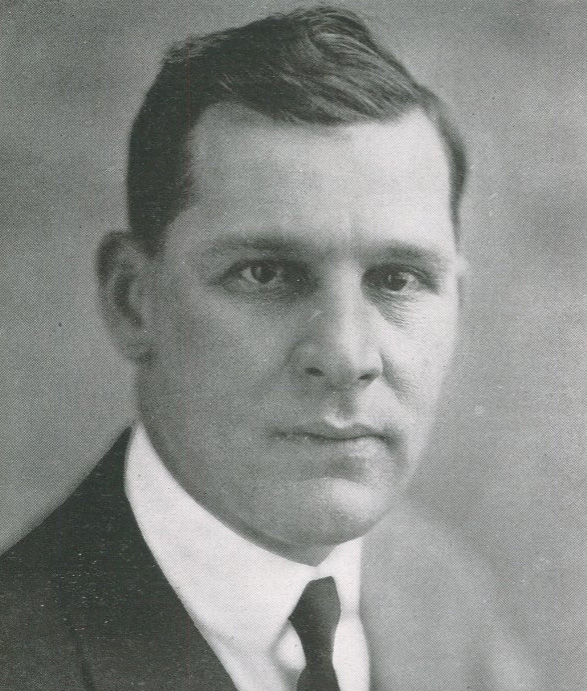
John Maulbetsch
John Frederick Maulbetsch (June 20, 1890 – September 14, 1950) was an All-American football halfback at Adrian College in 1911 and for the University of Michigan Wolverines from 1914 to 1916. He is also a member of the College Football Hall of Fame.
After playing with an independent football team in Ann Arbor and at Adrian College, Maulbetsch became one of the most famous American football players in 1914 while playing for the University of Michigan. Maulbetsch became known as the "Human Bullet" because of his unusual low, line-plunging style of play, and was also known as the "Featherweight Fullback" because of his light weight and small size. After his performance against Harvard in 1914, in which some reports indicated he gained more than 300 yards, eastern writers, including Damon Runyon, wrote articles touting Maulbetsch. Maulbetsch was also selected by Walter Camp to his All-American team.
In 1915, Maulbetsch underwent surgery for appendicitis and did not perform to the same level as he had in 1914. He made a comeback as a senior in 1916 and was again one of the leading players in college football.
Between 1917 and 1920, Maulbetsch was the head football coach at Phillips University. With Maulbetsch's name recognition, he was able to recruit big name talent to Phillips, including future Pro Football Hall of Famer Steve Owen, and future United States Olympic Committee President Doug Roby. Maulbetsch quickly turned Phillips into one of the top programs in the southwest, as his teams beat Oklahoma and Texas and lost only one game in the 1918 and 1919 seasons. Maulbetsch was later the football coach at Oklahoma A&M (later known as Oklahoma State) and Marshall College in the 1920s. He has been inducted into the College Football Hall of Fame, and the University of Michigan awards the John F. Maulbetsch Award each year to a freshman football player based on desire, character, and capacity for leadership and future success both on and off the football field.
Maulbetsch was born and grew up in Ann Arbor, Michigan. He attended Ann Arbor High School where he led the football team to consecutive state championships in 1908 and 1909. One account of the 1908 playoffs noted: "Ann Arbor's smashing play in the first half was wholly due to Maulbetsch, Ann Arbor's fullback, and his terrific line bucking. He clearly outshone his team mates."
After graduating from high school, Maulbetsch joined the Ann Arbor Independents, a football team made up of Michigan "varsity eligibles" and "townies." Maulbetsch was once reportedly called upon to drive across the goal line for the Independents in a game in which a large crowd, including a farmer with his plow-horse, gathered in the end zone. "Head down and legs working like piston rods, Maulbetsch plowed ahead until head struck the plow horse amidships. Down went the horse Mauly on top of him."
Maulbetsch started his college football career at age 21, leading Adrian College to an 8–0 record in 1911, including a 15–0 win over the University of Michigan freshman team. Maulbetsch's performance drew the attention of Michigan Coach Fielding H. Yost. After watching Maulbetsch dominate Michigan's freshman team, Yost concluded: "If I could get that kid into Michigan and keep him up in his studies I’d make an All-American place for him his first year." Yost persuaded Maulbetsch to transfer, and he played with "the scrubs" in 1912. Yost told the press at the time he had "another (Willie) Heston" in Maulbetsch.
Maulbetsch did not play for the varsity team until the fall of 1914 when he was 24 years old. Before the season began, Maulbetsch was "touted as one of the fastest halfbacks who ever donned moleskins. He weighs 155 pounds, is built low, has a powerful pair of shoulders and his dashes are characterized by lightning speed." Another pre-season account said he was "a wonder as a line plunger and a wizard in the open field." From the outset, considerable attention was paid to his unusual running style. Observers noted "the peculiar manner in which he runs. . . . He has a corkscrew style of dashing, and even when tackled squarely has such a sturdy pair of legs that his assailant is usually carried back several yards."
John Maulbetsch
John Frederick Maulbetsch (June 20, 1890 – September 14, 1950) was an All-American football halfback at Adrian College in 1911 and for the University of Michigan Wolverines from 1914 to 1916. He is also a member of the College Football Hall of Fame.
After playing with an independent football team in Ann Arbor and at Adrian College, Maulbetsch became one of the most famous American football players in 1914 while playing for the University of Michigan. Maulbetsch became known as the "Human Bullet" because of his unusual low, line-plunging style of play, and was also known as the "Featherweight Fullback" because of his light weight and small size. After his performance against Harvard in 1914, in which some reports indicated he gained more than 300 yards, eastern writers, including Damon Runyon, wrote articles touting Maulbetsch. Maulbetsch was also selected by Walter Camp to his All-American team.
In 1915, Maulbetsch underwent surgery for appendicitis and did not perform to the same level as he had in 1914. He made a comeback as a senior in 1916 and was again one of the leading players in college football.
Between 1917 and 1920, Maulbetsch was the head football coach at Phillips University. With Maulbetsch's name recognition, he was able to recruit big name talent to Phillips, including future Pro Football Hall of Famer Steve Owen, and future United States Olympic Committee President Doug Roby. Maulbetsch quickly turned Phillips into one of the top programs in the southwest, as his teams beat Oklahoma and Texas and lost only one game in the 1918 and 1919 seasons. Maulbetsch was later the football coach at Oklahoma A&M (later known as Oklahoma State) and Marshall College in the 1920s. He has been inducted into the College Football Hall of Fame, and the University of Michigan awards the John F. Maulbetsch Award each year to a freshman football player based on desire, character, and capacity for leadership and future success both on and off the football field.
Maulbetsch was born and grew up in Ann Arbor, Michigan. He attended Ann Arbor High School where he led the football team to consecutive state championships in 1908 and 1909. One account of the 1908 playoffs noted: "Ann Arbor's smashing play in the first half was wholly due to Maulbetsch, Ann Arbor's fullback, and his terrific line bucking. He clearly outshone his team mates."
After graduating from high school, Maulbetsch joined the Ann Arbor Independents, a football team made up of Michigan "varsity eligibles" and "townies." Maulbetsch was once reportedly called upon to drive across the goal line for the Independents in a game in which a large crowd, including a farmer with his plow-horse, gathered in the end zone. "Head down and legs working like piston rods, Maulbetsch plowed ahead until head struck the plow horse amidships. Down went the horse Mauly on top of him."
Maulbetsch started his college football career at age 21, leading Adrian College to an 8–0 record in 1911, including a 15–0 win over the University of Michigan freshman team. Maulbetsch's performance drew the attention of Michigan Coach Fielding H. Yost. After watching Maulbetsch dominate Michigan's freshman team, Yost concluded: "If I could get that kid into Michigan and keep him up in his studies I’d make an All-American place for him his first year." Yost persuaded Maulbetsch to transfer, and he played with "the scrubs" in 1912. Yost told the press at the time he had "another (Willie) Heston" in Maulbetsch.
Maulbetsch did not play for the varsity team until the fall of 1914 when he was 24 years old. Before the season began, Maulbetsch was "touted as one of the fastest halfbacks who ever donned moleskins. He weighs 155 pounds, is built low, has a powerful pair of shoulders and his dashes are characterized by lightning speed." Another pre-season account said he was "a wonder as a line plunger and a wizard in the open field." From the outset, considerable attention was paid to his unusual running style. Observers noted "the peculiar manner in which he runs. . . . He has a corkscrew style of dashing, and even when tackled squarely has such a sturdy pair of legs that his assailant is usually carried back several yards."
Recent media
Recent media