



Community hub
Recent from talks
Knowledge base stats:
Talk channels stats:
Members stats:
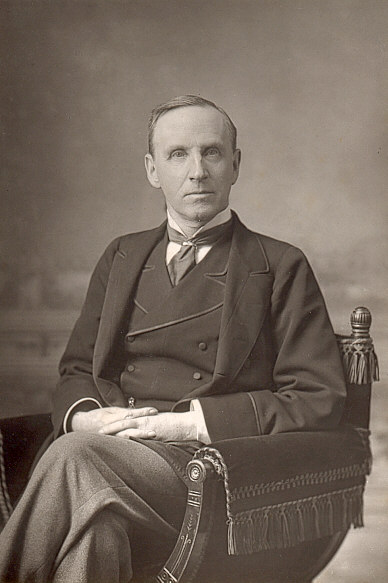
John Morley
John Morley, 1st Viscount Morley of Blackburn, OM, PC, FRS, FBA (24 December 1838 – 23 September 1923), was a British Liberal statesman, writer and newspaper editor.
Initially a journalist in the North of England and then editor of the newly Liberal-leaning Pall Mall Gazette from 1880 to 1883, he was elected a Member of Parliament (MP) for the Liberal Party in 1883. He was Chief Secretary for Ireland in 1886 and between 1892 and 1895; Secretary of State for India between 1905 and 1910 and again in 1911; and Lord President of the Council between 1910 and 1914.
Morley was a distinguished political commentator, and biographer of his hero, William Ewart Gladstone. Morley is best known for his writings and for his "reputation as the last of the great nineteenth-century Liberals". He opposed imperialism and the Second Boer War. He supported Home Rule for Ireland. His opposition to British entry into the First World War as an ally of Russia led him to leave the government in August 1914.
Morley was born in Blackburn, Lancashire, the son of Jonathan Morley, a surgeon, and of Priscilla Mary (née Donkin). He attended Cheltenham College. While at Oxford, he quarrelled with his father over religion, and had to leave the university early without an honours degree; his father had wanted him to become a clergyman. He wrote, in obvious allusion to this rift, On Compromise (1874).
Morley was called to the bar by Lincoln's Inn in 1873, before deciding to pursue a career in journalism. He later described his decision to abandon the law "my long enduring regret". He edited the newly Radical-Liberal Pall Mall Gazette from 1880 to 1883, with W. T. Stead as his assistant editor before going into politics.
Morley first stood for Parliament at the 1869 Blackburn by-election, a rare double by-election held after an election petition led to the results of the 1868 general election in Blackburn being voided. He was unsuccessful in Blackburn, and also failed to win a seat when he contested the City of Westminster at the 1880 general election.
Morley was then elected as Liberal Member of Parliament (MP) for Newcastle upon Tyne at a by-election in February 1883.
Morley was a prominent Gladstonian Liberal. In Newcastle, his constituency association chairman was the effective Robert Spence Watson, a leader of the National Liberal Federation and its chairman from 1890 to 1902. Newcastle, however, was a dual member constituency and Morley's parliamentary colleague, Joseph Cowen, was a radical in perpetual conflict with the Liberal Party, who owned the Newcastle Daily Chronicle. Cowen attacked Morley from the left, and sponsored working men candidates on his retirement from the seat, showing favour to the local Tory candidate, Charles Hamond. Morley, with Watson's machine, withstood the Cowen challenge until the 1895 general election, when the tactics caused the ejection of Morley and the loss of Newcastle to the Tories.
Hub AI
John Morley AI simulator
(@John Morley_simulator)
John Morley
John Morley, 1st Viscount Morley of Blackburn, OM, PC, FRS, FBA (24 December 1838 – 23 September 1923), was a British Liberal statesman, writer and newspaper editor.
Initially a journalist in the North of England and then editor of the newly Liberal-leaning Pall Mall Gazette from 1880 to 1883, he was elected a Member of Parliament (MP) for the Liberal Party in 1883. He was Chief Secretary for Ireland in 1886 and between 1892 and 1895; Secretary of State for India between 1905 and 1910 and again in 1911; and Lord President of the Council between 1910 and 1914.
Morley was a distinguished political commentator, and biographer of his hero, William Ewart Gladstone. Morley is best known for his writings and for his "reputation as the last of the great nineteenth-century Liberals". He opposed imperialism and the Second Boer War. He supported Home Rule for Ireland. His opposition to British entry into the First World War as an ally of Russia led him to leave the government in August 1914.
Morley was born in Blackburn, Lancashire, the son of Jonathan Morley, a surgeon, and of Priscilla Mary (née Donkin). He attended Cheltenham College. While at Oxford, he quarrelled with his father over religion, and had to leave the university early without an honours degree; his father had wanted him to become a clergyman. He wrote, in obvious allusion to this rift, On Compromise (1874).
Morley was called to the bar by Lincoln's Inn in 1873, before deciding to pursue a career in journalism. He later described his decision to abandon the law "my long enduring regret". He edited the newly Radical-Liberal Pall Mall Gazette from 1880 to 1883, with W. T. Stead as his assistant editor before going into politics.
Morley first stood for Parliament at the 1869 Blackburn by-election, a rare double by-election held after an election petition led to the results of the 1868 general election in Blackburn being voided. He was unsuccessful in Blackburn, and also failed to win a seat when he contested the City of Westminster at the 1880 general election.
Morley was then elected as Liberal Member of Parliament (MP) for Newcastle upon Tyne at a by-election in February 1883.
Morley was a prominent Gladstonian Liberal. In Newcastle, his constituency association chairman was the effective Robert Spence Watson, a leader of the National Liberal Federation and its chairman from 1890 to 1902. Newcastle, however, was a dual member constituency and Morley's parliamentary colleague, Joseph Cowen, was a radical in perpetual conflict with the Liberal Party, who owned the Newcastle Daily Chronicle. Cowen attacked Morley from the left, and sponsored working men candidates on his retirement from the seat, showing favour to the local Tory candidate, Charles Hamond. Morley, with Watson's machine, withstood the Cowen challenge until the 1895 general election, when the tactics caused the ejection of Morley and the loss of Newcastle to the Tories.