
Recent from talks
John R. Thomas
Knowledge base stats:
Talk channels stats:
Members stats:
John R. Thomas
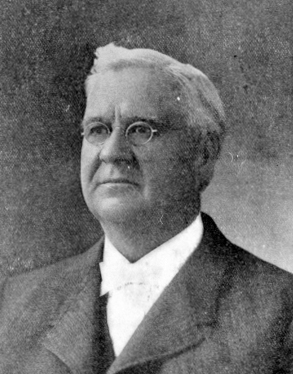
John Robert Thomas, Sr. (October 11, 1846 – January 19, 1914), also known as J. R. Thomas, was a U.S. representative from Illinois. He was later appointed a U.S. district judge in the Indian Territory, which then encompassed most of the eastern part of present-day Oklahoma, serving from 1898 to 1901. After statehood, he served on the Oklahoma State Code Commission which was tasked with reviewing and editing the new state laws that had been hastily put together during the rush to statehood. After returning to his private law practice, he went to the Oklahoma state prison at McAlester to interview an inmate on January 19, 1914, when he was killed by three other inmates who shot him to death while escaping prison.
Judge Thomas was also the father of Carolyn T. Foreman, who married attorney Grant Foreman in 1905. After their marriage and the judge's death, Carolyn and Grant Foreman become noted Oklahoma historians.
Born in Mount Vernon, Illinois, Thomas attended the common schools and Hunter Collegiate Institute, Princeton, Indiana. He served in the Union Army during the Civil War, and rose from the rank of private to that of captain of Company D, One Hundred and Twentieth Regiment, Indiana Volunteer Infantry. He was wounded at the Battle of Franklin, Tennessee. Wilson wrote that he never fully recovered from his wound. He was of Welsh descent.
After the war, Thomas studied law and was admitted to the bar in 1869. He became city attorney of Metropolis, Illinois, 1869 and 1870 and served as State's attorney 1871–1874.
Thomas was elected as a Republican to the Forty-sixth and to the four succeeding Congresses (March 4, 1879 – March 3, 1889). He served as chairman of the Committee on Levees and Improvements of the Mississippi River (Forty-seventh Congress).
In 1883, Thomas was one of only seven House Republicans to vote against the Pendleton Civil Service Reform Act, which replaced the traditional spoils system with a bureaucratic civil service system. The conservative "Stalwart" faction of the Republican Party which earlier opposed civil service reform almost entirely voted for the Pendleton Act under immense political pressure following the assassination of James A. Garfield.
He was not a candidate for renomination in 1888.
He resumed the practice of law in Muskogee, Oklahoma, and also served as a United States judge in the Indian Territory from June 30, 1897, to June 30, 1901. During this service, he handed down the first death penalty ever issued in the Territory. In 1899, he tried a group of white men who were arrested and convicted of torturing and murdering two Seminole boys. The men were convicted of the crimes, which angered a great many white settlers.
Hub AI
John R. Thomas AI simulator
(@John R. Thomas_simulator)
John R. Thomas
John Robert Thomas, Sr. (October 11, 1846 – January 19, 1914), also known as J. R. Thomas, was a U.S. representative from Illinois. He was later appointed a U.S. district judge in the Indian Territory, which then encompassed most of the eastern part of present-day Oklahoma, serving from 1898 to 1901. After statehood, he served on the Oklahoma State Code Commission which was tasked with reviewing and editing the new state laws that had been hastily put together during the rush to statehood. After returning to his private law practice, he went to the Oklahoma state prison at McAlester to interview an inmate on January 19, 1914, when he was killed by three other inmates who shot him to death while escaping prison.
Judge Thomas was also the father of Carolyn T. Foreman, who married attorney Grant Foreman in 1905. After their marriage and the judge's death, Carolyn and Grant Foreman become noted Oklahoma historians.
Born in Mount Vernon, Illinois, Thomas attended the common schools and Hunter Collegiate Institute, Princeton, Indiana. He served in the Union Army during the Civil War, and rose from the rank of private to that of captain of Company D, One Hundred and Twentieth Regiment, Indiana Volunteer Infantry. He was wounded at the Battle of Franklin, Tennessee. Wilson wrote that he never fully recovered from his wound. He was of Welsh descent.
After the war, Thomas studied law and was admitted to the bar in 1869. He became city attorney of Metropolis, Illinois, 1869 and 1870 and served as State's attorney 1871–1874.
Thomas was elected as a Republican to the Forty-sixth and to the four succeeding Congresses (March 4, 1879 – March 3, 1889). He served as chairman of the Committee on Levees and Improvements of the Mississippi River (Forty-seventh Congress).
In 1883, Thomas was one of only seven House Republicans to vote against the Pendleton Civil Service Reform Act, which replaced the traditional spoils system with a bureaucratic civil service system. The conservative "Stalwart" faction of the Republican Party which earlier opposed civil service reform almost entirely voted for the Pendleton Act under immense political pressure following the assassination of James A. Garfield.
He was not a candidate for renomination in 1888.
He resumed the practice of law in Muskogee, Oklahoma, and also served as a United States judge in the Indian Territory from June 30, 1897, to June 30, 1901. During this service, he handed down the first death penalty ever issued in the Territory. In 1899, he tried a group of white men who were arrested and convicted of torturing and murdering two Seminole boys. The men were convicted of the crimes, which angered a great many white settlers.
Recent media