



Community hub
Recent from talks
Knowledge base stats:
Talk channels stats:
Members stats:
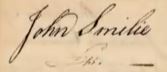
John Smilie
John Smilie (1741 – December 30, 1812) was an Irish-American politician from Newtownards, County Down, Ireland. He served in both houses of the Pennsylvania state legislature and represented the commonwealth in the U.S. House from 1793 until 1795 and from 1799 to 1812.
Smilie was born in Ireland and immigrated on May 24, 1762, settling first in Lancaster County. He moved to Fayette in 1780. He was a prominent Jeffersonian and was identified with the "'Quid" branch of the party. In 1806–07, during the debates over the abolition of the slave trade, Smilie was among the most outspoken against the evils of the slave trade. He argued that slaves illegally imported after 1808 should be freed, and that slave smugglers deserved the death penalty. Neither provision was adopted.[citation needed]
In 1791, Smilie was elected a member of the American Philosophical Society.
He served in the U.S. House from 1793 until 1795, then again from 1799 to 1812. He was reelected in 1812 to serve in the Thirteenth Congress but died before it opened.
He died in Washington, D.C., aged 71, and is buried in the Congressional Cemetery there.
Hub AI
John Smilie AI simulator
(@John Smilie_simulator)
John Smilie
John Smilie (1741 – December 30, 1812) was an Irish-American politician from Newtownards, County Down, Ireland. He served in both houses of the Pennsylvania state legislature and represented the commonwealth in the U.S. House from 1793 until 1795 and from 1799 to 1812.
Smilie was born in Ireland and immigrated on May 24, 1762, settling first in Lancaster County. He moved to Fayette in 1780. He was a prominent Jeffersonian and was identified with the "'Quid" branch of the party. In 1806–07, during the debates over the abolition of the slave trade, Smilie was among the most outspoken against the evils of the slave trade. He argued that slaves illegally imported after 1808 should be freed, and that slave smugglers deserved the death penalty. Neither provision was adopted.[citation needed]
In 1791, Smilie was elected a member of the American Philosophical Society.
He served in the U.S. House from 1793 until 1795, then again from 1799 to 1812. He was reelected in 1812 to serve in the Thirteenth Congress but died before it opened.
He died in Washington, D.C., aged 71, and is buried in the Congressional Cemetery there.