



Community hub
Wikipedia
Johnny Neumann
View on Wikipedia
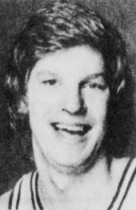
Carl John Neumann (September 11, 1951 – April 23, 2019), nicknamed "Johnny Reb", was an American professional basketball player and coach. At 6'6" and 200 pounds, he played at the shooting guard and small forward positions.
Key Information


High school and college
[edit]Following a standout career at Overton High School in Memphis, Neumann took his game to the University of Mississippi, where he played from 1969 to 1971. During his sophomore season, he drew comparisons to Pete Maravich, after averaging an NCAA-high of 40.1 points per game.[1] His strongest performances included a 63-point game against Louisiana State University and a 60-point game against Baylor University.[2] Neumann earned All-America and SEC Player of the Year honors at the end of the season.
Johnny Neumann returned to Ole Miss and completed his undergraduate degree, in 2016.[3] After earning his degree, he returned to coaching. He was named to the 2016 SEC Legends class. Neumann continues to hold the Ole Miss single-season scoring record of 923 points.
Professional career
[edit]Memphis Pros and Memphis Tams
[edit]After his sophomore season at Ole Miss, Neumann became the first player in basketball history to sign a hardship clause[4] as he signed a five-year, $2 million contract with the Memphis Pros of the American Basketball Association.[5] Neumann was later drafted by the Chicago Bulls, in the 6th round of the 1973 NBA draft.[6]
Neumann's professional career started strong, with averages of 18.3 points per game and 19.6 points per game in his first two full seasons with Memphis. He was named to the ABA All-Rookie Team in 1972.[7] However, Neumann gradually fell out of favor with the team's head coach and management, who thought he was not passing the ball enough, and he was traded by the Memphis Tams to the Utah Stars, in exchange for Glen Combs, Ronnie Robinson, Mike Jackson and cash, in January 1974.
The exploits of Neumann were briefly detailed in Terry Pluto's book Loose Balls, which had varuous players note his talent in scoring along with his immaturity that never quite ended in his playing days.[8]
Utah Stars
[edit]In Neumann's first year with the Utah Stars, his team won the ABA Western Division and defeated the San Diego Conquistadors, in the Western Division Semifinals and the Indiana Pacers in the Western Division Finals, to make it to the ABA Championship series, where they lost the 1974 ABA Finals to the New York Nets. Despite the team's success, Neumann struggled to regain his scoring average after being traded to Utah. He averaged just 10.1 points per game, in 44 games played with the Stars.
Virginia Squires and Indiana Pacers
[edit]In August 1974 the Stars traded Neumann and a draft choice, to the Virginia Squires, in exchange for Jim Eakins and Larry Miller. After just four games with the Squires, the Indiana Pacers bought Neumann's rights from the Squires, in November 1974. He averaged 8.3 points per game with Indiana.[6] Neumann finished out the 1974–75 season as a Pacer, and in March 1975, the Virginia Squires bought Neumann's rights back from the Pacers.[9]
Neumann averaged 16.6 points per game for Virginia during the 1975–76 season, but in January 1976, he was traded by the Squires.[6]
Kentucky Colonels
[edit]In January 1976, Neumann was traded along with Jan van Breda Kolff, to the Kentucky Colonels, in exchange for Marv Roberts. He averaged 10.1 points per game as the Colonels defeated the Indiana Pacers in the ABA Quarterfinals and lost a 4–3 seven-game series to the Denver Nuggets, in the 1976 ABA Semifinals.
NBA
[edit]After the ABA–NBA merger took place in June 1976, Neumann ended up with the Buffalo Braves. From 1976 to 1978, Neumann played 83 games in the NBA, as a member of the Braves, Los Angeles Lakers, and once again with the Pacers. His 1977–78 campaign with the Pacers, during which he averaged just 4.2 points per game, would be his last in the United States.
Europe
[edit]After leaving the NBA, Neumann took his game to Europe, where he competed in the Italian A League with Gabetti Cantù, in the 1978–79 season,[10] and in the German Federal League, with Saturn Köln, from 1980 to 1982.[11][12]
Coaching career
[edit]
Neumann became an assistant coach while playing in Germany, a position that would prove to be his first of many basketball coaching jobs. Neumann also coached in Belgium, Greece, Cyprus, Israel, Kuwait, Lebanon, Saudi Arabia, China, and Japan, as well as in the American minor-league Continental Basketball Association with the Maine Lumberjacks.[13] Neumann also coached the Louisville Shooters of the Global Basketball Association, in 1991 and 1992. While in Cyprus, he discovered Darrell Armstrong, a little-known American point guard from Fayetteville State University, who later found success in the NBA.[14]
On June 23, 2010, Neumann was appointed as the new head coach of the Romanian national team. After graduation from Ole Miss with a bachelor's degree in general studies, he hoped to obtain a position as a professional sports analyst and broadcaster, but those opportunities did not materialize. In an attempt to reenter coaching while waiting for the next professional opportunity, he served as an assistant coach at South Panola High School, in Batesville, Mississippi.[15]
Death
[edit]Neumann had suffered from several health issues for many years. By 2018, Johnny's health had declined significantly and it was discovered he had developed a brain tumor. In spite of surgery, Neumann died in Oxford, Mississippi, on April 23, 2019, after struggling against brain cancer. His ashes were deposited in an undisclosed location, but close to some of his most significant basketball achievements.[16]
Head coaching record
[edit]| Regular season | G | Games coached | W | Games won | L | Games lost | W–L % | Win–loss % |
| Playoffs | PG | Playoff games | PW | Playoff wins | PL | Playoff losses | PW–L % | Playoff win–loss % |
| Team | Year | G | W | L | W–L% | Finish | PG | PW | PL | PW–L% | Result |
|---|---|---|---|---|---|---|---|---|---|---|---|
| Rizing Fukuoka | 2007–08 | 44 | 20 | 24 | .455 | 3rd in Western | 1 | 0 | 1 | .000 | Lost in playoff semifinals |
| Rizing Fukuoka | 2008–09 | 52 | 22 | 30 | .423 | 4th in Western | 2 | 0 | 2 | .000 | Lost in 1st round |
| Takamatsu Five Arrows | 2009–10 | 52 | 13 | 39 | .250 | 7th in Western | - | - | - | – | - |
See also
[edit]References
[edit]- ^ http://www.thelocalvoice.net/TLV-pages/athletics/TLV22-johnnyneumann.html[permanent dead link]
- ^ "High scorers". Archived from the original on June 23, 2007. Retrieved May 9, 2007.
- ^ Documentary on former hoop star Neumann's life provides a cautionary tale.
- ^ NBA Official Site, "Where Are They Now? Johnny Neumann article
- ^ http://www.remembertheaba.com/MemphisMaterial/BuccaneersMemphisYearly.html Archived February 10, 2007, at the Wayback Machine
- ^ a b c Basketball-Reference.com Johnny Neumann page
- ^ RememberTheABA.com Memphis Pros Detailed Year to Year Notes Page Archived May 8, 2009, at the Wayback Machine
- ^ Pluto, Terry (1990). Loose Balls. Simon & Schuster. pp. 234–238. ISBN 978-1-4165-4061-8.
- ^ RememberTheABA.com Indiana Pacers Detailed Year to Year Notes Page
- ^ "John Neumann". Archived from the original on May 29, 2011. Retrieved September 27, 2008.
- ^ http://www.remembertheaba.com/Memphis-Tams.html Archived November 2, 2015, at the Wayback Machine
- ^ "Johnny Neumann Stats".
- ^ His playbook has an atlas. Retrieved on August 12, 2008.
- ^ "Where Are They Now? Johnny Neumann". NBA.com.
- ^ Johnny Neumann dead at 68.
- ^ Cobb, David (April 23, 2019). "Local basketball legend, former Ole Miss star Johnny Neumann dies at 68". The Commercial Appeal. Retrieved April 24, 2019.
External links
[edit]- Italian League profile Archived 2021-10-12 at the Wayback Machine (in Italian)
Grokipedia
Johnny Neumann
View on GrokipediaEarly life and education
High school career
Carl John Neumann was born on September 11, 1951, in Memphis, Tennessee, where he developed an early passion for basketball amid the city's vibrant sports culture in the 1960s.[1] Growing up in a segregated era, Neumann honed his skills on local courts, showcasing the athleticism and shooting talent that would define his career.[6] Neumann attended Overton High School in Memphis, emerging as a standout player during the late 1960s. As a junior, he averaged 26 points per game, and in his senior year of 1968-69, he boosted his output to 34 points per game while leading the state in scoring on a predominantly white team during a time when Tennessee high school basketball was still integrating.[7][6] Late in that season, Overton faced integrated competition, highlighting the shifting dynamics of Memphis basketball.[6] His scoring prowess and 6-foot-6 frame earned him All-American honors and drew recruitment from top programs, including UCLA under John Wooden and Kentucky under Adolph Rupp.[7][5] As one of the nation's premier high school prospects, Neumann committed to the University of Mississippi, setting the stage for his collegiate debut.[5]College career
Neumann arrived at the University of Mississippi (Ole Miss) in 1969 as a highly touted recruit from Memphis, where his high school scoring prowess had earned him national attention. During his freshman year in 1969–70, freshmen were ineligible for varsity play under NCAA rules, so he led the Ole Miss freshman team to a 25–1 record while averaging 38.4 points per game, showcasing his immediate adjustment to the college level despite the less competitive schedule.[5][8] In his sophomore and only varsity season in 1970–71, Neumann exploded offensively, leading the nation in scoring with an average of 40.1 points per game over 23 appearances, a mark that remains the highest in Ole Miss history. He set the school's single-season scoring record with 923 points, including standout performances like a 63-point outburst against LSU on January 30, 1971, which stands as the program's single-game high. His scoring carried the Rebels to an 11–15 overall record (6–12 in the Southeastern Conference), finishing eighth in the SEC, though the team struggled defensively, allowing 93.8 points per game. Neumann earned consensus second-team All-American honors, along with selections to multiple other All-America teams, and was named the 1971 SEC Player of the Year; he also received Academic All-America and Academic All-SEC recognition for his off-court efforts.[9][2][10][11][12] Over his brief college career, Neumann's varsity totals stood at 923 points and 40.1 points per game, with 6.6 rebounds and 3.2 assists per contest; he shot 46.2% from the field and 76.4% from the free-throw line. He holds several enduring Ole Miss records, including the single-season points total, the three highest single-game scoring outputs (63, 60, and 57 points), and the highest season scoring average. In March 1971, after the regular season, Neumann became the first college player to invoke the NBA's financial hardship clause—prompted by his family's economic difficulties—to leave school early, signing a groundbreaking five-year, $2 million contract with the ABA's Memphis Pros.[9][2][13][5] Neumann later completed a bachelor's degree in general studies from Ole Miss in 2016.[2] Neumann's electrifying play earned him the nickname "Johnny Reb," evoking the spirited Ole Miss Rebels mascot and symbolizing his bold, high-scoring style that revitalized the program during a transitional era. His departure paved the way for future early-entry players but left an indelible mark on Ole Miss basketball, as his records and accolades continue to highlight the school's scoring heritage.[2][8]Professional playing career
ABA career
Neumann entered the American Basketball Association (ABA) directly from the University of Mississippi via a hardship clause after his sophomore year, signing with the Memphis Pros for the 1971–72 season. As a rookie, he quickly established himself as a prolific scorer, averaging 18.3 points per game across 77 appearances while shooting 41.0% from the field and 76.0% from the free-throw line, which earned him a spot on the ABA All-Rookie First Team.[1] His contributions helped the Pros finish with a 30–44 record, though they missed the playoffs, and the franchise relocated to become the Memphis Tams midway through the following season. In his sophomore ABA campaign with the Tams during 1972–73, Neumann elevated his performance, leading the team in scoring with a 19.6 points per game average over 79 games, complemented by 5.9 assists per game and a career-high 46.5% field goal percentage.[1] Selected as an ABA All-Star for the only time in his career, he showcased his offensive versatility in an era defined by the league's innovative three-point line, though the Tams struggled to a 26–52 mark and again failed to qualify for the postseason. Neumann's scoring prowess was evident in standout games, including a career-high 41 points against the Kentucky Colonels. Traded to the Utah Stars in December 1973, Neumann joined a contending squad midway through the 1973–74 season, appearing in 44 games for the team that captured the Western Division title with a 51–33 record and advanced to the ABA Finals, where they fell to the New York Nets.[14] Across 87 total games that year (including 43 with the Tams), his scoring average settled at 13.2 points per game, reflecting adjustment challenges amid the trade, but he provided key perimeter scoring in Utah's balanced attack that emphasized fast breaks and outside shooting.[1] The Stars' deep playoff run highlighted Neumann's ability to contribute in high-stakes environments, averaging 12.4 points in nine postseason contests. Neumann's later ABA years involved frequent movement, beginning with a brief stint on the Virginia Squires in 1974–75 before a trade to the Indiana Pacers, where he played 48 games and helped the team reach the semifinals despite a league-worst 8.6 points per game average over 52 total appearances, hampered by reduced minutes and team instability.[1] Rejoined by the Squires for the 1975–76 season's opening 35 games, he was traded again in February 1976 to the Kentucky Colonels, appearing in 42 contests and averaging around 11.5 points per game with the team that finished 53–31 and advanced to the division finals.[1] In 12 playoff games across these stints, Neumann averaged 10.3 points, aiding Kentucky's strong regular-season push before their elimination by the regular-season champion Denver Nuggets. Throughout his five ABA seasons from 1971 to 1976, Neumann amassed 5,558 points in 372 regular-season games, averaging 14.9 points, 3.0 rebounds, and 3.2 assists per game while shooting 43.5% from the field.[1] His career was marked by scoring efficiency in an up-tempo league but also by inconsistencies from multiple trades, injuries that limited his durability, and off-court lifestyle factors that occasionally disrupted team dynamics and performance stability.[15]NBA career
Neumann was selected by the Chicago Bulls in the sixth round (98th overall pick) of the 1973 NBA draft, but he did not sign with the team and instead pursued a career in the ABA.[1] Following the ABA-NBA merger in June 1976, Neumann signed with the Buffalo Braves on September 22, 1976. He appeared in four games for the Braves early in the 1976-77 season, averaging 8.8 points per game in a limited role before being waived in November 1976. Shortly thereafter, the Los Angeles Lakers signed him as a free agent on November 18, 1976. With the Lakers, Neumann adjusted to the NBA's slower pace compared to the high-scoring ABA, playing in 59 regular-season games and averaging 5.9 points, 1.1 rebounds, and 2.2 assists per game in 15.1 minutes off the bench; he also contributed in the playoffs, appearing in six games and averaging 4.0 points.[1][16][17] In the 1977 offseason, the Lakers traded Neumann to the Buffalo Braves on June 10, 1977, in exchange for a third-round draft pick. However, before the 1977-78 season began, the Indiana Pacers acquired him from the Braves on October 18, 1977, for a 1978 second-round pick. Neumann played in 20 games for the Pacers that season, averaging 4.2 points and 1.4 assists per game in 10.8 minutes, primarily as a reserve, before being waived on December 24, 1977, marking the end of his NBA career amid ongoing challenges with injuries and personal issues.[18][16] Over his brief two-season NBA tenure, Neumann appeared in 83 regular-season games across three teams, totaling 464 points for a career average of 5.6 points per game—significantly lower than his ABA productivity, where he averaged over 14 points per game across five seasons.[1]European career
After being waived by the Indiana Pacers in 1978, Neumann signed with the Italian club Gabetti Cantù for the 1978–79 season, marking his entry into European professional basketball.[19] There, he adapted to the more tactical and physical style of play in Serie A, earning the nickname "Cavallo Pazzo" (Crazy Horse) for his dynamic scoring and vision on the court.[5] Neumann averaged 18.7 points and 3.4 assists per game in league play, leading the team in scoring.[19][5] Cantù achieved significant success that season, winning the 1978–79 FIBA European Cup Winners' Cup, with Neumann contributing 20 points in the final against EBBC Den Bosch.[5] Italian media, including La Gazzetta dello Sport, praised him as a "whimsical guard" with exceptional game vision, highlighting his successful adjustment to the international environment despite cultural and stylistic differences from American basketball.[5] He was the FIBA Saporta Cup Finals Top Scorer in 1979. Following the Italian campaign, Neumann briefly played in Germany for BSC Saturn Köln in 1979, serving in a dual player-assistant coach role, though specific performance details from this short stint are limited.[5] His European playing career, spanning just over a year, exposed him to diverse basketball cultures but ended abruptly at age 27 as he transitioned fully into coaching.[19] Across his ABA and NBA career, Neumann averaged 13.2 points per game.[1]Coaching career
United States coaching
After retiring from his professional playing career in Europe during the mid-1980s, Johnny Neumann transitioned into coaching by serving as a player-coach for the Maine Lumberjacks in the Continental Basketball Association (CBA) during the 1982-83 season.[20][21] Under his leadership, the Lumberjacks compiled a 22-22 regular-season record, finishing third in the East Division and advancing to the playoffs, where they were eliminated.[22] Neumann's high-energy, offensively oriented style, which echoed his own scoring prowess from his playing days, earned him second place in voting for CBA Coach of the Year, behind George Karl.[19][5] Neumann continued his CBA tenure as head coach of the Bay State Bombardiers (relocated from Maine) in the 1983-84 season, coaching the first 41 regular-season games to a 20-21 record before being replaced by Jim Sleeper, who coached the final three regular-season games (2-1) and the playoffs, where the team went 2-3 overall in the postseason.[23][24] His emphasis on fast-paced play and player development helped nurture talent in these lower-tier leagues, though the CBA's financial instability often led to team relocations and short-lived franchises, presenting ongoing challenges for coaches like Neumann.[19][24] In the 1990s, Neumann returned to U.S. minor-league coaching with the Louisville Shooters of the Global Basketball Association (GBA) in 1991-92, where his squad achieved a remarkable streak of 22 consecutive home victories amid the league's brief one-season existence.[25][26] He also coached the Youngstown Hawks of the International Basketball Association (IBA) from 1998 to 2000, earning Coach of the Year honors in 1998-99 while focusing on building competitive rosters despite the era's volatile minor-league environment marked by frequent franchise folds and limited resources.[19][5] These roles underscored Neumann's commitment to mentoring young players through an up-tempo, aggressive approach that prioritized scoring and team momentum.[5]International coaching
Neumann began his international coaching career in the 1980s, starting as a player-assistant coach for BSC Saturn Köln in Germany in 1979, where he adapted to the structured European style of play that emphasized team defense and fundamentals over individual scoring.[26] In 1986-87, he served as head coach for B.C. Binet-Courtage Verviers in Belgium, earning Coach of the Year honors with high-tempo offenses suited to the league's physicality and shorter seasons.[19][5] In Greece, he served as head coach for PAOK Thessaloniki during the 1988-89 season, earning Greek League Coach of the Year honors for leading the team to a competitive finish amid the league's intense rivalries and passionate fanbase.[5] He later coached Pagrati Athens, navigating restrictions on international competitions while focusing on player development in a basketball culture known for its tactical depth.[27] In the 1990s, Neumann achieved significant success in Cyprus, first as head coach of Pezoporikos Larnaca, guiding the team to the 1993-94 Cypriot League championship and earning Coach of the Year accolades for his strategic rotations and emphasis on local talent integration.[5] He repeated as Coach of the Year in 1994-95 with Pezoporikos Larnaca, marking back-to-back honors and solidifying his reputation for building cohesive units in smaller markets with limited resources.[5][26] Neumann's later international roles extended to the Middle East and Asia in the 2000s and 2010s. In 2000, he coached in the Kuwaiti League, adapting to the region's hot climate and cultural norms by prioritizing endurance training and team bonding.[26] From 2001 to 2002, he led the Lebanon national team to its first FIBA World Championship appearance, implementing an up-tempo style but departing after a controversial firing due to public comments criticizing federation officials.[28] In Saudi Arabia, he coached Al Hilal to Coach of the Year honors in 2003-04 and then Al Ittihad to a league title in 2004-05.[5] In 2006, he guided the Zhejiang Guangsha Lions to a Chinese National Basketball League (NBL) championship with a 13-1 record, earning promotion to the Chinese Basketball Association (CBA).[29] In Japan, Neumann coached Rizing Zephyr Fukuoka from 2007 to 2009, earning Coach of the Year honors in 2007-08 after a 20-24 debut season that reached the playoffs, fostering high-energy teams.[5] He then moved to Takamatsu Five Arrows in 2009-10, continuing his approach of aggressive defenses and fast breaks in the bj-league.[30] From 2010 to 2012, he served as head coach of the Romania national team.[5] Throughout his nomadic career spanning over a dozen countries, Neumann amassed notable win percentages above .500 in key stints, such as his Cypriot campaigns, and collected multiple Coach of the Year awards, with his global travels enhancing his adaptability and extending his coaching longevity into his later years.[5]Later life and death
Personal struggles
Throughout his life, Johnny Neumann faced significant personal challenges, particularly related to substance use and financial management. In interviews, Neumann admitted to smoking marijuana during the 1970s, describing it as commonplace in his era: "I smoked marijuana; that was our era." He recounted once using marijuana before a mandatory drug test to calm his nerves. These incidents contributed to erratic behavior that affected his stability during his playing and coaching years. Neumann's lifestyle often exacerbated his difficulties, as he squandered substantial earnings on luxury cars, women, and substances. After signing a landmark $2 million contract with the ABA's Memphis Pros at age 19, he quickly acquired multiple high-end vehicles, including a Pantera sports car, a Ferrari, and a Rolls-Royce, reflecting a pattern of impulsive spending. This profligacy strained his relationships and derailed his career trajectory, as he later reflected: "I blew a lot of my money because I was getting it so easy and I thought it would last forever." Financial hardships persisted long after his playing days, influencing his decision to leave the University of Mississippi early for professional basketball and culminating in post-career poverty. Despite his prodigious talent, Neumann ended up relying on a $847 monthly Social Security check and food stamps in his later years, living in married student housing with his family. In a 2014 interview, he expressed deep regrets over his "lost potential," stating, "God blessed me, but I squandered all of that talent," and positioned himself as a cautionary tale for young athletes about the pitfalls of the 1970s basketball generation.Illness and death
Neumann's health began to decline significantly in his later years, culminating in a diagnosis of brain cancer. His condition progressed despite treatment received in Oxford, Mississippi.[31] He passed away on April 23, 2019, at the age of 67 in Oxford, Mississippi.[2] A public memorial service was held on April 29, 2019, at The Pavilion Club on the Ole Miss campus, attended by family, friends, and members of the basketball community.[32] Ole Miss head coach Kermit Davis eulogized Neumann as "one of the all-time greats in Ole Miss history," highlighting his scoring prowess and lasting memories for Rebels fans.[32] Tributes poured in from the broader basketball world, including former ABA coach Hubie Brown, who recalled Neumann's exceptional talent during their time with the Memphis Tams.[6] Neumann was survived by his wife, Liliana; daughter Esmeralda of Oxford; daughters Maria and Leslie; sons Michael and Samuel; grandson Illies; brothers Robert Jr. and William; and sister Brenda.[32] His death prompted reflections on his enduring legacy as a pioneering scorer at Ole Miss, a flashy ABA star, and a dedicated coach in the U.S. and abroad, with many noting how he finally earned his college degree in 2016 as a symbol of redemption.[33]Head coaching record
| Team | League | Years | Regular season | Playoffs | Total | Notes |
|---|---|---|---|---|---|---|
| Maine Lumberjacks | CBA | 1982–83 | — | — | — | Runner-up for Coach of the Year (1982–83).[5] |
| Bay State Bombardiers | CBA | 1983–84 | — | — | — | |
| RBC Pepinster | Belgian League | 1986–87 | — | — | — | Coach of the Year.[5] |
| PAOK Thessaloniki | Greek A1 | 1987–89 | — | — | — | Coach of the Year (1988–89).[5] |
| Pagrati Athens | Greek A1 | 1989–90 | — | — | — | |
| Louisville Shooters | GBA | 1991–92 | — | — | — | 22 straight home wins.[5] |
| Iraklis Thessaloniki | Greek A1 | 1992–93 | — | — | — | |
| Pezoporikos | Cypriot League | 1993–94 | — | — | — | League title; Coach of the Year.[5] |
| AEK Larnaca | Cypriot League | 1994–95 | — | — | — | Coach of the Year. |
| APOEL | Cypriot League | 1997–98 | — | — | — | |
| Hapoel Tel Aviv | Israeli League | 1998 | — | — | — | |
| Youngstown Hawks | IBA | 1998–2000 | — | — | — | Coach of the Year (1998).[5] |
| Kazma | Kuwaiti League | 2000 | — | — | — | |
| Lebanon national team | FIBA | 2001–02 | — | — | — | Qualified for first FIBA World Championship appearance.[5] |
| Al-Hilal | Saudi League | 2003–04 | — | — | — | Coach of the Year.[5] |
| Al-Ittihad | Saudi League | 2004–05 | — | — | — | League title.[5] |
| Zhejiang Guangsha Lions | China NBL | 2006 | 13–1 | — | — | NBL championship.[5] |
| Rizing Fukuoka | bj league | 2007–08 | 20–24 | Lost in semifinals | — | Coach of the Year. [5] |
| Rizing Fukuoka | bj league | 2008–09 | 22–30 | Lost in first round | — | |
| Takamatsu Five Arrows | bj league | 2009–10 | 13–39 | Did not qualify | — | |
| Romania national team | FIBA | 2010–12 | — | — | — | [5] |