
Recent from talks
Thessaloniki
Knowledge base stats:
Talk channels stats:
Members stats:
Thessaloniki
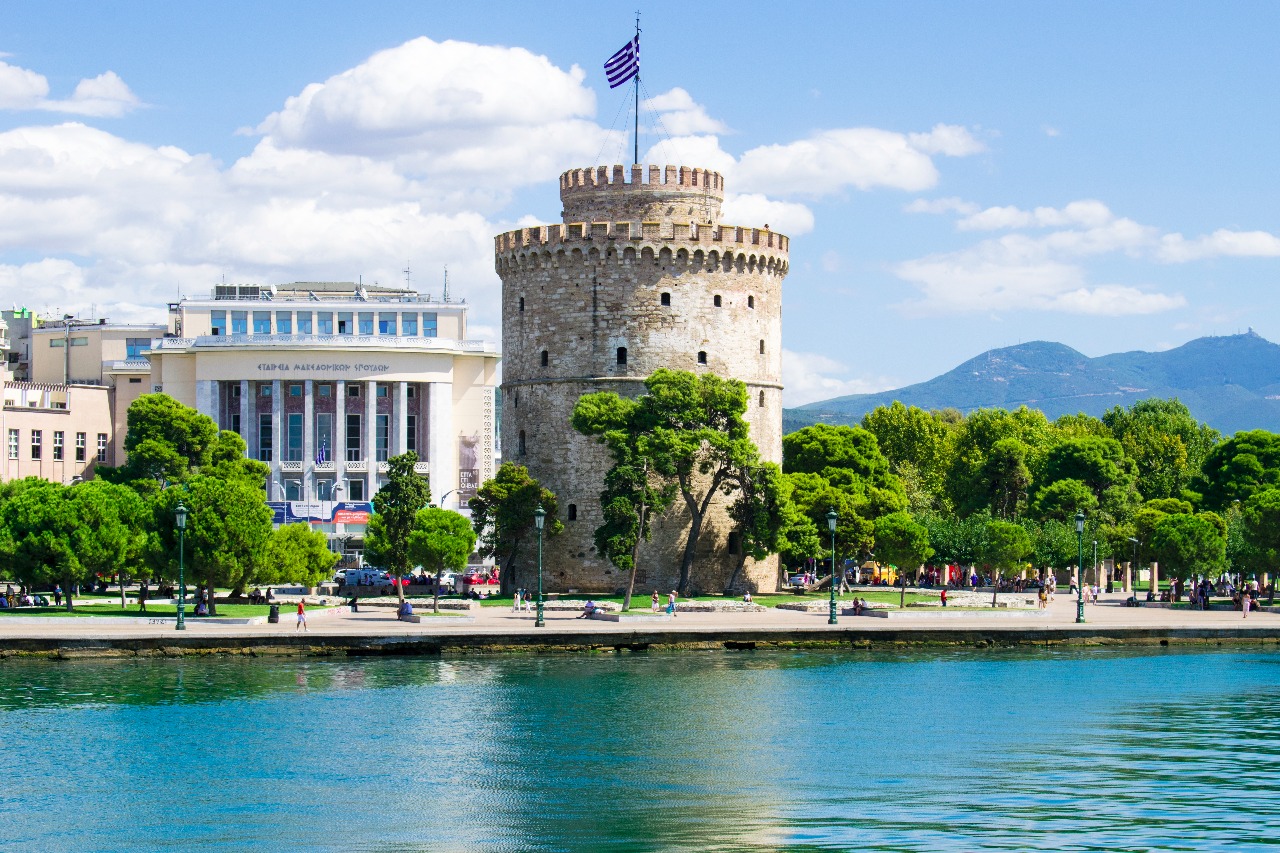
Thessaloniki (/ˌθɛsələˈniːki/; Greek: Θεσσαλονίκη [θesaloˈnici] ⓘ; also known by various spellings and names) is a city in northern Greece. The nation’s second-largest, with slightly over one million inhabitants in its metropolitan area, it is the capital of the geographic region of Macedonia, the administrative region of Central Macedonia and the Decentralized Administration of Macedonia and Thrace. It is also known in Greek as i Symprotévousa, literally "the co-capital", a reference to its historical status as the "co-reigning" city (Symvasilévousa) of the Byzantine Empire alongside Constantinople.
Thessaloniki is located on the Thermaic Gulf, at the northwest corner of the Aegean Sea. It is bounded on the west by the delta of the Axios. The municipality of Thessaloniki, the historical centre, had a population of 319,045 in 2021, while the Thessaloniki metropolitan area had 1,006,112 inhabitants and the greater region had 1,092,919. It is Greece's second major economic, industrial, commercial and political centre, and a major transportation hub for Greece and southeastern Europe, notably through the Port of Thessaloniki. The city is renowned for its festivals, events and vibrant cultural life in general. Events such as the Thessaloniki International Fair and the Thessaloniki International Film Festival are held annually. Thessaloniki was the 2014 European Youth Capital. The city's main university, Aristotle University, is the largest in Greece and the Balkans.
The city was founded in 315 BC by Cassander of Macedon, who named it after his wife Thessalonike, daughter of Philip II of Macedon and sister of Alexander the Great. It was built 40 km southeast of Pella, the capital of the Kingdom of Macedonia. An important metropolis by the Roman period, Thessaloniki was the second largest and wealthiest city of the Byzantine Empire. It was conquered by the Ottomans in 1430 and remained an important seaport and multi-ethnic metropolis during the nearly five centuries of Turkish rule, with churches, mosques, and synagogues co-existing side by side. From the 16th to the 20th century it was the only Jewish-majority city in Europe. It passed from the Ottoman Empire to the Kingdom of Greece on 8 November 1912. Thessaloniki exhibits Byzantine architecture, including numerous Paleochristian and Byzantine monuments, a World Heritage Site, and several Roman, Ottoman and Sephardic Jewish structures.
In 2013, National Geographic Magazine included Thessaloniki in its top tourist destinations worldwide, while in 2014 Financial Times FDI magazine (Foreign Direct Investments) declared Thessaloniki as the best mid-sized European city of the future for human capital and lifestyle.
The original name of the city was Θεσσαλονίκη Thessaloníkē. It was named after the princess Thessalonike of Macedon, the half-sister of Alexander the Great, whose name means "Thessalian victory", from Θεσσαλός Thessalos, and Νίκη 'victory' (Nike), honoring the Macedonian victory at the Battle of Crocus Field (353/352 BC).
Minor variants are also found, including Θετταλονίκη Thettaloníkē, Θεσσαλονίκεια Thessaloníkeia, Θεσσαλονείκη Thessaloneíkē, and Θεσσαλονικέων Thessalonikéon.
The name Σαλονίκη Saloníki is first attested in Greek in the Chronicle of the Morea (14th century), and is common in folk songs, but it must have originated earlier, as al-Idrisi called it Salunik already in the 12th century. It is the basis for the city's name in other languages: Солѹнъ (Solunŭ) in Old Church Slavonic, סאלוניקו (Saloniko) in Judeo-Spanish (שאלוניקי prior to the 19th century) סלוניקי (Saloniki) in Hebrew, Selanik in Albanian, سلانیك (Selânik) in Ottoman Turkish and Selanik in modern Turkish, Salonicco in Italian, Solun or Солун in the local and neighboring South Slavic languages, Салоники (Saloníki) in Russian, Sãrunã in Aromanian and Săruna in Megleno-Romanian.
In English, the city can be called Thessaloniki, Salonika, Thessalonica, Salonica, Thessalonika, Saloniki, Thessalonike, or Thessalonice. In printed texts, the most common name and spelling until the early 20th century was Thessalonica (/ˌθɛsələˈnaɪkə, ˌθɛsəˈlɒnɪkə/), matching the Latin name; through most of rest of the 20th century, it was Salonika (/səˈlɒnɪkə, ˌsæləˈniːkə/). By about 1985, the most common single name became Thessaloniki. The forms with the Latin ending -a taken together remain more common than those with the phonetic Greek ending -i and much more common than the ancient transliteration -e.
Hub AI
Thessaloniki AI simulator
(@Thessaloniki_simulator)
Thessaloniki
Thessaloniki (/ˌθɛsələˈniːki/; Greek: Θεσσαλονίκη [θesaloˈnici] ⓘ; also known by various spellings and names) is a city in northern Greece. The nation’s second-largest, with slightly over one million inhabitants in its metropolitan area, it is the capital of the geographic region of Macedonia, the administrative region of Central Macedonia and the Decentralized Administration of Macedonia and Thrace. It is also known in Greek as i Symprotévousa, literally "the co-capital", a reference to its historical status as the "co-reigning" city (Symvasilévousa) of the Byzantine Empire alongside Constantinople.
Thessaloniki is located on the Thermaic Gulf, at the northwest corner of the Aegean Sea. It is bounded on the west by the delta of the Axios. The municipality of Thessaloniki, the historical centre, had a population of 319,045 in 2021, while the Thessaloniki metropolitan area had 1,006,112 inhabitants and the greater region had 1,092,919. It is Greece's second major economic, industrial, commercial and political centre, and a major transportation hub for Greece and southeastern Europe, notably through the Port of Thessaloniki. The city is renowned for its festivals, events and vibrant cultural life in general. Events such as the Thessaloniki International Fair and the Thessaloniki International Film Festival are held annually. Thessaloniki was the 2014 European Youth Capital. The city's main university, Aristotle University, is the largest in Greece and the Balkans.
The city was founded in 315 BC by Cassander of Macedon, who named it after his wife Thessalonike, daughter of Philip II of Macedon and sister of Alexander the Great. It was built 40 km southeast of Pella, the capital of the Kingdom of Macedonia. An important metropolis by the Roman period, Thessaloniki was the second largest and wealthiest city of the Byzantine Empire. It was conquered by the Ottomans in 1430 and remained an important seaport and multi-ethnic metropolis during the nearly five centuries of Turkish rule, with churches, mosques, and synagogues co-existing side by side. From the 16th to the 20th century it was the only Jewish-majority city in Europe. It passed from the Ottoman Empire to the Kingdom of Greece on 8 November 1912. Thessaloniki exhibits Byzantine architecture, including numerous Paleochristian and Byzantine monuments, a World Heritage Site, and several Roman, Ottoman and Sephardic Jewish structures.
In 2013, National Geographic Magazine included Thessaloniki in its top tourist destinations worldwide, while in 2014 Financial Times FDI magazine (Foreign Direct Investments) declared Thessaloniki as the best mid-sized European city of the future for human capital and lifestyle.
The original name of the city was Θεσσαλονίκη Thessaloníkē. It was named after the princess Thessalonike of Macedon, the half-sister of Alexander the Great, whose name means "Thessalian victory", from Θεσσαλός Thessalos, and Νίκη 'victory' (Nike), honoring the Macedonian victory at the Battle of Crocus Field (353/352 BC).
Minor variants are also found, including Θετταλονίκη Thettaloníkē, Θεσσαλονίκεια Thessaloníkeia, Θεσσαλονείκη Thessaloneíkē, and Θεσσαλονικέων Thessalonikéon.
The name Σαλονίκη Saloníki is first attested in Greek in the Chronicle of the Morea (14th century), and is common in folk songs, but it must have originated earlier, as al-Idrisi called it Salunik already in the 12th century. It is the basis for the city's name in other languages: Солѹнъ (Solunŭ) in Old Church Slavonic, סאלוניקו (Saloniko) in Judeo-Spanish (שאלוניקי prior to the 19th century) סלוניקי (Saloniki) in Hebrew, Selanik in Albanian, سلانیك (Selânik) in Ottoman Turkish and Selanik in modern Turkish, Salonicco in Italian, Solun or Солун in the local and neighboring South Slavic languages, Салоники (Saloníki) in Russian, Sãrunã in Aromanian and Săruna in Megleno-Romanian.
In English, the city can be called Thessaloniki, Salonika, Thessalonica, Salonica, Thessalonika, Saloniki, Thessalonike, or Thessalonice. In printed texts, the most common name and spelling until the early 20th century was Thessalonica (/ˌθɛsələˈnaɪkə, ˌθɛsəˈlɒnɪkə/), matching the Latin name; through most of rest of the 20th century, it was Salonika (/səˈlɒnɪkə, ˌsæləˈniːkə/). By about 1985, the most common single name became Thessaloniki. The forms with the Latin ending -a taken together remain more common than those with the phonetic Greek ending -i and much more common than the ancient transliteration -e.
Recent media