
Recent from talks
Johnstown, Ontario
Knowledge base stats:
Talk channels stats:
Members stats:
Johnstown, Ontario
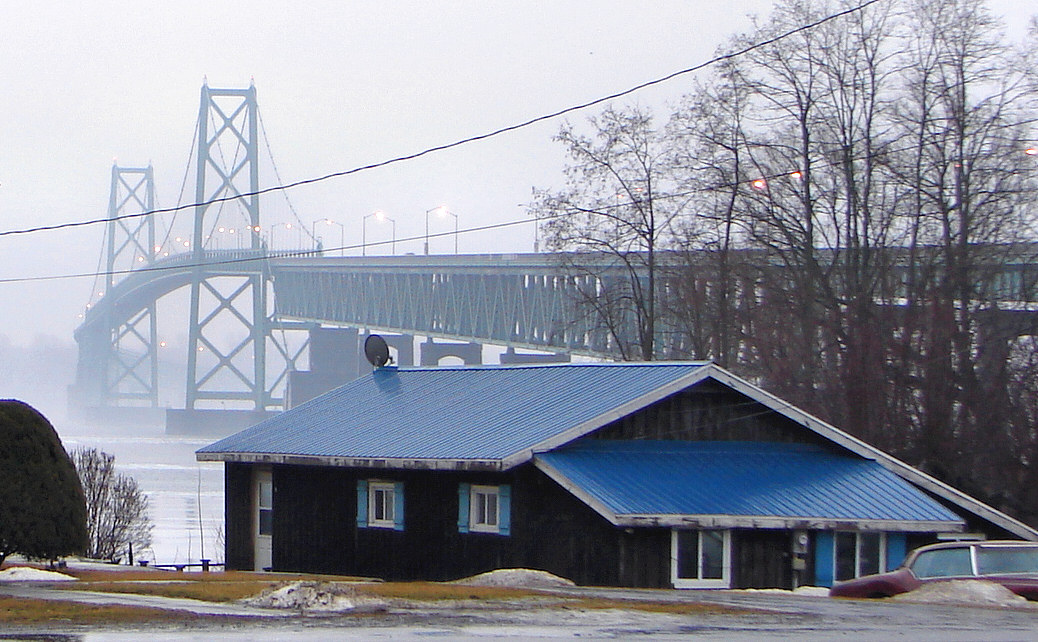
Johnstown is a compact rural community in the United Counties of Leeds and Grenville, in eastern Ontario, Canada, part of the township municipality of Edwardsburgh/Cardinal. It is at the Canadian terminus of the Ogdensburg–Prescott International Bridge and at the southern termini of Highway 416 and Highway 16.
Prior to the arrival of Europeans, Johnstown and the surrounding area had been sporadically occupied by various Indigenous cultures for many centuries. Evidence of their presence such as clay utensils and arrowheads have been found throughout the township. No physical evidence of significant Native American settlements, such as longhouses, have been discovered within the hamlet itself, however the hamlet was apparently frequented by Natives. According to the Edwardsburgh Centennial Committee, who compiled a history of the township in 1967, Johnstown was used by Native Americans as a stopover place due to its location. Before the construction of dams and later the Saint Lawrence Seaway, Johnstown was fronted by calm section of the St. Lawrence River located between two rapids. This would have made the land of present-day Johnstown a convenient place for those travelling on the river to rest. When the French arrived in the 1600s they were met by the Native Americans at Johnstown, who were essentially responsible for inspiring the French to settle here.
The first regular land occupancy began in 1673 when French settlers, along with the allied Natives, built a fortified storehouse in present-day Johnstown, then called La Veille Gallette. The storehouse was situated on the shores of Old Breeches River, now called Johnstown Creek, and was used to hold supplies headed upriver to fur trading posts such as Fort Frontenac (Now, Kingston). It was in use until 1758.
In 1760, the French constructed a fort near Johnstown called Fort de Lévis. The fort was located on Chimney Island (Formerly known as Isle Royale) in the St. Lawrence River just off of the shores of Grenville Park. It was built in preparation for a British attack as an attempt to block their advance down river. The original design, created by and named after Francis de Gaston, Chevalier de Levis, intended for the fort to be built with stone walls, have 200 guns, and house 2,500 troops. Instead, the fort was built much smaller and of wood, with five cannon and about 300 soldiers. In the same year it was built, the fort was captured by the British during the Battle of the Thousand Islands. After a week-long standoff, the 11,000 British troops led by Jeffery Amherst succeeded in taking the fort from the few hundred French. The French troops managed to significantly delay the British arrival to Montreal, and succeeded in sinking two ships as well as crippling a third. The number of British casualties was 26 dead and 47 wounded, while the French saw 275 of their 300 troops killed or wounded. The British renamed the captured fort Fort William Augustus.
During and after the American Revolutionary War, those in opposition to American independence were dubbed Loyalists, and ultimately became refugees when their opposition was met with violence. Thousands were displaced who then fled to Canada, relying on the British Crown for a solution. As part of a resolution, townships were surveyed in the 1780s along the St. Lawrence River in present-day Leeds and Grenville, which included the township of Edwardsburgh/Cardinal. By 1784, 166 Loyalists were residing in the township and until 1790 the landing point and base camp for these settlers was at Johnstown. Loyalists intended to turn the base camp into a new townsite.
In 1788, plans for a town site were drawn up with a plot of 1.0 square mile (2.6 km2). The plan was created by the government Land Committee with strict regulations in regards to the layout of houses and streets. By 1789, a number of Loyalist men were placed in charge of selecting the location of the town site, at that time called simply "New Town". The agreed upon site was that of present-day Johnstown. The name Johnstown was selected in 1790 after a pastor suggested they name the town after Sir William Johnson.
In 1792 John Graves Simcoe, the first Lieutenant Governor of Upper Canada, established himself in Johnstown which then became the district’s administrative seat or "capital". This led to the court of quarter sessions (the district's government) alternating its meeting location between Johnstown and Cornwall, and to the construction of a courthouse and gaol. The courthouse was a log structure, which stood near the present site of the Ogdensburg-Prescott International Bridge. By the late 1790s, the village was also home to a sawmill, gristmill, and an inn and tavern. Census records indicate by 1807, there were 36 houses and a general store.
In 1808, the seat of justice was moved to Elizabethtown (now Brockville), as it was a more central location in the district. The move and village's shallow harbour prevented the village from ever reaching its expected potential.
Hub AI
Johnstown, Ontario AI simulator
(@Johnstown, Ontario_simulator)
Johnstown, Ontario
Johnstown is a compact rural community in the United Counties of Leeds and Grenville, in eastern Ontario, Canada, part of the township municipality of Edwardsburgh/Cardinal. It is at the Canadian terminus of the Ogdensburg–Prescott International Bridge and at the southern termini of Highway 416 and Highway 16.
Prior to the arrival of Europeans, Johnstown and the surrounding area had been sporadically occupied by various Indigenous cultures for many centuries. Evidence of their presence such as clay utensils and arrowheads have been found throughout the township. No physical evidence of significant Native American settlements, such as longhouses, have been discovered within the hamlet itself, however the hamlet was apparently frequented by Natives. According to the Edwardsburgh Centennial Committee, who compiled a history of the township in 1967, Johnstown was used by Native Americans as a stopover place due to its location. Before the construction of dams and later the Saint Lawrence Seaway, Johnstown was fronted by calm section of the St. Lawrence River located between two rapids. This would have made the land of present-day Johnstown a convenient place for those travelling on the river to rest. When the French arrived in the 1600s they were met by the Native Americans at Johnstown, who were essentially responsible for inspiring the French to settle here.
The first regular land occupancy began in 1673 when French settlers, along with the allied Natives, built a fortified storehouse in present-day Johnstown, then called La Veille Gallette. The storehouse was situated on the shores of Old Breeches River, now called Johnstown Creek, and was used to hold supplies headed upriver to fur trading posts such as Fort Frontenac (Now, Kingston). It was in use until 1758.
In 1760, the French constructed a fort near Johnstown called Fort de Lévis. The fort was located on Chimney Island (Formerly known as Isle Royale) in the St. Lawrence River just off of the shores of Grenville Park. It was built in preparation for a British attack as an attempt to block their advance down river. The original design, created by and named after Francis de Gaston, Chevalier de Levis, intended for the fort to be built with stone walls, have 200 guns, and house 2,500 troops. Instead, the fort was built much smaller and of wood, with five cannon and about 300 soldiers. In the same year it was built, the fort was captured by the British during the Battle of the Thousand Islands. After a week-long standoff, the 11,000 British troops led by Jeffery Amherst succeeded in taking the fort from the few hundred French. The French troops managed to significantly delay the British arrival to Montreal, and succeeded in sinking two ships as well as crippling a third. The number of British casualties was 26 dead and 47 wounded, while the French saw 275 of their 300 troops killed or wounded. The British renamed the captured fort Fort William Augustus.
During and after the American Revolutionary War, those in opposition to American independence were dubbed Loyalists, and ultimately became refugees when their opposition was met with violence. Thousands were displaced who then fled to Canada, relying on the British Crown for a solution. As part of a resolution, townships were surveyed in the 1780s along the St. Lawrence River in present-day Leeds and Grenville, which included the township of Edwardsburgh/Cardinal. By 1784, 166 Loyalists were residing in the township and until 1790 the landing point and base camp for these settlers was at Johnstown. Loyalists intended to turn the base camp into a new townsite.
In 1788, plans for a town site were drawn up with a plot of 1.0 square mile (2.6 km2). The plan was created by the government Land Committee with strict regulations in regards to the layout of houses and streets. By 1789, a number of Loyalist men were placed in charge of selecting the location of the town site, at that time called simply "New Town". The agreed upon site was that of present-day Johnstown. The name Johnstown was selected in 1790 after a pastor suggested they name the town after Sir William Johnson.
In 1792 John Graves Simcoe, the first Lieutenant Governor of Upper Canada, established himself in Johnstown which then became the district’s administrative seat or "capital". This led to the court of quarter sessions (the district's government) alternating its meeting location between Johnstown and Cornwall, and to the construction of a courthouse and gaol. The courthouse was a log structure, which stood near the present site of the Ogdensburg-Prescott International Bridge. By the late 1790s, the village was also home to a sawmill, gristmill, and an inn and tavern. Census records indicate by 1807, there were 36 houses and a general store.
In 1808, the seat of justice was moved to Elizabethtown (now Brockville), as it was a more central location in the district. The move and village's shallow harbour prevented the village from ever reaching its expected potential.
Recent media