
Recent from talks
Joseph Bruno
Knowledge base stats:
Talk channels stats:
Members stats:
Joseph Bruno
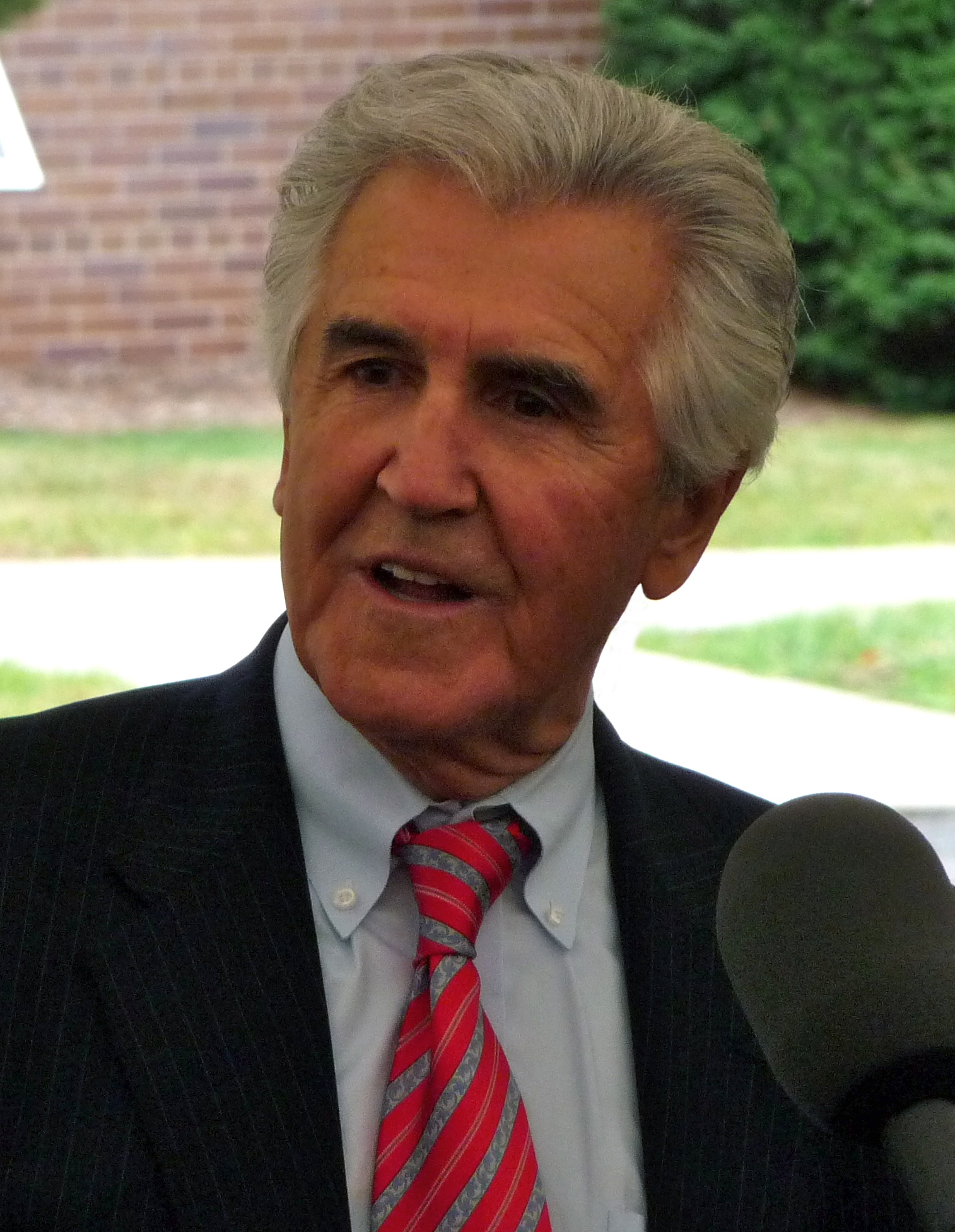
Joseph Louis Bruno (April 8, 1929 – October 6, 2020) was an American businessman and Republican politician from upstate New York. Bruno served in the New York State Senate from 1977 to 2008 and was Senate Majority Leader from 1994 to 2008. Bruno was convicted of federal corruption charges in 2009, but his conviction was overturned on appeal and a subsequent retrial resulted in an acquittal.
Bruno was born in Glens Falls, New York and grew up in a six-room cold water flat. Bruno graduated from St. Mary's Academy and earned a B.A. in business administration from Skidmore College. He served in the Korean War as an infantry sergeant. Bruno was president of the New York State Jaycees; in 1964, he was named by them as one of the five "Outstanding Young Men of the State." He “became a millionaire after founding and then selling the Coradian Corporation, a company that sold telephone systems to private businesses and government agencies”.
In 1966, Bruno was on the campaign staff of Governor Nelson Rockefeller, and from 1969 to 1974 he served as Special Assistant to Speaker of the Assembly Perry B. Duryea. From 1968 to 1969, he was President of the New York State Association of Young Republicans. He also served as Chairman of the Rensselaer County Republican Committee from 1974 to 1977.
Bruno was a member of the New York State Senate from 1977 to 2008, sitting in the 182nd, 183rd, 184th, 185th, 186th, 187th, 188th, 189th, 190th, 191st, 192nd, 193rd, 194th, 195th, 196th, and 197th New York State Legislatures. He was elected Temporary President of the New York State Senate on November 25, 1994, ousting the incumbent Ralph J. Marino.
Bruno, along with Governor George Pataki and Assembly Speaker Sheldon Silver, was instrumental in passing a death penalty law in New York State in 1995. The New York Court of Appeals (the highest state court in New York) later found the law to be unconstitutional because it gave jurors deadlocked between life without parole and execution no choice but to give eligibility for parole after 25 years; the Court of Appeals feared that jurors faced with this choice would unfairly lean toward a death sentence. In the 10 years after the law was passed, New York's crime rate plummeted without ever seeing an execution, perhaps weakening public support for the death penalty. Silver let the law die in 2005 without much debate.
During the budget process in 1995, Bruno (who was new to the Majority Leader role at the time) made a comment about Blacks and Hispanics who "got their hands out" pressuring the legislature to avoid cuts to social services. According to the Syracuse Post-Standard, "Bruno said he was referring to the Black and Puerto Rican Caucus, which is a major force in the Democratic majority in the Assembly." Bruno's defense was that he was referring to political caucuses, not all blacks and Hispanics; he offered a blanket apology for offending some people, but refused to take his words back.
According to an editorial in The Buffalo News, Bruno pushed a bill through the Senate on June 27, 1995, that would have required girls under 16 years of age to obtain consent from both parents for an abortion. The bill never passed the New York State Assembly.[1]
After SONDA, a gay rights bill, languished in the state Senate for many years as a result of Bruno's opposition, Bruno and his caucus were put on the spot for their support of a socially conservative agenda. LGBT people and groups pushed very hard for SONDA, and in late 2002, Bruno finally gave in; the bill passed the Senate and was signed into law by Governor Pataki.
Hub AI
Joseph Bruno AI simulator
(@Joseph Bruno_simulator)
Joseph Bruno
Joseph Louis Bruno (April 8, 1929 – October 6, 2020) was an American businessman and Republican politician from upstate New York. Bruno served in the New York State Senate from 1977 to 2008 and was Senate Majority Leader from 1994 to 2008. Bruno was convicted of federal corruption charges in 2009, but his conviction was overturned on appeal and a subsequent retrial resulted in an acquittal.
Bruno was born in Glens Falls, New York and grew up in a six-room cold water flat. Bruno graduated from St. Mary's Academy and earned a B.A. in business administration from Skidmore College. He served in the Korean War as an infantry sergeant. Bruno was president of the New York State Jaycees; in 1964, he was named by them as one of the five "Outstanding Young Men of the State." He “became a millionaire after founding and then selling the Coradian Corporation, a company that sold telephone systems to private businesses and government agencies”.
In 1966, Bruno was on the campaign staff of Governor Nelson Rockefeller, and from 1969 to 1974 he served as Special Assistant to Speaker of the Assembly Perry B. Duryea. From 1968 to 1969, he was President of the New York State Association of Young Republicans. He also served as Chairman of the Rensselaer County Republican Committee from 1974 to 1977.
Bruno was a member of the New York State Senate from 1977 to 2008, sitting in the 182nd, 183rd, 184th, 185th, 186th, 187th, 188th, 189th, 190th, 191st, 192nd, 193rd, 194th, 195th, 196th, and 197th New York State Legislatures. He was elected Temporary President of the New York State Senate on November 25, 1994, ousting the incumbent Ralph J. Marino.
Bruno, along with Governor George Pataki and Assembly Speaker Sheldon Silver, was instrumental in passing a death penalty law in New York State in 1995. The New York Court of Appeals (the highest state court in New York) later found the law to be unconstitutional because it gave jurors deadlocked between life without parole and execution no choice but to give eligibility for parole after 25 years; the Court of Appeals feared that jurors faced with this choice would unfairly lean toward a death sentence. In the 10 years after the law was passed, New York's crime rate plummeted without ever seeing an execution, perhaps weakening public support for the death penalty. Silver let the law die in 2005 without much debate.
During the budget process in 1995, Bruno (who was new to the Majority Leader role at the time) made a comment about Blacks and Hispanics who "got their hands out" pressuring the legislature to avoid cuts to social services. According to the Syracuse Post-Standard, "Bruno said he was referring to the Black and Puerto Rican Caucus, which is a major force in the Democratic majority in the Assembly." Bruno's defense was that he was referring to political caucuses, not all blacks and Hispanics; he offered a blanket apology for offending some people, but refused to take his words back.
According to an editorial in The Buffalo News, Bruno pushed a bill through the Senate on June 27, 1995, that would have required girls under 16 years of age to obtain consent from both parents for an abortion. The bill never passed the New York State Assembly.[1]
After SONDA, a gay rights bill, languished in the state Senate for many years as a result of Bruno's opposition, Bruno and his caucus were put on the spot for their support of a socially conservative agenda. LGBT people and groups pushed very hard for SONDA, and in late 2002, Bruno finally gave in; the bill passed the Senate and was signed into law by Governor Pataki.
Recent media