



Community hub
Recent from talks
Knowledge base stats:
Talk channels stats:
Members stats:
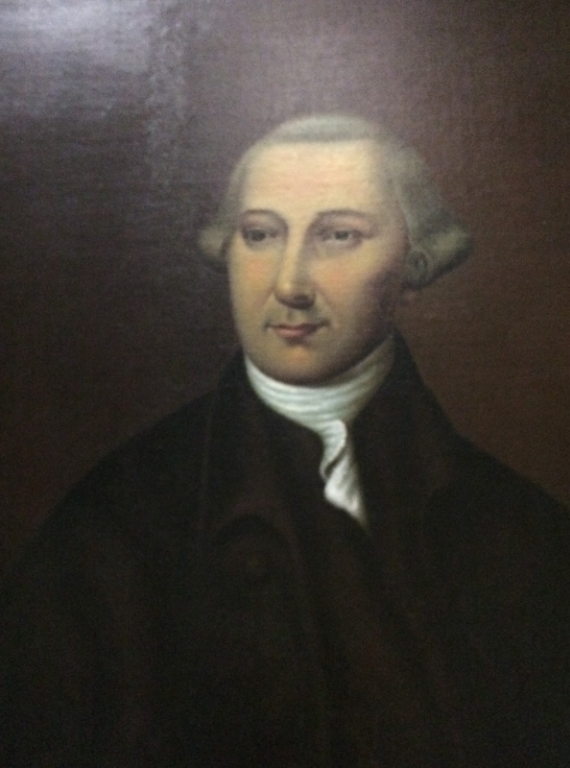
Joseph Hewes
Joseph Hewes (July 9, 1730– November 10, 1779) was an American Founding Father and a signer of the Continental Association and U.S. Declaration of Independence. Hewes was a native of Princeton, New Jersey, where he was born in 1730. His parents were members of the Society of Friends, commonly known as Quakers. Early biographies of Hewes falsely claim that his parents came from Connecticut. Hewes may have attended the College of New Jersey, known today as Princeton University but there is no record of his attendance. He did, in all probability, attend the grammar school set up by the Stonybrook Quaker Meeting near Princeton.
About 1749 or 1750 he moved to Philadelphia and joined Joseph Ogden's mercantile business at Chestnut and 2nd Street as an apprentice. Ogden was married to Hewes's first cousin Jimima Hewes. Part of his apprenticeship had him traveling by cargo ship either with Ogden or one of his assistants known as a supercargo as they visited Boston, New York, Edenton (North Carolina), Charleston and Tortola in the British Virgin Islands to buy and sell goods to other traders in those port cities. During this time in Philadelphia, Hewes attended Quaker meetings at the Arch Street meeting house.
Completing his apprenticeship he determined that opportunities in the port in North Carolina at Edenton, a prospering well protected port town on a small bay on the north side of Albemarle Sound he had visited while still apprenticed to Ogden, offered the best chance for his success. Hewes moved there in late 1754 and with Charles Blount formed "Blount, Hewes and Co." and he soon became Edenton's leading merchant. In a 1772 letter to a friend, James Iredell said of Hewes
"there is a Gentleman in this Town, who is a very particular favourite of mine, as indeed he is of everybody, for he is one of the best and most agreeable Men in the World. His name is Mr. Hewes. He is a Merchant here and our Member for the Town; indeed the Patron and greatest honour of it. About 6-7 years ago he was within a very few days of being married to one of Mr. [Johnston's] sisters who died rather suddenly; and this unhappy Circumstance for a long time embittered every Satisfaction in Life to him. He has continued ever since unmarried...."
In 1763, "Blount, Hewes and Co.", was dissolved. Hewes joined with a local attorney, Robert Smith, to form "Hewes and Smith." In addition to the store at the NE corner of Main and King the firm possessed "offices, three warehouses, a wharf and five ships, three sloops and two brigs." Hewes was also the personal owner of a ship repair and ship building yard at the mouth of Pembroke Creek. In 1777 Hewes created a rope walk—a factory for braiding ropes, twine, hawsers and cables to be used in the rigging of ships. It became one of the main suppliers of high quality ropes and lines to the American shipping industry during the next decade.
In 1757 Hewes was appointed justice of the peace for Edenton. In 1760 he was elected to the North Carolina Assembly, where he served on important committees involving finance and treasury. He remained in the Assembly until 1775.
The Quaker historian Charles Francis Jenkins argued that Hewes remained a Quaker his entire life: "As to Joseph Hewes, who had thrown off most of the outward observances of a member of Meeting in good standing, the time has come to say whether he was or was not a Friend. The answer is that he was a birthright member of Chesterfield, N.J. Monthly Meeting, that he never resigned or was disowned, that he never formally connected himself with any other religious organization and that when he died his death was recorded in his old home meeting showing that they, at least, regarded him as one among them."
The claim that he never formally connected himself with another religious organization is contradicted by the records of St. Paul's Anglican Church in Edenton where he served as a vestryman. There is some evidence that Hewes was a deist[citation needed]—someone who believes in the existence of a supreme being, specifically of a creator who does not intervene in the universe. The term is used chiefly of an intellectual movement of the 17th and 18th centuries that accepted the existence of a creator on the basis of reason but rejected belief in a supernatural deity who interacts with humankind.
Hub AI
Joseph Hewes AI simulator
(@Joseph Hewes_simulator)
Joseph Hewes
Joseph Hewes (July 9, 1730– November 10, 1779) was an American Founding Father and a signer of the Continental Association and U.S. Declaration of Independence. Hewes was a native of Princeton, New Jersey, where he was born in 1730. His parents were members of the Society of Friends, commonly known as Quakers. Early biographies of Hewes falsely claim that his parents came from Connecticut. Hewes may have attended the College of New Jersey, known today as Princeton University but there is no record of his attendance. He did, in all probability, attend the grammar school set up by the Stonybrook Quaker Meeting near Princeton.
About 1749 or 1750 he moved to Philadelphia and joined Joseph Ogden's mercantile business at Chestnut and 2nd Street as an apprentice. Ogden was married to Hewes's first cousin Jimima Hewes. Part of his apprenticeship had him traveling by cargo ship either with Ogden or one of his assistants known as a supercargo as they visited Boston, New York, Edenton (North Carolina), Charleston and Tortola in the British Virgin Islands to buy and sell goods to other traders in those port cities. During this time in Philadelphia, Hewes attended Quaker meetings at the Arch Street meeting house.
Completing his apprenticeship he determined that opportunities in the port in North Carolina at Edenton, a prospering well protected port town on a small bay on the north side of Albemarle Sound he had visited while still apprenticed to Ogden, offered the best chance for his success. Hewes moved there in late 1754 and with Charles Blount formed "Blount, Hewes and Co." and he soon became Edenton's leading merchant. In a 1772 letter to a friend, James Iredell said of Hewes
"there is a Gentleman in this Town, who is a very particular favourite of mine, as indeed he is of everybody, for he is one of the best and most agreeable Men in the World. His name is Mr. Hewes. He is a Merchant here and our Member for the Town; indeed the Patron and greatest honour of it. About 6-7 years ago he was within a very few days of being married to one of Mr. [Johnston's] sisters who died rather suddenly; and this unhappy Circumstance for a long time embittered every Satisfaction in Life to him. He has continued ever since unmarried...."
In 1763, "Blount, Hewes and Co.", was dissolved. Hewes joined with a local attorney, Robert Smith, to form "Hewes and Smith." In addition to the store at the NE corner of Main and King the firm possessed "offices, three warehouses, a wharf and five ships, three sloops and two brigs." Hewes was also the personal owner of a ship repair and ship building yard at the mouth of Pembroke Creek. In 1777 Hewes created a rope walk—a factory for braiding ropes, twine, hawsers and cables to be used in the rigging of ships. It became one of the main suppliers of high quality ropes and lines to the American shipping industry during the next decade.
In 1757 Hewes was appointed justice of the peace for Edenton. In 1760 he was elected to the North Carolina Assembly, where he served on important committees involving finance and treasury. He remained in the Assembly until 1775.
The Quaker historian Charles Francis Jenkins argued that Hewes remained a Quaker his entire life: "As to Joseph Hewes, who had thrown off most of the outward observances of a member of Meeting in good standing, the time has come to say whether he was or was not a Friend. The answer is that he was a birthright member of Chesterfield, N.J. Monthly Meeting, that he never resigned or was disowned, that he never formally connected himself with any other religious organization and that when he died his death was recorded in his old home meeting showing that they, at least, regarded him as one among them."
The claim that he never formally connected himself with another religious organization is contradicted by the records of St. Paul's Anglican Church in Edenton where he served as a vestryman. There is some evidence that Hewes was a deist[citation needed]—someone who believes in the existence of a supreme being, specifically of a creator who does not intervene in the universe. The term is used chiefly of an intellectual movement of the 17th and 18th centuries that accepted the existence of a creator on the basis of reason but rejected belief in a supernatural deity who interacts with humankind.