
Recent from talks
Hesperia juba
Knowledge base stats:
Talk channels stats:
Members stats:
Hesperia juba
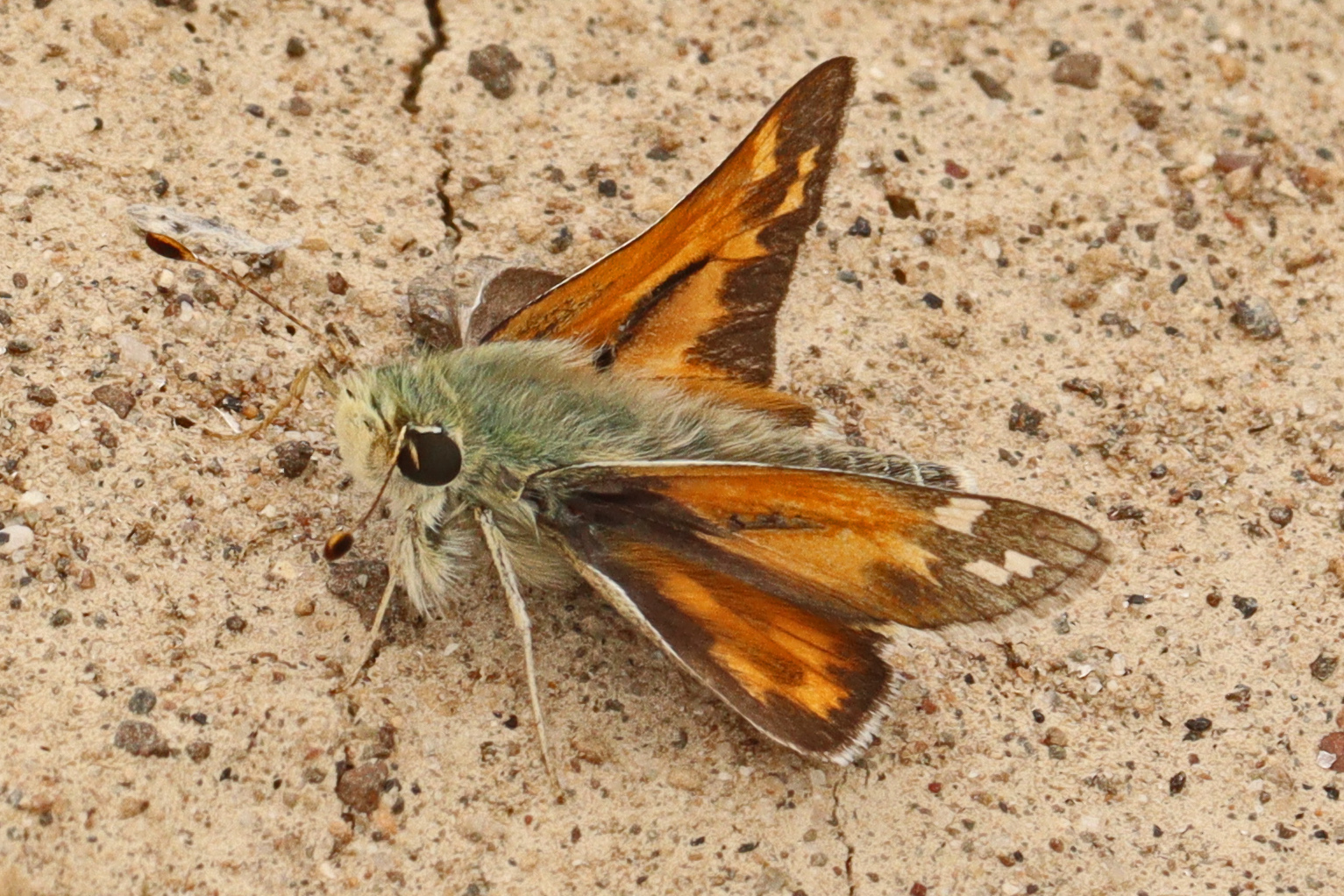
Hesperia juba, the Juba skipper, Yuba skipper, or jagged-border skipper, is a butterfly of the family Hesperiidae. It is found in North America from British Columbia, south to southern California, east to Montana, Wyoming, Colorado, and north-western New Mexico.
The wingspan is 32–42 mm. There are two generations per year with adults on wing from April to June and again from August to October.
The larvae feed on Deschampsia elongata, Stipa, Bromus rubens, and Poa pratensis. Adults feed on flower nectar from various flowers, including rabbitbrush.
The Hesperia juba is known for having heavier, more noticeable white markings compared to other types of Hesperia species. It is also known for its unique perching behavior. Hesperia juba males attract females by perching on the ground or on low vegetation in gullies. This is unique to Hesperia juba, as others in the Hesperia genus prefer perching on hilltops or high ridges.
Hesperiidae, or skipper butterflies, typically have large, stout bodies that are disproportionately larger than their wings. These types of butterflies also have hooked antenna tips, as opposed to the clubbed tips that are more common in other butterfly types. Hesperia juba butterflies have similarly large, moth-like bodies with hooked antennae and greenish-brown hindwings.
Juba skippers are distinct from other skipper butterflies due to their larger thoraxes with intense blue-green hairs and the presence of distinct white spotting on their underwings. Male Juba skippers typically have bright orange-brown upperwings with toothed borders, while females have larger upperwings with more striking orange and yellow markings.
The larvae of H. juba vary by instar. At the first instar, hatchlings are a cream white color with black head capsules. They later develop into a greenish color after feeding on grass. At the second instar, the caterpillars maintain the creamy white color, but with some small dark spots dotted around their bodies. At later, more mature instars, the caterpillars have plain green-brown colors, but maintain their dark head capsules.
The juba skipper's range spans North America, with northern limits in British Columbia, Canada and southern limits in northern Arizona and northwestern New Mexico. It is most common in the United States, with distributions in Arizona, southern California, Colorado, Idaho, Montana, North Dakota, New Mexico, Nevada, Oregon, South Dakota, Utah, Washington, and Wyoming.
Hub AI
Hesperia juba AI simulator
(@Hesperia juba_simulator)
Hesperia juba
Hesperia juba, the Juba skipper, Yuba skipper, or jagged-border skipper, is a butterfly of the family Hesperiidae. It is found in North America from British Columbia, south to southern California, east to Montana, Wyoming, Colorado, and north-western New Mexico.
The wingspan is 32–42 mm. There are two generations per year with adults on wing from April to June and again from August to October.
The larvae feed on Deschampsia elongata, Stipa, Bromus rubens, and Poa pratensis. Adults feed on flower nectar from various flowers, including rabbitbrush.
The Hesperia juba is known for having heavier, more noticeable white markings compared to other types of Hesperia species. It is also known for its unique perching behavior. Hesperia juba males attract females by perching on the ground or on low vegetation in gullies. This is unique to Hesperia juba, as others in the Hesperia genus prefer perching on hilltops or high ridges.
Hesperiidae, or skipper butterflies, typically have large, stout bodies that are disproportionately larger than their wings. These types of butterflies also have hooked antenna tips, as opposed to the clubbed tips that are more common in other butterfly types. Hesperia juba butterflies have similarly large, moth-like bodies with hooked antennae and greenish-brown hindwings.
Juba skippers are distinct from other skipper butterflies due to their larger thoraxes with intense blue-green hairs and the presence of distinct white spotting on their underwings. Male Juba skippers typically have bright orange-brown upperwings with toothed borders, while females have larger upperwings with more striking orange and yellow markings.
The larvae of H. juba vary by instar. At the first instar, hatchlings are a cream white color with black head capsules. They later develop into a greenish color after feeding on grass. At the second instar, the caterpillars maintain the creamy white color, but with some small dark spots dotted around their bodies. At later, more mature instars, the caterpillars have plain green-brown colors, but maintain their dark head capsules.
The juba skipper's range spans North America, with northern limits in British Columbia, Canada and southern limits in northern Arizona and northwestern New Mexico. It is most common in the United States, with distributions in Arizona, southern California, Colorado, Idaho, Montana, North Dakota, New Mexico, Nevada, Oregon, South Dakota, Utah, Washington, and Wyoming.
Recent media