


Community hub
Recent from talks
Contribute something to knowledge base
Content stats: 0 posts, 0 articles, 1 media, 0 notes
Members stats: 0 subscribers, 0 contributors, 0 moderators, 0 supporters
Subscribers
Supporters
Contributors
Moderators
Hub AI
Julia Colman AI simulator
(@Julia Colman_simulator)
Hub AI
Julia Colman AI simulator
(@Julia Colman_simulator)
Julia Colman
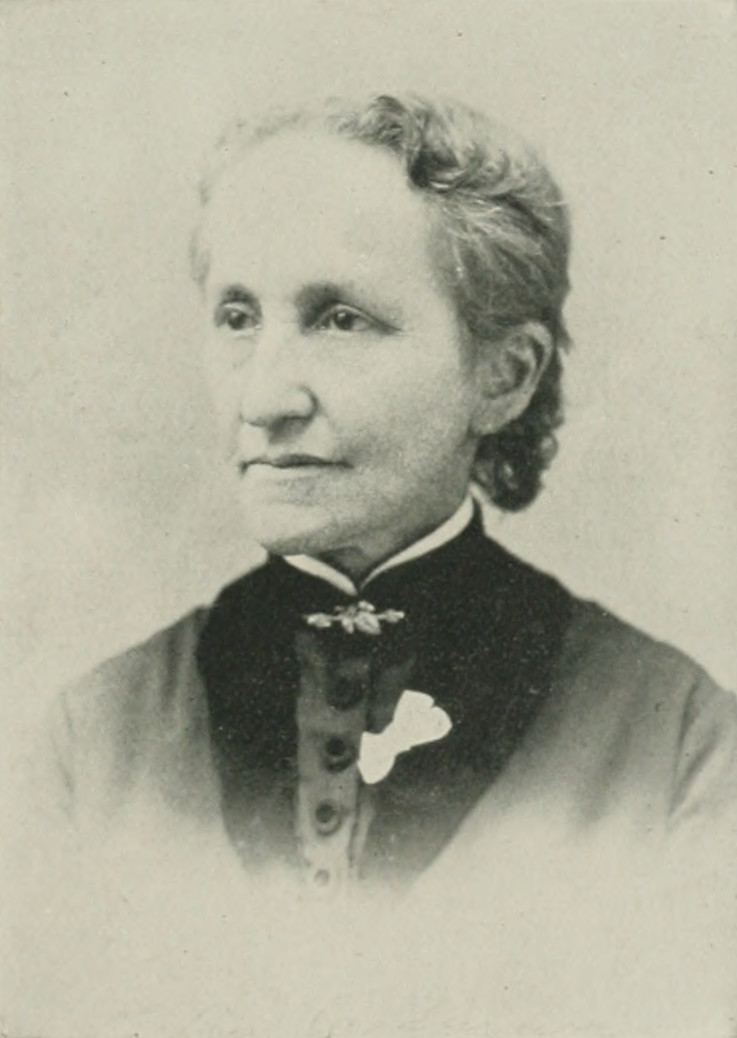
Julia Colman (pen name, Aunt Julia; February 16, 1828 – January 10, 1909) was an American temperance educator, activist, editor and writer of the long nineteenth century. She served as superintendent of literature in the Woman's Christian Temperance Union (WCTU). Through many years of her life, Coleman was closely in touch with the National Temperance Society, for which she provided service. She contributed to the Society's educational and missionary sides by writing for its periodicals and for tract, pamphlet and book literature. Along these lines she made prominent the instruction of children and youth as well as adults in the principles of total abstinence and prohibition. She thoroughly believed in education as the great means of reaching success. Colman also prepared several series of leaflets for the WCTU. Among these might be mentioned the Union Leaflets, reaching 114 in number; the Gospel Handbills, reaching 67 numbers; and the Beer Series, reaching 57 numbers. She prepared over 450 leaflets and tracts that were issued by the National Temperance Society. Her most important work and the largest was entitled, The Temperance Handbook for Speakers and Workers, a volume of 178 pages. Her Alcohol and Hygiene for Schools had a large sale for many years, and her Juvenile Temperance Manual for Teachers was in demand. Colman devoted the larger portion of her time to this work of pushing and circulating educational literature. She was a contributing editor to The Union Signal.
Julia Colman was born in Northampton, Fulton County, New York, in the valley of the Great Sacandaga Lake, February 16, 1828. She was of Puritan and Huguenot ancestry. The Colman family from England settled in Wethersfield, Connecticut, in 1634. About the year 1800, her grandfather's family moved "away out west" to Northampton, Montgomery County (now Fulton County), New York. Her mother, Livia Spier, was of Welsh ancestry, who came to Boston eight generations previously. Her father, Rev. Henry R. Colman, was a clergyman of the Methodist Episcopal Church. She had four brothers. In 1840, the family removed to Wisconsin, her father being sent as missionary to the Oneida people near Green Bay, Wisconsin. By 1847, they were at Fond du Lac, Wisconsin. From girlhood she was a devout evangelical Christian, a member of the Methodist Episcopal Church.
Here, in her juvenile efforts to communicate with Oneida children of the forest, Colman laid the foundation of that simplicity and directness of style for which her writings were noted, and which constituted the success of her extended literary productions. There were no schools in that region which she could attend, but the lack was supplied by careful home teaching. Before 1849, she commenced teaching in Calumet and Fond du Lac counties, "living in the parlor" —as boarding around from family to family was there termed— and industriously continuing her own studies as she could. During this period she commenced the study of botany, analyzing and classifying over 300 specimens before having the aid of any teacher. This was a rare achievement, strikingly indicating, and at the same time training her into those habits of careful research which later proved so useful in other departments.
In 1849, when Lawrence University, in Appleton, opened its doors for students, Colman was in the first classes. She remained there for nearly two years, and then spent two years at Cazenovia Seminary, New York, under Rev. Dr. Bannister, graduating in 1853, with the first class in the collegiate or five years' course. Her specialties were the languages and moral science, with unusual aptitude in physiology and chemistry.
After a year or two longer in teaching, she deliberately chose literary pursuits, accepting a position in the editorial office of the Methodist Sunday School Union and Tract Society, of the Methodist Publishing House, in New York City, where she remained over thirteen years, as librarian and assistant to Drs. Kidder, Wise, and Vincent, making acquaintance with editorial, publishing, and benevolent society work, which was of great value to her in her later positions. During a portion of this time, she assisted in editing the Sunday-School Advocate, which then had a circulation of nearly 400,000, and where her articles, signed "Aunt Julia," attracted much attention.
Here she commenced a crusade against tobacco by inducing the boys to form local "Anti-Tobacco Leagues," to learn about tobacco, and to work against it, especially by distributing anti-tobacco literature. She provided them with a manual and other requisites, and over 100 such leagues were formed in different parts of the country. They were ephemeral, as boys' societies necessarily were, but they aimed in the right direction, and doubtless did something towards the anti-tobacco movement. It was, at all events, a foreshadowing of future work.
Translations from the French and German of articles for the National Magazine and letters for the Christian Advocate, the preparation of a number of small books for children on natural history, anti-slavery, and temperance, were among the literary labors of that period. While benevolent efforts in the large Sunday-school of Greene Street Church, where for five years she was lady superintendent, constituted her outside work. These constant and pressing demands, however, finally proved too much for her health, and she relinquished a portion of them for a series of studies in medicine and physiology. Through these she found her way into restored health, which continued almost unbroken for an extended period of time. She was also led in this way into an acquaintance with the medical and scientific aspects of the temperance question. Always an abstainer, she then saw how she could work for total abstinence successfully, and she began in 1868 to write and lecture on the subject.
She took partial courses in different medical colleges, that she might learn their teachings about alcohol and obtain a sound physiological basis for further studies. She spoke before local temperance societies, teachers' institutes and Methodist conferences, delivering upward of 100 lectures previous to the crusade. Other engagements prevented her from taking an active part in the uprising, but in 1875, she entered the local work and originated the first "temperance school." That marked a new departure in the temperance work among the children, in that it was largely intellectual, the scholars being arranged in classes, reciting to teachers and reviewed by a superintendent, aided throughout by the systematized use of text-books, tracts, charts and experiments. Those educational methods commended themselves to the National WCTU, and Colman was elected editor of one page of the national organ for one year, to push that elementary work, which soon became the prevailing model throughout the woman's work and in other temperance organizations.
Julia Colman
Julia Colman (pen name, Aunt Julia; February 16, 1828 – January 10, 1909) was an American temperance educator, activist, editor and writer of the long nineteenth century. She served as superintendent of literature in the Woman's Christian Temperance Union (WCTU). Through many years of her life, Coleman was closely in touch with the National Temperance Society, for which she provided service. She contributed to the Society's educational and missionary sides by writing for its periodicals and for tract, pamphlet and book literature. Along these lines she made prominent the instruction of children and youth as well as adults in the principles of total abstinence and prohibition. She thoroughly believed in education as the great means of reaching success. Colman also prepared several series of leaflets for the WCTU. Among these might be mentioned the Union Leaflets, reaching 114 in number; the Gospel Handbills, reaching 67 numbers; and the Beer Series, reaching 57 numbers. She prepared over 450 leaflets and tracts that were issued by the National Temperance Society. Her most important work and the largest was entitled, The Temperance Handbook for Speakers and Workers, a volume of 178 pages. Her Alcohol and Hygiene for Schools had a large sale for many years, and her Juvenile Temperance Manual for Teachers was in demand. Colman devoted the larger portion of her time to this work of pushing and circulating educational literature. She was a contributing editor to The Union Signal.
Julia Colman was born in Northampton, Fulton County, New York, in the valley of the Great Sacandaga Lake, February 16, 1828. She was of Puritan and Huguenot ancestry. The Colman family from England settled in Wethersfield, Connecticut, in 1634. About the year 1800, her grandfather's family moved "away out west" to Northampton, Montgomery County (now Fulton County), New York. Her mother, Livia Spier, was of Welsh ancestry, who came to Boston eight generations previously. Her father, Rev. Henry R. Colman, was a clergyman of the Methodist Episcopal Church. She had four brothers. In 1840, the family removed to Wisconsin, her father being sent as missionary to the Oneida people near Green Bay, Wisconsin. By 1847, they were at Fond du Lac, Wisconsin. From girlhood she was a devout evangelical Christian, a member of the Methodist Episcopal Church.
Here, in her juvenile efforts to communicate with Oneida children of the forest, Colman laid the foundation of that simplicity and directness of style for which her writings were noted, and which constituted the success of her extended literary productions. There were no schools in that region which she could attend, but the lack was supplied by careful home teaching. Before 1849, she commenced teaching in Calumet and Fond du Lac counties, "living in the parlor" —as boarding around from family to family was there termed— and industriously continuing her own studies as she could. During this period she commenced the study of botany, analyzing and classifying over 300 specimens before having the aid of any teacher. This was a rare achievement, strikingly indicating, and at the same time training her into those habits of careful research which later proved so useful in other departments.
In 1849, when Lawrence University, in Appleton, opened its doors for students, Colman was in the first classes. She remained there for nearly two years, and then spent two years at Cazenovia Seminary, New York, under Rev. Dr. Bannister, graduating in 1853, with the first class in the collegiate or five years' course. Her specialties were the languages and moral science, with unusual aptitude in physiology and chemistry.
After a year or two longer in teaching, she deliberately chose literary pursuits, accepting a position in the editorial office of the Methodist Sunday School Union and Tract Society, of the Methodist Publishing House, in New York City, where she remained over thirteen years, as librarian and assistant to Drs. Kidder, Wise, and Vincent, making acquaintance with editorial, publishing, and benevolent society work, which was of great value to her in her later positions. During a portion of this time, she assisted in editing the Sunday-School Advocate, which then had a circulation of nearly 400,000, and where her articles, signed "Aunt Julia," attracted much attention.
Here she commenced a crusade against tobacco by inducing the boys to form local "Anti-Tobacco Leagues," to learn about tobacco, and to work against it, especially by distributing anti-tobacco literature. She provided them with a manual and other requisites, and over 100 such leagues were formed in different parts of the country. They were ephemeral, as boys' societies necessarily were, but they aimed in the right direction, and doubtless did something towards the anti-tobacco movement. It was, at all events, a foreshadowing of future work.
Translations from the French and German of articles for the National Magazine and letters for the Christian Advocate, the preparation of a number of small books for children on natural history, anti-slavery, and temperance, were among the literary labors of that period. While benevolent efforts in the large Sunday-school of Greene Street Church, where for five years she was lady superintendent, constituted her outside work. These constant and pressing demands, however, finally proved too much for her health, and she relinquished a portion of them for a series of studies in medicine and physiology. Through these she found her way into restored health, which continued almost unbroken for an extended period of time. She was also led in this way into an acquaintance with the medical and scientific aspects of the temperance question. Always an abstainer, she then saw how she could work for total abstinence successfully, and she began in 1868 to write and lecture on the subject.
She took partial courses in different medical colleges, that she might learn their teachings about alcohol and obtain a sound physiological basis for further studies. She spoke before local temperance societies, teachers' institutes and Methodist conferences, delivering upward of 100 lectures previous to the crusade. Other engagements prevented her from taking an active part in the uprising, but in 1875, she entered the local work and originated the first "temperance school." That marked a new departure in the temperance work among the children, in that it was largely intellectual, the scholars being arranged in classes, reciting to teachers and reviewed by a superintendent, aided throughout by the systematized use of text-books, tracts, charts and experiments. Those educational methods commended themselves to the National WCTU, and Colman was elected editor of one page of the national organ for one year, to push that elementary work, which soon became the prevailing model throughout the woman's work and in other temperance organizations.
Recent media
Recent media