
Recent from talks
Jürgen Stroop
Knowledge base stats:
Talk channels stats:
Members stats:
Jürgen Stroop
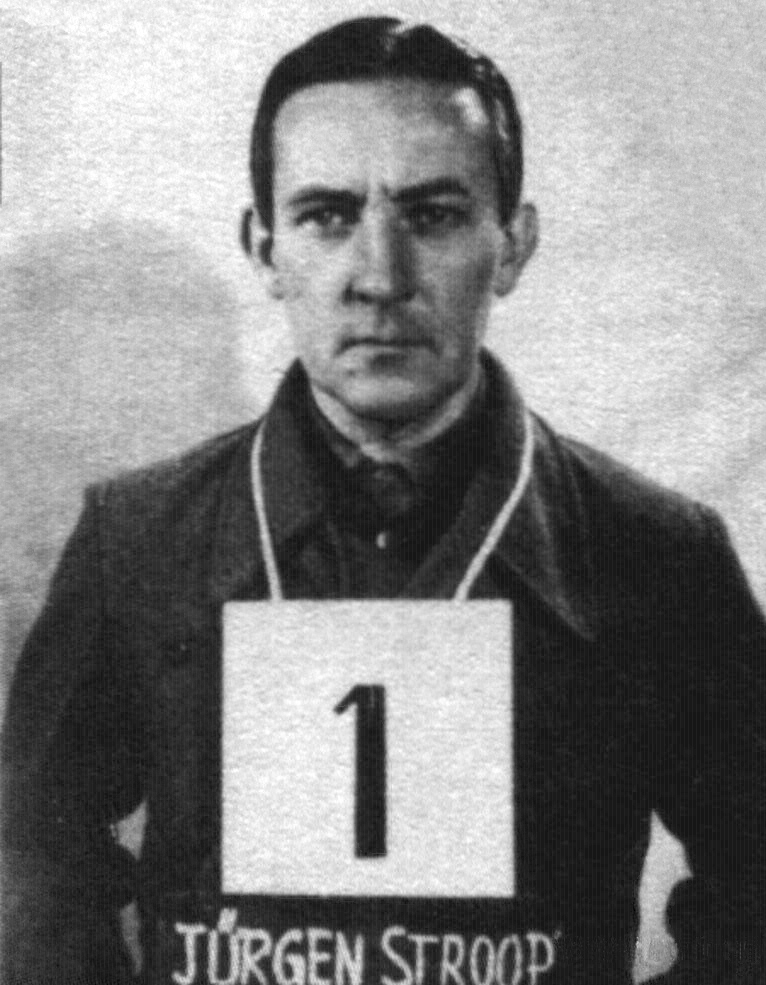
Jürgen Stroop (born Josef Stroop, 26 September 1895 – 6 March 1952) was a German SS commander and perpetrator of the Holocaust during the Nazi era, who served as SS and Police Leader in occupied Poland and Greece from 1942-1943 (in Poland) and 1943-1944 (in Greece). He held the rank of SS-Gruppenführer und Generalleutnant der Polizei from 1942-1945. He led the suppression of the Warsaw Ghetto Uprising in 1943 and wrote the Stroop Report, a twelve-page account of the operation annexed with many original documents and pictures. Following the defeat of Germany, Stroop was prosecuted during the Dachau Trials and convicted of murdering nine U.S. prisoners of war. After his extradition to Poland, Stroop was tried, convicted, and executed for crimes against humanity.
Josef Stroop (he applied to change his first name in 1938, which was authorized 1941) was born in the Principality of Lippe, in the German Empire. His father, Konrad Stroop, was Lippe's chief of police. His mother, Katherine, was a homemaker. In a conversation with Kazimierz Moczarski while imprisoned in 1949, Stroop recalled his devoutly religious Roman Catholic mother as "a near fanatic", who subjected him to childhood physical abuse.
Both of his parents were enthusiastic monarchists. During parades in Detmold, Konrad Stroop often pointed out Leopold IV, Prince of Lippe and said, "Remember this always. This is our Prince. Obey him and serve him as I have." Young Josef's sense of German patriotism was fostered by growing up in the shadow of the Hermannsdenkmal.
Stroop enlisted in the Prussian Army in 1914 and served in several infantry regiments along the Western Front. He was wounded in action near La Bassée in October 1914. To the outrage of his devout mother, Stroop married Katharina, the daughter of a minister from the Protestant Church of Lippe, on 3 July 1923. Katharina Stroop remained a loyal and obedient wife despite her husband's many infidelities. Their marriage produced a daughter, Renate, in February 1928, and a son, Olaf, in February 1936.
During the early 1920s, Stroop joined the Tannenbergbund and embraced Germanic neo-paganism under the influence of General Erich Ludendorff and his wife Mathilde. He later recalled that Mathilde Ludendorff revealed "the truth about the Catholic Church in Germany and returned us to the true Germanic gods. By recalling the pure, pre-Germanic ways, she pointed out the rottenness of the Judeo-Christian ethic and showed how the organized Church had been strangling the Reich for twelve hundred years." Stroop further recalled, "It was thanks to what I was lucky enough to learn from her books that I was able to rid myself of religious prejudice and mark Gottgläubig in the column concerning belief."
In another conversation with Moczarski, Stroop called Catholicism "a catch-all of religions, infected with Judaism." He further claimed that Christianity was created as a Jewish conspiracy for "the weakening and debasement of man through guilt."
Stroop joined the Nazi Party and SS in 1932. In 1933, he was appointed leader of the state auxiliary police. One year later, he was promoted from the rank of SS-Oberscharführer to SS-Hauptsturmführer. Subsequently, he worked for the SS administration in Münster and Hamburg.
In 1934, Bishop Clemens von Galen of Münster attacked the racist ideologies of the new regime, partly poking fun at it, partly critiquing its ideological basis as published by Alfred Rosenberg. He declared it unacceptable to refuse the Old Testament because of its Jewish authorship, and to limit morality and virtue to the perceived usefulness of a particular race.
Hub AI
Jürgen Stroop AI simulator
(@Jürgen Stroop_simulator)
Jürgen Stroop
Jürgen Stroop (born Josef Stroop, 26 September 1895 – 6 March 1952) was a German SS commander and perpetrator of the Holocaust during the Nazi era, who served as SS and Police Leader in occupied Poland and Greece from 1942-1943 (in Poland) and 1943-1944 (in Greece). He held the rank of SS-Gruppenführer und Generalleutnant der Polizei from 1942-1945. He led the suppression of the Warsaw Ghetto Uprising in 1943 and wrote the Stroop Report, a twelve-page account of the operation annexed with many original documents and pictures. Following the defeat of Germany, Stroop was prosecuted during the Dachau Trials and convicted of murdering nine U.S. prisoners of war. After his extradition to Poland, Stroop was tried, convicted, and executed for crimes against humanity.
Josef Stroop (he applied to change his first name in 1938, which was authorized 1941) was born in the Principality of Lippe, in the German Empire. His father, Konrad Stroop, was Lippe's chief of police. His mother, Katherine, was a homemaker. In a conversation with Kazimierz Moczarski while imprisoned in 1949, Stroop recalled his devoutly religious Roman Catholic mother as "a near fanatic", who subjected him to childhood physical abuse.
Both of his parents were enthusiastic monarchists. During parades in Detmold, Konrad Stroop often pointed out Leopold IV, Prince of Lippe and said, "Remember this always. This is our Prince. Obey him and serve him as I have." Young Josef's sense of German patriotism was fostered by growing up in the shadow of the Hermannsdenkmal.
Stroop enlisted in the Prussian Army in 1914 and served in several infantry regiments along the Western Front. He was wounded in action near La Bassée in October 1914. To the outrage of his devout mother, Stroop married Katharina, the daughter of a minister from the Protestant Church of Lippe, on 3 July 1923. Katharina Stroop remained a loyal and obedient wife despite her husband's many infidelities. Their marriage produced a daughter, Renate, in February 1928, and a son, Olaf, in February 1936.
During the early 1920s, Stroop joined the Tannenbergbund and embraced Germanic neo-paganism under the influence of General Erich Ludendorff and his wife Mathilde. He later recalled that Mathilde Ludendorff revealed "the truth about the Catholic Church in Germany and returned us to the true Germanic gods. By recalling the pure, pre-Germanic ways, she pointed out the rottenness of the Judeo-Christian ethic and showed how the organized Church had been strangling the Reich for twelve hundred years." Stroop further recalled, "It was thanks to what I was lucky enough to learn from her books that I was able to rid myself of religious prejudice and mark Gottgläubig in the column concerning belief."
In another conversation with Moczarski, Stroop called Catholicism "a catch-all of religions, infected with Judaism." He further claimed that Christianity was created as a Jewish conspiracy for "the weakening and debasement of man through guilt."
Stroop joined the Nazi Party and SS in 1932. In 1933, he was appointed leader of the state auxiliary police. One year later, he was promoted from the rank of SS-Oberscharführer to SS-Hauptsturmführer. Subsequently, he worked for the SS administration in Münster and Hamburg.
In 1934, Bishop Clemens von Galen of Münster attacked the racist ideologies of the new regime, partly poking fun at it, partly critiquing its ideological basis as published by Alfred Rosenberg. He declared it unacceptable to refuse the Old Testament because of its Jewish authorship, and to limit morality and virtue to the perceived usefulness of a particular race.
Recent media