
Recent from talks
Károly Kamermayer
Knowledge base stats:
Talk channels stats:
Members stats:
Károly Kamermayer
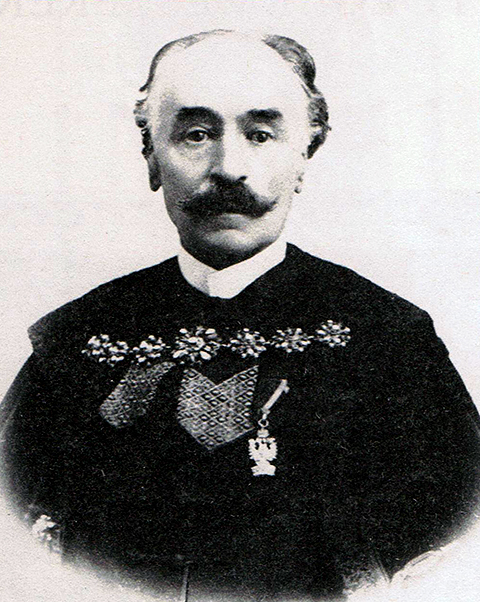
Károly Kamermayer (14 May 1829 – 5 June 1897) was a Hungarian jurist and councillor, who served as the first mayor of Budapest between 1873 and 1896. During his tenure, the city grew into the country's administrative, political, economic, trade, and cultural hub, and Budapest had become one of the cultural centers of Europe.
Also referred to as Kammermayer, he came from a bourgeois family of German origin, which had settled in Hungary in the 18th century. He was born in Pest on 14 May 1829, the son of wealthy industrialist József Kammermayer, who worked as operations manager at Count György Károlyi's glassworks in Parád. His mother, Anna Emmerling, was a descendant of a patrician family in Pest. Károly Kamermayer (who initially also wrote his name with double "m") finished his secondary studies in Gyöngyös. He attended the Archbishopric Lyceum of Eger, then studied law at the University of Pest (today Eötvös Loránd University, ELTE).
Kamermayer began his political career as a deputy at the Diet of 1847–1848 during the Hungarian Reform Era. In early 1848, he was among Lajos Kossuth's so-called "parliamentary youth" (Hungarian: országgyűlési ifjak), the law students and junior clerks who supported the ideas of reform and progress represented by the liberal aristocracy at the Lower House of the Diet. After the outbreak of the Hungarian Revolution of 1848, he joined as a volunteer in Colonel Lajos Kazinczy's sapper battalion. He was later promoted to lieutenant in the 61st Battalion commanded by Major Pál Csuzy. He participated in the battles of Kápolna, Isaszeg, and others during the victorious spring campaign commanded by General Artúr Görgei in 1849. On 24 April 1849 he arrived in Pest with the engineer corps under the leadership of Colonel István Szekulics, which occupied and guarded the Chain Bridge. Kamermayer also fought in the Battle of Buda on 21 May 1849. He marched with Lajos Aulich to Komárom. The Imperial Russian Army attacked the Hungarian army on 20 June at Pered and on 28 June at Győr, winning both battles. At the end of the war, Kamermayer was promoted to first lieutenant by General György Klapka, who defended Komárom for two months even after the army's defeat.
Following the defeat, he successfully avoided enforced military conscription to the Austrian Imperial Army. He returned to Pest to finish his interrupted legal studies. Having done so he began to work as an inspector in the city jail. In 1857 he took part in the management of the census process for a daily wage, then became a secretary. After the adoption of the October Diploma in 1860, he was elected to the General Assembly of Buda along with several other 1848 veterans and re-entrant officials. On 1 February 1861, he was appointed the chief notary of Buda. He gave a memorable speech on the occasion of the one-year anniversary of the suicide of Count István Széchenyi in April 1861, demanding the revival of the 1848 revolution's constitutional spirit. The speech brought him widespread national and political acclaim. After the dissolution of the Diet of 1861, and the suspension of the local government system by Emperor-King Francis Joseph I's absolutist regime, the entire General Assembly, including Kamermayer, resigned in protest on 31 October 1861. However, he was appointed councillor on 24 November, because of his expertise and apolitical professional attitude.
After the Austro-Hungarian Compromise, he was elected councillor in the Pest assembly on 19 May 1867. In that capacity, he was responsible for public health, animal health, and public sanitation issues, and also oversaw the operation of business associations, guilds, and the city tax office. On 1 August 1872, he played a major role in the establishment of the Central City Communal Slaughterhouse (Hungarian: Közvágóhíd). The structure was preceded by years of preparation. A delegation led by Kamermayer made study visits to several cities, including: Berlin, Dresden, Munich, Frankfurt, Prague, and Vienna. He studied their facilities before making the necessary improvements and reforms in Pest. His political creed had become that of catching up to Western urban living standards. To achieve this he was convinced that the most important first step was the creation and centralized management of a public sanitation system. The communal slaughterhouse building complex was planned by architect Hermann von der Hude and built by Gyula Hennicker. It contained thirty cutting chambers, indoor courtyards, leather drying attics, underground cooling chambers, a self-contained sewerage system, and a separate cattle market which was suitable for accommodating five thousand livestock and tens of thousands of poultry. Kamermayer personally wrote a draft of the communal sanitation regulations.
After the municipal election held on 25–26 September 1873, the newly elected 400-member General Assembly of Budapest held its inaugural session on 25 October 1873, as a major step in the process of establishing Budapest by unifying Buda and Óbuda on the west bank of the river Danube, with Pest on its east bank. The assembly elected the first Lord Mayor among the three candidates nominated by countersignature of King Francis Joseph I after consultations with the Ministry of Interior.
On 30 October 1873, four candidates, including Kamermayer, were selected by an election commission headed by Lord Mayor Károly Ráth for the position of Mayor. According to the city unification law (Statute XXXVI of 1872), the Mayor of Budapest was head of the local government, while the Lord Mayor became a representative on the executive branch of the government thus establishing a two-tier local government system in Budapest. On 4 November 1873, Károly Kamermayer was elected the first Mayor of Budapest, obtaining 297 of 348 votes. According to the contemporary press, Kamermayer's "unpretentious and diligent habit, conscientious sense of duty and tireless perseverance" made him well suited to fill the office. The next day, Károly Gerlóczy and the elderly Mihály Kada were elected his first and second deputies, respectively, and all councillors took their offices by November 11. Budapest officially became a single city on 17 November 1873, when the General Assembly took over the responsibilities of the discontinued city councils.
As the contemporary press and politicians noted, Budapest came under the rule of the three Károlys: Lord Mayor Ráth, Mayor Kamermayer, and Deputy Mayor Gerlóczy, who remained in office over the next two decades. Between them, a close professional and collegial relationship had developed. In the early years, in addition to the promoters' voices, there were serious concerns regarding the benefits of the unification. For instance, Móric Szentkirályi, who formerly served as the last Lord Mayor of Pest (1867–1868), argued that "Buda generally has no future" which can only be a burden for the industrializing and growing Pest. He added that Buda is "not a Hungarian town", referring to the large number of German-speaking residents. Scholar József Göőz also argued that during severe winters the two main parts of Budapest were almost completely isolated from each other, and he also emphasized their continuing persistent self-interest. Journalist Péter Buza compared the city's unification to a marriage: "[...] there is no real trust between each other. What kind of marriage is this? No doubt, like all other similar cases. One party is forcing its will on the other." However these skeptical voices were in the minority. For the coming years, a new "Budapest elite" emerged, overcoming the old urban political voting blocks. Both Ráth and Kamermayer were members of the so-called "Eagles", an influential intellectual group, which permanently convened at the Arany Sas Fogadó (lit. Golden Eagle Inn). It acted as a lobbying group, determining the city's policy orientations and objectives. During these gatherings, Kamermayer was famous for his taste in refined gastronomy. The Kamermayer torte, also known as Kamermayer's Joy (Hungarian: Kamermayer öröme) was named after him.
Hub AI
Károly Kamermayer AI simulator
(@Károly Kamermayer_simulator)
Károly Kamermayer
Károly Kamermayer (14 May 1829 – 5 June 1897) was a Hungarian jurist and councillor, who served as the first mayor of Budapest between 1873 and 1896. During his tenure, the city grew into the country's administrative, political, economic, trade, and cultural hub, and Budapest had become one of the cultural centers of Europe.
Also referred to as Kammermayer, he came from a bourgeois family of German origin, which had settled in Hungary in the 18th century. He was born in Pest on 14 May 1829, the son of wealthy industrialist József Kammermayer, who worked as operations manager at Count György Károlyi's glassworks in Parád. His mother, Anna Emmerling, was a descendant of a patrician family in Pest. Károly Kamermayer (who initially also wrote his name with double "m") finished his secondary studies in Gyöngyös. He attended the Archbishopric Lyceum of Eger, then studied law at the University of Pest (today Eötvös Loránd University, ELTE).
Kamermayer began his political career as a deputy at the Diet of 1847–1848 during the Hungarian Reform Era. In early 1848, he was among Lajos Kossuth's so-called "parliamentary youth" (Hungarian: országgyűlési ifjak), the law students and junior clerks who supported the ideas of reform and progress represented by the liberal aristocracy at the Lower House of the Diet. After the outbreak of the Hungarian Revolution of 1848, he joined as a volunteer in Colonel Lajos Kazinczy's sapper battalion. He was later promoted to lieutenant in the 61st Battalion commanded by Major Pál Csuzy. He participated in the battles of Kápolna, Isaszeg, and others during the victorious spring campaign commanded by General Artúr Görgei in 1849. On 24 April 1849 he arrived in Pest with the engineer corps under the leadership of Colonel István Szekulics, which occupied and guarded the Chain Bridge. Kamermayer also fought in the Battle of Buda on 21 May 1849. He marched with Lajos Aulich to Komárom. The Imperial Russian Army attacked the Hungarian army on 20 June at Pered and on 28 June at Győr, winning both battles. At the end of the war, Kamermayer was promoted to first lieutenant by General György Klapka, who defended Komárom for two months even after the army's defeat.
Following the defeat, he successfully avoided enforced military conscription to the Austrian Imperial Army. He returned to Pest to finish his interrupted legal studies. Having done so he began to work as an inspector in the city jail. In 1857 he took part in the management of the census process for a daily wage, then became a secretary. After the adoption of the October Diploma in 1860, he was elected to the General Assembly of Buda along with several other 1848 veterans and re-entrant officials. On 1 February 1861, he was appointed the chief notary of Buda. He gave a memorable speech on the occasion of the one-year anniversary of the suicide of Count István Széchenyi in April 1861, demanding the revival of the 1848 revolution's constitutional spirit. The speech brought him widespread national and political acclaim. After the dissolution of the Diet of 1861, and the suspension of the local government system by Emperor-King Francis Joseph I's absolutist regime, the entire General Assembly, including Kamermayer, resigned in protest on 31 October 1861. However, he was appointed councillor on 24 November, because of his expertise and apolitical professional attitude.
After the Austro-Hungarian Compromise, he was elected councillor in the Pest assembly on 19 May 1867. In that capacity, he was responsible for public health, animal health, and public sanitation issues, and also oversaw the operation of business associations, guilds, and the city tax office. On 1 August 1872, he played a major role in the establishment of the Central City Communal Slaughterhouse (Hungarian: Közvágóhíd). The structure was preceded by years of preparation. A delegation led by Kamermayer made study visits to several cities, including: Berlin, Dresden, Munich, Frankfurt, Prague, and Vienna. He studied their facilities before making the necessary improvements and reforms in Pest. His political creed had become that of catching up to Western urban living standards. To achieve this he was convinced that the most important first step was the creation and centralized management of a public sanitation system. The communal slaughterhouse building complex was planned by architect Hermann von der Hude and built by Gyula Hennicker. It contained thirty cutting chambers, indoor courtyards, leather drying attics, underground cooling chambers, a self-contained sewerage system, and a separate cattle market which was suitable for accommodating five thousand livestock and tens of thousands of poultry. Kamermayer personally wrote a draft of the communal sanitation regulations.
After the municipal election held on 25–26 September 1873, the newly elected 400-member General Assembly of Budapest held its inaugural session on 25 October 1873, as a major step in the process of establishing Budapest by unifying Buda and Óbuda on the west bank of the river Danube, with Pest on its east bank. The assembly elected the first Lord Mayor among the three candidates nominated by countersignature of King Francis Joseph I after consultations with the Ministry of Interior.
On 30 October 1873, four candidates, including Kamermayer, were selected by an election commission headed by Lord Mayor Károly Ráth for the position of Mayor. According to the city unification law (Statute XXXVI of 1872), the Mayor of Budapest was head of the local government, while the Lord Mayor became a representative on the executive branch of the government thus establishing a two-tier local government system in Budapest. On 4 November 1873, Károly Kamermayer was elected the first Mayor of Budapest, obtaining 297 of 348 votes. According to the contemporary press, Kamermayer's "unpretentious and diligent habit, conscientious sense of duty and tireless perseverance" made him well suited to fill the office. The next day, Károly Gerlóczy and the elderly Mihály Kada were elected his first and second deputies, respectively, and all councillors took their offices by November 11. Budapest officially became a single city on 17 November 1873, when the General Assembly took over the responsibilities of the discontinued city councils.
As the contemporary press and politicians noted, Budapest came under the rule of the three Károlys: Lord Mayor Ráth, Mayor Kamermayer, and Deputy Mayor Gerlóczy, who remained in office over the next two decades. Between them, a close professional and collegial relationship had developed. In the early years, in addition to the promoters' voices, there were serious concerns regarding the benefits of the unification. For instance, Móric Szentkirályi, who formerly served as the last Lord Mayor of Pest (1867–1868), argued that "Buda generally has no future" which can only be a burden for the industrializing and growing Pest. He added that Buda is "not a Hungarian town", referring to the large number of German-speaking residents. Scholar József Göőz also argued that during severe winters the two main parts of Budapest were almost completely isolated from each other, and he also emphasized their continuing persistent self-interest. Journalist Péter Buza compared the city's unification to a marriage: "[...] there is no real trust between each other. What kind of marriage is this? No doubt, like all other similar cases. One party is forcing its will on the other." However these skeptical voices were in the minority. For the coming years, a new "Budapest elite" emerged, overcoming the old urban political voting blocks. Both Ráth and Kamermayer were members of the so-called "Eagles", an influential intellectual group, which permanently convened at the Arany Sas Fogadó (lit. Golden Eagle Inn). It acted as a lobbying group, determining the city's policy orientations and objectives. During these gatherings, Kamermayer was famous for his taste in refined gastronomy. The Kamermayer torte, also known as Kamermayer's Joy (Hungarian: Kamermayer öröme) was named after him.
Recent media