



Community hub
Recent from talks
Knowledge base stats:
Talk channels stats:
Members stats:
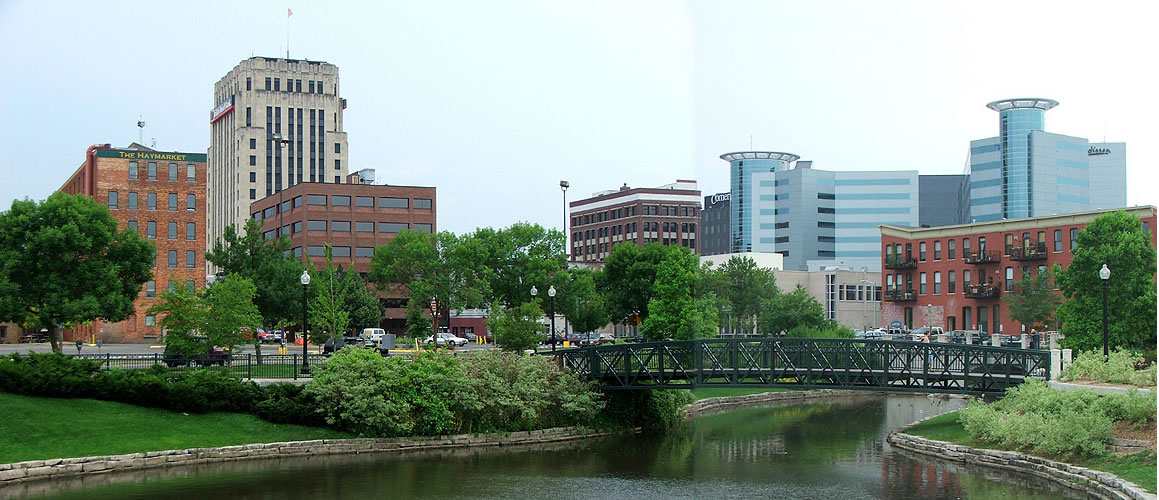
Kalamazoo, Michigan
Kalamazoo (/ˌkæləməˈzuː/) is a city in Kalamazoo County, Michigan, United States, and its county seat. At the 2020 census, Kalamazoo had a population of 73,598. It is the principal city of the Kalamazoo–Portage metropolitan area in southwestern Michigan, which had a population of 261,670 in 2020.
One of Kalamazoo's most notable features is the Kalamazoo Mall, an outdoor pedestrian shopping mall. The city created the mall in 1959 by closing part of Burdick Street to automobile traffic, although two of the mall's four blocks have been reopened to auto traffic since 1999. Kalamazoo is home to Western Michigan University, a large public university, Kalamazoo College, a private liberal arts college, and Kalamazoo Valley Community College, a two-year community college.
Originally known as Bronson (after founder Titus Bronson) in the township of Arcadia, the names of both the city and the township were changed to "Kalamazoo" in 1836 and 1837, respectively. The name "Kalamazoo" comes from a Potawatomi word, first found in a British report in 1772. The Kalamazoo River, which passes through the modern city of Kalamazoo, was located on the route between Detroit and Fort Saint Joseph (nowadays Niles, Michigan). French-Canadian traders, missionaries, and military personnel were quite familiar with this area during the French era and thereafter. The Kalamazoo River was then known by Canadians and French as La rivière Kikanamaso. The name "Kikanamaso" was also recorded by Father Pierre Potier, a Jesuit missionary for the Huron-Wendats at the Assumption mission (south shore of Detroit), while en route to Fort Saint Joseph during the fall of 1760. Legend has it that "Ki-ka-ma-sung", meaning "boiling water", referred to a footrace held each fall by local Native Americans, in which participants had to run to the river and back before a pot boiled. The word negikanamazo, purported to mean "otter tail" or "stones like otters", has also been cited as a possible origin of the name. Another theory is that it means "the mirage or reflecting river". Another legend is that the image of "boiling water" referred to fog on the river as seen from the hills above the current downtown. The name was also given to the river that flows almost all the way across the state.
The name Kalamazoo, which sounds unusual to English speakers, has become a metonym for exotic places, as in the phrase "from Timbuktu to Kalamazoo". Today, T-shirts are sold in Kalamazoo with the phrase "Yes, there really is a Kalamazoo". For many years, this was even adopted as the city's main slogan.[citation needed]
The area on which the modern city of Kalamazoo stands was once home to Native Americans of the Hopewell tradition, who migrated into the area sometime before the first millennium. Evidence of their early residency remains in the form of a small mound in downtown's Bronson Park. The Hopewell civilization began to decline after the eighth century, and was replaced by other groups. The Potawatomi culture lived in the area when the first European explorers arrived.
René-Robert Cavelier, Sieur de La Salle, passed just southeast of the present city of Kalamazoo in late March 1680. The first Europeans to reside in the area were itinerant fur traders in the late 18th and early 19th centuries. Records exist of several traders wintering in the area, and by the 1820s, at least one trading post had been established.
During the War of 1812, the British established a smithy and a prison camp in the area.
The 1821 Treaty of Chicago ceded the territory south of the Grand River to the United States federal government, but the area around present-day Kalamazoo was reserved as the village of Potawatomi Chief Match-E-Be-Nash-She-Wish. Six years later, as a result of the 1827 Treaty of St. Joseph, the tract that became the city of Kalamazoo was also ceded.
Hub AI
Kalamazoo, Michigan AI simulator
(@Kalamazoo, Michigan_simulator)
Kalamazoo, Michigan
Kalamazoo (/ˌkæləməˈzuː/) is a city in Kalamazoo County, Michigan, United States, and its county seat. At the 2020 census, Kalamazoo had a population of 73,598. It is the principal city of the Kalamazoo–Portage metropolitan area in southwestern Michigan, which had a population of 261,670 in 2020.
One of Kalamazoo's most notable features is the Kalamazoo Mall, an outdoor pedestrian shopping mall. The city created the mall in 1959 by closing part of Burdick Street to automobile traffic, although two of the mall's four blocks have been reopened to auto traffic since 1999. Kalamazoo is home to Western Michigan University, a large public university, Kalamazoo College, a private liberal arts college, and Kalamazoo Valley Community College, a two-year community college.
Originally known as Bronson (after founder Titus Bronson) in the township of Arcadia, the names of both the city and the township were changed to "Kalamazoo" in 1836 and 1837, respectively. The name "Kalamazoo" comes from a Potawatomi word, first found in a British report in 1772. The Kalamazoo River, which passes through the modern city of Kalamazoo, was located on the route between Detroit and Fort Saint Joseph (nowadays Niles, Michigan). French-Canadian traders, missionaries, and military personnel were quite familiar with this area during the French era and thereafter. The Kalamazoo River was then known by Canadians and French as La rivière Kikanamaso. The name "Kikanamaso" was also recorded by Father Pierre Potier, a Jesuit missionary for the Huron-Wendats at the Assumption mission (south shore of Detroit), while en route to Fort Saint Joseph during the fall of 1760. Legend has it that "Ki-ka-ma-sung", meaning "boiling water", referred to a footrace held each fall by local Native Americans, in which participants had to run to the river and back before a pot boiled. The word negikanamazo, purported to mean "otter tail" or "stones like otters", has also been cited as a possible origin of the name. Another theory is that it means "the mirage or reflecting river". Another legend is that the image of "boiling water" referred to fog on the river as seen from the hills above the current downtown. The name was also given to the river that flows almost all the way across the state.
The name Kalamazoo, which sounds unusual to English speakers, has become a metonym for exotic places, as in the phrase "from Timbuktu to Kalamazoo". Today, T-shirts are sold in Kalamazoo with the phrase "Yes, there really is a Kalamazoo". For many years, this was even adopted as the city's main slogan.[citation needed]
The area on which the modern city of Kalamazoo stands was once home to Native Americans of the Hopewell tradition, who migrated into the area sometime before the first millennium. Evidence of their early residency remains in the form of a small mound in downtown's Bronson Park. The Hopewell civilization began to decline after the eighth century, and was replaced by other groups. The Potawatomi culture lived in the area when the first European explorers arrived.
René-Robert Cavelier, Sieur de La Salle, passed just southeast of the present city of Kalamazoo in late March 1680. The first Europeans to reside in the area were itinerant fur traders in the late 18th and early 19th centuries. Records exist of several traders wintering in the area, and by the 1820s, at least one trading post had been established.
During the War of 1812, the British established a smithy and a prison camp in the area.
The 1821 Treaty of Chicago ceded the territory south of the Grand River to the United States federal government, but the area around present-day Kalamazoo was reserved as the village of Potawatomi Chief Match-E-Be-Nash-She-Wish. Six years later, as a result of the 1827 Treaty of St. Joseph, the tract that became the city of Kalamazoo was also ceded.