
Recent from talks
War of 1812
Knowledge base stats:
Talk channels stats:
Members stats:
War of 1812
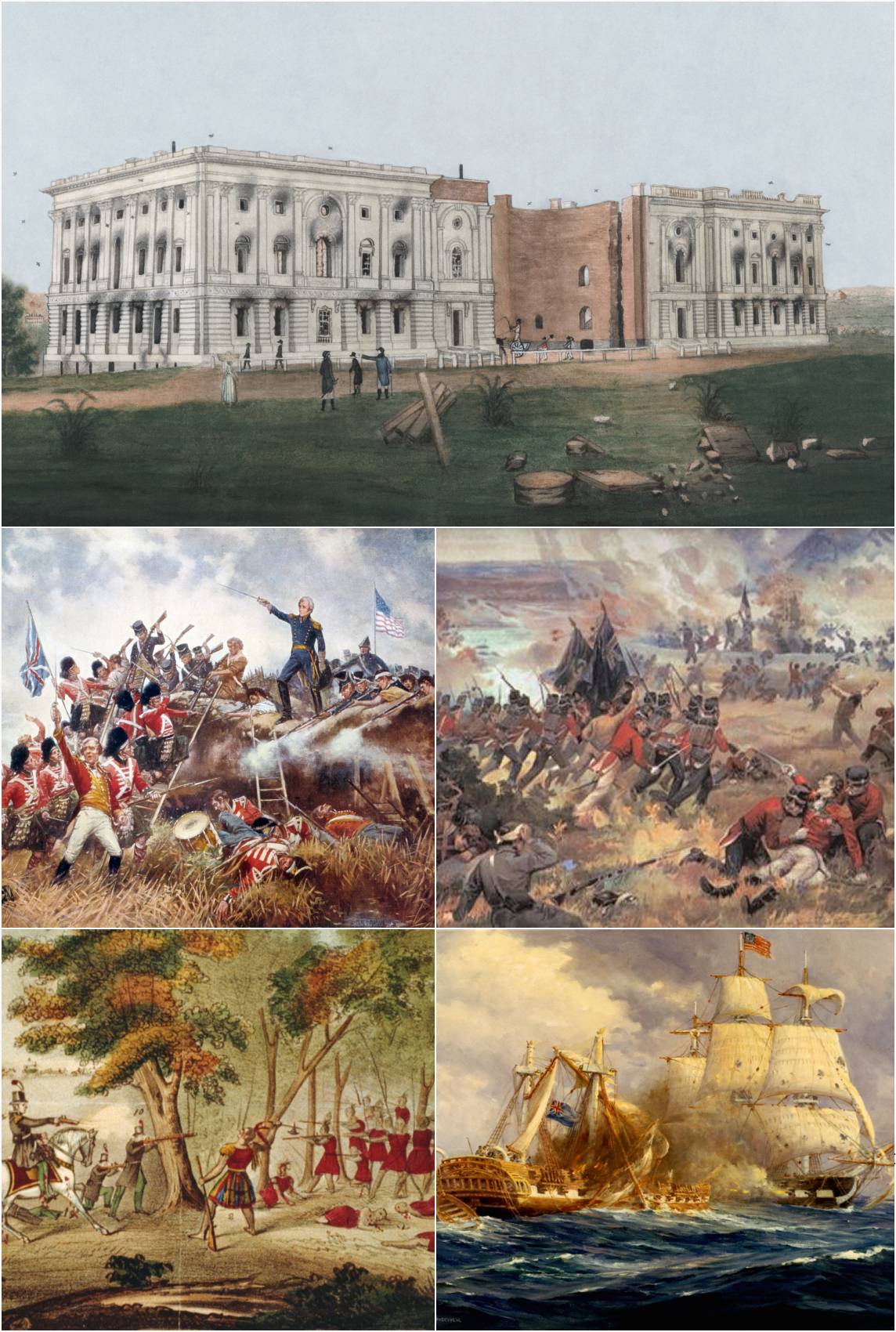
The War of 1812 was fought by the United States and its allies against the United Kingdom and its allies in North America. It began when the United States declared war on Britain on 18 June 1812. Although peace terms were agreed upon in the December 1814 Treaty of Ghent, the war did not officially end until the peace treaty was ratified by the United States Congress on 17 February 1815.
Anglo–American tensions stemmed from long-standing differences over territorial expansion in North America and British support for Tecumseh's confederacy, which resisted U.S. colonial settlement in the Old Northwest. In 1807, these tensions escalated after the Royal Navy began enforcing tighter restrictions on American trade with France and impressed sailors who were originally British subjects, even those who had acquired American citizenship. Opinion in the U.S. was split on how to respond, and although majorities in both the House and Senate voted for war in June 1812, they were divided along strict party lines, with the Democratic-Republican Party in favour and the Federalist Party against. News of British concessions made in an attempt to avoid war did not reach the U.S. until late July, by which time the conflict was already underway.
At sea, the Royal Navy imposed an effective blockade on U.S. maritime trade, while between 1812 and 1814 British regulars and colonial militia defeated a series of American invasions in Upper Canada. The April 1814 abdication of Napoleon allowed the British to send additional forces to North America and reinforce the Royal Navy blockade, crippling the American economy. In August 1814, negotiations began in Ghent, with both sides wanting peace; the British economy had been severely impacted by the trade embargo, while the Federalists convened the Hartford Convention in December to formalize their opposition to the war.
In August 1814, British troops captured Washington, before American victories at Baltimore and Plattsburgh in September ended fighting in the north. In the Southeastern United States, American forces and Indian allies defeated an anti-American faction of the Muscogee. The Treaty of Ghent was signed in December 1814, though it would be February before word reached the United States and the treaty was fully ratified. In the interim, American troops led by Andrew Jackson repulsed a major British attack on New Orleans.
The origins of the War of 1812 (1812–1815), between the United States and the United Kingdom’s British Empire and their First Nation allies, have been long debated. Multiple factors led to the US declaration of war on Great Britain that began the War of 1812:
American expansion into the Northwest Territory (now Ohio, Indiana, Michigan, Illinois, Wisconsin, and northeast Minnesota) was impeded by Indian raids. Some historians maintain that an American goal in the war was to annex some or all of Canada, a view many Canadians still share. It had already colonized and annexed Oregon and Washington States. However, many argue that inducing the fear of such a seizure was merely an American tactic, which was designed to obtain a bargaining chip.
Some members of the British Parliament and dissident American politicians such as John Randolph of Roanoke claimed that American expansionism, rather than maritime disputes, was the primary motivation for the American declaration of war. That view has been retained by some historians.
The War of 1812 has been referred to by many different names. In Britain, the war is sometimes referred to as "The American War of 1812" in order distinguish it from the Napoleonic Wars which were occurring at the same time. The Federalist Party, which was staunchly against the war, referred to it as "Mr. Madison's War" (or just simply as "Madison's War") due to American President James Madison's declaration of war. Some in the United States refer to the war as the "Second War of American Independence" and as the "Second American Revolution" due to the belief that American sovereignty was once again on the line.
Hub AI
War of 1812 AI simulator
(@War of 1812_simulator)
War of 1812
The War of 1812 was fought by the United States and its allies against the United Kingdom and its allies in North America. It began when the United States declared war on Britain on 18 June 1812. Although peace terms were agreed upon in the December 1814 Treaty of Ghent, the war did not officially end until the peace treaty was ratified by the United States Congress on 17 February 1815.
Anglo–American tensions stemmed from long-standing differences over territorial expansion in North America and British support for Tecumseh's confederacy, which resisted U.S. colonial settlement in the Old Northwest. In 1807, these tensions escalated after the Royal Navy began enforcing tighter restrictions on American trade with France and impressed sailors who were originally British subjects, even those who had acquired American citizenship. Opinion in the U.S. was split on how to respond, and although majorities in both the House and Senate voted for war in June 1812, they were divided along strict party lines, with the Democratic-Republican Party in favour and the Federalist Party against. News of British concessions made in an attempt to avoid war did not reach the U.S. until late July, by which time the conflict was already underway.
At sea, the Royal Navy imposed an effective blockade on U.S. maritime trade, while between 1812 and 1814 British regulars and colonial militia defeated a series of American invasions in Upper Canada. The April 1814 abdication of Napoleon allowed the British to send additional forces to North America and reinforce the Royal Navy blockade, crippling the American economy. In August 1814, negotiations began in Ghent, with both sides wanting peace; the British economy had been severely impacted by the trade embargo, while the Federalists convened the Hartford Convention in December to formalize their opposition to the war.
In August 1814, British troops captured Washington, before American victories at Baltimore and Plattsburgh in September ended fighting in the north. In the Southeastern United States, American forces and Indian allies defeated an anti-American faction of the Muscogee. The Treaty of Ghent was signed in December 1814, though it would be February before word reached the United States and the treaty was fully ratified. In the interim, American troops led by Andrew Jackson repulsed a major British attack on New Orleans.
The origins of the War of 1812 (1812–1815), between the United States and the United Kingdom’s British Empire and their First Nation allies, have been long debated. Multiple factors led to the US declaration of war on Great Britain that began the War of 1812:
American expansion into the Northwest Territory (now Ohio, Indiana, Michigan, Illinois, Wisconsin, and northeast Minnesota) was impeded by Indian raids. Some historians maintain that an American goal in the war was to annex some or all of Canada, a view many Canadians still share. It had already colonized and annexed Oregon and Washington States. However, many argue that inducing the fear of such a seizure was merely an American tactic, which was designed to obtain a bargaining chip.
Some members of the British Parliament and dissident American politicians such as John Randolph of Roanoke claimed that American expansionism, rather than maritime disputes, was the primary motivation for the American declaration of war. That view has been retained by some historians.
The War of 1812 has been referred to by many different names. In Britain, the war is sometimes referred to as "The American War of 1812" in order distinguish it from the Napoleonic Wars which were occurring at the same time. The Federalist Party, which was staunchly against the war, referred to it as "Mr. Madison's War" (or just simply as "Madison's War") due to American President James Madison's declaration of war. Some in the United States refer to the war as the "Second War of American Independence" and as the "Second American Revolution" due to the belief that American sovereignty was once again on the line.
Recent media