



Community hub
Recent from talks
Knowledge base stats:
Talk channels stats:
Members stats:
Kalbajar
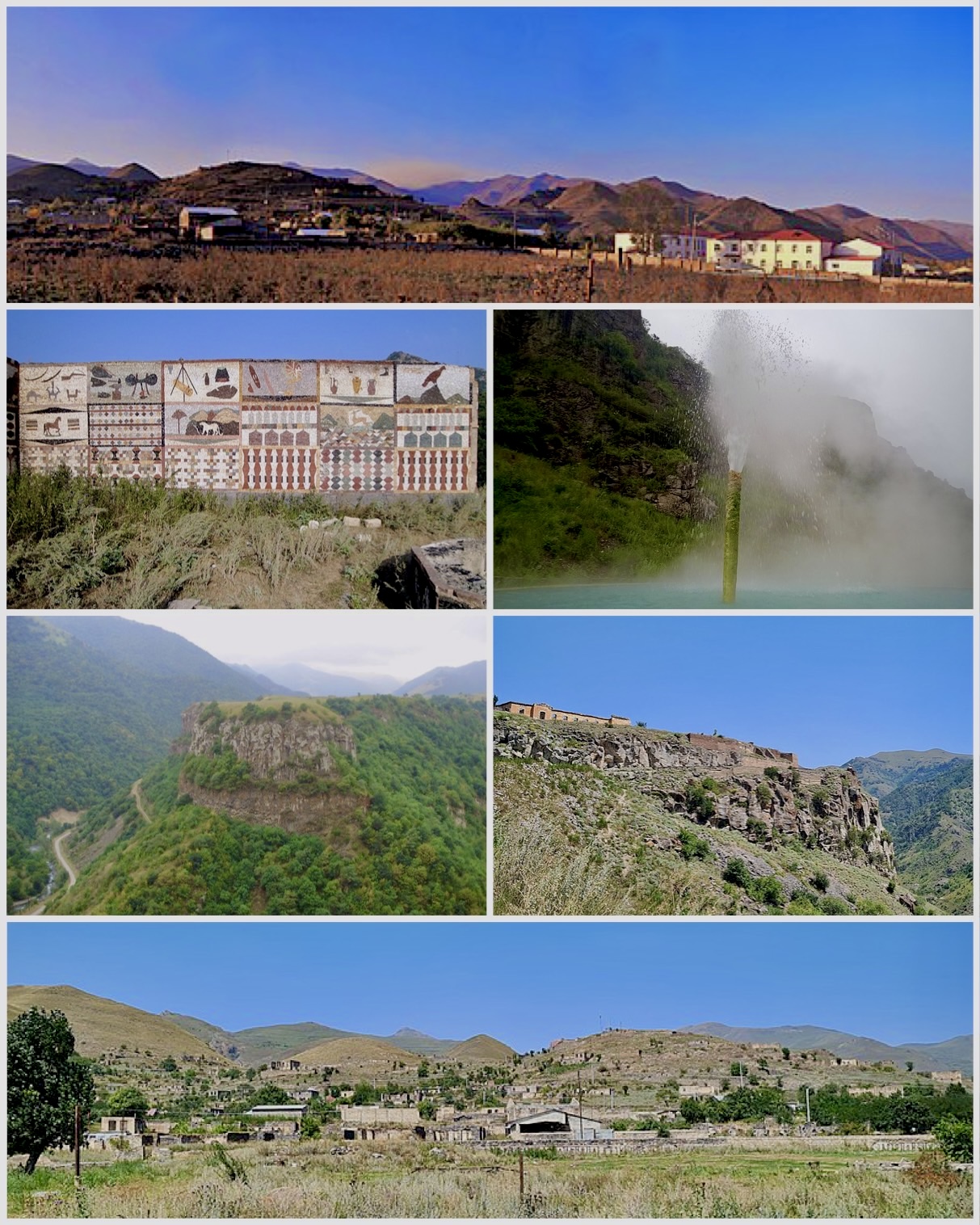
Kalbajar (Azerbaijani: Kəlbəcər ⓘ; Armenian: Քարվաճառ, romanized: Karvachar) is a city and the capital of the Kalbajar District of Azerbaijan. Located in the Tartar Valley, it is 458 kilometres (285 mi) away from the country's capital city Baku.
Before the First Nagorno-Karabakh War, the city had a population of 7,246 people. It was captured by Armenia on 2 April 1993, after which its Azerbaijani population was expelled and replaced with Armenians. As part of the 2020 Nagorno-Karabakh ceasefire agreement, which ended the Second Nagorno-Karabakh War, it was returned to Azerbaijan on 25 November of that year.
There are several theories about the origin of the town's name.
According to Armenian sources, the name Kalbajar is a modified form of K’aravachar’/K’arvachar’ (Քարավաճառ). The Armenian name is popularly interpreted as meaning "a place for selling rocks", as if consisting of the elements k’ar ('rock') and vachar’ ('sale, selling'). Other possible etymologies consider k’ar to mean 'fortress' in this case or to be a prefix meaning settlement found in the names of some ancient Near Eastern cities.
According to Azerbaijani sources, the name evolved from Kevlicher, meaning 'fortress in the upper reaches of the rivers' (kevli – 'the upper reaches of the river,' cher/jar – 'fortress') in Old Turkic. According to another version, the name of the town comes from the combination of the Persian word kevil ('cave') and the Turkic word jer ("rock, ravine") and means 'ravine with caves'. Another version proposes that the name comes from the Turkic words kevli ('river mouths') and jar ("gorge, ravine"), and that the settlement was called Keblajar before purportedly morphing to Kalbajar.
In ancient times, the territory where modern-day Kalbajar is located was part of the county (gavar’) of Tsar of the Artsakh province within the Kingdom of Armenia. Archaeological evidence uncovered in 1924 by Soviet archaeologist and scholar of the Caucasus Yevgenia Pchelina attests to the existence of an Armenian settlement in the area during the Middle Ages.
The settlement is mentioned by Armenian sources in the 15th century as the village of K’aravachar’ (17th-century and later Armenian sources spell it K’arvachar’). It is first mentioned in the colophon of an Armenian manuscript dated to 1402:
… in the archdiocese of this province of Father Zakaria, abbot of Dadivank, in the famous region of Tsar, in the village of Karavachar …
Hub AI
Kalbajar AI simulator
(@Kalbajar_simulator)
Kalbajar
Kalbajar (Azerbaijani: Kəlbəcər ⓘ; Armenian: Քարվաճառ, romanized: Karvachar) is a city and the capital of the Kalbajar District of Azerbaijan. Located in the Tartar Valley, it is 458 kilometres (285 mi) away from the country's capital city Baku.
Before the First Nagorno-Karabakh War, the city had a population of 7,246 people. It was captured by Armenia on 2 April 1993, after which its Azerbaijani population was expelled and replaced with Armenians. As part of the 2020 Nagorno-Karabakh ceasefire agreement, which ended the Second Nagorno-Karabakh War, it was returned to Azerbaijan on 25 November of that year.
There are several theories about the origin of the town's name.
According to Armenian sources, the name Kalbajar is a modified form of K’aravachar’/K’arvachar’ (Քարավաճառ). The Armenian name is popularly interpreted as meaning "a place for selling rocks", as if consisting of the elements k’ar ('rock') and vachar’ ('sale, selling'). Other possible etymologies consider k’ar to mean 'fortress' in this case or to be a prefix meaning settlement found in the names of some ancient Near Eastern cities.
According to Azerbaijani sources, the name evolved from Kevlicher, meaning 'fortress in the upper reaches of the rivers' (kevli – 'the upper reaches of the river,' cher/jar – 'fortress') in Old Turkic. According to another version, the name of the town comes from the combination of the Persian word kevil ('cave') and the Turkic word jer ("rock, ravine") and means 'ravine with caves'. Another version proposes that the name comes from the Turkic words kevli ('river mouths') and jar ("gorge, ravine"), and that the settlement was called Keblajar before purportedly morphing to Kalbajar.
In ancient times, the territory where modern-day Kalbajar is located was part of the county (gavar’) of Tsar of the Artsakh province within the Kingdom of Armenia. Archaeological evidence uncovered in 1924 by Soviet archaeologist and scholar of the Caucasus Yevgenia Pchelina attests to the existence of an Armenian settlement in the area during the Middle Ages.
The settlement is mentioned by Armenian sources in the 15th century as the village of K’aravachar’ (17th-century and later Armenian sources spell it K’arvachar’). It is first mentioned in the colophon of an Armenian manuscript dated to 1402:
… in the archdiocese of this province of Father Zakaria, abbot of Dadivank, in the famous region of Tsar, in the village of Karavachar …