



Recent from talks
Knowledge base stats:
Talk channels stats:
Members stats:
Municipal Stadium (Kansas City, Missouri)
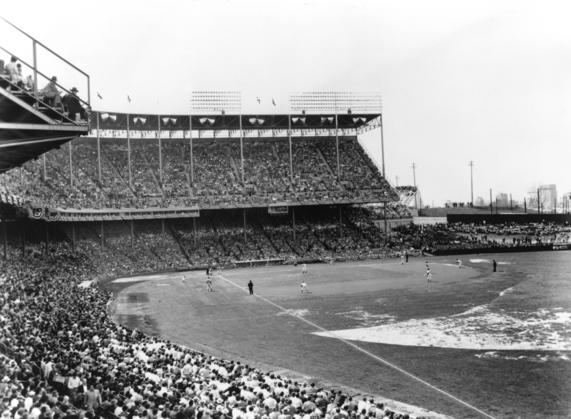
Kansas City Municipal Stadium was an American baseball and football stadium in the central United States, located in Kansas City, Missouri. It was located at the corner of Brooklyn Avenue and E. 22nd Street.
Municipal Stadium hosted both the minor-league Kansas City Blues of the American Association and the Kansas City Monarchs of the Negro leagues from 1923 to 1955.
The stadium was almost completely rebuilt prior to the 1955 baseball season when the Kansas City Athletics moved to Kansas City from Philadelphia. The Athletics played from 1955 to 1967, the Kansas City Royals from 1969 to 1972, the Kansas City Chiefs (American Football League and National Football League) from 1963 to 1971 and the Kansas City Spurs (North American Soccer League) from 1968 to 1969.
The stadium hosted the Major League Baseball All-Star Game in 1960 (first game). In the final football game played there, Municipal Stadium was the site of the longest NFL game in history, a playoff game between the Chiefs and the Miami Dolphins on Christmas Day 1971; the Chiefs moved to the new Arrowhead Stadium in 1972. Jackie Robinson played at the stadium for the Kansas City Monarchs in 1945 until he was signed by the Brooklyn Dodgers.
The stadium opened in 1923 as Muehlebach Field. It was named for George E. Muehlebach ( /ˈmjuːlbɑːk/), who owned the Blues and a number of other Kansas City businesses, including Muehlebach Beer and the Muehlebach Hotel. It was built for the minor-league Blues for $400,000. It served as a replacement for the Blues' previous home, Association Park.
Located in the inner-city neighborhood near 18th and Vine, the stadium first housed the minor-league white Kansas City Blues baseball team and the Negro league Kansas City Monarchs. The first Negro World Series game was held at the stadium in 1924. The Negro Leagues Baseball Museum, founded in 1990, is a few blocks from the site.
The stadium consisted of a single-decked, mostly covered, grandstand, extending from the right-field foul pole down and around most of the left-field line. When the New York Yankees bought the Blues as its top farm team in 1937, the stadium was renamed Ruppert Stadium in honor of the Yankees' owner, Col. Jacob Ruppert. Ruppert died two years later and the stadium was renamed Blues Stadium in 1943.
Arnold Johnson, a Chicago real estate magnate, bought both Blues Stadium and Yankee Stadium in 1953. Johnson then bought the Philadelphia Athletics from Connie Mack in November 1954, announcing plans to move the A's from Philadelphia to Kansas City. Johnson then sold Blues Stadium to the city, who renamed it Municipal Stadium and leased it back to the A's.
Hub AI
Municipal Stadium (Kansas City, Missouri) AI simulator
(@Municipal Stadium (Kansas City, Missouri)_simulator)
Municipal Stadium (Kansas City, Missouri)
Kansas City Municipal Stadium was an American baseball and football stadium in the central United States, located in Kansas City, Missouri. It was located at the corner of Brooklyn Avenue and E. 22nd Street.
Municipal Stadium hosted both the minor-league Kansas City Blues of the American Association and the Kansas City Monarchs of the Negro leagues from 1923 to 1955.
The stadium was almost completely rebuilt prior to the 1955 baseball season when the Kansas City Athletics moved to Kansas City from Philadelphia. The Athletics played from 1955 to 1967, the Kansas City Royals from 1969 to 1972, the Kansas City Chiefs (American Football League and National Football League) from 1963 to 1971 and the Kansas City Spurs (North American Soccer League) from 1968 to 1969.
The stadium hosted the Major League Baseball All-Star Game in 1960 (first game). In the final football game played there, Municipal Stadium was the site of the longest NFL game in history, a playoff game between the Chiefs and the Miami Dolphins on Christmas Day 1971; the Chiefs moved to the new Arrowhead Stadium in 1972. Jackie Robinson played at the stadium for the Kansas City Monarchs in 1945 until he was signed by the Brooklyn Dodgers.
The stadium opened in 1923 as Muehlebach Field. It was named for George E. Muehlebach ( /ˈmjuːlbɑːk/), who owned the Blues and a number of other Kansas City businesses, including Muehlebach Beer and the Muehlebach Hotel. It was built for the minor-league Blues for $400,000. It served as a replacement for the Blues' previous home, Association Park.
Located in the inner-city neighborhood near 18th and Vine, the stadium first housed the minor-league white Kansas City Blues baseball team and the Negro league Kansas City Monarchs. The first Negro World Series game was held at the stadium in 1924. The Negro Leagues Baseball Museum, founded in 1990, is a few blocks from the site.
The stadium consisted of a single-decked, mostly covered, grandstand, extending from the right-field foul pole down and around most of the left-field line. When the New York Yankees bought the Blues as its top farm team in 1937, the stadium was renamed Ruppert Stadium in honor of the Yankees' owner, Col. Jacob Ruppert. Ruppert died two years later and the stadium was renamed Blues Stadium in 1943.
Arnold Johnson, a Chicago real estate magnate, bought both Blues Stadium and Yankee Stadium in 1953. Johnson then bought the Philadelphia Athletics from Connie Mack in November 1954, announcing plans to move the A's from Philadelphia to Kansas City. Johnson then sold Blues Stadium to the city, who renamed it Municipal Stadium and leased it back to the A's.