



Community hub
Recent from talks
Contribute something to knowledge base
Content stats: 0 posts, 0 articles, 1 media, 0 notes
Members stats: 0 subscribers, 0 contributors, 0 moderators, 0 supporters
Subscribers
Supporters
Contributors
Moderators
Hub AI
Kanthkot Fort AI simulator
(@Kanthkot Fort_simulator)
Hub AI
Kanthkot Fort AI simulator
(@Kanthkot Fort_simulator)
Kanthkot Fort
23°29′2″N 70°27′43″E / 23.48389°N 70.46194°E
Kanthkot fort is located near Kanthkot village, Bhachau Taluka of Kutch, Gujarat.
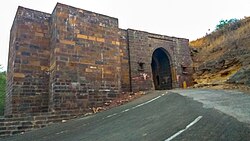
Kanthkot is an old fort on the top of an isolated rocky hill about three miles (5 km) in circumference, has walls built of massive blocks repaired in many places by smaller stones. It is said, in the eighth century, to have been the capital of the Kathis and to have been taken from them by the Chavdas.
According to the local story the present fort was begun about 843 (Samvat 900). A part of the wall crossed the fireplace of the great ascetic Kanthadnath, who in anger destroyed it. Then the builders appeasing the ascetic called the fort after his name, and were allowed to finish it. About the middle of the tenth century, under the name Kanthadurg, it appears as the place to which the Chaulukya king Mularaja fled, when pressed (950) by Tailapa II of Kalyani. In the eleventh century (1024) it is believed to be the fort Khandaba, forty parasangas from Somnath and between that place and the desert, where Bhima I sought shelter from Mahmud Ghazni. About the middle of the twelfth century (1143) the Raja of Kanthagam, probably Kanthkot, from the west is mentioned as joining the Nagor chief against Kumarapala of Anhilwad Patan.
In the thirteenth century, it was the capital of the Vaghelas from whom, about the close of the century (1270), it was taken by Mod and Manai Samma. Mod befriended Vaghela who not only gave Kanthkot but also his daughter in marriage to Mod’s son Sad. Sad lived in Kanthkot and made it his capital. Sad’s son Ful named the fort Kanthadurg.
In the beginning of the fifteenth century (1410) it was besieged by Muzaffar Shah (1390-1411). It afterwards passed to the Deda branch of the Jadejas. During the reign of Jadejas, Kanthkot was given as an estate to Dedaji, the second son of Rao Raydhan Ratna. At the close of the sixteenth century is mentioned by Mughal vizier Abu'l-Fazl ibn Mubarak as one of the chief Kutch forts.
In 1816, it surrendered to a British detachment under Colonel East, when the fortifications were razed to the ground before the Cutch State accepted the suzerainty of British in 1819. Although, the Kanthkot remained under Jadeja rulers till independence of India in 1947.
In the west of the hill in a ravine are two large deep wells and one ruined stepwell built of blocks of sandstone. Of these wells one called Bhamario is 12 feet in diameter and 76 deep, the other the Nogan well is 18 feet round and 63 deep.
Kanthkot Fort
23°29′2″N 70°27′43″E / 23.48389°N 70.46194°E
Kanthkot fort is located near Kanthkot village, Bhachau Taluka of Kutch, Gujarat.
Kanthkot is an old fort on the top of an isolated rocky hill about three miles (5 km) in circumference, has walls built of massive blocks repaired in many places by smaller stones. It is said, in the eighth century, to have been the capital of the Kathis and to have been taken from them by the Chavdas.
According to the local story the present fort was begun about 843 (Samvat 900). A part of the wall crossed the fireplace of the great ascetic Kanthadnath, who in anger destroyed it. Then the builders appeasing the ascetic called the fort after his name, and were allowed to finish it. About the middle of the tenth century, under the name Kanthadurg, it appears as the place to which the Chaulukya king Mularaja fled, when pressed (950) by Tailapa II of Kalyani. In the eleventh century (1024) it is believed to be the fort Khandaba, forty parasangas from Somnath and between that place and the desert, where Bhima I sought shelter from Mahmud Ghazni. About the middle of the twelfth century (1143) the Raja of Kanthagam, probably Kanthkot, from the west is mentioned as joining the Nagor chief against Kumarapala of Anhilwad Patan.
In the thirteenth century, it was the capital of the Vaghelas from whom, about the close of the century (1270), it was taken by Mod and Manai Samma. Mod befriended Vaghela who not only gave Kanthkot but also his daughter in marriage to Mod’s son Sad. Sad lived in Kanthkot and made it his capital. Sad’s son Ful named the fort Kanthadurg.
In the beginning of the fifteenth century (1410) it was besieged by Muzaffar Shah (1390-1411). It afterwards passed to the Deda branch of the Jadejas. During the reign of Jadejas, Kanthkot was given as an estate to Dedaji, the second son of Rao Raydhan Ratna. At the close of the sixteenth century is mentioned by Mughal vizier Abu'l-Fazl ibn Mubarak as one of the chief Kutch forts.
In 1816, it surrendered to a British detachment under Colonel East, when the fortifications were razed to the ground before the Cutch State accepted the suzerainty of British in 1819. Although, the Kanthkot remained under Jadeja rulers till independence of India in 1947.
In the west of the hill in a ravine are two large deep wells and one ruined stepwell built of blocks of sandstone. Of these wells one called Bhamario is 12 feet in diameter and 76 deep, the other the Nogan well is 18 feet round and 63 deep.
Recent media
Recent media