
Recent from talks
Karabel relief
Knowledge base stats:
Talk channels stats:
Members stats:
Karabel relief
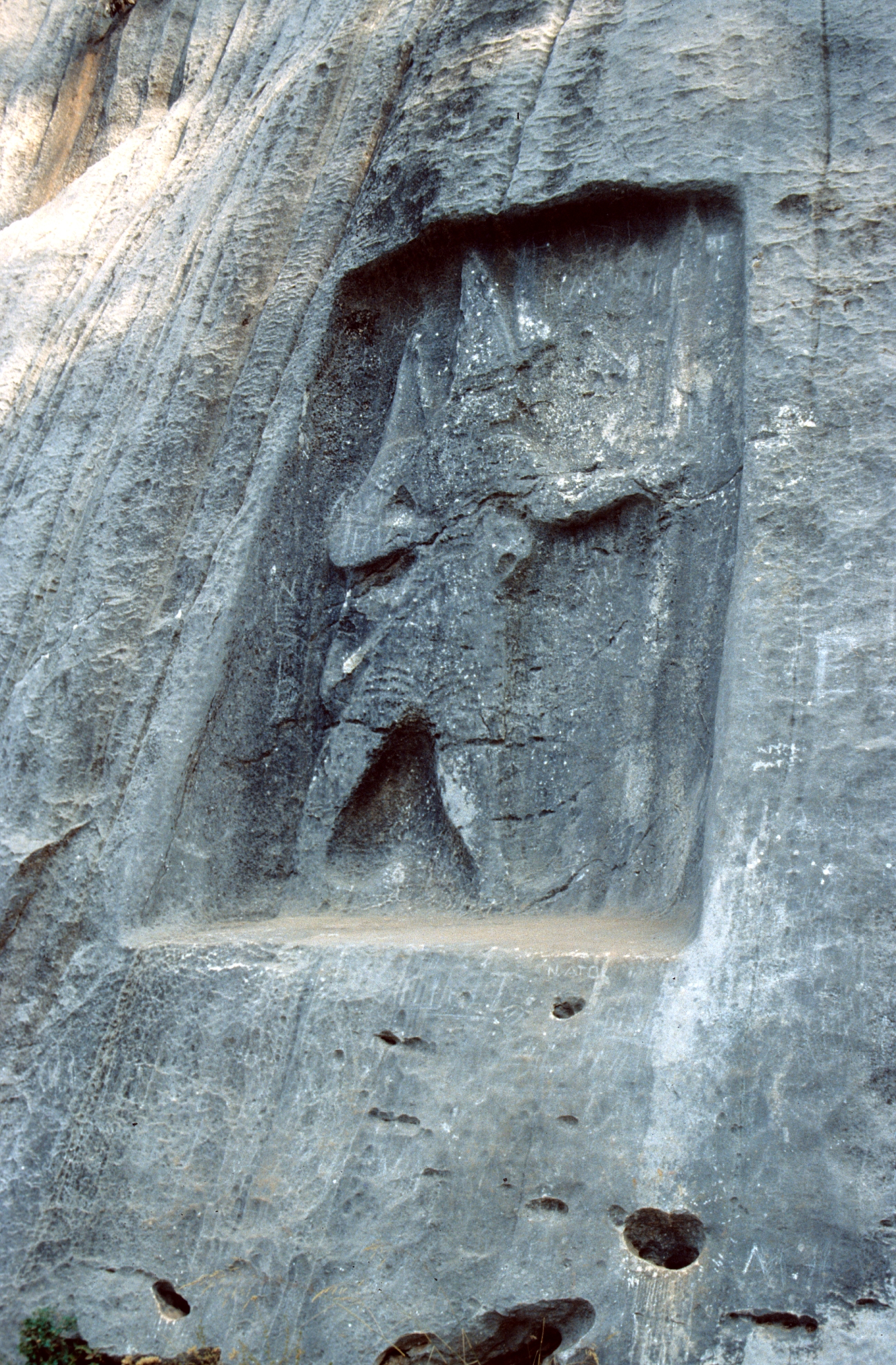
The Hittite / Luwian Karabel relief is a rock relief in the pass of the same name, between Torbalı and Kemalpaşa, about 20 km from İzmir in Turkey. Rock reliefs are a prominent aspect of Hittite art.
The monument originally consisted of four parts: two ruler figures carved into the cliff (Karabel A and B) and two inscriptions on boulders (Karabel C1 and C2). During the construction of a road through the pass between 1977 and 1982, all the reliefs except for Karabel A were destroyed. Karabel A shows a warrior marching to the right with a bow in his right hand and a spear in his left. There are Luwian hieroglyphs inscribed above his left arm. The relief is 1.5 m wide and 2.5 m high
The Karabel relief was damaged by unknown persons, presumed to be treasure hunters, in early 2019.
Herodotus interpreted the figure as the Egyptian Pharaoh Sesostris. The relief was visited by the French traveller Charles Texier in 1839 – he published a description in 1862. After him, Karl Richard Lepsius visited it in 1840. Both accepted it as Egyptian. Heinrich Kiepert disproved this in 1843 by comparing it with the reliefs of Yazılıkaya. Subsequently, when the relief was accepted as Hittite, the place was visited and described by several scholars, including Kurt Bittel, Helmuth Theodor Bossert, Hans Gustav Güterbock, Ekrem Akurgal, Heinrich Otten and Annelies Kammenhuber.
According to the latest research, the relief depicts Tarkasnawa, the king of the Hittite vassal state of Mira under the Hittite empire (13th century BC). In 1998 John David Hawkins was able to read the inscription as follows:
Tarkasnawa, King [of the land] of Mira
[son] of Alantallis, King of the land of Mira
grandson of ...., King of the land of Mira
Hub AI
Karabel relief AI simulator
(@Karabel relief_simulator)
Karabel relief
The Hittite / Luwian Karabel relief is a rock relief in the pass of the same name, between Torbalı and Kemalpaşa, about 20 km from İzmir in Turkey. Rock reliefs are a prominent aspect of Hittite art.
The monument originally consisted of four parts: two ruler figures carved into the cliff (Karabel A and B) and two inscriptions on boulders (Karabel C1 and C2). During the construction of a road through the pass between 1977 and 1982, all the reliefs except for Karabel A were destroyed. Karabel A shows a warrior marching to the right with a bow in his right hand and a spear in his left. There are Luwian hieroglyphs inscribed above his left arm. The relief is 1.5 m wide and 2.5 m high
The Karabel relief was damaged by unknown persons, presumed to be treasure hunters, in early 2019.
Herodotus interpreted the figure as the Egyptian Pharaoh Sesostris. The relief was visited by the French traveller Charles Texier in 1839 – he published a description in 1862. After him, Karl Richard Lepsius visited it in 1840. Both accepted it as Egyptian. Heinrich Kiepert disproved this in 1843 by comparing it with the reliefs of Yazılıkaya. Subsequently, when the relief was accepted as Hittite, the place was visited and described by several scholars, including Kurt Bittel, Helmuth Theodor Bossert, Hans Gustav Güterbock, Ekrem Akurgal, Heinrich Otten and Annelies Kammenhuber.
According to the latest research, the relief depicts Tarkasnawa, the king of the Hittite vassal state of Mira under the Hittite empire (13th century BC). In 1998 John David Hawkins was able to read the inscription as follows:
Tarkasnawa, King [of the land] of Mira
[son] of Alantallis, King of the land of Mira
grandson of ...., King of the land of Mira
Recent media