
Recent from talks
Karesuando
Knowledge base stats:
Talk channels stats:
Members stats:
Karesuando
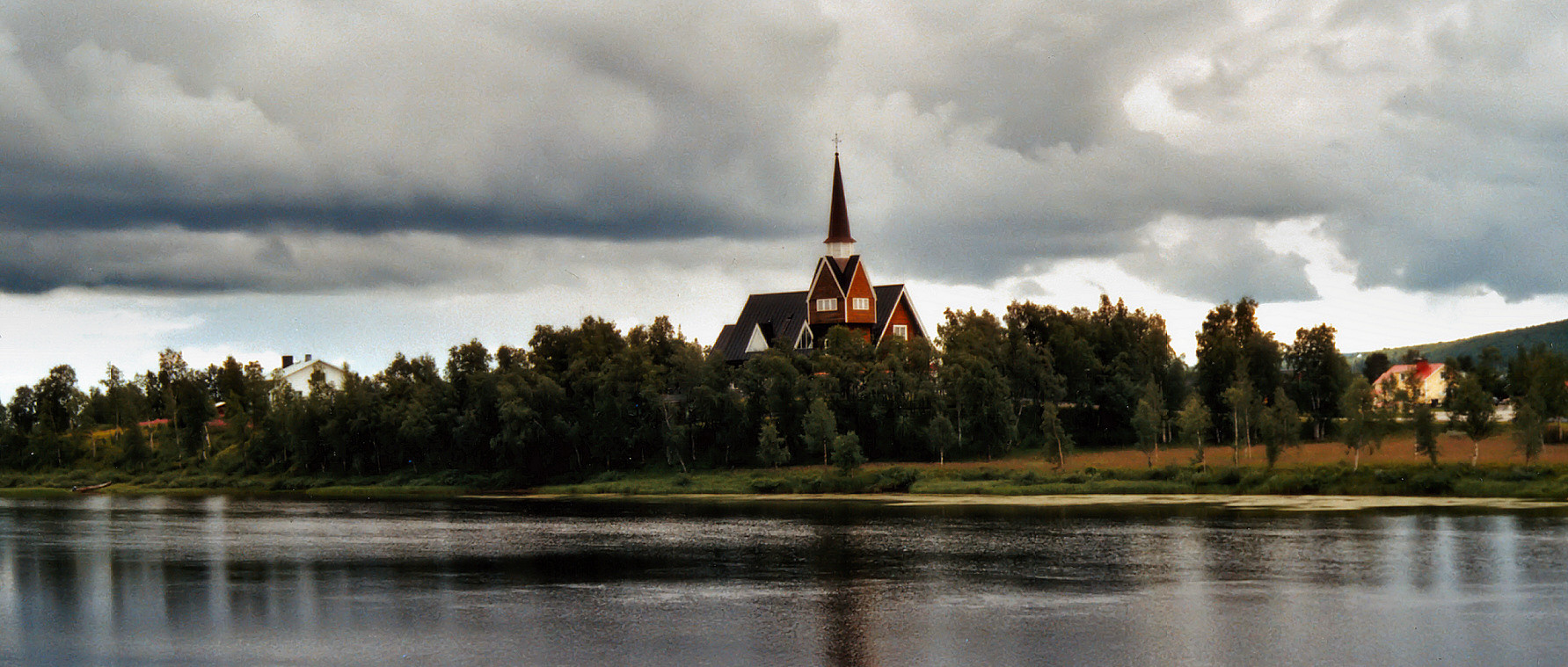
Karesuando (Swedish: [ˈkǎrːɛsʉandɔ]; Finnish: Kaaresuvanto or Karesuvanto; Northern Sámi: Gárasavvon; Meänkieli: Karesuanto) is the northernmost locality in Sweden. It is situated in Kiruna Municipality, Norrbotten County, Sweden, with 303 inhabitants in 2010 and 350 in 2011.
It is a church village, located alongside the Muonio River on the border with Finland.
The Finnish village of Karesuvanto (population about 140) is located on the Finnish side of the river. According to Finnish tradition, they are one and the same village (with a combined population of about 470), but are usually considered to be separate villages since there is a national border between them (although both are called Karesuvanto in Finnish).
The village's buildings were built in 1670, when Måns Mårtensson Karesuando, called "Hyvä Maunu Martinpoika" in Finnish and "Good Maunu, Son of Martin" in English, bought land from Sami Henrik Nilsson Nikkas. The first church was built in 1816 because the previous parish church is located on the Finnish side of the border created in 1809. The Lutheran vicar and botanist Lars Levi Laestadius served in Karesuando from 1826 to 1849. It was here that he founded the revivalist movement known to this day as Laestadianism.
The area is traditionally Finnish speaking, and the border was drawn for political reasons in 1809, not because of any cultural or any other border existing at that time. There was not even a parish border, so Karesuando Church was built because the older church was on the Finnish side. School and church influences have since resulted in cultural and linguistic differences.
The area had a training camp for the Norwegian police troops in Sweden during World War II.
Karesuando is located along the European route E45, and is the northern terminus of Swedish national road 99.
Karesuando has a continental type of a subarctic climate (Köppen Dfc) with short and cool summers and long, cold and sometimes very cold winters. Snowfall varies from year to year, but is often quite moderate due to dry polar air. Still, accumulation in spring is usually quite high since the snow cover does not thaw at all during winter due to the cold averages. The warmest temperature of the month usually goes above freezing in winter, but for very brief spells.
Hub AI
Karesuando AI simulator
(@Karesuando_simulator)
Karesuando
Karesuando (Swedish: [ˈkǎrːɛsʉandɔ]; Finnish: Kaaresuvanto or Karesuvanto; Northern Sámi: Gárasavvon; Meänkieli: Karesuanto) is the northernmost locality in Sweden. It is situated in Kiruna Municipality, Norrbotten County, Sweden, with 303 inhabitants in 2010 and 350 in 2011.
It is a church village, located alongside the Muonio River on the border with Finland.
The Finnish village of Karesuvanto (population about 140) is located on the Finnish side of the river. According to Finnish tradition, they are one and the same village (with a combined population of about 470), but are usually considered to be separate villages since there is a national border between them (although both are called Karesuvanto in Finnish).
The village's buildings were built in 1670, when Måns Mårtensson Karesuando, called "Hyvä Maunu Martinpoika" in Finnish and "Good Maunu, Son of Martin" in English, bought land from Sami Henrik Nilsson Nikkas. The first church was built in 1816 because the previous parish church is located on the Finnish side of the border created in 1809. The Lutheran vicar and botanist Lars Levi Laestadius served in Karesuando from 1826 to 1849. It was here that he founded the revivalist movement known to this day as Laestadianism.
The area is traditionally Finnish speaking, and the border was drawn for political reasons in 1809, not because of any cultural or any other border existing at that time. There was not even a parish border, so Karesuando Church was built because the older church was on the Finnish side. School and church influences have since resulted in cultural and linguistic differences.
The area had a training camp for the Norwegian police troops in Sweden during World War II.
Karesuando is located along the European route E45, and is the northern terminus of Swedish national road 99.
Karesuando has a continental type of a subarctic climate (Köppen Dfc) with short and cool summers and long, cold and sometimes very cold winters. Snowfall varies from year to year, but is often quite moderate due to dry polar air. Still, accumulation in spring is usually quite high since the snow cover does not thaw at all during winter due to the cold averages. The warmest temperature of the month usually goes above freezing in winter, but for very brief spells.
Recent media