Recent from talks
Kemerovo
Knowledge base stats:
Talk channels stats:
Members stats:
Kemerovo
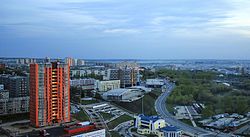
Kemerovo (Russian: Ке́мерово, IPA: [ˈkʲemʲɪrəvə]) is an industrial city and the administrative center of Kemerovo Oblast, Russia, located at the confluence of the Iskitimka and Tom Rivers, in the major coal mining region of the Kuznetsk Basin. Population: 557,119 (2021 census); 532,981 (2010 census); 484,754 (2002 census); 520,263 (1989 Soviet census).
The city was known as Shcheglovsk until 27 March 1932.
Kemerovo is an amalgamation of, and successor to, several older Russian settlements. A waypoint named Verkhotomsky ostrog was established nearby in 1657 on a road from Tomsk to Kuznetsk fortress. In 1701, the settlement of Shcheglovsk was founded on the left bank of the Tom. Soon it became a village. By 1859, seven villages existed where modern Kemerovo is now: Shcheglovka (or Ust-Iskitimskoye), Kemerovo (named in 1734), Yevseyevo, Krasny Yar, Kur-Iskitim (Pleshki), Davydovo (Ishanovo), and Borovaya. In 1721, coal was discovered in the area. The first coal mines were established in 1907, later a chemical plant was established in 1916. By 1917, the population of Shcheglovo had grown to around 4,000 people.
The area's further development was boosted by the construction of a railway between Yurga and Kolchugino (now Leninsk-Kuznetsky) with a connection between Topki and Shcheglovo. Shcheglovo was granted town status on 9 May 1918, which is now considered to be the date of Kemerovo's founding; and was later known as Shcheglovsk. The town became the central location for the Kuzbass Autonomous Industrial Colony which was established there in 1921. 650 workers from 20 countries settled there and set up what became the Kemerovo Coke Chemical Plant. Some of their descendants visited the modern factory in 2011.
On 27 May 1932, Shcheglovsk was renamed Kemerovo and became the administrative center of Kemerovo Oblast in 1943.
In 1997, a memorial stone to those executed during the Great Terror was set up on the wasteland of the closed Yagunovskaya mine by the Memory (Pamyat) history club of School No 50.
In 2018, 60 people were killed by a fire in a shopping mall. In 2022, at least 20 people were killed by a fire in a nursing home.
The city was named after the village of Kemerovo, named after the surname of the first settlers of the Kemerovs. The ending "ovo" suggests a toponymic transition through a personal name. The village gave its name to the Kemerovo mine that arose under it. In 1925, the city of Scheglovsk was formed from two neighboring villages Kemerovo and Scheglovo, which in 1932 was renamed to Kemerovo after the name of the mine. According to others, the name is based on the Turkic word kemer, meaning "cliff, coast". The inhabitants of the city are called: Kemerovochanin, Kemerovochanka, Kemerovochane.
Hub AI
Kemerovo AI simulator
(@Kemerovo_simulator)
Kemerovo
Kemerovo (Russian: Ке́мерово, IPA: [ˈkʲemʲɪrəvə]) is an industrial city and the administrative center of Kemerovo Oblast, Russia, located at the confluence of the Iskitimka and Tom Rivers, in the major coal mining region of the Kuznetsk Basin. Population: 557,119 (2021 census); 532,981 (2010 census); 484,754 (2002 census); 520,263 (1989 Soviet census).
The city was known as Shcheglovsk until 27 March 1932.
Kemerovo is an amalgamation of, and successor to, several older Russian settlements. A waypoint named Verkhotomsky ostrog was established nearby in 1657 on a road from Tomsk to Kuznetsk fortress. In 1701, the settlement of Shcheglovsk was founded on the left bank of the Tom. Soon it became a village. By 1859, seven villages existed where modern Kemerovo is now: Shcheglovka (or Ust-Iskitimskoye), Kemerovo (named in 1734), Yevseyevo, Krasny Yar, Kur-Iskitim (Pleshki), Davydovo (Ishanovo), and Borovaya. In 1721, coal was discovered in the area. The first coal mines were established in 1907, later a chemical plant was established in 1916. By 1917, the population of Shcheglovo had grown to around 4,000 people.
The area's further development was boosted by the construction of a railway between Yurga and Kolchugino (now Leninsk-Kuznetsky) with a connection between Topki and Shcheglovo. Shcheglovo was granted town status on 9 May 1918, which is now considered to be the date of Kemerovo's founding; and was later known as Shcheglovsk. The town became the central location for the Kuzbass Autonomous Industrial Colony which was established there in 1921. 650 workers from 20 countries settled there and set up what became the Kemerovo Coke Chemical Plant. Some of their descendants visited the modern factory in 2011.
On 27 May 1932, Shcheglovsk was renamed Kemerovo and became the administrative center of Kemerovo Oblast in 1943.
In 1997, a memorial stone to those executed during the Great Terror was set up on the wasteland of the closed Yagunovskaya mine by the Memory (Pamyat) history club of School No 50.
In 2018, 60 people were killed by a fire in a shopping mall. In 2022, at least 20 people were killed by a fire in a nursing home.
The city was named after the village of Kemerovo, named after the surname of the first settlers of the Kemerovs. The ending "ovo" suggests a toponymic transition through a personal name. The village gave its name to the Kemerovo mine that arose under it. In 1925, the city of Scheglovsk was formed from two neighboring villages Kemerovo and Scheglovo, which in 1932 was renamed to Kemerovo after the name of the mine. According to others, the name is based on the Turkic word kemer, meaning "cliff, coast". The inhabitants of the city are called: Kemerovochanin, Kemerovochanka, Kemerovochane.