
Recent from talks
Kensico Reservoir
Knowledge base stats:
Talk channels stats:
Members stats:
Kensico Reservoir
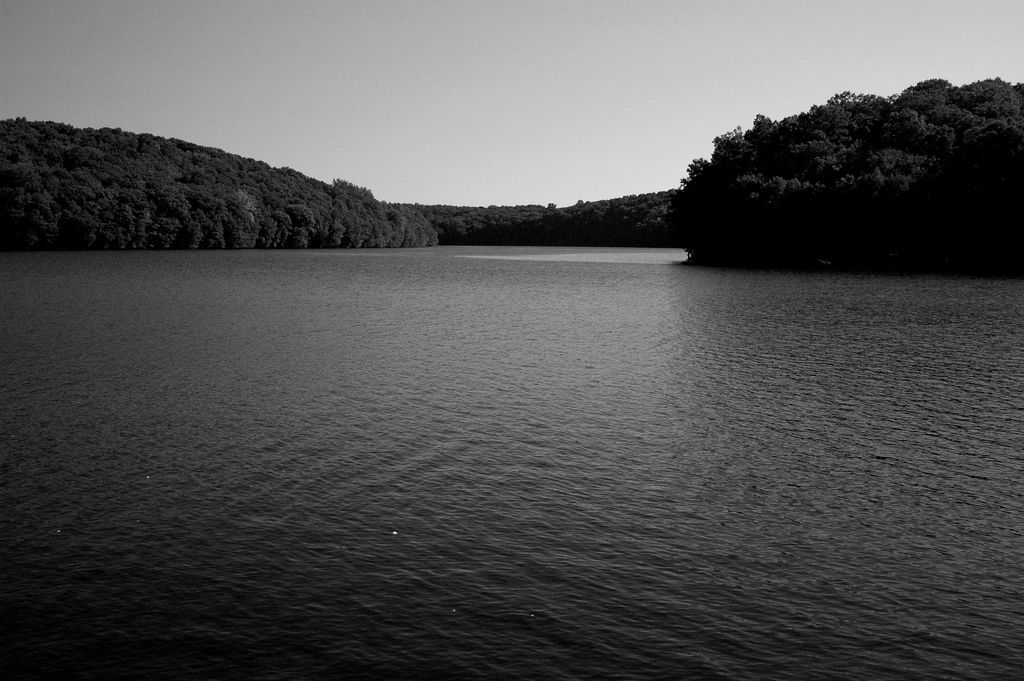
The Kensico Reservoir is a reservoir in the New York City water supply system. Spanning the towns of North Castle and Mount Pleasant, New York, it was formed by the Kensico Dam in 1885, which impounded waters from the Bronx and Byram Rivers.
In addition to being a catchment for its own drainage basin in Westchester County, the reservoir serves as a mixing basin for and stores waters from both the Catskill Aqueduct and Delaware Aqueduct, as well as the drainages of the West Branch Reservoir and Boyds Corner Reservoir (that lie within the Croton River watershed), which get mixed at West Branch with those of the Delaware Aqueduct before the combined flow is carried to Kensico.
The final reservoir within the Catskill/Delaware system, Kensico is held back by the 1,843 foot (562 m) long, 307-foot (94 m) high Kensico Dam, and holds approximately 30 billion US gallons (110,000,000 m3) of water.
The first use of water from Westchester County came from the Old Croton Dam, which was completed in 1842. During the 1880s, New York faced increased demands for water and sought to enlarge the Croton Distributing Reservoir located in Manhattan to meet that need. The enlargement was completed in 1906 as a part of a system of reservoirs – the Croton Watershed – designed to draw water from Putnam and Westchester counties to New York City.
In 1885, the old Kensico Dam was built south of the village of Kensico as an additional source of water for New York City. The dam formed a small lake with water from the Bronx and Byram Rivers, but it was not enough for New York's increasing population. A larger reservoir was needed to act as a holding tank for distribution to New York City. Kensico was surrounded by hills that came to a natural V-shape, making it an ideal area to hold a vast amount of water. To the south of Kensico were two ponds in Harrison, Rye Pond and Little Rye Pond, which would eventually form part of the new reservoir. A nearby quarry in Harrison bordering Cranberry Lake provided the necessary materials for building the new dam.
In 1905, New York State passed legislation to allow fundraising for the construction of Kensico Reservoir. The following year, final planning by the state was approved, and preliminary surveys were started. A seventeen-mile railroad spur and a small network of highways were built to carry materials from quarries at nearby Cranberry and Silver Lakes to the dam site. A camp for the workers and their families was also constructed, along with public facilities for their children.
To prepare for the dam construction, each individual lot of land was condemned and appraised, and the owner was paid a "fair value" for the land. Many of the families had to move to the surrounding communities of Armonk, Harrison, Valhalla, and White Plains. The village of Kensico was then flooded to make way for the reservoir.
On July 12, 2018, the New York City Department of Environmental Protection (DEP) announced plans for a Kensico-Eastview Connection Project. The project mainly involved constructing an approximately 2-mile long tunnel between the Kensico Reservoir and the nearby Catskill-Delaware Water Ultraviolet Disinfection Facility.
Hub AI
Kensico Reservoir AI simulator
(@Kensico Reservoir_simulator)
Kensico Reservoir
The Kensico Reservoir is a reservoir in the New York City water supply system. Spanning the towns of North Castle and Mount Pleasant, New York, it was formed by the Kensico Dam in 1885, which impounded waters from the Bronx and Byram Rivers.
In addition to being a catchment for its own drainage basin in Westchester County, the reservoir serves as a mixing basin for and stores waters from both the Catskill Aqueduct and Delaware Aqueduct, as well as the drainages of the West Branch Reservoir and Boyds Corner Reservoir (that lie within the Croton River watershed), which get mixed at West Branch with those of the Delaware Aqueduct before the combined flow is carried to Kensico.
The final reservoir within the Catskill/Delaware system, Kensico is held back by the 1,843 foot (562 m) long, 307-foot (94 m) high Kensico Dam, and holds approximately 30 billion US gallons (110,000,000 m3) of water.
The first use of water from Westchester County came from the Old Croton Dam, which was completed in 1842. During the 1880s, New York faced increased demands for water and sought to enlarge the Croton Distributing Reservoir located in Manhattan to meet that need. The enlargement was completed in 1906 as a part of a system of reservoirs – the Croton Watershed – designed to draw water from Putnam and Westchester counties to New York City.
In 1885, the old Kensico Dam was built south of the village of Kensico as an additional source of water for New York City. The dam formed a small lake with water from the Bronx and Byram Rivers, but it was not enough for New York's increasing population. A larger reservoir was needed to act as a holding tank for distribution to New York City. Kensico was surrounded by hills that came to a natural V-shape, making it an ideal area to hold a vast amount of water. To the south of Kensico were two ponds in Harrison, Rye Pond and Little Rye Pond, which would eventually form part of the new reservoir. A nearby quarry in Harrison bordering Cranberry Lake provided the necessary materials for building the new dam.
In 1905, New York State passed legislation to allow fundraising for the construction of Kensico Reservoir. The following year, final planning by the state was approved, and preliminary surveys were started. A seventeen-mile railroad spur and a small network of highways were built to carry materials from quarries at nearby Cranberry and Silver Lakes to the dam site. A camp for the workers and their families was also constructed, along with public facilities for their children.
To prepare for the dam construction, each individual lot of land was condemned and appraised, and the owner was paid a "fair value" for the land. Many of the families had to move to the surrounding communities of Armonk, Harrison, Valhalla, and White Plains. The village of Kensico was then flooded to make way for the reservoir.
On July 12, 2018, the New York City Department of Environmental Protection (DEP) announced plans for a Kensico-Eastview Connection Project. The project mainly involved constructing an approximately 2-mile long tunnel between the Kensico Reservoir and the nearby Catskill-Delaware Water Ultraviolet Disinfection Facility.
Recent media