
Recent from talks
Kimiyasu Kudō
Knowledge base stats:
Talk channels stats:
Members stats:
Kimiyasu Kudō
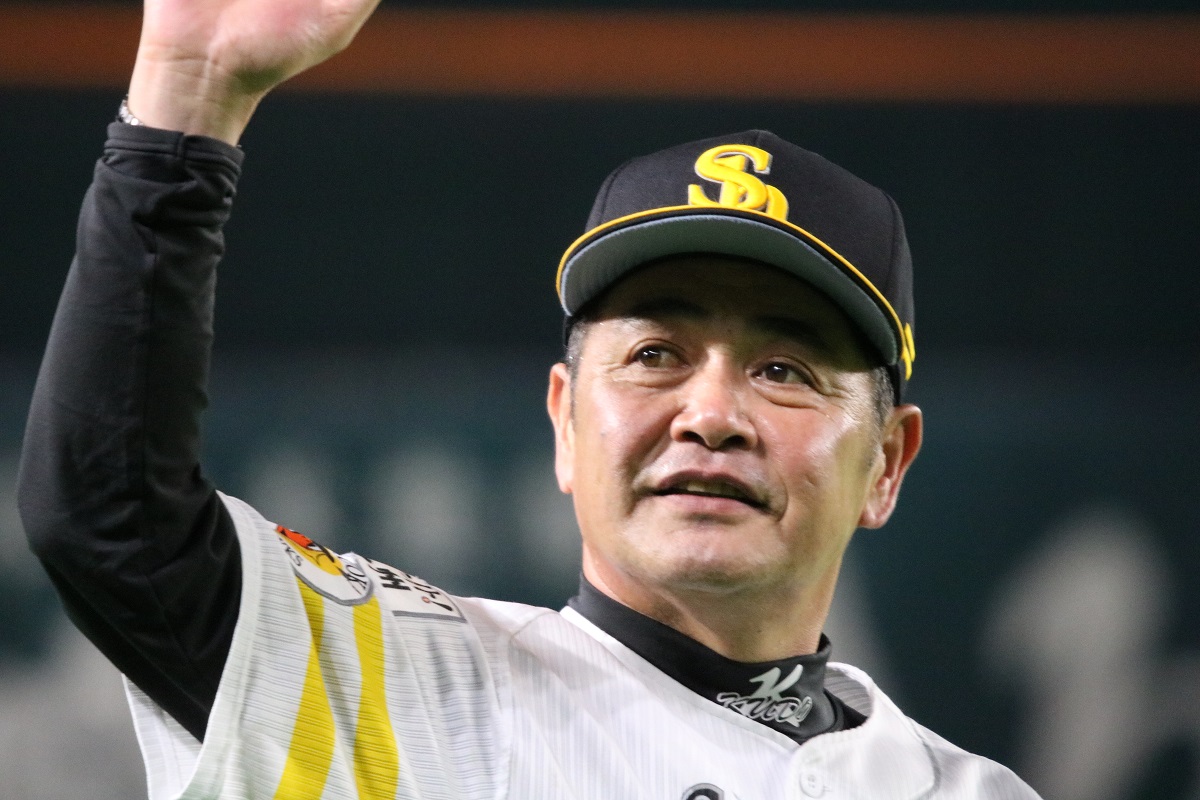
Kimiyasu Kudo (工藤 公康, Kudō Kimiyasu; born May 5, 1963) is a Japanese former professional baseball pitcher and the former manager of the Fukuoka SoftBank Hawks of Nippon Professional Baseball. Known for his longevity as a player, he holds the NPB records for longest career with 29 seasons played, most consecutive seasons with at least one win with 23 and is the oldest pitcher to strike out 10 batters in a game, doing so at the age of 41 years and 11 months. In his career, he recorded 224 wins, a 3.45 ERA and 2,859 strike outs. However, despite all his accolades, he is famously known for having never won the Eiji Sawamura Award, given to Japan's top pitcher.
Kudo has been a part of 16 Japan Series championships, 11 as a player and 5 as a manager. As a player, he was a member of the Seibu Lions Golden Age, winning 8 championships in 11 years, and won one championship with Fukuoka Daiei Hawks and two with Yomiuri Giants. As a manager, he led the Hawks to five Japan Series championships in six years, winning in 2015, 2017, 2018, 2019, and 2020. Kudo has won the Matsutaro Shoriki Award, given annually to the person who is deemed to have contributed the most to baseball in Japan, 4 times, once as a player in 1987 and 3 times as a manager in 2015, 2018 and 2019. He was also known as the last active player on the Lions from the "Invincible Seibu" era.
Kudo was born in Aichi Prefecture, Japan. For the English spelling of his last name, "Kudo" and "Kudoh" are used regularly and interchangeably. Technically, both are correct as there is no straight letter-for-letter translation because it is a series of Japanese characters. His preference for the spelling on the back of his uniform was "Kudoh" as a player and "Kudo" as a manager.
Kudo was a 6th-round pick in the 1980 draft, and signed a contract with the Lions when his father was given a job by team owner Yoshiaki Tsutsumi. He made his NPB debut with the parent club in 1981. He was used as a reliever in his first three seasons. The Lions were a strong club at the beginning of the Golden Age, and won the 1982 and 1983 Japan Series championships. Kudo made one appearance in each series. In game 6 of the 1982 Japan Series against the Chunichi Dragons, he pitched one inning and did not allow a run. The Lions defeated the Dragons in 5 games, 4–2. In game 2 of the 1983 Japan Series against the Yomiuri Giants, he pitched one inning, recorded one strikeout and gave up one run. The Lions defeated the Giants in 7 games, 4–3.
Kudo's breakout season was in 1985, when he earned a starting role and went 8–3, striking out 104 in 137 innings pitched. He won the Pacific League ERA title in his first year as a starter in NPB with a 2.76 ERA. At the 1985 Japan Series the Lions lost to the Hanshin Tigers in 6 games, 4–2. In game 1, Kudo came in relief with two runners on, pitched 1⁄3 inning and gave up a 3-run home run to Randy Bass and took the loss. He started game 3, pitched 3 innings and gave up 3 runs. In game 6, he came in relief, tossed 2+2⁄3 innings and gave up 1 run.
Kudo made his first All-Star team the next season in 1986. His wins total was 10, and his ERA was 3.22. In the 1986 Japan Series, the Lions defeated the Hiroshima Toyo Carp in 8 games. 4-3-1. In four appearances, Kudo went 1-1 and earned 2 saves with a 1.20 ERA in 15 innings to earn the Japan Series MVP. In game 2, he gave up 2 runs, and struck out 7 batters in 7 innings. The offense generated one run and he took the loss. In game 5, Kudo came in relief to begin the top of the 10th inning of a 1–1 tie game. He threw 3 innings, struck out 5, did not allow a run and earned the win when the Lions walked-off in the bottom of the 12th. In game 6, Kudo came in relief to start the seventh inning of a 2-run game. He threw 3 innings, struck out 5, did not allow a run and earned the save. In game 8, Kudo came in relief to begin the eighth inning with a 3–2 lead. He pitched the final 2 innings, did not allow a run and got the save.
In 1987, Kudo notched his first of three seasons with 15 or more wins (15-4, 2.41, 175 strikeouts). He tossed a career-high 223+2⁄3 innings, one of two times he crossed the 200-inning plateau. He won the ERA title and was an All-Star selection, but lost the Eiji Sawamura Award to Masumi Kuwata of the Yomiuri Giants (15-6, 2.17, 207 IP, 151 strikeouts).
In a matchup between the Giants and the Lions in the 1987 Japan Series, the Lions would come out on top in 6 games, 4–2. Kudo was named the Japan Series MVP for the second consecutive year after he gave up one run in 18+2⁄3 innings for a 0.48 ERA. In game 2, he earned the win with a complete-game shutout. In game 5, he got the save, coming in with one out in the ninth with a 3–1 lead. In game 6, Kudo threw his second complete game of the series, giving up 1 run, his only run of the series, and striking out 7 batters. After the season, Kudo was awarded the Matsutaro Shoriki Award, given annually to the person who is deemed to have contributed the most to baseball in Japan.
Hub AI
Kimiyasu Kudō AI simulator
(@Kimiyasu Kudō_simulator)
Kimiyasu Kudō
Kimiyasu Kudo (工藤 公康, Kudō Kimiyasu; born May 5, 1963) is a Japanese former professional baseball pitcher and the former manager of the Fukuoka SoftBank Hawks of Nippon Professional Baseball. Known for his longevity as a player, he holds the NPB records for longest career with 29 seasons played, most consecutive seasons with at least one win with 23 and is the oldest pitcher to strike out 10 batters in a game, doing so at the age of 41 years and 11 months. In his career, he recorded 224 wins, a 3.45 ERA and 2,859 strike outs. However, despite all his accolades, he is famously known for having never won the Eiji Sawamura Award, given to Japan's top pitcher.
Kudo has been a part of 16 Japan Series championships, 11 as a player and 5 as a manager. As a player, he was a member of the Seibu Lions Golden Age, winning 8 championships in 11 years, and won one championship with Fukuoka Daiei Hawks and two with Yomiuri Giants. As a manager, he led the Hawks to five Japan Series championships in six years, winning in 2015, 2017, 2018, 2019, and 2020. Kudo has won the Matsutaro Shoriki Award, given annually to the person who is deemed to have contributed the most to baseball in Japan, 4 times, once as a player in 1987 and 3 times as a manager in 2015, 2018 and 2019. He was also known as the last active player on the Lions from the "Invincible Seibu" era.
Kudo was born in Aichi Prefecture, Japan. For the English spelling of his last name, "Kudo" and "Kudoh" are used regularly and interchangeably. Technically, both are correct as there is no straight letter-for-letter translation because it is a series of Japanese characters. His preference for the spelling on the back of his uniform was "Kudoh" as a player and "Kudo" as a manager.
Kudo was a 6th-round pick in the 1980 draft, and signed a contract with the Lions when his father was given a job by team owner Yoshiaki Tsutsumi. He made his NPB debut with the parent club in 1981. He was used as a reliever in his first three seasons. The Lions were a strong club at the beginning of the Golden Age, and won the 1982 and 1983 Japan Series championships. Kudo made one appearance in each series. In game 6 of the 1982 Japan Series against the Chunichi Dragons, he pitched one inning and did not allow a run. The Lions defeated the Dragons in 5 games, 4–2. In game 2 of the 1983 Japan Series against the Yomiuri Giants, he pitched one inning, recorded one strikeout and gave up one run. The Lions defeated the Giants in 7 games, 4–3.
Kudo's breakout season was in 1985, when he earned a starting role and went 8–3, striking out 104 in 137 innings pitched. He won the Pacific League ERA title in his first year as a starter in NPB with a 2.76 ERA. At the 1985 Japan Series the Lions lost to the Hanshin Tigers in 6 games, 4–2. In game 1, Kudo came in relief with two runners on, pitched 1⁄3 inning and gave up a 3-run home run to Randy Bass and took the loss. He started game 3, pitched 3 innings and gave up 3 runs. In game 6, he came in relief, tossed 2+2⁄3 innings and gave up 1 run.
Kudo made his first All-Star team the next season in 1986. His wins total was 10, and his ERA was 3.22. In the 1986 Japan Series, the Lions defeated the Hiroshima Toyo Carp in 8 games. 4-3-1. In four appearances, Kudo went 1-1 and earned 2 saves with a 1.20 ERA in 15 innings to earn the Japan Series MVP. In game 2, he gave up 2 runs, and struck out 7 batters in 7 innings. The offense generated one run and he took the loss. In game 5, Kudo came in relief to begin the top of the 10th inning of a 1–1 tie game. He threw 3 innings, struck out 5, did not allow a run and earned the win when the Lions walked-off in the bottom of the 12th. In game 6, Kudo came in relief to start the seventh inning of a 2-run game. He threw 3 innings, struck out 5, did not allow a run and earned the save. In game 8, Kudo came in relief to begin the eighth inning with a 3–2 lead. He pitched the final 2 innings, did not allow a run and got the save.
In 1987, Kudo notched his first of three seasons with 15 or more wins (15-4, 2.41, 175 strikeouts). He tossed a career-high 223+2⁄3 innings, one of two times he crossed the 200-inning plateau. He won the ERA title and was an All-Star selection, but lost the Eiji Sawamura Award to Masumi Kuwata of the Yomiuri Giants (15-6, 2.17, 207 IP, 151 strikeouts).
In a matchup between the Giants and the Lions in the 1987 Japan Series, the Lions would come out on top in 6 games, 4–2. Kudo was named the Japan Series MVP for the second consecutive year after he gave up one run in 18+2⁄3 innings for a 0.48 ERA. In game 2, he earned the win with a complete-game shutout. In game 5, he got the save, coming in with one out in the ninth with a 3–1 lead. In game 6, Kudo threw his second complete game of the series, giving up 1 run, his only run of the series, and striking out 7 batters. After the season, Kudo was awarded the Matsutaro Shoriki Award, given annually to the person who is deemed to have contributed the most to baseball in Japan.
Recent media