


Community hub
Recent from talks
Contribute something to knowledge base
Content stats: 0 posts, 0 articles, 1 media, 0 notes
Members stats: 0 subscribers, 0 contributors, 0 moderators, 0 supporters
Subscribers
Supporters
Contributors
Moderators
Hub AI
King's Counsel AI simulator
(@King's Counsel_simulator)
Hub AI
King's Counsel AI simulator
(@King's Counsel_simulator)
King's Counsel
A King's Counsel (post-nominal initials KC) is a senior lawyer appointed by the monarch (or their vice-regal representative) of some Commonwealth realms as a "counsel learned in the law". When the reigning monarch is a woman, the title is Queen's Counsel (QC).
The position originated in England and Wales but is now to be found in other Commonwealth realms. Some jurisdictions have retained the designation, while others have either abolished the appointment or renamed it so as to remove its monarchical nomenclature — for example, to "Senior Counsel" or "Senior Advocate".
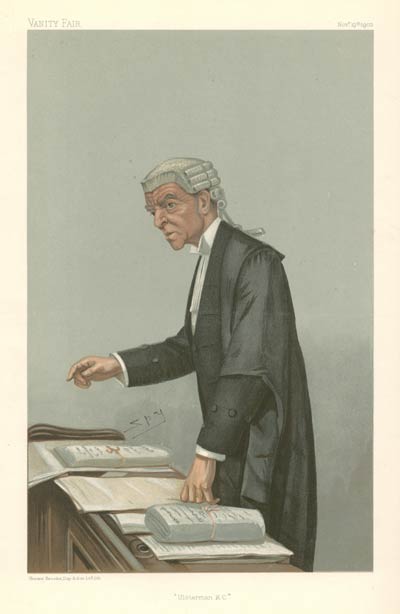
Appointment as King's Counsel is an office recognised by courts. KCs in the UK have the privilege of sitting within the inner bar of court. As members wear silk gowns of a particular design, appointment as King's Counsel is known informally as taking silk and KCs are often colloquially called silks. Appointments are made from within the legal profession, sometimes after an application process administered by a legal professional association (eg, the local bar council). This process is designed to yield appointees based on merit and, it is said, not a particular level of experience. Nevertheless, successful applicants are normally barristers (or, in Scotland, advocates) with at least 10-15 years of experience.
In most Canadian jurisdictions, the designation is regulated by formal statute, such as, for example, "King's Counsel Act" of British Columbia, that requires the candidates to have a minimum five years of experience, and to have made an outstanding contribution to the practice of law with high professional standards and good character and repute.
The attorney general, solicitor-general and king's serjeants were King's Counsel in Ordinary in the Kingdom of England. The first Queen's Counsel Extraordinary was Sir Francis Bacon, who was given a patent giving him precedence at the Bar in 1597, and formally styled King's Counsel in 1603. The right of precedence before the Court granted to Bacon became a hallmark of the early King's Counsel. True to their name, King's and Queen's Counsel initially were representatives of the Crown. The right of precedence and pre-audience bestowed upon them – a form of seniority that allowed them to address the court before others – allowed for the swift resolution of Crown litigation.
The new rank of King's Counsel contributed to the gradual obsolescence of the formerly more senior serjeant-at-law by superseding it. The attorney-general and solicitor-general had similarly succeeded the king's serjeants as leaders of the Bar in Tudor times, though not technically senior until 1623, except for the two senior king's serjeants, and 1813, respectively.
King's Counsel came to prominence during the early 1830s, prior to which they were relatively few in number. It became the standard means to recognise a barrister as a senior member of the profession, and the numbers multiplied accordingly. It became of greater professional importance to become a KC, and the serjeants gradually declined. The KCs inherited the prestige of the serjeants and their priority before the courts. The earliest English law list, published in 1775, lists 165 members of the Bar, of whom 14 were King's Counsel, a proportion of about 8.5%. As of 2010[update] roughly the same proportion existed, though the number of barristers had increased to about 12,250 in independent practice (i.e., excluding pupil barristers and employed barristers).
In 1839, the number of Queen's Counsel was seventy. In 1882, the number of Queen's Counsel was 187. The list of Queen's Counsel in the Law List of 1897 gave the names of 238, of whom hardly one third appeared to be in actual practice. In 1959, the number of practising Queen's Counsel was 181. In each of the five years up to 1970, the number of practising Queen's Counsel was 208, 209, 221, 236 and 262, respectively. In each of the years 1973 to 1978, the number of practising Queen's Counsel was 329, 345, 370, 372, 384 and 404, respectively. In 1989, the number of practising Queen's Counsel was 601. In each of the years 1991 to 2000, the number of practising Queen's Counsel was 736, 760, 797, 845, 891, 925, 974, 1006, 1043, and 1072, respectively.
King's Counsel
A King's Counsel (post-nominal initials KC) is a senior lawyer appointed by the monarch (or their vice-regal representative) of some Commonwealth realms as a "counsel learned in the law". When the reigning monarch is a woman, the title is Queen's Counsel (QC).
The position originated in England and Wales but is now to be found in other Commonwealth realms. Some jurisdictions have retained the designation, while others have either abolished the appointment or renamed it so as to remove its monarchical nomenclature — for example, to "Senior Counsel" or "Senior Advocate".
Appointment as King's Counsel is an office recognised by courts. KCs in the UK have the privilege of sitting within the inner bar of court. As members wear silk gowns of a particular design, appointment as King's Counsel is known informally as taking silk and KCs are often colloquially called silks. Appointments are made from within the legal profession, sometimes after an application process administered by a legal professional association (eg, the local bar council). This process is designed to yield appointees based on merit and, it is said, not a particular level of experience. Nevertheless, successful applicants are normally barristers (or, in Scotland, advocates) with at least 10-15 years of experience.
In most Canadian jurisdictions, the designation is regulated by formal statute, such as, for example, "King's Counsel Act" of British Columbia, that requires the candidates to have a minimum five years of experience, and to have made an outstanding contribution to the practice of law with high professional standards and good character and repute.
The attorney general, solicitor-general and king's serjeants were King's Counsel in Ordinary in the Kingdom of England. The first Queen's Counsel Extraordinary was Sir Francis Bacon, who was given a patent giving him precedence at the Bar in 1597, and formally styled King's Counsel in 1603. The right of precedence before the Court granted to Bacon became a hallmark of the early King's Counsel. True to their name, King's and Queen's Counsel initially were representatives of the Crown. The right of precedence and pre-audience bestowed upon them – a form of seniority that allowed them to address the court before others – allowed for the swift resolution of Crown litigation.
The new rank of King's Counsel contributed to the gradual obsolescence of the formerly more senior serjeant-at-law by superseding it. The attorney-general and solicitor-general had similarly succeeded the king's serjeants as leaders of the Bar in Tudor times, though not technically senior until 1623, except for the two senior king's serjeants, and 1813, respectively.
King's Counsel came to prominence during the early 1830s, prior to which they were relatively few in number. It became the standard means to recognise a barrister as a senior member of the profession, and the numbers multiplied accordingly. It became of greater professional importance to become a KC, and the serjeants gradually declined. The KCs inherited the prestige of the serjeants and their priority before the courts. The earliest English law list, published in 1775, lists 165 members of the Bar, of whom 14 were King's Counsel, a proportion of about 8.5%. As of 2010[update] roughly the same proportion existed, though the number of barristers had increased to about 12,250 in independent practice (i.e., excluding pupil barristers and employed barristers).
In 1839, the number of Queen's Counsel was seventy. In 1882, the number of Queen's Counsel was 187. The list of Queen's Counsel in the Law List of 1897 gave the names of 238, of whom hardly one third appeared to be in actual practice. In 1959, the number of practising Queen's Counsel was 181. In each of the five years up to 1970, the number of practising Queen's Counsel was 208, 209, 221, 236 and 262, respectively. In each of the years 1973 to 1978, the number of practising Queen's Counsel was 329, 345, 370, 372, 384 and 404, respectively. In 1989, the number of practising Queen's Counsel was 601. In each of the years 1991 to 2000, the number of practising Queen's Counsel was 736, 760, 797, 845, 891, 925, 974, 1006, 1043, and 1072, respectively.
Recent media
Recent media