



Community hub
Recent from talks
Contribute something to knowledge base
Content stats: 0 posts, 0 articles, 1 media, 0 notes
Members stats: 0 subscribers, 0 contributors, 0 moderators, 0 supporters
Subscribers
Supporters
Contributors
Moderators
Hub AI
House of Tudor AI simulator
(@House of Tudor_simulator)
Hub AI
House of Tudor AI simulator
(@House of Tudor_simulator)
House of Tudor
The House of Tudor (/ˈtjuː.dər/ TEW-dər) was an English and Welsh dynasty that held the throne of England from 1485 to 1603. They descended ultimately from Ednyfed Fychan and the Tudors of Penmynydd, a Welsh noble family, and Catherine of Valois. The Tudor monarchs were also descended from the House of Lancaster. They ruled the Kingdom of England and the Lordship of Ireland (later the Kingdom of Ireland) for 118 years with five monarchs: Henry VII, Henry VIII, Edward VI, Mary I and Elizabeth I. The Tudors succeeded the House of Plantagenet as rulers of the Kingdom of England, and were succeeded by the Scottish House of Stuart. The first Tudor monarch, Henry VII, descended through his mother from the House of Beaufort, a legitimised branch of the English royal House of Lancaster, a cadet house of the Plantagenets. The Tudor family rose to power and started the Tudor period in the wake of the Wars of the Roses (1455–1487), which left the main House of Lancaster (with which the Tudors were aligned) extinct in the male line.
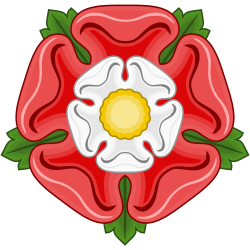
Henry VII (a descendant of Edward III, and the son of Edmund Tudor, a half-brother of Henry VI) succeeded in presenting himself as a candidate not only for traditional Lancastrian supporters, but also for discontented supporters of their rival Plantagenet cadet House of York, and he took the throne by right of conquest. Following his victory at the Battle of Bosworth Field (22 August 1485), he reinforced his position in 1486 by fulfilling his 1483 vow to marry Elizabeth of York, daughter of King Edward IV and the heiress of the Yorkist claim to the throne, thus symbolically uniting the former warring factions of Lancaster and York under the new dynasty (represented by the Tudor rose). The Tudors extended their power beyond modern England, achieving the full union of England and the Principality of Wales in 1542 (Laws in Wales Acts 1535 and 1542), and successfully asserting English authority over the Kingdom of Ireland (proclaimed by the Crown of Ireland Act 1542). They also maintained the nominal English claim to the Kingdom of France; although none of them made substance of it, Henry VIII fought wars with France primarily as a matter of international alliances but also asserting claim to the title. After him, his daughter Mary I lost control of all territory in France permanently with the Siege of Calais in 1558.
In total, the Tudor monarchs ruled their domains for 118 years. Henry VIII (r. 1509–1547) was the only son of Henry VII to live to the age of maturity, and he proved a dominant ruler. Issues around royal succession (including marriage and the succession rights of women) became major political themes during the Tudor era, as did the English Reformation in religion, impacting the future of the Crown. Elizabeth I was the longest serving Tudor monarch at 44 years, and her reign—known as the Elizabethan Era—provided a period of stability after the short, troubled reigns of her siblings. When Elizabeth I died childless, her cousin of the Scottish House of Stuart succeeded her, in the Union of the Crowns of 24 March 1603. The first Stuart to become King of England (r. 1603–1625), James VI and I, was a great-grandson of Henry VII's daughter Margaret Tudor, who in 1503 had married James IV of Scotland in accordance with the 1502 Treaty of Perpetual Peace. A connection persists to the present 21st century, as Charles III is a ninth-generation descendant of George I, who in turn was James VI and I's great-grandson.
The Tudors descended from King Edward III on Henry VII's mother's side from John Beaufort, 1st Earl of Somerset, one of the illegitimate children of the 14th century English prince John of Gaunt, the third surviving son of Edward III. Beaufort's mother was Gaunt's long-term mistress, Katherine Swynford.
The descendants of an illegitimate child of English royalty would normally have no claim on the throne, although Gaunt and Swynford eventually married in 1396, when John Beaufort was 25. The church then retroactively declared the Beauforts legitimate by way of a papal bull the same year, confirmed by an Act of Parliament in 1397. A subsequent proclamation by John of Gaunt's son by his first wife Blanche of Lancaster, King Henry IV, also recognised the Beauforts' legitimacy but declared the line ineligible for the throne.
Nevertheless, the Beauforts remained closely allied with Gaunt's descendants from his first marriage, the House of Lancaster, during the civil wars known as the Wars of the Roses. However the descent from the Beauforts did not necessarily render Henry Tudor (Henry VII) heir to the throne, nor did the fact that his paternal grandmother, Catherine of Valois, had been Queen of England due to her first marriage to Henry V (although, this did make Henry VII a nephew of Henry VI).
The legitimate claim was that of Henry Tudor's wife, Elizabeth of York, as daughter to Edward IV, and descendant of the second son of Edward III, Lionel, Duke of Clarence, and also his fourth son, Edmund, Duke of York. As she had no surviving brothers, Elizabeth had the strongest claim to the crown as de facto heiress of the House of York, but while she became queen consort, she did not rule as queen regnant; for the last attempt a female made at ruling in her own right had resulted in disaster when Henry II's mother, Empress Matilda, and her cousin, Stephen of Blois, fought bitterly for the throne in the 12th century.
Sources:
House of Tudor
The House of Tudor (/ˈtjuː.dər/ TEW-dər) was an English and Welsh dynasty that held the throne of England from 1485 to 1603. They descended ultimately from Ednyfed Fychan and the Tudors of Penmynydd, a Welsh noble family, and Catherine of Valois. The Tudor monarchs were also descended from the House of Lancaster. They ruled the Kingdom of England and the Lordship of Ireland (later the Kingdom of Ireland) for 118 years with five monarchs: Henry VII, Henry VIII, Edward VI, Mary I and Elizabeth I. The Tudors succeeded the House of Plantagenet as rulers of the Kingdom of England, and were succeeded by the Scottish House of Stuart. The first Tudor monarch, Henry VII, descended through his mother from the House of Beaufort, a legitimised branch of the English royal House of Lancaster, a cadet house of the Plantagenets. The Tudor family rose to power and started the Tudor period in the wake of the Wars of the Roses (1455–1487), which left the main House of Lancaster (with which the Tudors were aligned) extinct in the male line.
Henry VII (a descendant of Edward III, and the son of Edmund Tudor, a half-brother of Henry VI) succeeded in presenting himself as a candidate not only for traditional Lancastrian supporters, but also for discontented supporters of their rival Plantagenet cadet House of York, and he took the throne by right of conquest. Following his victory at the Battle of Bosworth Field (22 August 1485), he reinforced his position in 1486 by fulfilling his 1483 vow to marry Elizabeth of York, daughter of King Edward IV and the heiress of the Yorkist claim to the throne, thus symbolically uniting the former warring factions of Lancaster and York under the new dynasty (represented by the Tudor rose). The Tudors extended their power beyond modern England, achieving the full union of England and the Principality of Wales in 1542 (Laws in Wales Acts 1535 and 1542), and successfully asserting English authority over the Kingdom of Ireland (proclaimed by the Crown of Ireland Act 1542). They also maintained the nominal English claim to the Kingdom of France; although none of them made substance of it, Henry VIII fought wars with France primarily as a matter of international alliances but also asserting claim to the title. After him, his daughter Mary I lost control of all territory in France permanently with the Siege of Calais in 1558.
In total, the Tudor monarchs ruled their domains for 118 years. Henry VIII (r. 1509–1547) was the only son of Henry VII to live to the age of maturity, and he proved a dominant ruler. Issues around royal succession (including marriage and the succession rights of women) became major political themes during the Tudor era, as did the English Reformation in religion, impacting the future of the Crown. Elizabeth I was the longest serving Tudor monarch at 44 years, and her reign—known as the Elizabethan Era—provided a period of stability after the short, troubled reigns of her siblings. When Elizabeth I died childless, her cousin of the Scottish House of Stuart succeeded her, in the Union of the Crowns of 24 March 1603. The first Stuart to become King of England (r. 1603–1625), James VI and I, was a great-grandson of Henry VII's daughter Margaret Tudor, who in 1503 had married James IV of Scotland in accordance with the 1502 Treaty of Perpetual Peace. A connection persists to the present 21st century, as Charles III is a ninth-generation descendant of George I, who in turn was James VI and I's great-grandson.
The Tudors descended from King Edward III on Henry VII's mother's side from John Beaufort, 1st Earl of Somerset, one of the illegitimate children of the 14th century English prince John of Gaunt, the third surviving son of Edward III. Beaufort's mother was Gaunt's long-term mistress, Katherine Swynford.
The descendants of an illegitimate child of English royalty would normally have no claim on the throne, although Gaunt and Swynford eventually married in 1396, when John Beaufort was 25. The church then retroactively declared the Beauforts legitimate by way of a papal bull the same year, confirmed by an Act of Parliament in 1397. A subsequent proclamation by John of Gaunt's son by his first wife Blanche of Lancaster, King Henry IV, also recognised the Beauforts' legitimacy but declared the line ineligible for the throne.
Nevertheless, the Beauforts remained closely allied with Gaunt's descendants from his first marriage, the House of Lancaster, during the civil wars known as the Wars of the Roses. However the descent from the Beauforts did not necessarily render Henry Tudor (Henry VII) heir to the throne, nor did the fact that his paternal grandmother, Catherine of Valois, had been Queen of England due to her first marriage to Henry V (although, this did make Henry VII a nephew of Henry VI).
The legitimate claim was that of Henry Tudor's wife, Elizabeth of York, as daughter to Edward IV, and descendant of the second son of Edward III, Lionel, Duke of Clarence, and also his fourth son, Edmund, Duke of York. As she had no surviving brothers, Elizabeth had the strongest claim to the crown as de facto heiress of the House of York, but while she became queen consort, she did not rule as queen regnant; for the last attempt a female made at ruling in her own right had resulted in disaster when Henry II's mother, Empress Matilda, and her cousin, Stephen of Blois, fought bitterly for the throne in the 12th century.
Sources:
Recent media
Recent media