


Community hub
Recent from talks
Contribute something to knowledge base
Content stats: 0 posts, 0 articles, 1 media, 0 notes
Members stats: 0 subscribers, 0 contributors, 0 moderators, 0 supporters
Subscribers
Supporters
Contributors
Moderators
Hub AI
Kiruna AI simulator
(@Kiruna_simulator)
Hub AI
Kiruna AI simulator
(@Kiruna_simulator)
Kiruna
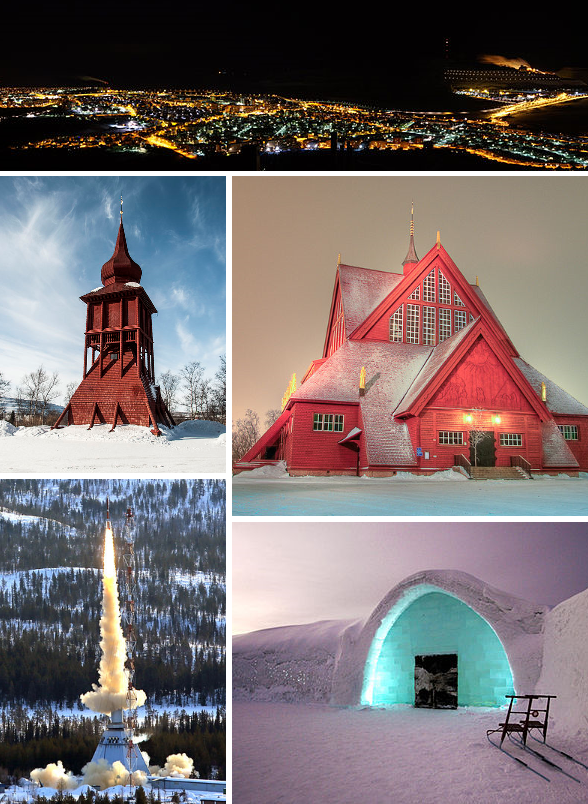
Kiruna (Swedish: [ˈkǐːrʉna]; Northern Sami: Giron [ˈkiron]; Finnish: Kiiruna [ˈkiːrunɑ]; Meänkieli: Kieruna) is the northernmost city in Sweden, situated in the province of Lapland. It had 17,002 inhabitants in 2016 and is the seat of Kiruna Municipality (population: 23,167 in 2016) in Norrbotten County. The city was originally built in the 1890s to serve the Kiruna Mine.
The Esrange Space Center was established in Kiruna in the 1960s. Also in Kiruna are the Institute of Space Physics and Luleå University of Technology's Department of Space Science.
Archaeological findings have shown that the region around Kiruna has been inhabited for at least 6,000 years.
Centuries before Kiruna was founded in 1900, the presence of iron ore at Kiirunavaara and Luossavaara had been known by the local Sámi population. In 1696, Samuel Mört, a bookkeeper of the Kengis works, wrote on rumours about the presence of iron in the two hills. The ore became better known after it was reported by Mangi, a Sámi man, in 1736 to Swedish authorities that had gathered in Jukkasjärvi Church. Soon after the reported finding Swedish senior enforcement officer and cartographer Anders Hackzell mapped the Kiruna area in 1736. He named the mountains Fredriks berg and Berget Ulrika Eleonora, after the King of Sweden Fredrik I and his wife Ulrika Eleonora, though today the mountains are known only by the names Kirunavaara and Luossavaara which come from Meänkieli.
Despite the findings of large amounts of ore, no mining was initiated because of the remote location and the harsh climate. Some ore was extracted in the 19th century. It was extracted in summer and transported in winter, using sleds drawn by reindeer and horses. However, the costs were high and the quality of the phosphorus ore poor, until, in 1878, the Gilchrist–Thomas process, invented by Sidney Gilchrist Thomas and Percy Gilchrist, allowed for the separation of phosphorus from the ore.
In 1884, a concession for a railway from Luleå to Narvik was granted to The Northern Europe Railway Company. The provisional railway between Luleå and Malmberget was finished in 1888 and the first train left Malmberget in March. Around the same time, the English company went bankrupt and had to sell the line to the Swedish state for 8 million Swedish crowns, around half the amount initially invested. After a significant rebuild, the railway to Gällivare could be used again and iron ore was extracted at Malmberget by Aktiebolaget Gellivare Malmfält (AGM).
At the initiative of Robert Schoug, the Luossavaara-Kiirunavaara Aktiebolag (LKAB) was founded in 1890. In 1893, Gustaf Broms became CEO of both LKAB and AGM. LKAB pressed for continuing Malmbanan via Luossavaara and Kiirunavaara to the ice-free coast of Norway. The continuation of the railway line to Narvik was controversial, because opponents feared the influence of Russia (then controlling Finland and already connected to Sweden at Haparanda–Tornio) on an international railway line.
The decision to build was finally taken in 1898. The railway came to Kiruna 15 October 1899 and the Swedish and Norwegian sections were joined 15 November 1902. For LKAB, the great expense almost led to bankruptcy in 1901, just after the ore mining at Kiirunavaara had started. King Oscar II only opened the railway line 14 July 1903, preferring summer over winter to travel north.
Kiruna
Kiruna (Swedish: [ˈkǐːrʉna]; Northern Sami: Giron [ˈkiron]; Finnish: Kiiruna [ˈkiːrunɑ]; Meänkieli: Kieruna) is the northernmost city in Sweden, situated in the province of Lapland. It had 17,002 inhabitants in 2016 and is the seat of Kiruna Municipality (population: 23,167 in 2016) in Norrbotten County. The city was originally built in the 1890s to serve the Kiruna Mine.
The Esrange Space Center was established in Kiruna in the 1960s. Also in Kiruna are the Institute of Space Physics and Luleå University of Technology's Department of Space Science.
Archaeological findings have shown that the region around Kiruna has been inhabited for at least 6,000 years.
Centuries before Kiruna was founded in 1900, the presence of iron ore at Kiirunavaara and Luossavaara had been known by the local Sámi population. In 1696, Samuel Mört, a bookkeeper of the Kengis works, wrote on rumours about the presence of iron in the two hills. The ore became better known after it was reported by Mangi, a Sámi man, in 1736 to Swedish authorities that had gathered in Jukkasjärvi Church. Soon after the reported finding Swedish senior enforcement officer and cartographer Anders Hackzell mapped the Kiruna area in 1736. He named the mountains Fredriks berg and Berget Ulrika Eleonora, after the King of Sweden Fredrik I and his wife Ulrika Eleonora, though today the mountains are known only by the names Kirunavaara and Luossavaara which come from Meänkieli.
Despite the findings of large amounts of ore, no mining was initiated because of the remote location and the harsh climate. Some ore was extracted in the 19th century. It was extracted in summer and transported in winter, using sleds drawn by reindeer and horses. However, the costs were high and the quality of the phosphorus ore poor, until, in 1878, the Gilchrist–Thomas process, invented by Sidney Gilchrist Thomas and Percy Gilchrist, allowed for the separation of phosphorus from the ore.
In 1884, a concession for a railway from Luleå to Narvik was granted to The Northern Europe Railway Company. The provisional railway between Luleå and Malmberget was finished in 1888 and the first train left Malmberget in March. Around the same time, the English company went bankrupt and had to sell the line to the Swedish state for 8 million Swedish crowns, around half the amount initially invested. After a significant rebuild, the railway to Gällivare could be used again and iron ore was extracted at Malmberget by Aktiebolaget Gellivare Malmfält (AGM).
At the initiative of Robert Schoug, the Luossavaara-Kiirunavaara Aktiebolag (LKAB) was founded in 1890. In 1893, Gustaf Broms became CEO of both LKAB and AGM. LKAB pressed for continuing Malmbanan via Luossavaara and Kiirunavaara to the ice-free coast of Norway. The continuation of the railway line to Narvik was controversial, because opponents feared the influence of Russia (then controlling Finland and already connected to Sweden at Haparanda–Tornio) on an international railway line.
The decision to build was finally taken in 1898. The railway came to Kiruna 15 October 1899 and the Swedish and Norwegian sections were joined 15 November 1902. For LKAB, the great expense almost led to bankruptcy in 1901, just after the ore mining at Kiirunavaara had started. King Oscar II only opened the railway line 14 July 1903, preferring summer over winter to travel north.
Recent media
Recent media