Hubbry Logo
ScissorsScissorsMain
Open search
Scissors
Community hub
Scissors
logo
8 pages, 0 posts
0 subscribers
Be the first to start a discussion here.
Scissors
Scissors
from Wikipedia

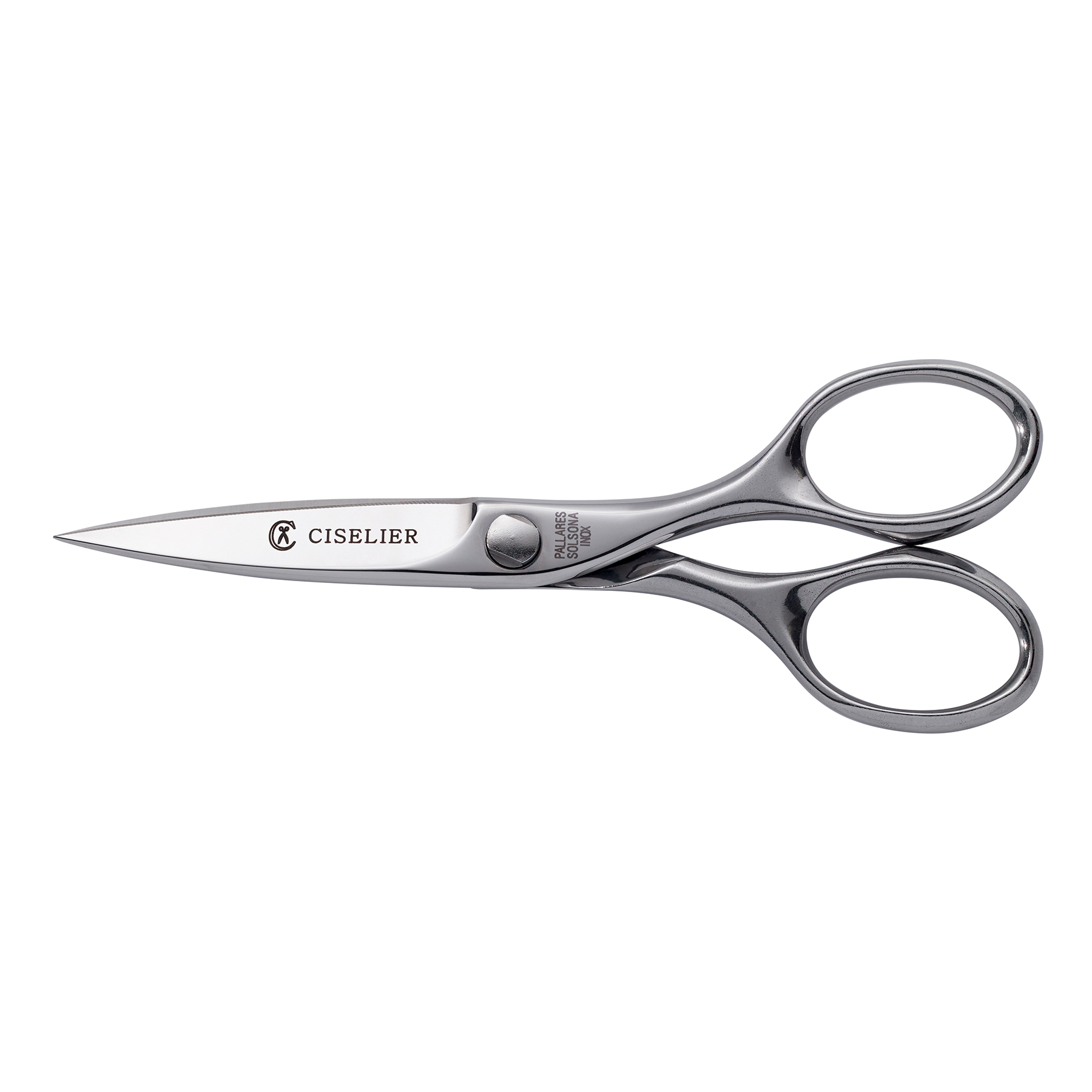
A pair of standard scissors
A video showing scissors being used to cut a piece of card stock

Scissors are hand-operated shearing tools. A pair of scissors consists of a pair of blades pivoted so that the sharpened edges slide against each other when the handles (bows) opposite to the pivot are closed. Scissors are used for cutting various thin materials, such as paper, cardboard, metal foil, cloth, rope, and wire. A large variety of scissors and shears all exist for specialized purposes. Hair-cutting shears and kitchen shears are functionally equivalent to scissors, but the larger implements tend to be called shears. Hair-cutting shears have specific blade angles ideal for cutting hair. Using the incorrect type of scissors to cut hair will result in increased damage or split ends, or both, by breaking the hair. Kitchen shears, also known as kitchen scissors, are intended for cutting and trimming foods such as meats.

Inexpensive, mass-produced modern scissors are often designed ergonomically with composite thermoplastic and rubber handles.

Terminology

[edit]

The noun scissors is treated as a plural noun and therefore takes a plural verb (e.g., these scissors are).[1] Alternatively, the tool is referred to by the singular phrase a pair of scissors.[2] The word shears is used to describe similar instruments that are larger in size and for heavier cutting.[3]

History

[edit]
Han dynasty scissors
These shears are thought to date to the 2nd century AD and come from a Roman settlement in Trabzon, Turkey. The style of the "Egyptianizing" metal inlay designs suggests that they were made to imitate actual Egyptian art. When closed, the dog and cat figures at the tips come face to face.[4]

Early manufacture

[edit]

The Hangzhou Zhang Xiaoquan Company in Hangzhou, China, has been manufacturing scissors since 1663.[5]

Pivoted scissors were not manufactured in large numbers until 1761, when Robert Hinchliffe of Sheffield produced the first pair of modern-day scissors made of hardened and polished cast steel. His major challenge was to form the bows; first, he made them solid, then drilled a hole, and then filed away metal to make this large enough to admit the user's fingers. This process was laborious, and apparently Hinchliffe improved upon it in order to increase production. Hinchliffe lived in Cheney Square (now the site of Sheffield Town Hall), and set up a sign identifying himself as a "fine scissor manufacturer". He achieved strong sales in London and elsewhere.[6]

Modern manufacturing regions

[edit]

China

[edit]

The vast majority of global scissor manufacturing takes place in China. As of 2019, China was responsible for 64.3% of worldwide scissors exports. When combined with Chinese Taipei exports, this rises to 68.3%.[7]

The Hangzhou Zhang Xiaoquan Company, founded in 1663, is one of the oldest continuously operating scissor manufacturers in the world. The company was nationalized in 1958 and now employs 1500 people who annually mass-produce an estimated seven million pairs of inexpensive scissors that retail for an average of US$4 each.[5]

France

[edit]

In the late 14th century, the English word "scissors" came into usage. It was derived from the Old French word cisoires, which referred to shears.[8]

There are several historically important scissor-producing regions in France: Haute-Marne in Nogent-en Bassigny, Châtellereault, Thiers and Rouen.[9] These towns, like many other scissor-producing communities, began with sabre, sword and bayonet production, which transitioned to scissors and other blades in the late 18th and early 19th centuries.[10]

Thiers, in the Puy-de-Dôme department of Auvergne, remains an important centre of scissor and cutlery production. It is home to both the Musée de la Coutellerie, which showcases the town's 800-year history of blade-making,[11] as well as Coutellia [fr], an industry tradeshow that advertises itself as one of the largest annual gatherings of artisanal blade-makers in the world.

Germany

[edit]

Germany was responsible for manufacturing just under 7% of global scissors exports in 2019.[12] Often called "The City of Blades", Solingen, in North Rhine-Westphalia, has been a center for the manufacturing of scissors since medieval times. At the end of the 18th century it's estimated that there were over 300 scissorsmiths in Solingen.[13]

In 1995 the City of Solingen passed The Solingen Ordinance, an update to a 1930s law that decreed "Made in Solingen" stamps could only be applied to products almost entirely manufactured in the old industrial area of Solingen. In 2019 this applied to approximately 150 companies making high-quality blades of all kinds, including scissors.[14]

Friedrich Herder, founded in Solingen in 1727, is one of the oldest scissors manufacturers still operating in Germany.[15]

Italy

[edit]
Classic Italian-style kitchen scissors, often used to cut food. The two halves can be detached in order to be cleaned.

Premana, in Lecco Province, has its origins in ironworks and knife manufacturing beginning in the 16th century. In 1900 there were ten scissor manufacturing workshops, 20 in 1952 and 48 by 1960.[16] Today, Consorzio Premax, an industrial partnership, organizes over 60 local companies involved in the manufacture of scissors for global markets.[17] In 2019 Italy exported 3.5% of scissors manufactured globally.[18]

One of the oldest Premanese scissor manufacturing firms still in operation is Sanelli Ambrogio, which was founded in 1869.[19]

Japan

[edit]

Scissormaking in Japan evolved from sword making in the 14th century.[20] Seki, in Gifu Prefecture, was a renowned center of swordmaking beginning in the 1200s. After citizens were no longer permitted to carry swords, the city's blacksmiths turned to making scissors and knives.[21] There are many specialized types of Japanese scissors, but sewing scissors were introduced by American Commodore Matthew Perry from the United States in 1854.[22]

The Sasuke workshop in Sakai City south of Osaka is run by Yasuhiro Hirakawa, a 5th generation scissorsmith. The company has been in operation since 1867.[23] Yasuhiro Hirakawa is the last traditional scissormaker in Japan, making scissors in the traditional style where the blades are believed to be thinner, lighter and sharper than European scissors.[24] In 2018 he was profiled in a documentary that featured a pair of his bonsai snips which retailed for US$35,000.[25]

Spain

[edit]

In Solsona, Spain, scissor manufacturing began in the 16th century. At the industry's peak in the 18th century there were 24 workshops, organized as the Guild of Saint Eligius, the patron saint of knife makers.[26] By the mid-1980s there were only two, and by 2021, Pallarès Solsona, founded in 1917 by Lluìs and Carles Pallarès Canal, and still family-operated, was the town's sole remaining artisanal scissor manufacturer.[27]

United Kingdom

[edit]

Sheffield was home to the first mass production of scissors beginning in 1761. By the 19th century there were an estimated 60 steel scissor companies in Sheffield. However, since the 1980s, industry globalization and a shift towards cheaper, mass-produced scissors created price deflation that many artisanal manufacturers could not compete with. The Sheffield scissor industry consisted of just two local companies in 2021.[28]

The two remaining Sheffield scissor manufacturers are William Whiteley, founded in 1760,[29] and Ernest Wright, which was established in 1902. Both now focus on high-end/niche crafting of "products for life" rather than mass production.[30] Between these two firms it is estimated that there are no more than ten "putter-togetherers" or "putters" who are the master-trained craftspeople responsible for high quality Sheffield scissor assembly.[31] In 2020, Ernest Wright was recognized with the Award for Endangered Crafts by the British Heritage Crafts Association.[32]

Right-handed and left-handed scissors

[edit]
Left-handed (left) and right-handed (right) sidebent scissors

There are two varieties of left-handed scissors. Many common left-handed scissors (often called "semi"-left-handed scissors) simply have reversed finger grips. The blades open and close as with right-handed scissors, so that users tend to pull the blades apart as they are cutting. This can be challenging for craftspeople as the blades still obscure the cut. "True" left-handed scissors have both reversed finger grips and reversed blade layout, like mirror images of right-handed scissors.[33] A left-handed person accustomed to using semi-left handed scissors may find using true left-handed scissors difficult at first, as they may have learned to rely heavily on the strength of their thumb to pull the blades apart vs. pushing the blades together in order to cut.[34]

Some scissors are marketed as ambidextrous. These have symmetric handles so there is no distinction between the thumb and finger handles, and have very strong pivots so that the blades rotate without any lateral give. However, most "ambidextrous" scissors are in fact still right-handed in that the upper blade is on the right, and hence is on the outside when held in the right hand. Even if they cut successfully, the blade orientation will block the view of the cutting line for a left-handed person. True ambidextrous scissors are possible if the blades are double-edged and one handle is swung all the way around (to almost 360 degrees) so that what were the backs of the blades become the new cutting edges. U.S. patent 3,978,584 was awarded for true ambidextrous scissors.

Specialized scissors and shears

[edit]

Specialized scissors and shears include:

Gardening, agriculture and animal husbandry

[edit]
Type Image Description/purpose
Hedge trimmers for trimming hedges
Grass shears for trimming grass
Averruncators for trimming high branches
Pruning shears or secateurs for trimming small branches
Loppers for cutting through large branches
Blade shears for cutting an animal's fleece to harvest wool

Food and drug

[edit]
Type Image Description/purpose
Kitchen scissors or kitchen shears for food preparation and other purposes
Poultry shears to cut poultry
Cigar cutter specialized scissors with concave blade edges to cut cigars

Grooming

[edit]
Type Image Description/purpose
Hair-cutting shears for trimming hair
Thinning shears for thinning thick hair to avoid a bushy look
Hair clippers used by barbers, hairdressers, and pet groomers for cutting hair
Nail scissors for cutting nails
Nose scissors small scissors for nostril and ear hair

Metalwork

[edit]
Type Image Description/purpose
Tinner snips for cutting through tin
Compound-action snips for cutting through aluminium and stainless steel
Pipe and duct snips for cutting through stove pipe and ducting
Hydraulic cutters for cutting heavy sheet metal, often in traffic collisions. Sometimes referred to by the genericized trademark "Jaws of Life".
Throatless shear for cutting complex shapes in sheet metal

Medical

[edit]
Type Image Description/purpose
Trauma shears, or "tuff cuts" for use in emergency medical response and rescue to cut off clothing
Dissection scissors for cutting flesh in dissection[citation needed]
Surgical scissors for cutting flesh in surgery[35]
Suture scissors for cutting sutures, the hook lifts the suture
Iris scissors for ophthalmic surgery[citation needed]
Metzenbaum scissors for delicate surgery[citation needed]
Tenotomy scissors for delicate surgery[36]
Mayo scissors often for cutting fascia[citation needed]
Bandage scissors for cutting bandages[37]

Ceremonial

[edit]
Type Image Description/purpose
Ceremonial scissors giant scissors used for ceremonial ribbon-cutting events[citation needed]

Sewing and clothes-making

[edit]
Type Image Description/purpose
Crafting scissors for cutting materials for crafts[citation needed]
Buttonhole scissors for opening buttonholes[citation needed]
Dressmaker's shears for cutting fabric for dressmaking[citation needed]
Embroidery scissors for cutting fabric for embroidery[citation needed]
Pinking shears for cutting cloth leaving a sawtooth edge[citation needed]
Tailor's scissors for cutting through heavy-duty materials such as leather or multiple layers of fabric[citation needed]

Primary education

[edit]

Type Image Description/purpose
Safety scissors for children to learn and practice how to use scissors; tips are blunt to reduce injury risk; small size, for children's hands
[edit]

Due to their ubiquity across cultures and classes, scissors have numerous representations across world culture.

Art

[edit]

Numerous art forms worldwide enlist scissors as a tool/material with which to accomplish the art. For cases where scissors appear in or are represented by the final art product, see Commons:Category:Scissors in art.

Film

[edit]

Games

[edit]
  • The game rock paper scissors involves two or more players making shapes with their hands to determine the outcome of the game. One of the three shapes, 'scissors', is made by extending the index and middle fingers to mimic the shape of most scissors.
  • In the horror video game franchise Clock Tower, recurring antagonist Scissorman is a demonic serial killer with a giant pair of scissors.
  • An anthropomorphic pair of scissors appears as a boss in Paper Mario: The Origami King. Various additions of scissor related activity appear as well, such as a variation of rock paper scissors.[38]

Literature

[edit]
  • Heinrich Hoffmann's 1845 children's book Struwwelpeter includes Die Geschichte vom Daumenlutscher ("The Story of the Thumb-Sucker") in which a child continues to suck his thumbs despite his mother's warnings about The Great Tall Scissorman.
  • "Save Your Scissors" – song by City and Colour.
  • The song "Scissors" by American Rock Band "Slipknot"

Proverbs

[edit]

Proverbs about scissors are found in many language communities.

  • "Dull scissors don't cut straight." English[39]
  • "An old bachelor is only half a pair of scissors." English[40]
  • "A man without a woman like half a scissors, that would not cut but scratch." Romanian[41]
  • "Scissors do not cut out the scissors' nail." Hungarian[42]
  • "A face shaped like petals of the lotus, a voice as cool as sandal, a heart like a pair of scissors, and excessive humility, these are the signs of a rogue." Sanskrit[43]
  • "Those who have scissors are many but those who sew are none." Pagu[44]
  • "Spoon, fork, scissors, and lamp are not for little children." Volga German[45]

Sport

[edit]

The term 'scissor kick' may be found in several sports, including:

  • Scissor kick (strike), a generic martial arts term for any of a number of moves that may resemble the appearance or action of a pair of scissors.
  • Bicycle kicks in football are sometimes known as 'scissor kicks'.
  • Swimming strokes including the sidestroke incorporate a leg movement often known as a 'scissor kick'.
  • a style of high jump

Superstition

[edit]

Scissors have a widespread place in cultural superstitions. In many cases, the details of the superstition may be specific to a given country, region, tribe, religion or even situation.

  • Africa
    • In parts of North Africa, it was held that scissors could be used to curse a bridegroom. When the bridegroom was on horseback, the person enacting the curse would stand behind him with the scissors open and call his name. If the bridegroom answered to his name being called, the scissors would then be snapped shut and the bridegroom would be unable to consummate his marriage with his bride.[46]
  • North America
    • United States
      • In New Orleans, some believed that putting an open pair of scissors underneath your pillow at night was a sound method for sleeping well, even if one is cursed.[47]

Nature

[edit]

Animals named after scissors include:

[edit]

See also

[edit]
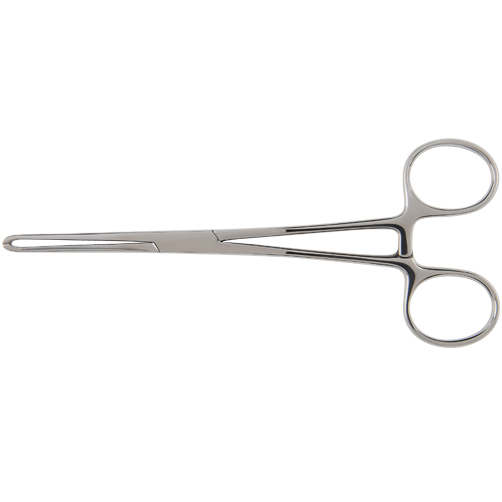
  • Hemostat resembles a pair of scissors, but is used as a clamp in surgery and does not cut at all.
  • Nippers cut (break) small pieces out of tile.
  • Pliers used for holding and crimping metal or wire.
  • Tijeras Canyon a geological feature in New Mexico, US and Tijeras a village in the same canyon, after "scissors" in Spanish.

References

[edit]
[edit]
Revisions and contributorsEdit on WikipediaRead on Wikipedia
from Grokipedia
Scissors are hand-operated shearing tools consisting of two pivoted blades that slide against each other when the handles are squeezed together, enabling precise cutting of materials such as , cloth, thread, food, , and thin metals. The term "scissors" originates from the late 14th-century cisoires, meaning "shears," which derives from the cīsōria and ultimately from the Latin caedere, "to cut," reflecting the tool's fundamental purpose. The earliest known precursors to modern scissors, known as spring scissors, date back to around 3000–4000 years ago in , with well-documented U-shaped tools with spring-like blades used for cutting tasks without a pivot mechanism appearing around 1500 BCE in . The Romans developed the cross-bladed, pivoted design around 100 CE, using iron blades that more closely resemble contemporary scissors, though these were initially considered a form of shears for larger cuts. By the early CE, the modern pivot-jointed scissors were in use in , as described by , and in 1761, English cutler Robert Hinchliffe pioneered the production of scissors from cast steel, improving durability and sharpness for widespread adoption. Scissors vary widely in design to suit specific applications, with distinctions based on —typically those under 15 cm (6 inches) are classified as scissors, while longer ones are shears—and specialized features like serrated edges or rounded tips. Common types include tailoring scissors for fabric, surgical scissors for medical procedures, for zigzag cuts to prevent fraying, safety scissors with blunt tips for children, and heavy-duty shears like bolt cutters for metal. Their versatility has made them indispensable in households, industries, and professions ranging from crafting and grooming to and , where ergonomic handles and high-quality enhance precision and reduce fatigue.

Overview

Definition and Terminology

Scissors are a handheld cutting tool consisting of two blades connected at a central pivot point, designed to shear materials such as , cloth, or by sliding the sharpened edges past each other. This shearing action allows for precise cuts through various substances, distinguishing scissors from tools that employ slicing or chopping mechanisms. The term "scissors" originates from Late Latin cīsōria, the plural form of cīsōrium meaning "cutting instrument," derived from the verb caedere ("to cut"). It entered Old French as cisoires ("shears") and was adopted into Middle English around the late 14th century as sisoures, with the modern spelling and pronunciation evolving by the 16th century. In English usage, "scissors" functions as a plurale tantum, a noun that appears only in plural form to denote a singular object, taking plural verbs (e.g., "the scissors are sharp") despite referring to one tool; formally, multiples are counted as "pairs of scissors," with no standard singular equivalent like "scissor" for the complete instrument. The related term "shears" generally refers to larger variants or those specialized for heavier tasks, such as cutting metal or thick fabric, often featuring longer blades and asymmetrical handles for increased leverage. Scissors are broadly classified by their opening mechanism and leverage system: pivoted types, the most common, rely on a single central or to join the blades, requiring manual opening and closing; spring-loaded variants incorporate a spring to automatically reopen the blades after each cut, aiding users with limited hand strength. Regarding leverage, single-leverage designs use one pivot for straightforward application, while compound-leverage models employ multiple pivot points to multiply cutting power, enabling easier cuts through tougher materials.

Basic Design and Mechanics

Scissors consist of two primary sharpened blades connected at a central pivot, which serves as the fulcrum for the cutting action. The blades are typically flat and tapered toward the tips, with honed edges that slide against each other to create a shearing effect. Extending from the blades are the shanks, which connect to the handles—often referred to as bows or finger loops—designed to accommodate and s for operation. Many designs include finger rests or on the bows to provide additional support and prevent slippage during use. The pivot is usually a screw or that allows the blades to rotate relative to one another, enabling the handles to open and close smoothly. The operational mechanics of standard scissors rely on leverage to generate shearing force, where the pivot acts as the fulcrum in a first-class lever system. When force is applied to the handles, it translates through the pivot to bring the blade edges together, concentrating pressure along the cutting path to separate materials via shear stress. Cutting efficiency is influenced by the blade's bevel angle—the sharpened edge geometry—typically ranging from 25 to 35 degrees for optimal balance between sharpness and durability, as well as the hardness of the blade material, which affects resistance to wear. In simple pivot designs, the direct hand force provides straightforward operation for light-duty tasks, while compound action variants incorporate additional levers or gears to amplify force, making them suitable for tougher materials like sheet metal, as seen in aviation snips where multiple pivot points multiply the mechanical advantage. Blades are commonly forged from high-carbon steel for its and edge retention, stainless steel for corrosion resistance in moist environments, or for lightweight durability in specialized applications. Handles, in contrast, are often molded from for affordability and insulation, or coated metal and rubber for enhanced grip and , ensuring user comfort without compromising the tool's . Tension in the pivot can be adjusted via a thumb screw mechanism, which aligns the blades and controls the resistance between them—too loose leads to misalignment and poor cuts, while excessive tightness increases hand fatigue. This adjustability maintains precise operation over time.

History

Ancient Origins

The earliest known scissors-like tools emerged during the in the , with spring-type shears appearing in around 2000 BCE. These implements consisted of two blades connected at one end by a thin, flexible strip of curved acting as a spring, allowing the blades to open and close through manual pressure. This design marked an evolution from single-edged knives, enabling more controlled and efficient shearing actions for practical tasks. In , similar spring scissors were developed by circa 1500 BCE, forged from a single bar bent into a U-shape with the blades extending from the open end. These tools were versatile, used for cutting cloth, trimming hair, and slicing in daily and scribal activities, while larger versions served agricultural needs such as shearing from sheep and goats in Sumerian-influenced and native Egyptian farming practices. Archaeological finds, including examples in Museum's collection of surgical and implements, illustrate their robust construction and the gradual shift toward dual-blade efficiency over traditional knives. Regional adaptations appeared in the and , where spring scissors often featured L-shaped or U-shaped designs tailored to available bronze-working techniques and specific uses like processing. Without a central pivot, these tools depended on the inherent tension of the spring for operation, reflecting the technological constraints and innovations of metallurgy across these cultures. Such variations highlight the tool's role in early economies centered on , grooming, and .

Pivoted Scissors and Early Modern Developments

The pivotal design of scissors, featuring two crossed blades joined by a central rivet or screw, emerged in ancient Rome around 100 AD, marking a significant advancement over earlier spring-loaded shears by allowing greater precision and control in cutting. This cross-blade mechanism, where the sharpened edges slid against each other when the handles were squeezed, represented the first true precursor to modern scissors and was crafted from bronze or iron. Archaeological evidence, including examples from Roman sites, confirms the use of this riveted pivot, which facilitated even cutting pressure along the blade length. The innovation spread across the Roman Empire through trade and conquest, reaching regions from Britain to the eastern provinces and influencing subsequent tool development in Europe and beyond. During the medieval period, pivoted scissors became commonplace in Europe, particularly among artisans, tailors, and surgeons, with artifacts dating from the 8th to 14th centuries unearthed in sites such as Tuna and Koping in Sweden and Rougier in France. By the 15th century, these tools had largely supplanted the older spring-type shears, which were phased out in favor of the more efficient pivot design that offered better maneuverability for detailed work like cloth cutting and grooming. Byzantine and Islamic artisans contributed to refinements in blade sharpening techniques, drawing on advanced metallurgical knowledge to produce concave edges ideal for precise tasks such as paper trimming in calligraphy, an influence that permeated European workshops via trade routes. For instance, Arabic medical texts from around 1000 AD, such as those by Albucasis, describe the surgical application of pivoted scissors for procedures like tonsillectomy, highlighting honed blades that enhanced cutting accuracy. Key advancements in the 14th to 16th centuries occurred in and , where improvements in enabled stronger, more durable blades with optimized pivot mechanisms for reduced and sharper edges. craftsmen, in particular, experimented with to create scissors suitable for fine and tailoring, while French innovations included decorative elements that elevated the tool's status. Around 1500, sketched designs for compound shears—multi-bladed mechanisms for cloth processing—but these were refinements rather than inventions, as pivoted scissors predated him by over a millennium; the persistent myth of his role likely stems from his detailed notebook illustrations of existing tools used in his artistic preparations. These sketches, preserved in his codices, demonstrate practical adaptations like geared pivots for industrial shearing but do not introduce the core pivot concept. In the early , pivoted scissors transitioned from utilitarian items to , exported primarily from Toledo in and in , where guild-based craftsmanship produced ornate versions with engraved handles and superior steel for elite markets. Toledo's forges, renowned for blade quality since the medieval period, supplied finely balanced scissors to European nobility, often as status symbols in tailoring and personal care. Similarly, emerged as a hub for precision-cutlery trade by the , shipping luxury pivoted scissors across the continent via merchant networks, reflecting the growing demand for refined, hand-forged tools among the emerging middle and upper classes.

Industrial Manufacturing and Global Centers

The industrial manufacturing of scissors began in earnest in 1761 when Robert Hinchliffe of , , introduced the use of cast steel, enabling the first large-scale production of hardened and polished scissors. This innovation marked a shift from labor-intensive hand-forging to mechanized processes, with steam-powered machinery facilitating factory-based forging by the early 1800s, particularly in Sheffield's cutlery industry. Key manufacturing techniques evolved to include drop forging, where heated blanks are shaped under high-pressure hammers to form durable blades, a method still used for high-quality scissors today. Edges are then refined using grinding wheels with rotating abrasives to achieve precise sharpness, followed by with chrome or for enhanced corrosion resistance. In modern production, computer numerical control (CNC) machining ensures exact tolerances for pivots and contours, supporting high-volume output while maintaining precision. Global production centers emerged around specialized expertise, with , , renowned for its high-quality scissors leveraging local metallurgical traditions. , , developed as a hub for precision tools, drawing on centuries of blade-making smanship since medieval times. Nogent, France, specializes in tailoring shears, producing chrome-plated models through over 70 manual and mechanized steps for professional use. In , Mani in Takanezawa focuses on surgical scissors, emphasizing sterile, fine-edged instruments for medical applications. Yangjiang, , has dominated since the as the world's largest producer, accounting for about 80% of global knife and scissor output through its vast network of factories. Italy's region, including nearby Premana, excels in fashion and scissors with artisanal techniques. , Spain, contributes specialized scissors for ceramics and general , utilizing for robust designs. Contemporary trends emphasize automation in Asian facilities, particularly in China, where smart manufacturing integrates robotics for forging and assembly to boost efficiency.

Ergonomics and Accessibility

Right- and Left-Handed Variants

Scissors are primarily designed for right-handed users, with the upper blade—positioned on the thumb side—curving slightly outward to enhance visibility of the cutting line and prevent the material from folding over the blade during use. In contrast, left-handed variants reverse this orientation, placing the upper blade on the left side when held in the left hand, which allows left-handers to see the cut clearly and ensures the natural motion pushes the blades together for a clean shear, mimicking a guillotine action. This blade reversal is the core distinction, as the handles often mirror ergonomic contours but do not alter the fundamental mechanics. Approximately 90% of scissors produced are right-handed, reflecting the global prevalence of right-handedness at around 90% of the population, which drives mass manufacturing toward the majority. Left-handed scissors emerged in the late , with true mirrored designs becoming available only after the , as earlier tools forced left-handers to adapt suboptimal right-handed models. Today, they are widely available in educational settings to support and in professional tools to reduce strain, though they remain a niche product comprising about 3% of sales for some major brands. Ambidextrous scissors, intended for both hands, are uncommon and often ergonomically flawed, as they typically retain a right-handed in blade alignment and handle shaping, leading to imprecise cuts or discomfort for left-handers. Historically, left-handers adapted to right-handed scissors by altering their grip—pushing with fingers and pulling with the thumb—which could cause , reduced efficiency, and long-term hand strain, contributing to a subtle psychological burden from societal right-hand in tool design. Leading manufacturers like and Kai now produce dedicated left-handed pairs with reversed blades and ergonomic grips, promoting better accessibility and reducing these adaptation challenges in professional and everyday use.

Safety and Ergonomic Features

Safety mechanisms in scissors are designed to minimize risks, particularly from blade contact or accidental closure. Blunt tips, common in children's safety scissors, prevent punctures and comply with standards that prohibit sharp points on accessible parts. Finger guards, often integrated into the blade design, shield users' fingers from slips during cutting, enhancing protection in educational and home settings. Spring-loaded auto-return blades automatically reopen after each cut, reducing hand strain and the likelihood of pinching injuries, especially for young or users with limited dexterity. Ergonomic features prioritize user comfort and reduce musculoskeletal strain during prolonged use. Rubberized grips provide slip resistance and cushioning, improving control on various materials. Angled handles, such as those with a bent promoting neutral posture, decrease deviation and discomfort compared to straight models; studies show bent-handle fabric scissors result in more neutral angles and higher usability scores. Lightweight composites, including plastic handles paired with blades, minimize fatigue by reducing overall weight. Wide-handled variants further lower muscle activity in the and hand, enhancing performance in cutting tasks. Safety standards ensure these features meet rigorous criteria across applications. For toys, ASTM F963 mandates third-party testing for accessible edges and points to eliminate hazards like sharp tips on scissors. In medical contexts, ISO 7741 specifies requirements for surgical scissors, including corrosion resistance, cutting performance, and material hardness to prevent failures that could cause injury. Child-resistant locks, such as blade-securing mechanisms on children's models, keep scissors closed when not in use, preventing unintended openings. 21st-century innovations build on these foundations for enhanced durability and comfort. Self-sharpening edges, achieved through coatings like titanium-nitride on one blade that hones the opposing edge with each use, maintain cutting efficiency without external tools. Vibration-dampening materials in handles, such as soft thermoplastic rubber, absorb shocks during heavy-duty tasks, reducing transmitted vibrations to the hand.

Specialized Types

, , and

In , , and , specialized scissors facilitate precise cutting of plant materials and animal fibers, enhancing efficiency in outdoor and farming tasks. , also known as secateurs, represent a primary type, designed for trimming branches and stems up to approximately 2 cm in diameter. These include models, featuring two curved blades that pass each other for clean cuts on live green growth, and anvil styles, where one sharp blade meets a flat surface to crush and sever tougher, dead wood. Hedge trimmers, resembling oversized scissors with extended blades up to 60 cm long, enable shaping and maintaining dense foliage like shrubs and hedges. Sheep shears, adapted for removal, typically feature wide blades and are available in manual or powered forms to handle thick fleece without injuring the animal. The evolution of these tools traces back to Roman-era shears, which were initially used for trimming and later adapted for gardening tasks like flower pruning, predating modern pivoted designs. By the early 19th century, the secateur emerged as a refined pivoted instrument, improving leverage for agricultural use. Powered variants of sheep shears appeared in the early 20th century, with electric models commercialized around 1909; electric hedge trimmers were introduced in 1940, with household-powered models becoming available shortly thereafter, revolutionizing large-scale operations by reducing manual effort. Key features enhance durability and usability in harsh outdoor environments. Rust-resistant coatings, such as construction or plating, protect blades from moisture and during prolonged field exposure. Leverage mechanisms, often with compound designs, amplify cutting for thick stems while minimizing hand strain, building on basic pivoted to distribute efficiently. Ergonomic long handles, extending up to 46 inches in some models, allow users to reach elevated branches without ladders, reducing in extended agricultural sessions. In , are essential for vine clipping during winter dormancy, removing old canes to promote healthy production and prevent disease spread. These tools enable precise cuts that support the 's structure, typically performed annually to balance growth and yield. In , sheep shears facilitate fleece removal, a process conducted once or twice yearly to maintain animal health and quality; powered models, often electric or battery-operated, enable skilled operators to process 100-300 sheep per day in commercial settings.

Culinary and Pharmaceutical

In culinary applications, scissors designed for food preparation emphasize precision, , and durability to handle delicate ingredients without or damage. Kitchen shears, a versatile type often featuring two blades with a central pivot, are commonly used for snipping herbs, trimming bones, and cutting through or , leveraging a shearing action similar to that in basic scissor mechanics. These tools are typically constructed from dishwasher-safe to withstand repeated sterilization, with micro-serrated edges that provide grip on slippery surfaces like without tearing the material. Poultry shears represent a specialized of , distinguished by notched blades that facilitate cutting through and small bones in preparation, reducing the need for heavier cleavers in butchery tasks. Historically, such bone cutters evolved from early 19th-century designs used in professional to streamline processing of and other proteins, ensuring clean cuts that minimize bacterial spread. Modern versions often carry NSF certification, verifying their safety for direct food contact and compliance with sanitation standards in commercial settings. In pharmaceutical contexts, scissors play a critical role in safe handling, particularly through pill splitters that allow precise division of tablets to adjust dosages without compromising integrity or exposing users to harmful residues. These devices, often made from FDA-approved non-toxic plastics or , feature V-shaped or slotted blades to cradle and bisect pills evenly, preventing dust during in pharmacies. Their design prioritizes sterility and ease of cleaning, aligning with guidelines for handling medications in both retail and environments.

Grooming and Personal Care

In grooming and personal care, scissors are essential tools for trimming , , and , designed to provide precision and on the skin and body. Hairdressing shears, a primary type, feature convex or beveled blade edges to achieve clean, smooth cuts. Convex edges, often hollow-ground for a razor-like sharpness, allow blades to glide effortlessly through , reducing and enabling techniques like slide cutting, while beveled edges with angled facets provide controlled precision for detailed styling. These shears typically have thin, sharp blades with edges honed to approximately 0.3-0.5 mm for optimal cutting efficiency without pulling . features include rounded tips to prevent accidental nicks, especially around the face and , and adjustable tension screws at the pivot to customize alignment for user comfort and cut quality. Nail clippers, another key variant, employ a compound leverage mechanism where pressing the handles amplifies through multiple pivot points, enabling effortless trimming of fingernails and toenails with minimal hand strain. These tools often incorporate blades for durability and , with some models featuring ergonomic grips for extended reach, such as in long-handled versions for toenail care. Mustache and trimmers are specialized straight or slightly curved scissors with fine, pointed blades suited for shaping , typically made from high-carbon to maintain sharpness over repeated use; they may include safety-rounded tips to navigate sensitive areas like the upper lip. Thinning shears, used in both professional and home settings, feature one or both blades with notches or teeth—typically 20-40 per blade—to reduce volume by 30-40% while blending layers and softening ends without altering length. In professional environments, these shears are crafted from premium Japanese steel for longevity and precision, often requiring regular like tension adjustments to prevent dulling, whereas home-use versions prioritize affordability and ease but may blunt faster on thicker . For cultural context, Japanese grooming scissors trace their precision craftsmanship to traditional swordsmithing techniques developed for katanas, where blacksmiths like those in Seki adapted forging methods for ultra-sharp, durable blades in personal care tools during the .

Industrial and Metalwork

Industrial scissors, also known as heavy-duty snips or cutters, are robust tools designed for cutting tough metals in manufacturing and fabrication environments. These include tin snips, which come in straight-cut, aviation (left, right, or straight patterns), and compound-action variants, capable of handling sheet metal up to approximately 1.5 mm thick, such as 18-gauge cold-rolled steel or 22-gauge stainless steel. Bolt croppers, often referred to as bolt cutters, feature hardened jaws for severing wires, rods, chains, and bolts up to several inches in diameter, making them essential for demolition and assembly tasks. These tools leverage mechanical principles to amplify cutting force, with long handles providing ratios up to 20:1 for reduced user effort. Constructed from high-carbon or alloy steels, such as chrome-vanadium, these scissors achieve hardness levels of HRC 58 or higher through , ensuring durability and edge retention during repeated use on materials. Long, ergonomic handles extend leverage, often incorporating bi-material grips for comfort and control, while insulated models with VDE up to 1000V protect against electrical hazards in wiring and circuitry work. Compound-action designs multiply through multiple pivot points, allowing cuts in thicker materials without excessive strain. In applications like automotive assembly, these tools trim body panels and exhaust components, while in HVAC systems, they fabricate ducting from for efficient airflow installation. Bolt croppers are commonly used in for cutting or fencing rods on-site. Powered variants, including pneumatic models introduced in the early for high-volume production, enhance speed in industrial settings like auto body repair and shops. Safety features prioritize , with jaw guards and spring-loaded latches on many models to shield fingers from pinch points during operation and storage. Ergonomic designs and non-slip grips further reduce hand fatigue and slippage risks, aligning with standards from organizations like OSHA for . Users are advised to wear protective gloves to mitigate crush injuries from closing blades.

Medical and Surgical

Medical and surgical scissors are precision instruments designed for cutting tissues, sutures, and dressings in healthcare settings, emphasizing sterility, sharpness, and minimal trauma to ensure during procedures. These tools have evolved to meet the demands of various surgical specialties, from to , with designs that prioritize ergonomic handling and durability under repeated sterilization. Key types include iris scissors, which feature fine, sharp tips and are primarily used for delicate tasks such as trimming sutures or dissecting small tissues, originally developed for ophthalmic surgeries like iridectomy. Mayo scissors, heavier and more robust, are suited for cutting thicker tissues or sutures near the surface, available in straight or curved blade variants to accommodate different access angles during operations. Bandage scissors, characterized by blunt, angled tips—often with a flattened lower blade to slide safely under dressings—facilitate the removal of bandages and gauze without injuring the skin. These scissors incorporate advanced features for enhanced performance and longevity, such as inserts in the blades, which provide superior edge retention and resistance to dulling compared to standard , lasting significantly longer. Blades may be straight for superficial cuts or curved for deeper tissue manipulation, and all are constructed from autoclavable materials to withstand high-temperature steam sterilization without corrosion. Typical lengths range from 11.5 cm to 18 cm, balancing precision with maneuverability in confined surgical fields. As medical devices, surgical scissors are classified by the U.S. (FDA) as Class I instruments, subject to general controls like good manufacturing practices but exempt from premarket notification due to their low risk profile. This ensures they meet basic and standards for reuse in clinical environments. The refinement of surgical scissors accelerated in the , with innovations like iris scissors attributed to Louis de Wecker for ophthalmic precision around the 1880s. In the early , American surgeons further advanced designs; Myron Firth Metzenbaum developed his namesake scissors around 1912 for delicate dissection in otolaryngology and reconstructive procedures, while the Mayo brothers introduced their heavier variant at the for general tissue cutting.

Ceremonial and Symbolic

Ceremonial scissors transcend their utilitarian origins, serving as symbols of transition, achievement, and formality in various rituals and events. These specialized implements, often far larger than standard tools, emphasize spectacle and prestige over everyday functionality, marking moments of or celebration. Giant ceremonial shears, frequently reaching lengths of up to 1 meter (40 inches), are iconic for ribbon-cutting at grand openings and public unveilings, where they dramatically sever symbolic barriers to signify new beginnings. Developed as a modern publicity tradition in the early , these oversized tools evolved from simple ribbon ceremonies into elaborate displays, with their exaggerated scale enhancing visual impact for photographs and crowds. Constructed from durable with ergonomic handles, they are engineered to actually cut through wide ribbons, though some variants exist as lightweight props for portability. Ornate versions, plated in gold or silver with engraved handles, appear in high-profile formal events, including royal and diplomatic ceremonies, where their luxurious finishes convey authority and elegance. Customization options, such as embossed logos or text, allow for , transforming the scissors into branded keepsakes that reinforce organizational identity during openings or milestones. Non-functional replicas, crafted solely for display, further extend their symbolic role in exhibitions or as trophies, detached from any cutting purpose. In contemporary settings, such as Olympic-related inaugurations or international summits, these shears underscore themes of cutting through obstacles, aligning with broader cultural motifs of severance and progress.

Sewing, Tailoring, and Crafts

In sewing and tailoring, specialized scissors enable precise cuts through various fabrics, from delicate silks to heavier cottons, facilitating pattern layout, seam finishing, and detailed work. Dressmaker's shears, typically 8 to 12 inches long, feature long blades designed for straight cuts along patterns and large fabric pieces, allowing efficient handling of substantial material without distortion. Pinking shears, with their serrated zigzag blades, create decorative edges that reduce fraying in woven fabrics by shortening threads on the bias, a technique particularly useful for unhemmed seams in garments and linings. Embroidery scissors, small and pointed with blades around 3 to 5 inches, provide fine control for trimming threads and snipping close to stitches in intricate needlework. Key features enhance the functionality of these tools for fabric manipulation. Bent handles on dressmaker's shears position the blades parallel to the cutting surface, preventing fabric lift and enabling smooth, flat cuts even on tabletops. High-carbon steel construction in many tailoring scissors maintains exceptional sharpness for clean edges through multiple layers, outperforming in edge retention for professional use. Thread snips, compact spring-loaded cutters under 5 inches, offer quick, one-handed operation for removing excess threads during assembly, minimizing disruption to the workflow. The development of scissors for accelerated in 18th-century amid a tailoring boom driven by expanding industries and demands. In , , Robert Hinchliffe's 1761 innovation of hardened cast-iron pivot scissors improved durability and precision, supporting the of garments during early industrialization. In , traditional tailoring scissors, such as those used in kimono making, evolved from ancient designs with forged blades for slicing multilayered without snags, reflecting centuries-old craftsmanship in garment construction. Beyond apparel, scissors play a vital role in crafts involving textiles and paper. In , duckbill-style scissors with one wide, flat blade protect underlying layers while trimming shapes for piecing, ensuring accurate edges in layered designs. For paper-based crafts, precision scissors facilitate —Japanese paper-cutting akin to —by enabling intricate folds and cuts to form three-dimensional motifs, where sharp tips prevent tearing delicate sheets.

Educational and Children's Tools

Educational and children's scissors are designed with as the primary concern, featuring modifications that prevent while allowing young users to practice cutting basic materials like and . Safety scissors typically incorporate blades or edges with rounded tips to eliminate sharp points, ensuring they cannot cut , , or . Loop-handled variants, such as the Easi-Grip model, provide a continuous loop for easier manipulation by toddlers and children with limited dexterity, automatically opening the blades after each cut via a built-in spring mechanism. Popular examples include kid models, which measure 5 inches overall with blunt edges angled for safe cutting of supplies. These tools emphasize child-friendly features to support and play. Handles are often made from colorful, soft-grip plastics in vibrant hues like , , and to enhance visibility and encourage proper hand positioning, while being washable and non-toxic to meet hygiene standards in educational settings. Blades are engineered for shallow cuts, limited to less than 1 mm depth on or thin , preventing damage to thicker or hazardous materials. Safety scissors may incorporate ergonomic grips similar to those in general safety designs, promoting comfortable use without fatigue. The development of these scissors traces to the mid-20th century, with early patents for child-safe designs emerging around to address risks in home and school environments. They became integral to , where cutting activities form part of practical life lessons to foster independence, with modern iterations aligning to ASTM F963 standards that mandate rounded edges, non-toxic materials, and mechanical testing for durability and hazard prevention. Using these scissors offers significant developmental benefits, particularly in building fine motor skills through repeated hand-eye coordination and finger isolation during cutting tasks. This practice strengthens small hand muscles, refines pincer grasp patterns, and enhances focus, preparing children for writing and other precision activities. Left-handed options, such as reversed-blade models, ensure equitable access by accommodating natural hand orientation without forcing awkward adaptations.

Cultural and Symbolic Role

In Art and Literature

In , scissors serve as a potent symbol of fate and inevitability, particularly through the figure of , one of the three (), who wields shears to sever the thread of human life, marking the end of mortality. This imagery underscores themes of inescapable destiny, with Atropos' act representing the final, irreversible cut that no mortal can evade. In , scissors often embody the domestic craft and creative labor central to women's lives, as seen in the works of , who employed them extensively in revising her manuscripts, such as excising passages in Shirley and Villette to refine narrative voice and conceal personal elements. Brontë's "heron scissors," a personal tool, facilitated intricate paper manipulations that mirrored the meticulous handicrafts depicted in her novels, where and cutting symbolize both and constraint in female spheres. Scissors feature prominently in as tools of bold experimentation, exemplified by Henri Matisse's late-career cut-outs from the , where he used shears to "draw with scissors" on painted , creating vibrant, Fauvist-inspired forms that bypassed traditional amid his physical limitations. Similarly, crafted intricate paper cuts throughout his life, employing large scissors to produce whimsical, narrative-driven designs that complemented his , often gifting them as tokens that blended with visual art. In surrealist art, scissors symbolize severance and psychological rupture, as in Salvador Dalí's incorporation of them as unsettling motifs representing the cutting of illusions or ties to reality, drawn from his visions and used to evoke disintegration and rebirth. Contemporary extends this precision, with artists like relying on meticulously cut stencils—often fashioned with craft scissors or shears—to produce rapid, politically charged murals that critique society through sharp, replicable imagery.

In Film, Games, and Media

In film, scissors often serve as potent symbols of peril and transformation, elevating everyday objects into horror elements. Tim Burton's 1990 fantasy-horror features the titular character with scissor blades for hands, portraying them as an iconic emblem of tragic isolation and accidental destruction that permeates . Similarly, in Jordan Peele's 2019 thriller Us, the antagonistic Tethered wield golden scissors as their primary weapon, embodying themes of duality and violent severance while paying homage to slasher tropes. These depictions foster cultural unease by transforming a mundane tool into an unexpected instrument of fear, as explored in analyses of scissors' subversive role in horror cinema. Video games integrate scissors through strategic and functional items, blending playfulness with tension. The Pokémon franchise's type chart mirror rock-paper-scissors dynamics, with elemental cycles like beating Grass, Grass beating Water, and Water beating creating balanced battle strategies central to gameplay. In the multiplayer horror game , Medical Scissors function as a survivor item that boosts Med-Kit healing speed by 15%, aiding evasion in tense pursuits against killers. Such implementations highlight scissors' versatility, from tactical decision-making to survival utility. Beyond film and games, scissors appear in television tropes and , often in dynamic or promotional contexts. The "Shear Menace" trope depicts characters wielding shears or scissors in chase scenes, typically by gardeners or tailors, adding surprise to comedic or suspenseful narratives. In cooking show advertisements, brands like promote kitchen shears, such as the Super Shears, for efficient tasks like trimming herbs or opening packaging, emphasizing durability and precision. This positive framing counters slasher-induced fears, as seen in crafting reality TV like Making It, where scissors enable contestants to build intricate projects, celebrating and craftsmanship in competitive formats. Overall, these media portrayals reinforce scissors' dual symbolism of cutting ties in horror while fostering innovation in everyday and artistic endeavors. As of 2025, recent games like Paper Mario: The Thousand-Year Door remake continue to feature scissor-based abilities, such as Paper Mario's cut-out mechanics for puzzle-solving, extending the tool's playful symbolism in interactive media.

Proverbs, Superstitions, and Folklore

Scissors feature prominently in various proverbs and idioms that emphasize caution, similarity, or the consequences of hasty actions. The English-language idiom "running with scissors" describes engaging in reckless or dangerous behavior, originating from the obvious physical risk of carrying an open pair while in motion. In Spanish-speaking cultures, the expression "cortado con la misma tijera" (cut with the same scissors) refers to individuals who share striking similarities in character or background, paralleling the English phrase "cut from the same cloth." Superstitions about scissors often stem from their symbolic association with division and severance, leading to beliefs that mishandling them can disrupt harmony. In Irish tradition, presenting scissors as a gift is thought to "cut" the friendship or familial bond between giver and recipient, a misfortune averted only if the receiver hands over a coin in symbolic purchase to maintain the connection. Similarly, in some English and broader European folk beliefs, idly opening and closing scissors without using them to cut is considered an invitation to arguments or discord, as the repetitive motion evokes pointless separation. Dropping a pair of scissors, particularly if the points embed in the ground, serves as a sign of impending death in traditional English folklore. Folklore traditions worldwide portray scissors or shears as enchanted tools wielded by supernatural beings. In , dwarves (dvergar) are depicted as subterranean master smiths who forge extraordinary artifacts for the gods, including magical weapons such as spears and swords that embody their unparalleled craftsmanship. African oral tales frequently feature magical cutting tools, such as enchanted shears or knives, employed by figures or spirits to alter fates, sever curses, or reveal hidden truths in narratives of transformation and conflict. Cultural variations extend these motifs, as seen in Japanese superstitions where "hasami" (scissors) play a role in omens of parting. An ancient belief holds that if scissors fall to the ground, it is considered bad luck or a sign of misfortune, prompting careful handling to ward off such divisions. Placing scissors under one's , conversely, is said to protect against spirits and nightmares, harnessing their cutting power for spiritual defense.

In Sports, Nature, and Everyday Symbolism

In sports, scissors-inspired techniques and games highlight the tool's influence on physical and strategic elements of athletic competition. The game of , where the "scissors" gesture symbolizes a cutting action that defeats "," is often employed in team sports for quick decision-making, such as determining starting positions or resolving ties during practice sessions; in wrestling, for instance, competitors or teammates have used it to playfully decide match outcomes, avoiding direct confrontation while building camaraderie and mental sharpness. The scissor kick in soccer, an acrobatic aerial strike, derives its name from the crossing motion of the legs, which mimics the opening and closing blades of scissors as the player leaps backward to volley an airborne ball; this technique, popularized by Brazilian forward Leonidas da Silva in the 1930s, demands precise timing and body control to execute effectively. In nature, scissor-like adaptations appear in various species, enabling efficient foraging and defense through shearing mechanisms. Earwigs (order Dermaptera) possess cerci—paired, forceps-like appendages at the abdomen's end—that function as scissor-like pincers for grasping prey, folding eggs during brooding, or delivering defensive pinches; these structures, etymologically linked to the Latin "forficulidae" meaning "little scissors," allow the insect to perform precise, cutting motions in combat or manipulation. Similarly, (genus Loxia), such as the (Loxia curvirostra), have mandibles that cross at the tips like misaligned scissors, an evolutionary adaptation for prying open cones to extract seeds; this specialized pries scales apart and shears the seed from its wing, providing access to a source inaccessible to birds with aligned bills. Scissors carry metaphorical weight in symbolism, often evoking severance and in personal and proverbial contexts. The phrase "," alluding to scissors severing bonds, commonly describes ending relationships, including , where it signifies a decisive break from emotional or legal entanglements to foster ; this , rooted in the literal act of cutting or fabric to release attachments, underscores the finality of relational dissolution in modern psychological discourse. In gardening proverbs, scissors or shears symbolize renewal through , as in the adage that "a good cut promotes new growth," reflecting how trimming dead or overgrown branches encourages healthier, more vigorous plant development by redirecting energy to productive areas. Everyday applications extend the scissor motif to practical engineering solutions for elevation and traffic flow. A scissor lift is a hydraulic or electric platform that elevates workers and equipment vertically via linked, folding arms resembling scissor blades, commonly used in construction, warehousing, and maintenance for tasks requiring stable access to heights up to 50 feet; its design prioritizes safety and maneuverability in confined spaces, distinguishing it from extendable boom lifts. In traffic engineering, a scissors intersection—also known as a skewed or crossed intersection—features roadways that intersect at an acute angle rather than perpendicularly, with opposing traffic flows separated by medians or channels to minimize conflict points; this configuration, often seen in urban areas with space constraints, improves sight lines and reduces collision risks compared to traditional at-grade crossings.

References

Add your contribution
Related Hubs
User Avatar
No comments yet.