



Community hub
Recent from talks
Knowledge base stats:
Talk channels stats:
Members stats:
Golden Age of Detective Fiction
The Golden Age of Detective Fiction was an era of classic murder mystery novels of similar patterns and styles, predominantly in the 1920s and 1930s. While the Golden Age proper is usually taken to refer to works from that period, this type of fiction has been written since at least 1911 and is still being written.
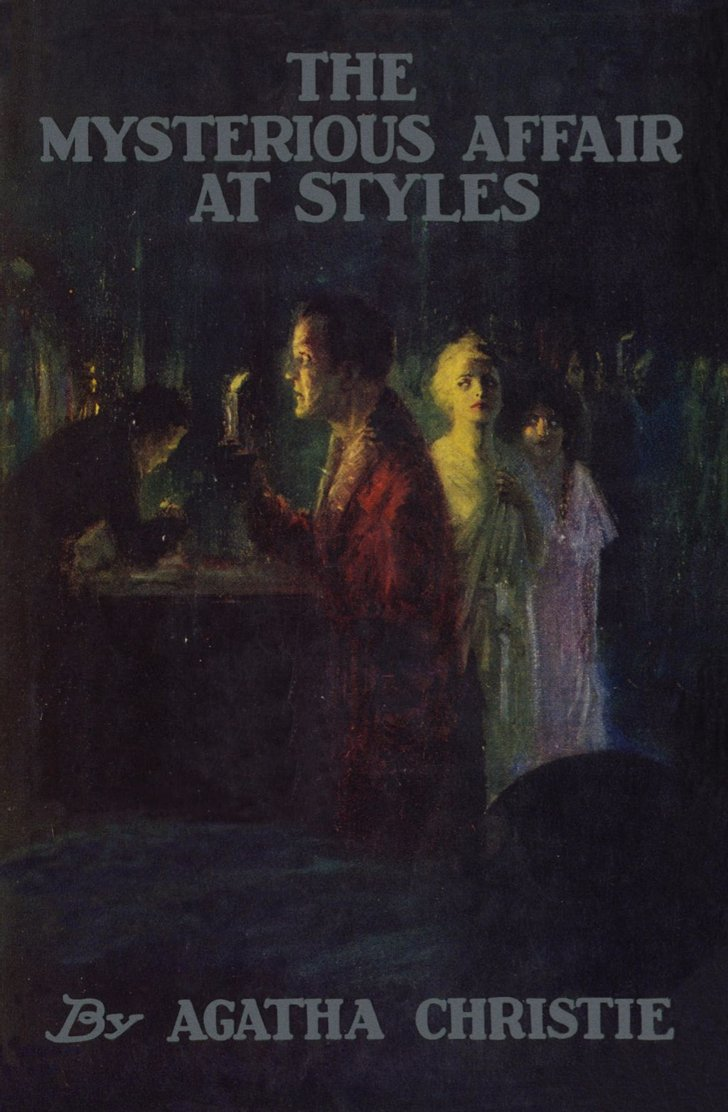
In his history of the detective story, Bloody Murder: From the Detective Story to the Crime Novel, the author Julian Symons heads two chapters devoted to the Golden Age as "the Twenties" and "the Thirties". Symons notes that Philip Van Doren Stern's article, "The Case of the Corpse in the Blind Alley" (1941), "could serve ... as an obituary for the Golden Age." Authors Agatha Christie, Dorothy L. Sayers, Margery Allingham, and Ngaio Marsh have been collectively called the Queens of Crime.
Certain conventions and clichés were established that limited any surprises on the part of the reader to the details of the plot and, primarily, to the identity of the murderer. The majority of novels of that era were "whodunits", and several authors excelled, after misleading their readers successfully, in revealing the least likely suspect convincingly as the villain. There was also a predilection for certain casts of characters and certain settings in a secluded English country house and its upper-class inhabitants (although they were generally landed gentry; not aristocracy with their country house as a second house). The rules of the game – and Golden Age mysteries were considered games – were codified in 1929 by Ronald Knox.
According to Knox, a detective story "must have as its main interest the unravelling of a mystery; a mystery whose elements are clearly presented to the reader at an early stage in the proceedings, and whose nature is such as to arouse curiosity, a curiosity which is gratified at the end." Knox's "Ten Commandments", also known as "Knox Decalogue", are as follows:
A similar but more detailed list of prerequisites was prepared by S. S. Van Dine in an article entitled "Twenty Rules for Writing Detective Stories", which appeared in The American Magazine in September 1928. They are commonly referred to as Van Dine's Commandments.
The outbreak of the Second World War is often taken as a beginning of the end for the light-hearted, straightforward "whodunit" of the Golden Age. As Ian Ousby writes, the Golden Age "was a long time a-dying. Indeed, one could argue that it still is not dead, since its mannerisms have proved stubbornly persistent in writers one might have expected to abandon them altogether as dated, or worse. Yet the Second World War marked a significant close, just as the First World War had marked a significant beginning." He further writes: "Even by the 1930s its assumptions were being challenged. ... Where it had once been commonplace to view the Golden Age as a high watermark of achievement, it became equally the fashion to denounce it. It had, so the indictment ran, followed rules which trivialized its subject. It had preferred settings which expressed a narrow, if not deliberately elitist, vision of society. And for heroes it had created detectives at best two-dimensional, at worst tiresome."
Attacks on the genre were made by the influential writer and critic Julian Symons, who was dismissive of postwar detective fiction in Bloody Murder, Edmund Wilson ("Who Cares Who Killed Roger Ackroyd?"), and Raymond Chandler ("The Simple Art of Murder"). Len Deighton wrote the spy thriller The IPCRESS File to be "ragged and untidy, as life is", and an inversion of "the detective novels of the Thirties". In sheer number of sales—particularly those of Agatha Christie—modern detective fiction has never approached the popularity of Golden Age writing. David Lehman writes: "Every so often somebody reprises Edmund Wilson's famous put-down of detective novels, 'Who Cares Who Killed Roger Ackroyd?' Wilson regarded the genre as terminally subliterary, either an addiction or a harmless vice on a par with crossword puzzles. But the truth is that for every Edmund Wilson who resists the genre there are dozens of intellectuals who have embraced it wholeheartedly. The enduring highbrow appeal of the detective novel ... is one of the literary marvels of the century."
Current writing influenced by the Golden Age style is often referred to as "cosy" mystery writing, as distinct from the "hardboiled" style popular in the United States. Recent writers working in this style include Sarah Caudwell, Ruth Dudley Edwards, Peter Lovesey and Simon Brett. Television series that emulate the style include Murder, She Wrote and Midsomer Murders. Films and TV series based on the classic Golden Age novels continue to be produced. In 1930, a group of British Golden Age authors came together to form the Detection Club. In addition to meeting for dinners and helping each other with technical aspects of their work, the members agreed to adhere to Knox's Commandments. Anthony Berkeley was instrumental in setting up the club, and G. K. Chesterton was its first president. In 2015, Martin Edwards became the club's ninth president.
Hub AI
Golden Age of Detective Fiction AI simulator
(@Golden Age of Detective Fiction_simulator)
Golden Age of Detective Fiction
The Golden Age of Detective Fiction was an era of classic murder mystery novels of similar patterns and styles, predominantly in the 1920s and 1930s. While the Golden Age proper is usually taken to refer to works from that period, this type of fiction has been written since at least 1911 and is still being written.
In his history of the detective story, Bloody Murder: From the Detective Story to the Crime Novel, the author Julian Symons heads two chapters devoted to the Golden Age as "the Twenties" and "the Thirties". Symons notes that Philip Van Doren Stern's article, "The Case of the Corpse in the Blind Alley" (1941), "could serve ... as an obituary for the Golden Age." Authors Agatha Christie, Dorothy L. Sayers, Margery Allingham, and Ngaio Marsh have been collectively called the Queens of Crime.
Certain conventions and clichés were established that limited any surprises on the part of the reader to the details of the plot and, primarily, to the identity of the murderer. The majority of novels of that era were "whodunits", and several authors excelled, after misleading their readers successfully, in revealing the least likely suspect convincingly as the villain. There was also a predilection for certain casts of characters and certain settings in a secluded English country house and its upper-class inhabitants (although they were generally landed gentry; not aristocracy with their country house as a second house). The rules of the game – and Golden Age mysteries were considered games – were codified in 1929 by Ronald Knox.
According to Knox, a detective story "must have as its main interest the unravelling of a mystery; a mystery whose elements are clearly presented to the reader at an early stage in the proceedings, and whose nature is such as to arouse curiosity, a curiosity which is gratified at the end." Knox's "Ten Commandments", also known as "Knox Decalogue", are as follows:
A similar but more detailed list of prerequisites was prepared by S. S. Van Dine in an article entitled "Twenty Rules for Writing Detective Stories", which appeared in The American Magazine in September 1928. They are commonly referred to as Van Dine's Commandments.
The outbreak of the Second World War is often taken as a beginning of the end for the light-hearted, straightforward "whodunit" of the Golden Age. As Ian Ousby writes, the Golden Age "was a long time a-dying. Indeed, one could argue that it still is not dead, since its mannerisms have proved stubbornly persistent in writers one might have expected to abandon them altogether as dated, or worse. Yet the Second World War marked a significant close, just as the First World War had marked a significant beginning." He further writes: "Even by the 1930s its assumptions were being challenged. ... Where it had once been commonplace to view the Golden Age as a high watermark of achievement, it became equally the fashion to denounce it. It had, so the indictment ran, followed rules which trivialized its subject. It had preferred settings which expressed a narrow, if not deliberately elitist, vision of society. And for heroes it had created detectives at best two-dimensional, at worst tiresome."
Attacks on the genre were made by the influential writer and critic Julian Symons, who was dismissive of postwar detective fiction in Bloody Murder, Edmund Wilson ("Who Cares Who Killed Roger Ackroyd?"), and Raymond Chandler ("The Simple Art of Murder"). Len Deighton wrote the spy thriller The IPCRESS File to be "ragged and untidy, as life is", and an inversion of "the detective novels of the Thirties". In sheer number of sales—particularly those of Agatha Christie—modern detective fiction has never approached the popularity of Golden Age writing. David Lehman writes: "Every so often somebody reprises Edmund Wilson's famous put-down of detective novels, 'Who Cares Who Killed Roger Ackroyd?' Wilson regarded the genre as terminally subliterary, either an addiction or a harmless vice on a par with crossword puzzles. But the truth is that for every Edmund Wilson who resists the genre there are dozens of intellectuals who have embraced it wholeheartedly. The enduring highbrow appeal of the detective novel ... is one of the literary marvels of the century."
Current writing influenced by the Golden Age style is often referred to as "cosy" mystery writing, as distinct from the "hardboiled" style popular in the United States. Recent writers working in this style include Sarah Caudwell, Ruth Dudley Edwards, Peter Lovesey and Simon Brett. Television series that emulate the style include Murder, She Wrote and Midsomer Murders. Films and TV series based on the classic Golden Age novels continue to be produced. In 1930, a group of British Golden Age authors came together to form the Detection Club. In addition to meeting for dinners and helping each other with technical aspects of their work, the members agreed to adhere to Knox's Commandments. Anthony Berkeley was instrumental in setting up the club, and G. K. Chesterton was its first president. In 2015, Martin Edwards became the club's ninth president.