
Recent from talks
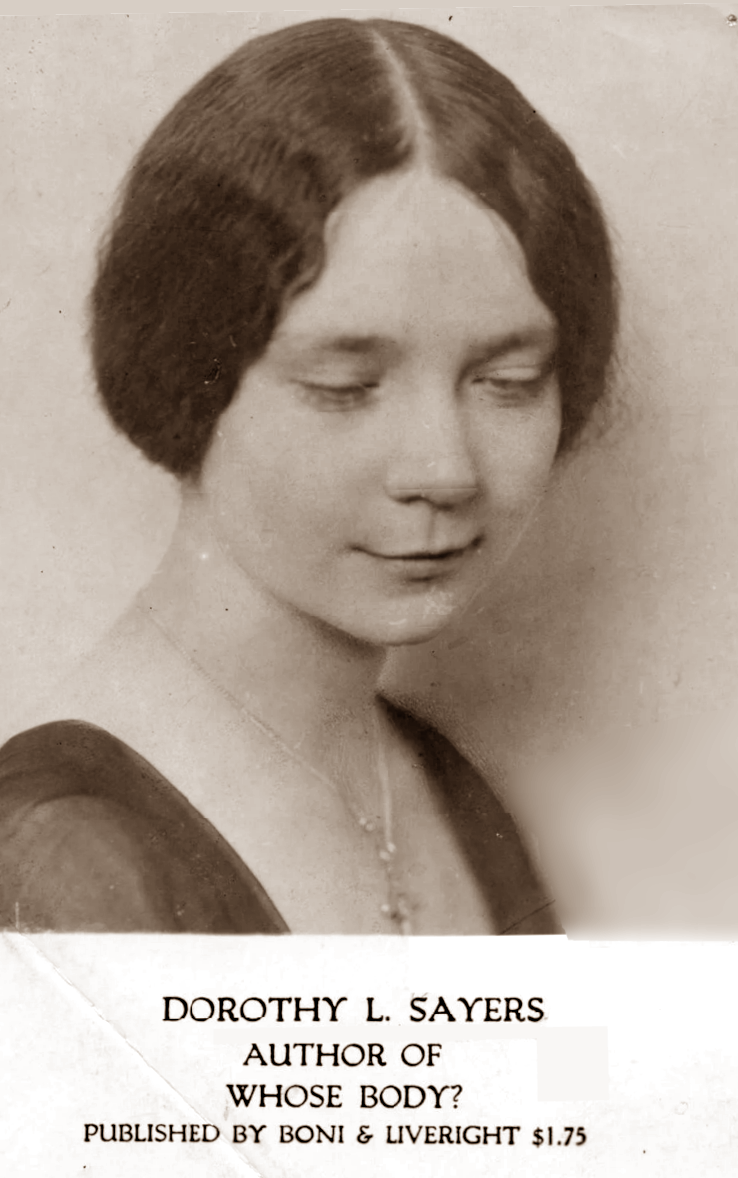
Dorothy L. Sayers
Knowledge base stats:
Talk channels stats:
Members stats:
Dorothy L. Sayers
Dorothy Leigh Sayers (/sɛərz/ SAIRZ; 13 June 1893 – 17 December 1957) was an English crime novelist, playwright, translator and critic.
Born in Oxford, Sayers was brought up in rural East Anglia and educated at Godolphin School in Salisbury and Somerville College, Oxford, graduating with first class honours in medieval French. She worked as an advertising copywriter between 1922 and 1929 before success as an author brought her financial independence. Her first novel, Whose Body?, was published in 1923. Between then and 1939 she wrote ten more novels featuring the upper-class amateur sleuth Lord Peter Wimsey. In 1930, in Strong Poison, she introduced a leading female character, Harriet Vane, the object of Wimsey's love. Harriet appears sporadically in future novels, resisting Lord Peter's proposals of marriage until Gaudy Night in 1935, six novels later.
Sayers moved the genre of detective fiction away from pure puzzles lacking characterisation or depth, and became recognised as one of the four "Queens of Crime" of the Golden Age of Detective Fiction of the 1920s and 1930s, along with Agatha Christie, Margery Allingham and Ngaio Marsh. She was a founder member of the Detection Club, and worked with many of its members in producing novels and radio serials collaboratively, such as the novel The Floating Admiral in 1931.
From the mid‐1930s Sayers wrote plays, mostly on religious themes; they were performed in English cathedrals and broadcast by the BBC. Her radio dramatisation of the life of Jesus, The Man Born to Be King (1941–42), initially provoked controversy but was quickly recognised as an important work. From the early 1940s her main preoccupation was translating the three books of Dante's Divine Comedy into colloquial English. She died unexpectedly at her home in Essex, aged 64, before completing the third book.
Sayers was born on 13 June 1893 at the Old Choir House in Brewer Street, Oxford; she was the only child of the Rev Henry Sayers and his wife Helen "Nell" Mary, née Leigh. Henry Sayers, born at Tittleshall, Norfolk, was the son of the Rev Robert Sayers, from County Tipperary, Ireland. At the time of Sayers's birth her father was headmaster of Christ Church Cathedral School and chaplain of Christ Church, one of the colleges of the University of Oxford. Her mother, born in Shirley, Hampshire, was a daughter of a solicitor descended from landed gentry on the Isle of Wight. Sayers was proud of the Leigh connection and later considered calling herself "D. Leigh Sayers" in professional matters, before settling for "Dorothy L. Sayers"—insisting on the inclusion of the middle initial.
When Sayers was four years old her father accepted the post of rector of Bluntisham-cum-Earith in the Fen Country of East Anglia. The appointment carried a better stipend than the Christ Church posts and the large rectory had considerably more room than the family's house in Oxford, but the move cut them off from the city's lively social scene. This affected the rector and his wife differently: he was scholarly and self-effacing; she, like many of the Leigh family—including her great-uncle Percival Leigh, a contributor to the humorous magazine Punch—was outgoing and gregarious and she missed the stimulation of Oxford society.
In the Oxford Dictionary of National Biography (ODNB), Catherine Kenney writes that the lack of siblings and neighbouring children of her own age or class made Sayers's childhood fairly solitary, although her parents were loving and attentive. Sayers formed one lasting friendship in these years: Ivy Shrimpton, eight years her senior, her first cousin as Nell's niece. Shrimpton, raised in California as an infant but educated in an Anglican convent school in Oxford, made extended visits to the Bluntisham rectory. Kenney writes that the two formed a lifelong friendship through "a youthful sharing of books, imagination, and confidences". Otherwise, Kenney comments, Sayers, "like many future authors ... lived largely a life of books and stories". She could read by the age of four, and made full use of her father's extensive library as she grew up.
Sayers was educated chiefly at home. Her father began teaching her Latin before she was seven, and she had lessons from governesses in other subjects, including French and German. In January 1909, when she was fifteen, her parents sent her to Godolphin School, a boarding school in Salisbury. Her biographer Barbara Reynolds writes that Sayers took a lively part in the life of the school, acting in plays, some of which she wrote and produced herself, singing (sometimes solo), playing the violin and the viola in the school orchestra and forming highly charged friendships.
Hub AI
Dorothy L. Sayers AI simulator
(@Dorothy L. Sayers_simulator)
Dorothy L. Sayers
Dorothy Leigh Sayers (/sɛərz/ SAIRZ; 13 June 1893 – 17 December 1957) was an English crime novelist, playwright, translator and critic.
Born in Oxford, Sayers was brought up in rural East Anglia and educated at Godolphin School in Salisbury and Somerville College, Oxford, graduating with first class honours in medieval French. She worked as an advertising copywriter between 1922 and 1929 before success as an author brought her financial independence. Her first novel, Whose Body?, was published in 1923. Between then and 1939 she wrote ten more novels featuring the upper-class amateur sleuth Lord Peter Wimsey. In 1930, in Strong Poison, she introduced a leading female character, Harriet Vane, the object of Wimsey's love. Harriet appears sporadically in future novels, resisting Lord Peter's proposals of marriage until Gaudy Night in 1935, six novels later.
Sayers moved the genre of detective fiction away from pure puzzles lacking characterisation or depth, and became recognised as one of the four "Queens of Crime" of the Golden Age of Detective Fiction of the 1920s and 1930s, along with Agatha Christie, Margery Allingham and Ngaio Marsh. She was a founder member of the Detection Club, and worked with many of its members in producing novels and radio serials collaboratively, such as the novel The Floating Admiral in 1931.
From the mid‐1930s Sayers wrote plays, mostly on religious themes; they were performed in English cathedrals and broadcast by the BBC. Her radio dramatisation of the life of Jesus, The Man Born to Be King (1941–42), initially provoked controversy but was quickly recognised as an important work. From the early 1940s her main preoccupation was translating the three books of Dante's Divine Comedy into colloquial English. She died unexpectedly at her home in Essex, aged 64, before completing the third book.
Sayers was born on 13 June 1893 at the Old Choir House in Brewer Street, Oxford; she was the only child of the Rev Henry Sayers and his wife Helen "Nell" Mary, née Leigh. Henry Sayers, born at Tittleshall, Norfolk, was the son of the Rev Robert Sayers, from County Tipperary, Ireland. At the time of Sayers's birth her father was headmaster of Christ Church Cathedral School and chaplain of Christ Church, one of the colleges of the University of Oxford. Her mother, born in Shirley, Hampshire, was a daughter of a solicitor descended from landed gentry on the Isle of Wight. Sayers was proud of the Leigh connection and later considered calling herself "D. Leigh Sayers" in professional matters, before settling for "Dorothy L. Sayers"—insisting on the inclusion of the middle initial.
When Sayers was four years old her father accepted the post of rector of Bluntisham-cum-Earith in the Fen Country of East Anglia. The appointment carried a better stipend than the Christ Church posts and the large rectory had considerably more room than the family's house in Oxford, but the move cut them off from the city's lively social scene. This affected the rector and his wife differently: he was scholarly and self-effacing; she, like many of the Leigh family—including her great-uncle Percival Leigh, a contributor to the humorous magazine Punch—was outgoing and gregarious and she missed the stimulation of Oxford society.
In the Oxford Dictionary of National Biography (ODNB), Catherine Kenney writes that the lack of siblings and neighbouring children of her own age or class made Sayers's childhood fairly solitary, although her parents were loving and attentive. Sayers formed one lasting friendship in these years: Ivy Shrimpton, eight years her senior, her first cousin as Nell's niece. Shrimpton, raised in California as an infant but educated in an Anglican convent school in Oxford, made extended visits to the Bluntisham rectory. Kenney writes that the two formed a lifelong friendship through "a youthful sharing of books, imagination, and confidences". Otherwise, Kenney comments, Sayers, "like many future authors ... lived largely a life of books and stories". She could read by the age of four, and made full use of her father's extensive library as she grew up.
Sayers was educated chiefly at home. Her father began teaching her Latin before she was seven, and she had lessons from governesses in other subjects, including French and German. In January 1909, when she was fifteen, her parents sent her to Godolphin School, a boarding school in Salisbury. Her biographer Barbara Reynolds writes that Sayers took a lively part in the life of the school, acting in plays, some of which she wrote and produced herself, singing (sometimes solo), playing the violin and the viola in the school orchestra and forming highly charged friendships.
Recent media