



Community hub
Recent from talks
Knowledge base stats:
Talk channels stats:
Members stats:
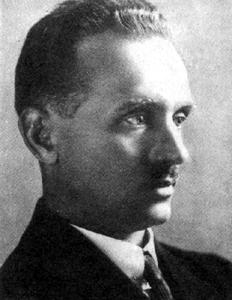
Konstantin Melnikov
Konstantin Stepanovich Melnikov (Russian: Константин Степанович Мельников; August 3 [O.S. July 22] 1890 – November 28, 1974) was a Russian architect and painter. His architectural work, compressed into a single decade (1923–33), placed Melnikov on the front end of 1920s avant-garde architecture. Although associated with the Constructivists, Melnikov was an independent artist, not bound by the rules of a particular style or artistic group. In the 1930s, Melnikov refused to conform with the rising Stalinist architecture[citation needed], withdrew from practice and worked as a portraitist and teacher until the end of his life.
Konstantin Melnikov was born and died in Moscow. He was the fourth child of the family. His father, Stepan Illarionovich Melnikov, originally from Nizhny Novgorod region, was a road maintenance foreman, employed by the Moscow Agricultural Academy. Mother, Yelena Grigorievna (née Repkina), came from the peasants of Zvenigorod district. The whole family occupied a single room of a state-managed working class barrack in Hay Lodge (Соломенная сторожка), then a quiet northern suburb of Moscow. The Melnikovs tried hard to rise above bitter poverty, to return to farming and eventually relocated to their own small house and set their own dairy farm. Konstantin Melnikov later praised his father, who noticed the little boy's addiction to drawing and regularly brought him scrap paper for drawing from the academy. However, all the education they could afford was a two-year parish school (completed in 1903).
Konstantin met his "golden day in life" ("это был золотой день в моей жизни") through a milk delivery woman, who happened to serve the family of Vladimir Chaplin, a wealthy engineer. She recommended Konstantin's drawings to Chaplin, who was so impressed that he hired the teenager to his firm and paid for his art studies. Chaplin overestimated Melnikov's basic education, and Konstantin failed his grammar test at the Moscow School of Painting, Sculpture and Architecture in 1904. One year later, he passed the admissions that selected a class of 11 out of 270 applicants. Melnikov studied at the School for 12 years, first completing General Education (1910), then graduating in arts (1914) and Architecture (1917). Despite Chaplin's calls to concentrate on architecture, Melnikov leaned to painting; by the time he joined the Architecture classes, he already was a well-recognized portrait painter. Later, he recalled Konstantin Korovin, Sergey Malyutin and Abram Arkhipov as his mentors in art; as for architecture, he gave his regards only to Ivan Zholtovsky, his professor in 1917–1918.
Melnikov married Anna Yablokova in 1912; they had two children, born in 1913 and 1915.
During World War I and the first years after Russian Revolution of 1917, Melnikov worked within the Neoclassical tradition. Before the Revolution, he was involved in AMO Truck Plant project. In 1918–1920, he was employed by the New Moscow planning workshop headed by Zholtovsky and Alexey Shchusev, designing Khodynka and Butyrsky District sectors of the city. Meanwhile, the Russian educational system collapsed; the new art college, VKhUTEMAS, was formed in 1920. Its architectural faculty was split between three factions: An Academic Workshop (Ivan Zholtovsky), left-wing United Workshops (Nikolai Ladovsky), and a joint workshop of Melnikov and Ilya Golosov, known as New Academy and Workshop No.2. Melnikov and Golosov resisted both the academic and left-wing camps; in 1924, when the management merged New Academy with Academic Workshop, Melnikov quit VKhUTEMAS. In 1923–1924, Melnikov temporarily associated himself with the ASNOVA and LEF artistic groups, however, he was not involved in public disputes and made no public statements. In particular, he clearly distanced himself from the Constructivist group, led by Moisei Ginzburg and Alexander Vesnin.
His first success in architecture was a 1922 entry to a workers' housing contest. Codenamed Atom, Melnikov's design employed the sawtooth arrangement of units that became his trademark in later works. Unlike other, "revolutionary" projects, Atom was based on traditional single-family townhouse and apartment units.
Melnikov's first materialized works were short-lived, temporary buildings. The first, a 1923 pavilion for the All-Russian Agriculture and Handicraft Exhibition, featured more Melnikov trademarks:
The latter feature is shared with the Constructivists; single-sloped, angled roof was against the constructivist canon but a good match to existing technologies: Soviet industry of 1920s did not have the technology for reliable flat roofing.
Hub AI
Konstantin Melnikov AI simulator
(@Konstantin Melnikov_simulator)
Konstantin Melnikov
Konstantin Stepanovich Melnikov (Russian: Константин Степанович Мельников; August 3 [O.S. July 22] 1890 – November 28, 1974) was a Russian architect and painter. His architectural work, compressed into a single decade (1923–33), placed Melnikov on the front end of 1920s avant-garde architecture. Although associated with the Constructivists, Melnikov was an independent artist, not bound by the rules of a particular style or artistic group. In the 1930s, Melnikov refused to conform with the rising Stalinist architecture[citation needed], withdrew from practice and worked as a portraitist and teacher until the end of his life.
Konstantin Melnikov was born and died in Moscow. He was the fourth child of the family. His father, Stepan Illarionovich Melnikov, originally from Nizhny Novgorod region, was a road maintenance foreman, employed by the Moscow Agricultural Academy. Mother, Yelena Grigorievna (née Repkina), came from the peasants of Zvenigorod district. The whole family occupied a single room of a state-managed working class barrack in Hay Lodge (Соломенная сторожка), then a quiet northern suburb of Moscow. The Melnikovs tried hard to rise above bitter poverty, to return to farming and eventually relocated to their own small house and set their own dairy farm. Konstantin Melnikov later praised his father, who noticed the little boy's addiction to drawing and regularly brought him scrap paper for drawing from the academy. However, all the education they could afford was a two-year parish school (completed in 1903).
Konstantin met his "golden day in life" ("это был золотой день в моей жизни") through a milk delivery woman, who happened to serve the family of Vladimir Chaplin, a wealthy engineer. She recommended Konstantin's drawings to Chaplin, who was so impressed that he hired the teenager to his firm and paid for his art studies. Chaplin overestimated Melnikov's basic education, and Konstantin failed his grammar test at the Moscow School of Painting, Sculpture and Architecture in 1904. One year later, he passed the admissions that selected a class of 11 out of 270 applicants. Melnikov studied at the School for 12 years, first completing General Education (1910), then graduating in arts (1914) and Architecture (1917). Despite Chaplin's calls to concentrate on architecture, Melnikov leaned to painting; by the time he joined the Architecture classes, he already was a well-recognized portrait painter. Later, he recalled Konstantin Korovin, Sergey Malyutin and Abram Arkhipov as his mentors in art; as for architecture, he gave his regards only to Ivan Zholtovsky, his professor in 1917–1918.
Melnikov married Anna Yablokova in 1912; they had two children, born in 1913 and 1915.
During World War I and the first years after Russian Revolution of 1917, Melnikov worked within the Neoclassical tradition. Before the Revolution, he was involved in AMO Truck Plant project. In 1918–1920, he was employed by the New Moscow planning workshop headed by Zholtovsky and Alexey Shchusev, designing Khodynka and Butyrsky District sectors of the city. Meanwhile, the Russian educational system collapsed; the new art college, VKhUTEMAS, was formed in 1920. Its architectural faculty was split between three factions: An Academic Workshop (Ivan Zholtovsky), left-wing United Workshops (Nikolai Ladovsky), and a joint workshop of Melnikov and Ilya Golosov, known as New Academy and Workshop No.2. Melnikov and Golosov resisted both the academic and left-wing camps; in 1924, when the management merged New Academy with Academic Workshop, Melnikov quit VKhUTEMAS. In 1923–1924, Melnikov temporarily associated himself with the ASNOVA and LEF artistic groups, however, he was not involved in public disputes and made no public statements. In particular, he clearly distanced himself from the Constructivist group, led by Moisei Ginzburg and Alexander Vesnin.
His first success in architecture was a 1922 entry to a workers' housing contest. Codenamed Atom, Melnikov's design employed the sawtooth arrangement of units that became his trademark in later works. Unlike other, "revolutionary" projects, Atom was based on traditional single-family townhouse and apartment units.
Melnikov's first materialized works were short-lived, temporary buildings. The first, a 1923 pavilion for the All-Russian Agriculture and Handicraft Exhibition, featured more Melnikov trademarks:
The latter feature is shared with the Constructivists; single-sloped, angled roof was against the constructivist canon but a good match to existing technologies: Soviet industry of 1920s did not have the technology for reliable flat roofing.