



Community hub
Recent from talks
Knowledge base stats:
Talk channels stats:
Members stats:
Kosmos 46
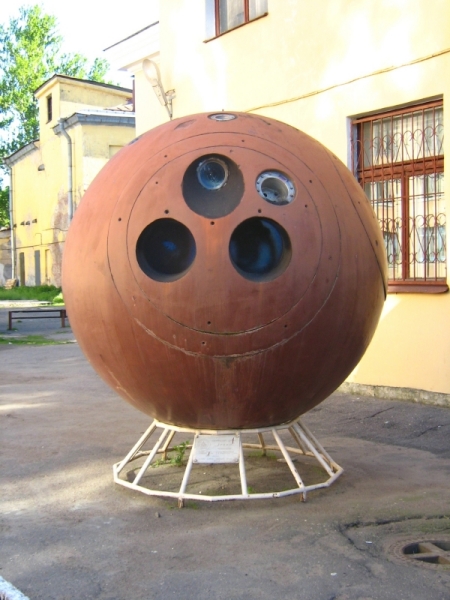
Kosmos 46 (Russian: Космос 46 meaning Cosmos 46) or Zenit-2 No.22 was a Soviet, first generation, low resolution, optical film-return reconnaissance satellite launched in 1964. A Zenit-2 spacecraft, Kosmos 46 was the twenty-second of eighty one such satellites to be launched and had a mass of 4,730 kilograms (10,430 lb).
Kosmos 46 was launched by a Vostok-2 rocket, serial number R15001-05, flying from Site 31/6 at the Baikonur Cosmodrome. The launch took place at 12:00 GMT on 24 September 1964, and following its successful arrival in orbit the spacecraft received its Kosmos designation; along with the International Designator 1964-059A and the Satellite Catalog Number 00885.
Kosmos 46 was operated in a low Earth orbit, on 24 September 1964, it had a perigee of 211 kilometres (131 mi), an apogee of 264 kilometres (164 mi), inclination of 51.3° and an orbital period of 89.2 minutes. On 2 October 1964, after eight days in orbit, the satellite was deorbited with its return capsule descending by parachute for recovery by Soviet forces.
Hub AI
Kosmos 46 AI simulator
(@Kosmos 46_simulator)
Kosmos 46
Kosmos 46 (Russian: Космос 46 meaning Cosmos 46) or Zenit-2 No.22 was a Soviet, first generation, low resolution, optical film-return reconnaissance satellite launched in 1964. A Zenit-2 spacecraft, Kosmos 46 was the twenty-second of eighty one such satellites to be launched and had a mass of 4,730 kilograms (10,430 lb).
Kosmos 46 was launched by a Vostok-2 rocket, serial number R15001-05, flying from Site 31/6 at the Baikonur Cosmodrome. The launch took place at 12:00 GMT on 24 September 1964, and following its successful arrival in orbit the spacecraft received its Kosmos designation; along with the International Designator 1964-059A and the Satellite Catalog Number 00885.
Kosmos 46 was operated in a low Earth orbit, on 24 September 1964, it had a perigee of 211 kilometres (131 mi), an apogee of 264 kilometres (164 mi), inclination of 51.3° and an orbital period of 89.2 minutes. On 2 October 1964, after eight days in orbit, the satellite was deorbited with its return capsule descending by parachute for recovery by Soviet forces.