Hubbry Logo
KumamonKumamonMain
Open search
Kumamon
Community hub
Kumamon
logo
8 pages, 0 posts
0 subscribers
Be the first to start a discussion here.
Kumamon
Kumamon
from Wikipedia
An illustration of Kumamon
Map of Japan with Kumamoto Prefecture highlighted

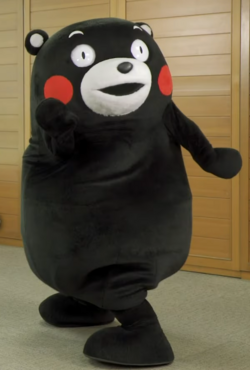
Kumamon (くまモン) is a mascot created by the government of Kumamoto Prefecture, Japan. It was created in 2010 for a campaign created to draw tourists to the region after the Kyushu Shinkansen line opened.[1] Kumamon subsequently became nationally popular, and in late 2011, was voted top in a nationwide survey of mascots, collectively known as yuru-chara, garnering over 280,000 votes.[2][3] Following his success in the contest, Kumamoto earned ¥11.8 billion (US$120 million, £79 million, €93 million) in merchandising revenue for the first half of 2012, after having only earned ¥2.5 billion (US$26 million, £17 million, €20 million) throughout all of 2011.[4][5] Kumamon enjoys tremendous popularity throughout the world.[6]

Economic impact

[edit]

In just two years, Kumamon has generated US$1.2 billion in economic benefits for his region, including tourism and product sales, as well as US$90 million worth of publicity, according to a recent Bank of Japan study.[7] Sales of Kumamon items have reached ¥29.3 billion in 2012, up from ¥2.5 billion in 2011.[8]

Kumamon merchandise

The Bank of Japan also estimated that Kumamon generated ¥123.2 billion in revenue during a two-year period starting from 2011.[6]

Success

[edit]

A large part of Kumamon's success can be attributed to its cuteness.[8] The unusual marketing strategy of free licensing has also contributed to Kumamon's commercial success;[8] Kumamoto Prefecture grants usage rights for free to any individual group as long as the products promote goods and services from the prefecture.[6][8] In 2018, this license was extended to foreign businesses, with aims to both boost worldwide recognition and increase tourism to the prefecture. Governor Ikuo Kabashima has said that he "want[s] to spread the Kumamon brand to the world."[9]

Cultural impact

[edit]
Exterior of a Kumamon-themed Kumamoto Electric Railway train (2024)
Rikishi (sumo wrestler) wearing a Kumamon mawashi

This mascot appears in a minor cameo in the 2014 video game Yo-Kai Watch 2, and made an appearance in Yo-kai Watch: The Movie, following the main characters (Whisper, Nate, and Jibanyan) around. Kumamon has gained popularity as an internet meme when images of the character, usually around a large bonfire, were captioned with text reading "Why? For the glory of Satan, of course!".[10]

Since 3 September 2018, Kumamon began regularly in-character videos uploading to its YouTube account.[11][12]

See also

[edit]

References

[edit]
[edit]
Revisions and contributorsEdit on WikipediaRead on Wikipedia
from Grokipedia
Kumamon (くまモン) is the official of in , portrayed as a bipedal black bear with wide eyes, red cheeks, and a mischievous yet friendly expression, created to symbolize and promote the prefecture's vibrant culture, natural attractions, and local products. Debuting in 2010 as part of the "Kumamoto Surprise" promotional campaign tied to the opening of the line, Kumamon was designed by illustrator Mizuno Manabu to draw tourists and boost regional pride. The character's name combines "kuma," meaning bear in Japanese, with "mon," a local term for a person or thing, reflecting the prefecture's name, which translates to "bear origin." As a prominent example of Japan's yuru-chara (relaxed or cute ) phenomenon, Kumamon gained rapid fame after winning the inaugural Yuru-chara Grand Prix in 2011 and going viral through a widely shared photo from a firefighters' event, establishing him as a . Kumamon's influence extends far beyond Kumamoto, with appearances at international events in over 20 countries, collaborations with global brands like and , and participation in high-profile occasions such as the 2020 Olympic torch relay. His royalty-free domestic licensing policy has spurred an explosion of merchandise—from apparel and groceries to everyday items like —generating approximately ¥989 billion (about $6.4 billion USD) in economic value over the first decade of his existence. This accessibility, combined with his endearing yet energetic persona, has made Kumamon a symbol of regional promotion and , captivating audiences worldwide while tirelessly advocating for Kumamoto's spirit of adventure and hospitality.

Origins

Creation and Debut

The development of Kumamon was initiated in 2010 by the Prefectural Government as part of its efforts to promote the prefecture in anticipation of the Shinkansen's northern extension, which would improve accessibility and boost . Kumamon was first introduced on March 12, 2010, in promotional materials for the "Kumamoto Surprise" campaign, led by writer and producer Koyama Kundō, who commissioned designer Manabu Mizuno to create a character that could serve as an engaging symbol alongside the campaign's logo. Mizuno's design featured a simple, black bear with wide eyes and red cheeks, intended to evoke approachability and local charm without relying on complex elements. Kumamon made its first public appearance on March 12, 2011, coinciding with the opening of the extension to Station, an event that marked the character's initial live unveiling. The character's official is celebrated on March 12. At the launch, Kumamon appeared at the station to greet arriving passengers and participated in inaugural ceremonies, aiming to create an immediate, memorable association with the prefecture's improved connectivity. Early promotional activities included appearances at regional events and distributions of character-branded materials, all under a pioneering policy allowing free use of Kumamon's image for non-commercial purposes to encourage adoption and widespread visibility. This no-fee approach, excluding only transportation costs for official appearances, was designed to foster organic promotion while tying usage to endorsements of Kumamoto's attractions and products, setting Kumamon apart from typical licensed mascots from the outset. Initial efforts focused on building a presence through public interactions at transportation hubs and local festivals, laying the groundwork for the character's role in elevating the prefecture's profile.

Background and Purpose

In the , Kumamoto Prefecture grappled with significant economic stagnation and demographic decline, mirroring broader challenges in rural . The region's economy stagnated amid a national context of shrinking populations in non-metropolitan areas that lost residents at an accelerating rate from 2000 onward. 's per capita GDP remained largely flat, rising only marginally from approximately $32,000 in 1992 to about $33,000 by the . Rural towns within Kumamoto experienced depopulation, leading to shuttered businesses, reduced viability, and a pressing need for revitalization strategies to combat economic inertia and foster growth. This context aligned with the rising yuru-chara trend across , where local governments increasingly adopted quirky characters to symbolize and promote regional identity. The phenomenon gained momentum in the late , catalyzed by , a samurai-cat created in 2007 for Hikone Castle's 400th anniversary in , which demonstrated the potential of such characters to generate public interest and economic activity without substantial costs. Kumamoto officials drew inspiration from this model, recognizing yuru-chara as an accessible tool for regional branding amid limited budgets for conventional promotion. The strategic objectives for Kumamon centered on addressing these challenges through low-cost, high-impact initiatives: attracting tourists to the prefecture, which was often overlooked as an agricultural hub; promoting local products and cultural assets; and instilling community pride to counteract depopulation trends. Developed as part of the "Kumamoto Surprise" campaign in anticipation of the Shinkansen's northern extension, the mascot aimed to elevate regional visibility and encourage resident engagement with local heritage. To amplify these goals, Kumamon was established as public owned by the Kumamoto Prefectural Government, permitting free commercial use by individuals and businesses upon simple registration, without royalties, to encourage widespread adoption and maximize promotional reach under established guidelines.

Design

Appearance

Kumamon is an anthropomorphic black bear mascot characterized by its glossy jet-black fur, large circular white eyes that convey a wide-eyed, glassy expression, prominent round red cheeks, and a broad, perpetual grin formed by a simple curved mouth. This color scheme of stark black contrasted with vivid red accents on the cheeks is intended to evoke the energetic spirit of , known as the "Land of Fire" due to its active volcanoes and abundant hot springs. The overall design features a straightforward, rounded without intricate details, which enhances its visual appeal and allows for straightforward replication in illustrations, animations, and physical merchandise. While the official height and other physical metrics are deliberately undisclosed to maintain an air of mystery, the design aligns with standard yuru-kyara proportions for accessibility in public appearances. Kumamon's core visual elements have remained unchanged since its public debut in , preserving the iconic look across media. Variations primarily involve temporary additions like seasonal costumes, such as a outfit with red-and-white trimmings for holiday events, layered over the standard form without altering the base bear features.

Personality

Kumamon is characterized as a mischievous boy with an abundance of , traits that define his playful and endearing in official portrayals. These attributes manifest in his energetic behaviors, such as bounding onto stages, performing enthusiastic dances like the Kumamon exercise, and engaging in spontaneous antics that highlight his childlike innocence. His clumsiness adds to this charm, often depicted through awkward movements and tripping gestures that emphasize a relatable, imperfect nature rather than polished perfection. As a non-verbal character, Kumamon communicates exclusively through actions, gestures, and expressive , avoiding spoken to maintain a universal appeal. In videos and live performances, he emits onomatopoeic sounds like "Kuma!" to convey excitement or mischief, reinforcing his lively and naughty demeanor without relying on words. This silent yet animated style allows him to connect emotionally with audiences of all ages, portraying a friendly and approachable figure inspired by Kumamoto's warm, hospitable culture. Kumamon's traits also reflect local Kumamoto influences, including a fondness for the region's cuisine that has led to his notably chubby physique. His role as Happiness Manager underscores an optimistic, surprise-finding spirit, where he seeks out joyful moments to share, blending his curious exploration with a commitment to spreading positivity.

Popularity

Early Recognition

Following its debut in March 2010 to promote Kumamoto Prefecture in anticipation of the opening of the northern extension of the Kyushu Shinkansen high-speed rail line in 2011, Kumamon quickly captured public attention through a combination of innovative marketing and grassroots adoption. The mascot's free licensing policy, initiated by Kumamoto Prefecture Governor Ikuo Kabashima, permitted any company in Japan to use Kumamon's image royalty-free for promotional purposes, provided the efforts supported local tourism or products; this approach, distinct from typical paid licensing models for yuru-chara mascots, encouraged widespread organic promotion by local businesses and creators without bureaucratic hurdles. This policy fueled rapid proliferation, as small enterprises and vendors incorporated Kumamon into advertisements, packaging, and events, transforming the character from a mere regional into a phenomenon within months. Complementing this was the "Kumamoto Surprise" campaign, launched in 2010, which featured unannounced appearances by Kumamon in high-traffic areas of , the nearest major hub connected by the new rail line; a key stunt involved a mock announcing the mascot had gone "AWOL" to promote , with Twitter tips (@55_kumamon) guiding fans to its locations, generating buzz on and extensive TV coverage across . A pivotal moment came in November 2011 when a photo of Kumamon attempting to join firefighters' training went viral, further accelerating his national recognition. The campaign's viral momentum peaked with Kumamon's first major national endorsement appearances at events in later that year, where the mascot drew large crowds and significant media spotlight, amplifying its appeal beyond . These efforts, leveraging Kumamon's playful and mischievous personality—such as energetic on-site performances—shifted public perception dramatically, elevating the once-obscure bear from an unfamiliar prefectural figure to a rapidly emerging national icon by late 2011.

Milestones and Awards

Kumamon achieved national prominence by winning the inaugural Yuru-chara Grand Prix in 2011, securing victory with 280,000 votes among 349 competing mascots from across . In 2013, Kumamon participated in a landmark event that set a for the largest gathering of costumed mascots performing synchronized dancing, involving 134 characters in , . The mascot's reach expanded globally in 2018 when lifted restrictions on foreign licensing, permitting international companies to use Kumamon's image for promotion and merchandise, aiming to boost worldwide recognition of the prefecture. In , Kumamon appeared at the Nippon Haku Bangkok event, a major Japanese cultural festival in , performing energetic dances and engaging with audiences to further enhance its international visibility. In 2025, Kumamon celebrated its 15th anniversary with special events, underscoring its enduring popularity.

Economic Impact

Revenue from Merchandise

Kumamon's merchandise has been a major driver of economic activity for , with sales of items featuring the mascot reaching ¥29.3 billion in 2012, encompassing a wide range of products such as plush toys, apparel, and food items. This figure marked a significant increase from ¥2.5 billion in 2011, reflecting the mascot's rapid rise in popularity following its national recognition. The licensing model for Kumamon emphasizes to promote regional branding, allowing free use for non-commercial promotional purposes while requiring royalties for commercial applications, typically ranging from 5% to 10% of profits. This structure generated ¥11.8 billion in revenue for the through in the first half of 2012 alone. For domestic companies, the policy facilitates broad adoption without upfront fees for promotional efforts, but commercial licensing fees support ongoing mascot operations and anti-piracy measures. By 2013, the diversity of Kumamon merchandise had expanded to over 8,200 items, ranging from small keychains and to larger products like automobiles and household goods. The estimated that Kumamon contributed a total economic impact of ¥123.2 billion over a two-year period starting in 2011 through such merchandise activities. Although detailed annual figures post-2013 are limited, cumulative sales of Kumamon-related goods surpassed ¥1 by 2021, reached approximately ¥1.5 by 2024, and ¥1.6222 by the end of 2024, driven by sustained demand for traditional items alongside emerging digital merchandise like and NFTs. Annual sales in recent years, such as approximately ¥160 billion in 2022 and ¥162.6 billion in 2024 (the second-highest on record), underscore the mascot's enduring commercial viability. In fiscal 2025, ¥440 million has been allocated for overseas marketing to further expand global presence.

Tourism and Regional Development

Kumamon's introduction in 2010, timed with the extension of the line to , played a pivotal role in enhancing the prefecture's visibility as a tourist destination. The mascot's promotional efforts contributed to an estimated US$1.2 billion in overall economic benefits for the region within two years from 2011, including and merchandise sales. This influx marked a significant increase in tourist footfall, as the character's appeal drew families and fans to explore the area's natural and cultural sites. To capitalize on this momentum, Kumamon has been central to various events and attractions designed to engage visitors. Themed promotions include train wrappings on the Kumamoto Electric Railway in 2024, featuring the mascot's image to encourage rides through scenic routes, and similar collaborations with the Hisatsu Orange Railway to highlight regional connectivity. Additionally, Kumamon has endorsed onsen initiatives, such as dedicated posters promoting hot springs—home to the fifth-highest number of wells in —to attract wellness tourists seeking relaxation amid volcanic landscapes like those near . Beyond direct , Kumamon has stimulated by bolstering local industries. In , the featured in campaigns like the "Cheek Loss Incident," which spotlighted Kumamoto's red-hued produce, including its leading tomato output—accounting for about one-fifth of Japan's total—to enhance branding and market for farm-fresh goods. The Shinkansen's arrival, amplified by Kumamon's role in nationwide advertising, further elevated infrastructure awareness, making more accessible and integrating rail travel with promotional tie-ins that sustained interest in rural economies. Looking ahead, Kumamon's involvement ensures ongoing growth, particularly through his appointment as a special supporter for , Kansai, , where collaborations are projected to channel international visitors toward , fostering long-term economic vitality in and allied sectors.

Cultural Impact

Media Appearances

Kumamon first captured widespread attention in through early memes that emerged in 2011 and 2012, often featuring edited videos highlighting his clumsy and endearing antics during public appearances. In television, Kumamon has been a regular presence on local Japanese broadcasts, including the short series Kumamon Map produced by Kumamoto Kenmin Television Corporation, where he plays the role of a PR company boss solving workplace and personal dilemmas for his employees. He has also made appearances on NHK programs, such as news segments and special features covering his promotional activities. Complementing these, Kumamon's official YouTube channel, launched on September 3, 2018, features original content like dance routines and comedic skits that showcase his playful personality, with many videos amassing millions of views collectively. Kumamon has extended his reach into video games and films as a guest character in (2014), where he interacts with the game's yokai protagonists and other regional mascots in cameo scenarios. This collaboration carried over to the accompanying anime film (2014), in which Kumamon follows the main characters on their adventure, adding a layer of local flavor to the story. In advertising, he frequently stars in commercials for JR Kyushu, promoting rail travel and regional tourism through humorous vignettes that emphasize his energetic and approachable demeanor. Internationally, Kumamon made his debut as a live performer at the Nippon Haku Bangkok event in 2024, leading exercise routines and engaging audiences in interactive displays.

Influence and Legacy

Kumamon's innovative free-use licensing model, which allows domestic businesses to utilize the character without fees for promotional purposes, has significantly transformed the yuru-chara industry in . This approach, implemented since the character's debut, encouraged widespread adoption and replication by other prefectures seeking to boost local economies through mascot-driven branding. For instance, the success of this model inspired the creation of similar unrestricted or low-barrier mascots, such as , the unofficial pear fairy of City, which operates without formal licensing constraints and has similarly driven viral regional promotion. As a global icon, Kumamon has garnered recognition across Asia and beyond, embodying Japan's kawaii culture through its endearing, simplistic bear design that emphasizes cuteness and approachability. In 2024, Kumamon appeared at Japan Expo Thailand, engaging thousands of fans and highlighting its role in cross-cultural exchanges. This international appeal has influenced mascot designs worldwide, prompting regions in Asia and even Western brands to adopt similar cute, regionally tied characters to foster emotional connections and soft power. Kumamon's legacy extends to promoting regionalism within by revitalizing local identities and economies, while serving as a key element of the country's strategy on the global stage. By associating the character with Kumamoto's unique volcanic landscapes and , it has encouraged a broader movement toward decentralized promotion, inspiring other locales to leverage mascots for community pride and . Its enduring popularity is evident in its substantial online presence, with over 800,000 followers on X (formerly ) as of March 2025, reflecting sustained engagement across social platforms. In the digital era post-2020, Kumamon has evolved through integrations with and technologies, expanding its reach beyond physical appearances. The launch of Kumamon Land in the VEX metaverse in introduced immersive virtual tourism experiences, allowing global users to explore Kumamoto's attractions via NFTs and interactive simulations. This development, furthered in 2023 with collaborative virtual exhibitions, demonstrates Kumamon's adaptability to digital platforms, ensuring its relevance in an increasingly online world. In 2025, Kumamon continued to expand its cultural footprint as a special supporter for , Kansai, , and through a collaboration with WePlay for a event featuring themed missions and merchandise.

Disaster Response

2016 Earthquakes

The consisted of a series of tremors that struck on April 14–16, 2016, with the most significant events being a magnitude 6.5 quake on April 14 and a magnitude 7.3 quake on April 16 ( magnitudes), leading to widespread destruction across the region, including damage to infrastructure and mascot-related facilities. In response to the disaster, official activities and public appearances featuring Kumamon were immediately paused to prioritize safety and recovery efforts, while the character's image was deployed in initial public service announcements on platforms to promote evacuation procedures and emergency preparedness. In the immediate aftermath, tourism to Kumamoto saw a temporary decline due to travel advisories and infrastructure disruptions.

Recovery Efforts

Following the 2016 Kumamoto earthquakes, Kumamon's image was permitted for use in various fundraising initiatives to support affected communities, with the prefecture relaxing its typically strict copyright rules to facilitate charity events and merchandise sales. For instance, a DARTSLIVE campaign featured a Kumamon-themed digital theme song, donating ¥10 to relief efforts for each copy shared during the promotional period in mid-2016. Similarly, a 2018 Nestlé KitKat collaboration with Kumamon featured Ikinari Dango flavor, directing a portion of proceeds toward regional reconstruction projects. These efforts contributed to a surge in Kumamon merchandise revenue, reaching ¥128 billion in 2016—a 27% increase from the previous year—which provided substantial economic support for local recovery. Kumamon participated in nationwide promotional activities to raise awareness and foster solidarity, including collaborations with popular media characters to highlight rebuilding progress. In 2021, Kumamon appeared alongside figures from the One Piece in videos promoting Kumamoto's post-earthquake restoration, emphasizing and encouraging visitor support. As the prefecture's official "Happiness Manager," Kumamon engaged in morale-boosting events across , such as appearances at international festivals to draw attention to recovery needs, helping to maintain public interest in the region's revival. In 2025, Kumamon continued such efforts through involvement in the "One Piece" statue tour promoting quake recovery and tourism. Symbolic projects underscored Kumamon's role in innovative rebuilding, notably the quake-resistant dome houses at Aso Farm Land , which feature interiors decorated with Kumamon motifs and have remained operational as of 2025 to demonstrate durable housing solutions. These lightweight, polyurethane-foam structures withstood the quakes without significant damage, serving as models for safe accommodation in seismic areas while attracting tourists to the Aso region. By 2018, Kumamon had resumed full promotional duties, including public performances and campaigns that integrated themes to educate audiences on resilience. Over the longer term, Kumamon's efforts significantly aided restoration, with the prefecture's visitor numbers and consumption rebounding toward pre-disaster levels by the early through targeted promotions of restored sites like and Aso. Adaptations such as awareness videos and events featuring Kumamon helped sustain community spirit and economic vitality, positioning the mascot as a enduring symbol of recovery amid ongoing challenges like the .

References

Add your contribution
Related Hubs
User Avatar
No comments yet.