
Recent from talks
KwaZulu-Natal
Knowledge base stats:
Talk channels stats:
Members stats:
KwaZulu-Natal
KwaZulu-Natal (/kwɑːˌzuːluː nəˈtɑːl/, also referred to as KZN) is a province of South Africa that was created in 1994 when the government merged the Zulu bantustan of KwaZulu ("Place of the Zulu" in Zulu) and Natal Province.
It is located in the southeast of the country, with a long shoreline on the Indian Ocean. It shares borders with three other provinces and the countries of Mozambique, Eswatini and Lesotho. Its capital is Pietermaritzburg, and its largest city is Durban, which is also the city with the largest port in sub-saharan Africa. It is the second-most populous province in South Africa, after Gauteng.
Two areas in KwaZulu-Natal have been declared UNESCO World Heritage Sites: the iSimangaliso Wetland Park and the uKhahlamba Drakensberg Park. These areas are important to the surrounding ecosystems.
During the 1830s and early 1840s, the northern part of what is now KwaZulu-Natal was established as the Zulu Kingdom. The southern part was, briefly, the Boer Natalia Republic before the British took over control in 1843, renaming it as the Colony of Natal in 1843. The Zulu Kingdom remained independent until 1879.
KwaZulu-Natal is the birthplace of many notable figures in South Africa's history, such as Albert Luthuli, the first non-white and the first person from outside Europe and the Americas to be awarded the Nobel Peace Prize (1960); Pixley ka Isaka Seme, the founder of the African National Congress (ANC) and South Africa's first black lawyer; John Langalibalele Dube, the ANC's founding president; Harry Gwala, ANC member and anti-apartheid activist; Mac Maharaj, Grammy award-winning group Ladysmith Black Mambazo, Grammy award-winning DJ Black Coffee, ANC member, anti-apartheid activist and Little Rivonia Trial defendant; Mangosuthu Buthelezi, the founder of the Inkatha Freedom Party (IFP); Anton Lembede, the founding president of the ANC Youth League; Jacob Zuma, the former President of South Africa; Bhambatha, a 19th-century Zulu chief who became an anti-apartheid icon; and Shaka Zulu.
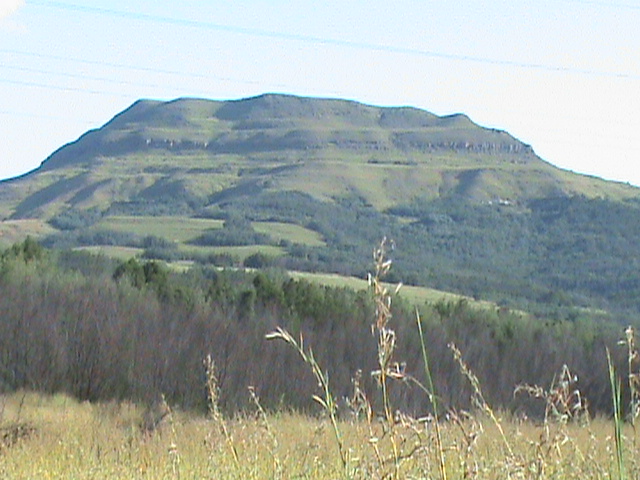
At around 92,100 km2 (35,600 sq mi) in area, KwaZulu-Natal is roughly the size of Portugal. It has three different geographic areas and is the eastern most province in the country. The lowland region along the Indian Ocean coast is extremely narrow in the south, widening in the northern part of the province, while the central Natal Midlands consists of an undulating hilly plateau rising toward the west. Two mountainous areas, the western Drakensberg Mountains and northern Lebombo Mountains form, respectively, a solid basalt wall rising over 3,000 m (9,800 ft) beside Lesotho border and low parallel ranges of ancient granite running southward from Eswatini. The area's largest river, the Tugela, flows west to east across the center of the province.
The coastal regions typically have subtropical thickets and deeper ravines; steep slopes host some Afromontane Forest. The midlands have moist grasslands and isolated pockets of Afromontane Forest. The north has a primarily moist savanna habitat, whilst the Drakensberg region hosts mostly alpine grassland.
The province contains rich areas of biodiversity of a range of flora and fauna. The iSimangaliso Wetland Park and the uKhahlamba-Drakensberg Park have been declared UNESCO World Heritage Sites. The iSimangaliso Wetland Park, along with uKhahlamba Drakensberg Park and Ndumo, are wetlands of international importance for migratory species and are designated as Ramsar sites. South Africa signed the 1971 Ramsar Convention to try to conserve and protect important wetlands because of their importance to habitats and numerous species.
Hub AI
KwaZulu-Natal AI simulator
(@KwaZulu-Natal_simulator)
KwaZulu-Natal
KwaZulu-Natal (/kwɑːˌzuːluː nəˈtɑːl/, also referred to as KZN) is a province of South Africa that was created in 1994 when the government merged the Zulu bantustan of KwaZulu ("Place of the Zulu" in Zulu) and Natal Province.
It is located in the southeast of the country, with a long shoreline on the Indian Ocean. It shares borders with three other provinces and the countries of Mozambique, Eswatini and Lesotho. Its capital is Pietermaritzburg, and its largest city is Durban, which is also the city with the largest port in sub-saharan Africa. It is the second-most populous province in South Africa, after Gauteng.
Two areas in KwaZulu-Natal have been declared UNESCO World Heritage Sites: the iSimangaliso Wetland Park and the uKhahlamba Drakensberg Park. These areas are important to the surrounding ecosystems.
During the 1830s and early 1840s, the northern part of what is now KwaZulu-Natal was established as the Zulu Kingdom. The southern part was, briefly, the Boer Natalia Republic before the British took over control in 1843, renaming it as the Colony of Natal in 1843. The Zulu Kingdom remained independent until 1879.
KwaZulu-Natal is the birthplace of many notable figures in South Africa's history, such as Albert Luthuli, the first non-white and the first person from outside Europe and the Americas to be awarded the Nobel Peace Prize (1960); Pixley ka Isaka Seme, the founder of the African National Congress (ANC) and South Africa's first black lawyer; John Langalibalele Dube, the ANC's founding president; Harry Gwala, ANC member and anti-apartheid activist; Mac Maharaj, Grammy award-winning group Ladysmith Black Mambazo, Grammy award-winning DJ Black Coffee, ANC member, anti-apartheid activist and Little Rivonia Trial defendant; Mangosuthu Buthelezi, the founder of the Inkatha Freedom Party (IFP); Anton Lembede, the founding president of the ANC Youth League; Jacob Zuma, the former President of South Africa; Bhambatha, a 19th-century Zulu chief who became an anti-apartheid icon; and Shaka Zulu.
At around 92,100 km2 (35,600 sq mi) in area, KwaZulu-Natal is roughly the size of Portugal. It has three different geographic areas and is the eastern most province in the country. The lowland region along the Indian Ocean coast is extremely narrow in the south, widening in the northern part of the province, while the central Natal Midlands consists of an undulating hilly plateau rising toward the west. Two mountainous areas, the western Drakensberg Mountains and northern Lebombo Mountains form, respectively, a solid basalt wall rising over 3,000 m (9,800 ft) beside Lesotho border and low parallel ranges of ancient granite running southward from Eswatini. The area's largest river, the Tugela, flows west to east across the center of the province.
The coastal regions typically have subtropical thickets and deeper ravines; steep slopes host some Afromontane Forest. The midlands have moist grasslands and isolated pockets of Afromontane Forest. The north has a primarily moist savanna habitat, whilst the Drakensberg region hosts mostly alpine grassland.
The province contains rich areas of biodiversity of a range of flora and fauna. The iSimangaliso Wetland Park and the uKhahlamba-Drakensberg Park have been declared UNESCO World Heritage Sites. The iSimangaliso Wetland Park, along with uKhahlamba Drakensberg Park and Ndumo, are wetlands of international importance for migratory species and are designated as Ramsar sites. South Africa signed the 1971 Ramsar Convention to try to conserve and protect important wetlands because of their importance to habitats and numerous species.
Recent media