



Community hub
Community hub
Recent from talks
Knowledge base stats:
Talk channels stats:
Members stats:
Labia
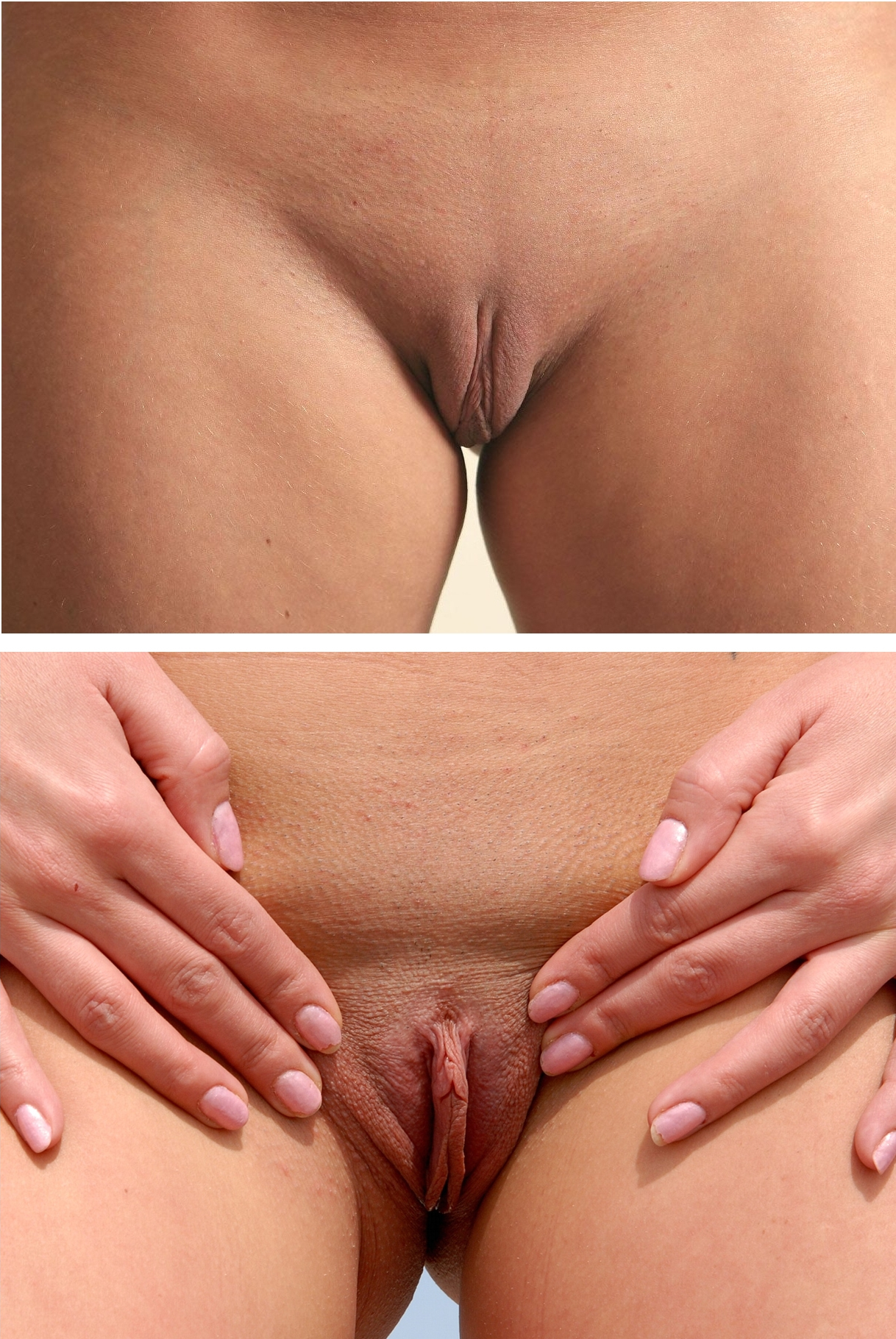
The labia are the major externally visible structures of the vulva. In humans and other primates, there are two pairs of labia: the labia majora (outer lips) are large and thick folds of skin that cover the vulva's other parts, while the labia minora (inner lips) are the folds of skin between the outer labia that surround and protect the urethral and vaginal openings, as well as the glans clitoridis.
In other mammals, the labia majora are not present and the labia minora are instead referred to as the labia vulvae.
Labium (plural labia) is a Latin-derived term meaning "lip". Labium and its derivatives (including labial, labrum) are used to describe any lip-like structure, but in the English language, labia often specifically refers to parts of the vulva.
The labia majora are lip-like structures consisting mostly of skin and adipose (fatty) tissue, which extend on either side of the vulva to form the pudendal cleft through the middle. They enclose and protect the other tissues of the vulva. The labia majora often have a plump appearance, and are thicker towards the anterior. The anterior junction of the labia majora is called the anterior commissure, which is below the mons pubis and above the clitoris. To the posterior, the labia majora join at the posterior commissure, which is above the perineum and below the frenulum of the labia minora. The grooves between the labia majora and labia minora are known as the interlabial sulci or interlabial folds.
The labia minora are two soft folds of fat-free, hairless skin between the labia majora. They enclose and protect the vulvar vestibule, urethra and vagina. The upper portion of each of the labia minora splits to join both the clitoral glans, and the clitoral hood. The labia minora meet posteriorly at the frenulum of the labia minora (also known as the fourchette), which is a fold of skin below the vaginal orifice. The fourchette is more prominent in younger women, and often recedes after sexual activity and childbirth. When standing or with the legs together, the labia majora usually entirely or partially cover the moist, sensitive inner surfaces of the vulva, which indirectly protects the vagina and urethra, much like the lips protect the mouth. The outer surface of the labia majora is pigmented skin, and develops pubic hair during puberty. The inner surface of the labia majora is smooth, hairless skin, which resembles a mucous membrane, and is only visible when the labia majora and labia minora are drawn apart.
Both the inner and outer surfaces of the labia majora contain sebaceous glands (oil glands), apocrine sweat glands, and eccrine sweat glands. The labia majora have fewer superficial nerve endings than the rest of the vulva, but the skin is highly vascularized. The internal surface of the labia minora is a thin moist skin, with the appearance of a mucous membrane. They contain many sebaceous glands, and occasionally have eccrine sweat glands. The labia minora have many sensory nerve endings, and have a core of erectile tissue.
The color, size, length, and shape of the inner labia can vary extensively from woman to woman. In some women, the labia minora are almost non-existent, and in others, they can be fleshy and protuberant. They can range in color from a light pink to brownish black, and texturally can vary between smooth and very rugose.
The urogenital folds form the labia minora while the labioscrotal swellings become the labia majora.
Hub AI
Labia AI simulator
(@Labia_simulator)
Labia
The labia are the major externally visible structures of the vulva. In humans and other primates, there are two pairs of labia: the labia majora (outer lips) are large and thick folds of skin that cover the vulva's other parts, while the labia minora (inner lips) are the folds of skin between the outer labia that surround and protect the urethral and vaginal openings, as well as the glans clitoridis.
In other mammals, the labia majora are not present and the labia minora are instead referred to as the labia vulvae.
Labium (plural labia) is a Latin-derived term meaning "lip". Labium and its derivatives (including labial, labrum) are used to describe any lip-like structure, but in the English language, labia often specifically refers to parts of the vulva.
The labia majora are lip-like structures consisting mostly of skin and adipose (fatty) tissue, which extend on either side of the vulva to form the pudendal cleft through the middle. They enclose and protect the other tissues of the vulva. The labia majora often have a plump appearance, and are thicker towards the anterior. The anterior junction of the labia majora is called the anterior commissure, which is below the mons pubis and above the clitoris. To the posterior, the labia majora join at the posterior commissure, which is above the perineum and below the frenulum of the labia minora. The grooves between the labia majora and labia minora are known as the interlabial sulci or interlabial folds.
The labia minora are two soft folds of fat-free, hairless skin between the labia majora. They enclose and protect the vulvar vestibule, urethra and vagina. The upper portion of each of the labia minora splits to join both the clitoral glans, and the clitoral hood. The labia minora meet posteriorly at the frenulum of the labia minora (also known as the fourchette), which is a fold of skin below the vaginal orifice. The fourchette is more prominent in younger women, and often recedes after sexual activity and childbirth. When standing or with the legs together, the labia majora usually entirely or partially cover the moist, sensitive inner surfaces of the vulva, which indirectly protects the vagina and urethra, much like the lips protect the mouth. The outer surface of the labia majora is pigmented skin, and develops pubic hair during puberty. The inner surface of the labia majora is smooth, hairless skin, which resembles a mucous membrane, and is only visible when the labia majora and labia minora are drawn apart.
Both the inner and outer surfaces of the labia majora contain sebaceous glands (oil glands), apocrine sweat glands, and eccrine sweat glands. The labia majora have fewer superficial nerve endings than the rest of the vulva, but the skin is highly vascularized. The internal surface of the labia minora is a thin moist skin, with the appearance of a mucous membrane. They contain many sebaceous glands, and occasionally have eccrine sweat glands. The labia minora have many sensory nerve endings, and have a core of erectile tissue.
The color, size, length, and shape of the inner labia can vary extensively from woman to woman. In some women, the labia minora are almost non-existent, and in others, they can be fleshy and protuberant. They can range in color from a light pink to brownish black, and texturally can vary between smooth and very rugose.
The urogenital folds form the labia minora while the labioscrotal swellings become the labia majora.