
Recent from talks
Lake City, Florida
Knowledge base stats:
Talk channels stats:
Members stats:
Lake City, Florida
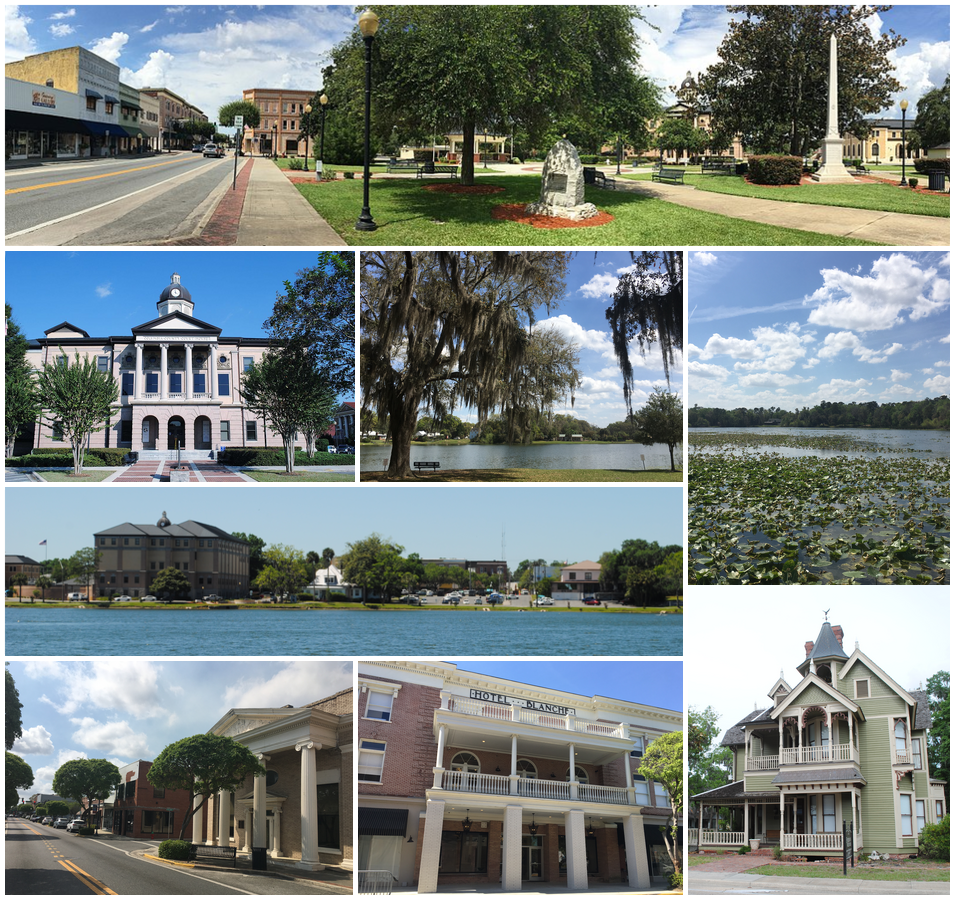
Lake City is a city in and the county seat of Columbia County, Florida, United States. As of the 2020 census, the city's population was 12,329, up from 12,046 at the 2010 census. It is the principal city of the Lake City Micropolitan Statistical Area, composed of Columbia County, as well as a principal city of the Gainesville metropolitan area, Florida. Lake City is 60 miles west of Jacksonville. Lake City is known as "The Gateway to Florida" because it is adjacent to the intersection of Interstate 75 and Interstate 10. Sports Illustrated magazine profiled the town in a September 2021 article, "Football and Community Come Together in Lake City".
In 1539, Hernando de Soto and his Spanish expedition arrived in Tampa Bay. The de Soto expedition proceeded north from Tampa Bay looking for gold. His expedition met a large Native American group called the northern Utina, possibly near present-day Lake City, who were part of the western Timucua people. Some northern Utina were led by powerful chiefs. In the 17th century Spanish missionaries established missions in this area, west of the site of present-day Lake City. Called Santa Cruz de Tarihica, it was used by the Spanish to develop agriculture and bring Native Americans within their sphere.
In the 18th century, a Seminole community called Halapata Telofa (also spelled Alapata Telophka) occupied this area, which translated into English, was "Alligator Town". Historians do not know when it was established, but its existence was documented by the U.S. Army in 1821. A February 1821 report, by Captain John H. Bell, mentions that the mico (chief) of Alligator Town had recently died and missed a gathering of chiefs.
The most famous resident of Alligator Town was Alligator Warrior (Halpatter Tustenuggee), also known as "Chief Alligator." He led Seminole warriors in the Second Seminole War (1835–1842) to resist their people's relocation to the Arkansas Territory (now known as Oklahoma).
After Florida became a territory of the United States in 1821, American settlers formed their own settlement adjacent to Alligator Village and called it Alligator. Following the 1823 Treaty of Moultrie Creek, the residents of Alligator Village relocated to the banks of the Peace River (Peas Creek) in the newly established Seminole reservation, leaving Alligator Town. When Columbia County was formed in 1832 from Duval and Alachua counties, Alligator was designated as the seat of the county government.
During the Second Seminole War, several forts were established in the area, including Fort White on the Santa Fe River, and Fort Alligator, also called Fort Lancaster, in present-day downtown Lake City. By 1845, the last of the Seminole left the area of present-day Lake City or were forcibly removed by the US Army.
In 1847, Company C of the Florida Volunteers, which was composed of Lake City members, served in the Mexican–American War.
In November 1858, a railroad was completed connecting Jacksonville to Alligator, which opened the town to more commerce and passenger traffic. Alligator Town was incorporated and its name changed to Lake City in 1859; M. Whit Smith was elected as the town's first mayor. According to an urban legend, the name was changed because the mayor's wife Martha Jane, who had recently moved to the town, refused to hang her lace curtains in a town named Alligator.
Hub AI
Lake City, Florida AI simulator
(@Lake City, Florida_simulator)
Lake City, Florida
Lake City is a city in and the county seat of Columbia County, Florida, United States. As of the 2020 census, the city's population was 12,329, up from 12,046 at the 2010 census. It is the principal city of the Lake City Micropolitan Statistical Area, composed of Columbia County, as well as a principal city of the Gainesville metropolitan area, Florida. Lake City is 60 miles west of Jacksonville. Lake City is known as "The Gateway to Florida" because it is adjacent to the intersection of Interstate 75 and Interstate 10. Sports Illustrated magazine profiled the town in a September 2021 article, "Football and Community Come Together in Lake City".
In 1539, Hernando de Soto and his Spanish expedition arrived in Tampa Bay. The de Soto expedition proceeded north from Tampa Bay looking for gold. His expedition met a large Native American group called the northern Utina, possibly near present-day Lake City, who were part of the western Timucua people. Some northern Utina were led by powerful chiefs. In the 17th century Spanish missionaries established missions in this area, west of the site of present-day Lake City. Called Santa Cruz de Tarihica, it was used by the Spanish to develop agriculture and bring Native Americans within their sphere.
In the 18th century, a Seminole community called Halapata Telofa (also spelled Alapata Telophka) occupied this area, which translated into English, was "Alligator Town". Historians do not know when it was established, but its existence was documented by the U.S. Army in 1821. A February 1821 report, by Captain John H. Bell, mentions that the mico (chief) of Alligator Town had recently died and missed a gathering of chiefs.
The most famous resident of Alligator Town was Alligator Warrior (Halpatter Tustenuggee), also known as "Chief Alligator." He led Seminole warriors in the Second Seminole War (1835–1842) to resist their people's relocation to the Arkansas Territory (now known as Oklahoma).
After Florida became a territory of the United States in 1821, American settlers formed their own settlement adjacent to Alligator Village and called it Alligator. Following the 1823 Treaty of Moultrie Creek, the residents of Alligator Village relocated to the banks of the Peace River (Peas Creek) in the newly established Seminole reservation, leaving Alligator Town. When Columbia County was formed in 1832 from Duval and Alachua counties, Alligator was designated as the seat of the county government.
During the Second Seminole War, several forts were established in the area, including Fort White on the Santa Fe River, and Fort Alligator, also called Fort Lancaster, in present-day downtown Lake City. By 1845, the last of the Seminole left the area of present-day Lake City or were forcibly removed by the US Army.
In 1847, Company C of the Florida Volunteers, which was composed of Lake City members, served in the Mexican–American War.
In November 1858, a railroad was completed connecting Jacksonville to Alligator, which opened the town to more commerce and passenger traffic. Alligator Town was incorporated and its name changed to Lake City in 1859; M. Whit Smith was elected as the town's first mayor. According to an urban legend, the name was changed because the mayor's wife Martha Jane, who had recently moved to the town, refused to hang her lace curtains in a town named Alligator.
Recent media