
Recent from talks
Jean-Baptiste Lamarck
Knowledge base stats:
Talk channels stats:
Members stats:
Jean-Baptiste Lamarck
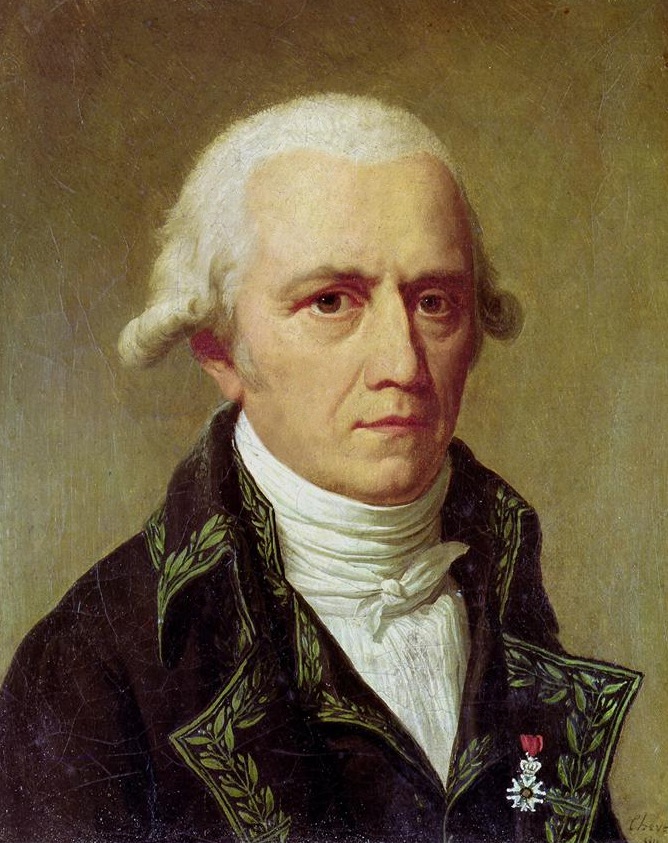
Jean-Baptiste Pierre Antoine de Monet, chevalier de Lamarck (1 August 1744 – 18 December 1829), often known simply as Lamarck (/ləˈmɑːrk/; French: [ʒɑ̃batist lamaʁk]), was a French naturalist, biologist, academic, and soldier. He was an early proponent of the idea that biological evolution occurred and proceeded in accordance with natural laws.
Lamarck fought in the Seven Years' War against Prussia, and was awarded a commission for bravery on the battlefield. Posted to Monaco, Lamarck became interested in natural history and resolved to study medicine. He retired from the army after being injured in 1766, and returned to his medical studies. Lamarck developed a particular interest in botany, and later, after he published the three-volume work Flore françoise (1778), he gained membership of the French Academy of Sciences in 1779. Lamarck became involved in the Jardin des Plantes and was appointed to the Chair of Botany in 1788. When the French National Assembly founded the Muséum national d'Histoire naturelle in 1793, Lamarck became a professor of zoology.
In 1801, he published Système des animaux sans vertèbres, a major work on the classification of invertebrates, a term which he coined. In an 1802 publication, he became one of the first to use the term "biology" in its modern sense. Lamarck continued his work as a premier authority on invertebrate zoology. He is remembered, at least in malacology, as a taxonomist of considerable stature.
The modern era generally remembers Lamarck for a theory of inheritance of acquired characteristics, called Lamarckism (inaccurately named after him), soft inheritance, or use/disuse theory, which he described in his 1809 Philosophie zoologique. However, the idea of soft inheritance long antedates him, formed only a small element of his theory of evolution, and was in his time accepted by many natural historians. Lamarck's contribution to evolutionary theory consisted of the first truly cohesive theory of biological evolution, in which an alchemical complexifying force drove organisms up a ladder of complexity, and a second environmental force adapted them to local environments through use and disuse of characteristics, differentiating them from other organisms. Scientists have debated whether advances in the field of transgenerational epigenetics mean that Lamarck was to an extent correct, or not.
Jean-Baptiste Lamarck was born in Bazentin, Picardy, northern France, as the 11th child in an impoverished aristocratic family. Male members of the Lamarck family had traditionally served in the French army. Lamarck's eldest brother was killed in combat at the Siege of Bergen op Zoom, and two other brothers were still in service when Lamarck was in his teenaged years. Yielding to the wishes of his father, Lamarck enrolled in a Jesuit college in Amiens in the late 1750s.
After his father died in 1760, Lamarck bought himself a horse, and rode across the country to join the French army, which was in Germany at the time. Lamarck showed great physical courage on the battlefield in the Seven Years' War with Prussia, and he was even nominated for the lieutenancy. Lamarck's company was left exposed to the direct artillery fire of their enemies, and was quickly reduced to just 14 men—with no officers. One of the men suggested that the puny, 17-year-old volunteer should assume command and order a withdrawal from the field; although Lamarck accepted command, he insisted they remain where they had been posted until relieved.
When their colonel reached the remains of their company, this display of courage and loyalty impressed him so much that Lamarck was promoted to officer on the spot. However, when one of his comrades playfully lifted him by the head, he sustained an inflammation in the lymphatic glands of the neck, and he was sent to Paris to receive treatment. He was awarded a commission and settled at his post in Monaco. There, he encountered Traité des plantes usuelles, a botany book by James Francis Chomel.
With a reduced pension of only 400 francs a year, Lamarck resolved to pursue a profession. He attempted to study medicine, and supported himself by working in a bank office. Lamarck studied medicine for four years, but gave it up under his elder brother's persuasion. He was interested in botany, especially after his visits to the Jardin du Roi, and he became a student under Bernard de Jussieu, a notable French naturalist. Under Jussieu, Lamarck spent 10 years studying French flora. In 1776, he wrote his first scientific essay—a chemical treatise.
Hub AI
Jean-Baptiste Lamarck AI simulator
(@Jean-Baptiste Lamarck_simulator)
Jean-Baptiste Lamarck
Jean-Baptiste Pierre Antoine de Monet, chevalier de Lamarck (1 August 1744 – 18 December 1829), often known simply as Lamarck (/ləˈmɑːrk/; French: [ʒɑ̃batist lamaʁk]), was a French naturalist, biologist, academic, and soldier. He was an early proponent of the idea that biological evolution occurred and proceeded in accordance with natural laws.
Lamarck fought in the Seven Years' War against Prussia, and was awarded a commission for bravery on the battlefield. Posted to Monaco, Lamarck became interested in natural history and resolved to study medicine. He retired from the army after being injured in 1766, and returned to his medical studies. Lamarck developed a particular interest in botany, and later, after he published the three-volume work Flore françoise (1778), he gained membership of the French Academy of Sciences in 1779. Lamarck became involved in the Jardin des Plantes and was appointed to the Chair of Botany in 1788. When the French National Assembly founded the Muséum national d'Histoire naturelle in 1793, Lamarck became a professor of zoology.
In 1801, he published Système des animaux sans vertèbres, a major work on the classification of invertebrates, a term which he coined. In an 1802 publication, he became one of the first to use the term "biology" in its modern sense. Lamarck continued his work as a premier authority on invertebrate zoology. He is remembered, at least in malacology, as a taxonomist of considerable stature.
The modern era generally remembers Lamarck for a theory of inheritance of acquired characteristics, called Lamarckism (inaccurately named after him), soft inheritance, or use/disuse theory, which he described in his 1809 Philosophie zoologique. However, the idea of soft inheritance long antedates him, formed only a small element of his theory of evolution, and was in his time accepted by many natural historians. Lamarck's contribution to evolutionary theory consisted of the first truly cohesive theory of biological evolution, in which an alchemical complexifying force drove organisms up a ladder of complexity, and a second environmental force adapted them to local environments through use and disuse of characteristics, differentiating them from other organisms. Scientists have debated whether advances in the field of transgenerational epigenetics mean that Lamarck was to an extent correct, or not.
Jean-Baptiste Lamarck was born in Bazentin, Picardy, northern France, as the 11th child in an impoverished aristocratic family. Male members of the Lamarck family had traditionally served in the French army. Lamarck's eldest brother was killed in combat at the Siege of Bergen op Zoom, and two other brothers were still in service when Lamarck was in his teenaged years. Yielding to the wishes of his father, Lamarck enrolled in a Jesuit college in Amiens in the late 1750s.
After his father died in 1760, Lamarck bought himself a horse, and rode across the country to join the French army, which was in Germany at the time. Lamarck showed great physical courage on the battlefield in the Seven Years' War with Prussia, and he was even nominated for the lieutenancy. Lamarck's company was left exposed to the direct artillery fire of their enemies, and was quickly reduced to just 14 men—with no officers. One of the men suggested that the puny, 17-year-old volunteer should assume command and order a withdrawal from the field; although Lamarck accepted command, he insisted they remain where they had been posted until relieved.
When their colonel reached the remains of their company, this display of courage and loyalty impressed him so much that Lamarck was promoted to officer on the spot. However, when one of his comrades playfully lifted him by the head, he sustained an inflammation in the lymphatic glands of the neck, and he was sent to Paris to receive treatment. He was awarded a commission and settled at his post in Monaco. There, he encountered Traité des plantes usuelles, a botany book by James Francis Chomel.
With a reduced pension of only 400 francs a year, Lamarck resolved to pursue a profession. He attempted to study medicine, and supported himself by working in a bank office. Lamarck studied medicine for four years, but gave it up under his elder brother's persuasion. He was interested in botany, especially after his visits to the Jardin du Roi, and he became a student under Bernard de Jussieu, a notable French naturalist. Under Jussieu, Lamarck spent 10 years studying French flora. In 1776, he wrote his first scientific essay—a chemical treatise.
Recent media