
Recent from talks
Landing Craft Infantry
Knowledge base stats:
Talk channels stats:
Members stats:
Landing Craft Infantry
The Landing Craft Infantry (LCI) were several classes of landing craft used by the Allies to land large numbers of infantry directly onto beaches during World War II. They were developed in response to a British request for seagoing amphibious assault ships capable of carrying and landing substantially more troops than their smaller assault landing craft (LCA). The result was a small steel ship that could land 200 men, traveling from rear bases on its own bottom at a speed of up to 15 knots.
Some 923 were built starting in 1943, serving in both the Pacific and European theaters, including a number that were converted into heavily armed beach assault support ships. The LCI(L) supplemented the small LCAs/LCVPs as a way to get many troops ashore before a dock could be captured or built. As such, they were the largest dedicated beachable infantry landing craft (the larger infantry landing ship (LSI) was a transporter for men and small craft such as the British LCA) in the Allied inventory.
The LCI(L) was designed to carry 200 men at up to 15 knots and be as capable at landing as the LCA. Since a steel hull would be needed and steel was already earmarked for building destroyers at home, the US was approached. There, the plans were developed into the LCI(L), landing craft, infantry (large).
The original British design was envisioned as being a "one time use" vessel which would simply ferry the troops across the English Channel, and were considered an expendable vessel. As such, no sleeping accommodations were placed in the original design. The infantry were provided benches (similar to those on a ferry) upon which to sit while they were transported across the channel. This was changed shortly after initial use of these ships, when it was discovered that many missions would require overnight accommodations.
The U.S. was able to come up with an easily-built and mass-produced design by using non-traditional shipbuilding facilities and equipment. The U.S. established LCI building yards at ten different locations.
There were 3 major types of LCI(L) which differed mostly by the location of the ramps and by the shape of the conning tower. All of these ships had similar hulls. The hull of all LCI(L) were 158 ft (48 m) long with a 23-foot beam, making them relatively long and narrow.
The 3 major LCI(L) types are normally referred to as: a) Square Conning tower, Side Ramp (the original style); b) Round Conn, Side Ramp; and c) Round Conn, Bow Ramp.
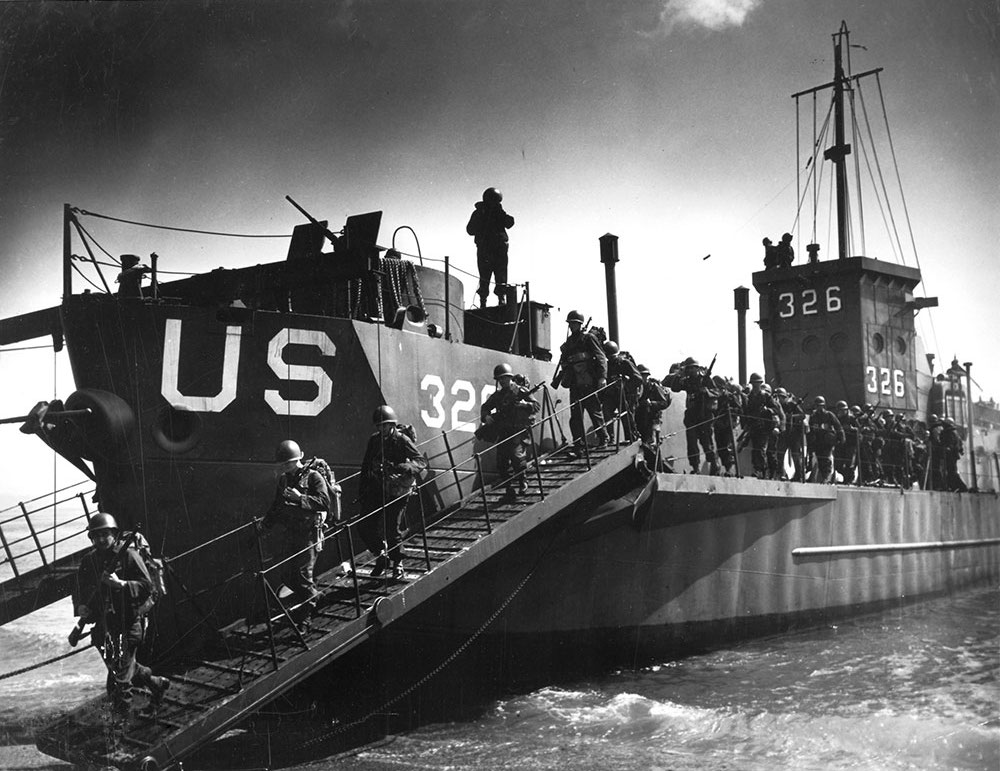
On LCI(L)1-349 class, (Square Conn, Side Ramps) the deck was wider than the prow and two gangways on either side of the bow led onto a pair of ramps that were lowered, and down which troops would disembark. The LCI 350 class had a single enclosed bow ramp with two bow doors that swung open. The reason for moving the ramp to the inside was to provide some protection for the troops as they disembarked to the beach, if only by concealing them from enemy sight. Also, the low, squared-off conning tower was upgraded on later models (LCI(L)350 and higher) with a taller, round conning tower which afforded slightly more visibility from the bridge.
Hub AI
Landing Craft Infantry AI simulator
(@Landing Craft Infantry_simulator)
Landing Craft Infantry
The Landing Craft Infantry (LCI) were several classes of landing craft used by the Allies to land large numbers of infantry directly onto beaches during World War II. They were developed in response to a British request for seagoing amphibious assault ships capable of carrying and landing substantially more troops than their smaller assault landing craft (LCA). The result was a small steel ship that could land 200 men, traveling from rear bases on its own bottom at a speed of up to 15 knots.
Some 923 were built starting in 1943, serving in both the Pacific and European theaters, including a number that were converted into heavily armed beach assault support ships. The LCI(L) supplemented the small LCAs/LCVPs as a way to get many troops ashore before a dock could be captured or built. As such, they were the largest dedicated beachable infantry landing craft (the larger infantry landing ship (LSI) was a transporter for men and small craft such as the British LCA) in the Allied inventory.
The LCI(L) was designed to carry 200 men at up to 15 knots and be as capable at landing as the LCA. Since a steel hull would be needed and steel was already earmarked for building destroyers at home, the US was approached. There, the plans were developed into the LCI(L), landing craft, infantry (large).
The original British design was envisioned as being a "one time use" vessel which would simply ferry the troops across the English Channel, and were considered an expendable vessel. As such, no sleeping accommodations were placed in the original design. The infantry were provided benches (similar to those on a ferry) upon which to sit while they were transported across the channel. This was changed shortly after initial use of these ships, when it was discovered that many missions would require overnight accommodations.
The U.S. was able to come up with an easily-built and mass-produced design by using non-traditional shipbuilding facilities and equipment. The U.S. established LCI building yards at ten different locations.
There were 3 major types of LCI(L) which differed mostly by the location of the ramps and by the shape of the conning tower. All of these ships had similar hulls. The hull of all LCI(L) were 158 ft (48 m) long with a 23-foot beam, making them relatively long and narrow.
The 3 major LCI(L) types are normally referred to as: a) Square Conning tower, Side Ramp (the original style); b) Round Conn, Side Ramp; and c) Round Conn, Bow Ramp.
On LCI(L)1-349 class, (Square Conn, Side Ramps) the deck was wider than the prow and two gangways on either side of the bow led onto a pair of ramps that were lowered, and down which troops would disembark. The LCI 350 class had a single enclosed bow ramp with two bow doors that swung open. The reason for moving the ramp to the inside was to provide some protection for the troops as they disembarked to the beach, if only by concealing them from enemy sight. Also, the low, squared-off conning tower was upgraded on later models (LCI(L)350 and higher) with a taller, round conning tower which afforded slightly more visibility from the bridge.
Recent media