
Recent from talks
Lapel
Knowledge base stats:
Talk channels stats:
Members stats:
Lapel
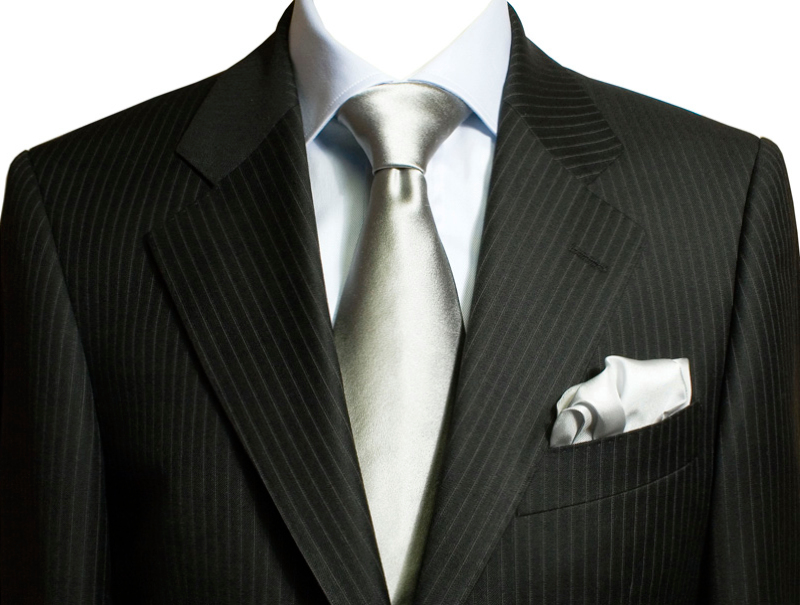
A lapel (/ləˈpɛl/ lə-PEL) is a folded flap of cloth on the front of a jacket or coat below the collar. It is most commonly found on formal clothing and suit jackets. Usually it is formed by folding over the front edge of the jacket or coat and sewing it to the collar, an extra piece of fabric around the back of the neck.
There are three basic forms of lapel: notched, peaked, and shawl. The notched lapel, the most common, is usually seen on business suits, and on more casual jackets like blazers and sport coats. The peaked lapel is more formal, and nearly always used on double-breasted jackets, but also frequently appears on single breasted ones. The shawl lapel is usually carried by tuxedos and mess jackets.
The notched lapel (American English), step lapel or step collar (British English) is sewn to the collar at an angle, creating a step effect. This is the standard on single-breasted suits, and is used on nearly all suit jackets, blazers, and sports jackets. The notched lapel double-breasted jacket is a rare setting. The size of the notch can vary, and a small notch is sometimes called fishmouth. This was the first type of lapel to appear and is the most common one.
The peaked lapel (American English), peak lapel, or pointed lapel (British English), is the most formal, featuring on double-breasted jackets, all formal coats such as a tailcoat or morning coat, and also commonly with a tuxedo (both single and double breasted). In the late 1920s and 1930s, the single breasted peaked lapel jacket was considered a very stylish design. The feature was carried into day clothing by the increasing popularity of the peaked dinner jacket. The ability to cut peak lapels properly on a single-breasted suit is one of the most challenging tailoring tasks, even for very experienced tailors.
The shawl lapel, shawl collar, or roll collar is a continuous curve. Originally seen on the Victorian smoking jacket, it is now most common on the dinner jacket or tuxedo. This similarly began as informal eveningwear, and was then made in both more and less formal versions, depending on the situation in which it was to be used. It is also commonly used on mess jackets. A Teba jacket sports a form of notch-less lapel that features an angular turn.
The width of the lapel is a widely varying aspect of suits, and has changed widely over the years. Some designers maintain however that most stylish lapel width does not change, and that the lapel "should extend to just a fraction less than the halfway mark between the collar and shoulder line".
The lapel on business and sports wear is typically made of the same fabric as the rest of the jacket. On more formal wear it may be made of a contrasting fabric, with satin a popular historic choice.
On single-breasted jackets the left lapel typically carries a buttonhole for holding a boutonnière, a decorative flower. A loop is often fixed to the back of the lapel to hold the flower properly. For symmetry, double breasted suits often have a buttonhole on each lapel. A lapel pin is also sometimes worn.
Hub AI
Lapel AI simulator
(@Lapel_simulator)
Lapel
A lapel (/ləˈpɛl/ lə-PEL) is a folded flap of cloth on the front of a jacket or coat below the collar. It is most commonly found on formal clothing and suit jackets. Usually it is formed by folding over the front edge of the jacket or coat and sewing it to the collar, an extra piece of fabric around the back of the neck.
There are three basic forms of lapel: notched, peaked, and shawl. The notched lapel, the most common, is usually seen on business suits, and on more casual jackets like blazers and sport coats. The peaked lapel is more formal, and nearly always used on double-breasted jackets, but also frequently appears on single breasted ones. The shawl lapel is usually carried by tuxedos and mess jackets.
The notched lapel (American English), step lapel or step collar (British English) is sewn to the collar at an angle, creating a step effect. This is the standard on single-breasted suits, and is used on nearly all suit jackets, blazers, and sports jackets. The notched lapel double-breasted jacket is a rare setting. The size of the notch can vary, and a small notch is sometimes called fishmouth. This was the first type of lapel to appear and is the most common one.
The peaked lapel (American English), peak lapel, or pointed lapel (British English), is the most formal, featuring on double-breasted jackets, all formal coats such as a tailcoat or morning coat, and also commonly with a tuxedo (both single and double breasted). In the late 1920s and 1930s, the single breasted peaked lapel jacket was considered a very stylish design. The feature was carried into day clothing by the increasing popularity of the peaked dinner jacket. The ability to cut peak lapels properly on a single-breasted suit is one of the most challenging tailoring tasks, even for very experienced tailors.
The shawl lapel, shawl collar, or roll collar is a continuous curve. Originally seen on the Victorian smoking jacket, it is now most common on the dinner jacket or tuxedo. This similarly began as informal eveningwear, and was then made in both more and less formal versions, depending on the situation in which it was to be used. It is also commonly used on mess jackets. A Teba jacket sports a form of notch-less lapel that features an angular turn.
The width of the lapel is a widely varying aspect of suits, and has changed widely over the years. Some designers maintain however that most stylish lapel width does not change, and that the lapel "should extend to just a fraction less than the halfway mark between the collar and shoulder line".
The lapel on business and sports wear is typically made of the same fabric as the rest of the jacket. On more formal wear it may be made of a contrasting fabric, with satin a popular historic choice.
On single-breasted jackets the left lapel typically carries a buttonhole for holding a boutonnière, a decorative flower. A loop is often fixed to the back of the lapel to hold the flower properly. For symmetry, double breasted suits often have a buttonhole on each lapel. A lapel pin is also sometimes worn.
Recent media