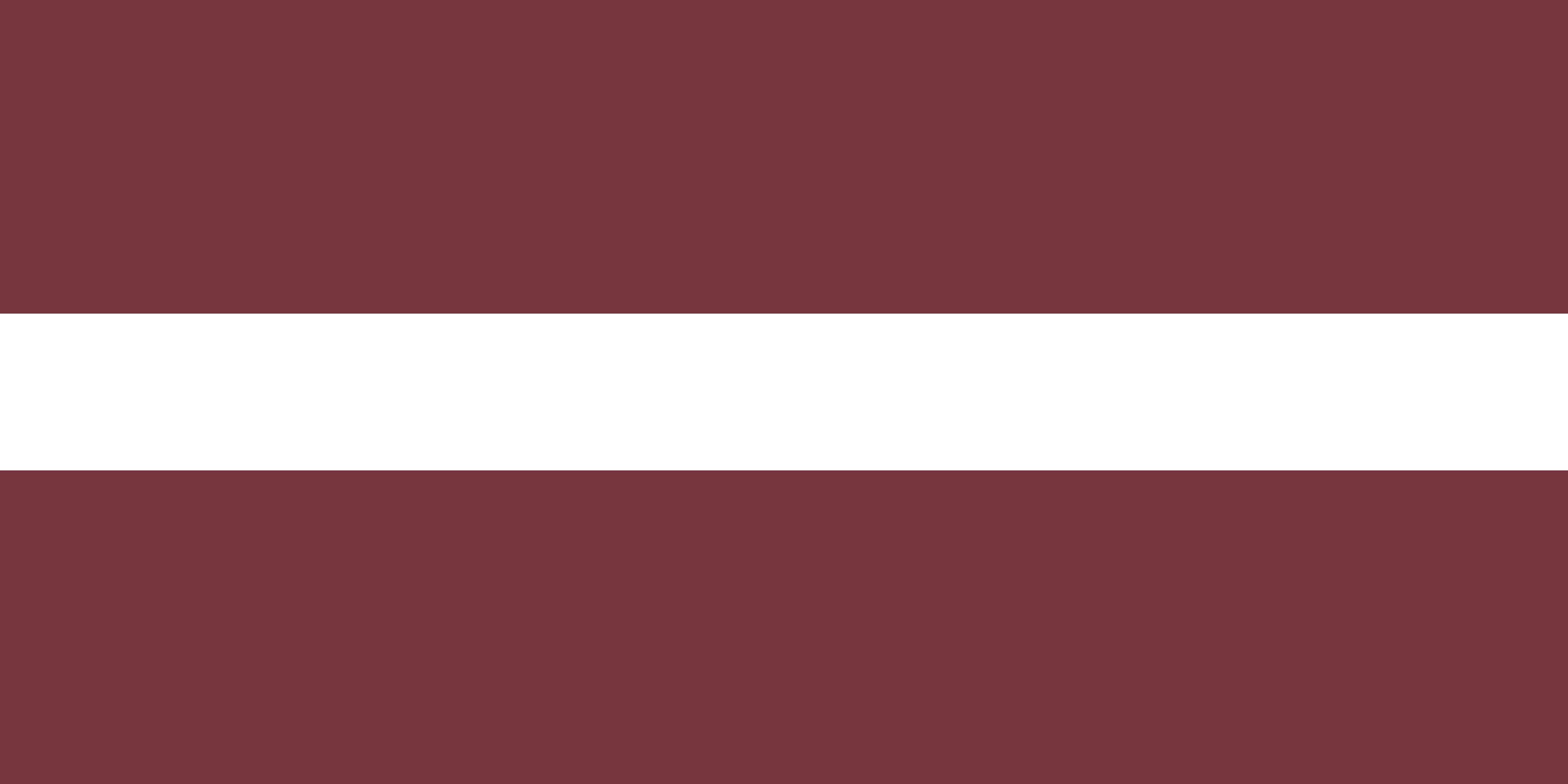
Latvia
Latvia
Main page
2321676

Latvia

logo
Community Hub0 subscribers
What are your thoughts?
Be the first to start a discussion here.
Latvia

Latvia, officially the Republic of Latvia, is a country in the Baltic region of northern Europe. It is one of the three Baltic states, along with Estonia to the north and Lithuania to the south. It borders Russia to the east and Belarus to the southeast and shares a maritime border with Sweden to the west. Latvia covers an area of 64,589 km2 (24,938 sq mi), with a population of 1.8 million. The country has a temperate seasonal climate. Its capital and largest city is Riga. Latvians, who are the titular nation and comprise 65.5% of the country's population, belong to the ethnolinguistic group of the Balts and speak Latvian. Russians are the most prominent minority in the country, at almost a quarter of the population; 37.7% of the population speak Russian as their native tongue.

After centuries of Teutonic, Swedish, Polish-Lithuanian, and Russian rule, the independent Republic of Latvia was established on 18 November 1918 after breaking away from the Russian Empire in the aftermath of World War I. The country became increasingly autocratic after the coup in 1934 established the dictatorship of Kārlis Ulmanis. Latvia's de facto independence was interrupted at the outset of World War II, beginning with forcible incorporation into the Soviet Union, followed by the invasion and occupation by Nazi Germany in 1941 and the re-occupation by the Soviets in 1944, which formed the Latvian SSR for the next 45 years. As a result of extensive immigration during the Soviet occupation, ethnic Russians became the most prominent minority in the country. The peaceful Singing Revolution started in 1987 among the Baltic Soviet republics and ended with the restoration of both de facto and official independence on 21 August 1991. Latvia has since been a democratic unitary parliamentary republic.

Latvia is a developed country with a high-income, advanced economy ranking 39th in the Human Development Index. It is a member of the European Union, Eurozone, NATO, the Council of Europe, the United Nations, the Council of the Baltic Sea States, the International Monetary Fund, the Nordic-Baltic Eight, the Nordic Investment Bank, the Organisation for Economic Co-operation and Development, the Organization for Security and Co-operation in Europe, and the World Trade Organization.

The name Latvija is derived from the name of the ancient Latgalians, one of four Indo-European Baltic tribes (along with Curonians, Selonians and Semigallians), which formed the ethnic core of modern Latvians together with the Finnic Livonians. Henry of Latvia coined the latinisations of the country's name, "Lettigallia" and "Lethia", both derived from the Latgalians. The terms inspired the variations on the country's name in Romance languages from "Letonia" and in several Germanic languages from "Lettland".

Around 3000 BC, the Proto-Baltic ancestors of the Latvian people settled on the eastern coast of the Baltic Sea. The Balts established trade routes to Rome and Byzantium, trading local amber for precious metals. By 900 AD, four distinct Baltic tribes inhabited Latvia: Curonians, Latgalians, Selonians, Semigallians (in Latvian: kurši, latgaļi, sēļi and zemgaļi), as well as the Finnic tribe of Livonians (lībieši) speaking a Finnic language.

In the 12th century in the territory of Latvia, there were lands with their rulers: Vanema [lv], Ventava [lv], Bandava, Piemare, Duvzare [lv], Selen [lv], Koknese, Jersika, Tālava and Atzele [lv].

Although the local people had contact with the outside world for centuries, they became more fully integrated into the European socio-political system in the 12th century. The first missionaries, sent by the pope, sailed up the Daugava River in the late 12th century, seeking converts. The local people, however, did not convert to Christianity as readily as the church had hoped.

German crusaders were sent, or more likely decided to go of their own accord as they were known to do. Saint Meinhard of Segeberg arrived in Ikšķile, in 1184, traveling with merchants to Livonia, on a Catholic mission to convert the population from their original pagan beliefs. Pope Celestine III had called for a crusade against pagans in northern Europe in 1193. When peaceful means of conversion failed to produce results, Meinhard plotted to convert Livonians by force of arms.

See all
User Avatar
No comments yet.