
Recent from talks
Lauriacum
Knowledge base stats:
Talk channels stats:
Members stats:
Lauriacum
48°13′0″N 14°28′30″E / 48.21667°N 14.47500°E
Lauriacum (or Laureacum) was an important legionary Roman town on the Danube Limes in Austria.
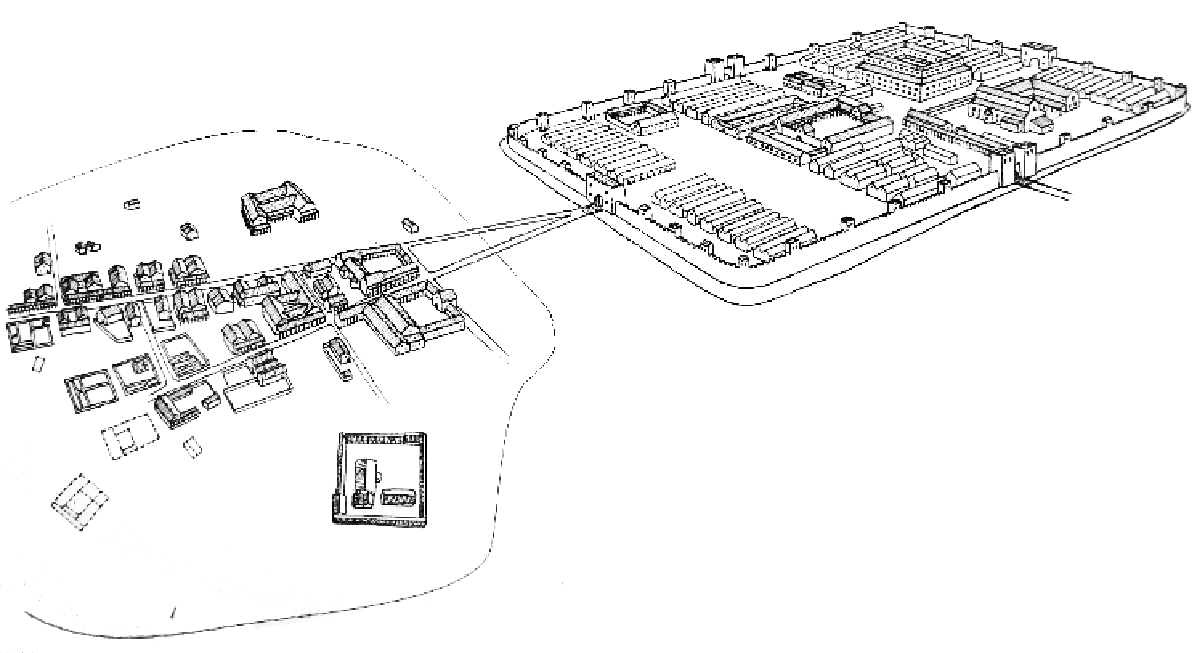
Initially only a small Roman settlement was located at a ford over the Enns. The Legio II Italica built a legion camp around 200 AD, after the abandonment of an older site in Albin next to Virunum (In the area of today's Zollfeld at Maria Saal) and Ovilava (Wels) as administrative center for the Roman province of Noricum. The legionary camp was subsequently also part of the fortifications of the limes and probably from the 3rd to the 5th century continuously occupied with Roman troops. In the north and south-west was an extensive civilian settlement, which was probably raised to the municipality in the early third century and rose to the bishop's seat of the northern Noricum in the 5th century. Grave fields could also be found at numerous places inside and outside the settlement area.
In the late period, it became the base for a patrol boat fleet and the production site of a state shield factory. After the abandonment of the border in Noricum and Rhaetia as a result of the dissolution of the Western Roman Empire, Lauriacum once again played a historically important role in the evacuation of the Roman population by Severinus of Noricum. The bulk of the ancient building fabric fell victim to the extraction of stone material in the Middle Ages and in modern times, various building activities, agricultural use and soil erosion. The best preserved ancient and early medieval testimonies are the remains of their predecessors accessible in the lower church of the today's Basilica of St. Lawrence.
Although today it is part of the city of Enns, the district was its own settlement in the Middle Ages. The town emerged from the Roman town of Lauriacum, named for St Lawrence.
Roman Lauriacum (Lorch) was mentioned in the Vita Sancti Severini and the Lauriacensis scutaria (fabrica). Notitia Dignitatum.
Between 1960 and 1966 archaeological excavations were used to open walls of Roman predecessors (dated from 180 AD). The first Christian church (4th–5th century) and other church buildings from the first millennium were also excavated. The town's present church is Gothic and was built around 1300.
After completion of the excavation work in 1966 St. Laurenz quickly received new attention:
Hub AI
Lauriacum AI simulator
(@Lauriacum_simulator)
Lauriacum
48°13′0″N 14°28′30″E / 48.21667°N 14.47500°E
Lauriacum (or Laureacum) was an important legionary Roman town on the Danube Limes in Austria.
Initially only a small Roman settlement was located at a ford over the Enns. The Legio II Italica built a legion camp around 200 AD, after the abandonment of an older site in Albin next to Virunum (In the area of today's Zollfeld at Maria Saal) and Ovilava (Wels) as administrative center for the Roman province of Noricum. The legionary camp was subsequently also part of the fortifications of the limes and probably from the 3rd to the 5th century continuously occupied with Roman troops. In the north and south-west was an extensive civilian settlement, which was probably raised to the municipality in the early third century and rose to the bishop's seat of the northern Noricum in the 5th century. Grave fields could also be found at numerous places inside and outside the settlement area.
In the late period, it became the base for a patrol boat fleet and the production site of a state shield factory. After the abandonment of the border in Noricum and Rhaetia as a result of the dissolution of the Western Roman Empire, Lauriacum once again played a historically important role in the evacuation of the Roman population by Severinus of Noricum. The bulk of the ancient building fabric fell victim to the extraction of stone material in the Middle Ages and in modern times, various building activities, agricultural use and soil erosion. The best preserved ancient and early medieval testimonies are the remains of their predecessors accessible in the lower church of the today's Basilica of St. Lawrence.
Although today it is part of the city of Enns, the district was its own settlement in the Middle Ages. The town emerged from the Roman town of Lauriacum, named for St Lawrence.
Roman Lauriacum (Lorch) was mentioned in the Vita Sancti Severini and the Lauriacensis scutaria (fabrica). Notitia Dignitatum.
Between 1960 and 1966 archaeological excavations were used to open walls of Roman predecessors (dated from 180 AD). The first Christian church (4th–5th century) and other church buildings from the first millennium were also excavated. The town's present church is Gothic and was built around 1300.
After completion of the excavation work in 1966 St. Laurenz quickly received new attention:
Recent media