
Recent from talks
Le Moss
Knowledge base stats:
Talk channels stats:
Members stats:
Le Moss
Le Moss (3 April 1975 – 17 August 2000) was an Irish-bred, British-trained Thoroughbred racehorse and sire. A specialist stayer, he excelled at distances of two miles and beyond, winning eleven times from fifteen races between 1977 and 1980. He showed good form as a three-year-old, winning the Queen's Vase and finishing second in the classic St Leger, but reached his peak as an older horse. In 1979 he completed the "Stayers' Triple Crown" by winning the Ascot Gold Cup, Goodwood Cup and Doncaster Cup. He won the same three races as a five-year-old, becoming the only horse to achieve this feat twice. At stud Le Moss had some success as a sire of steeplechasers.
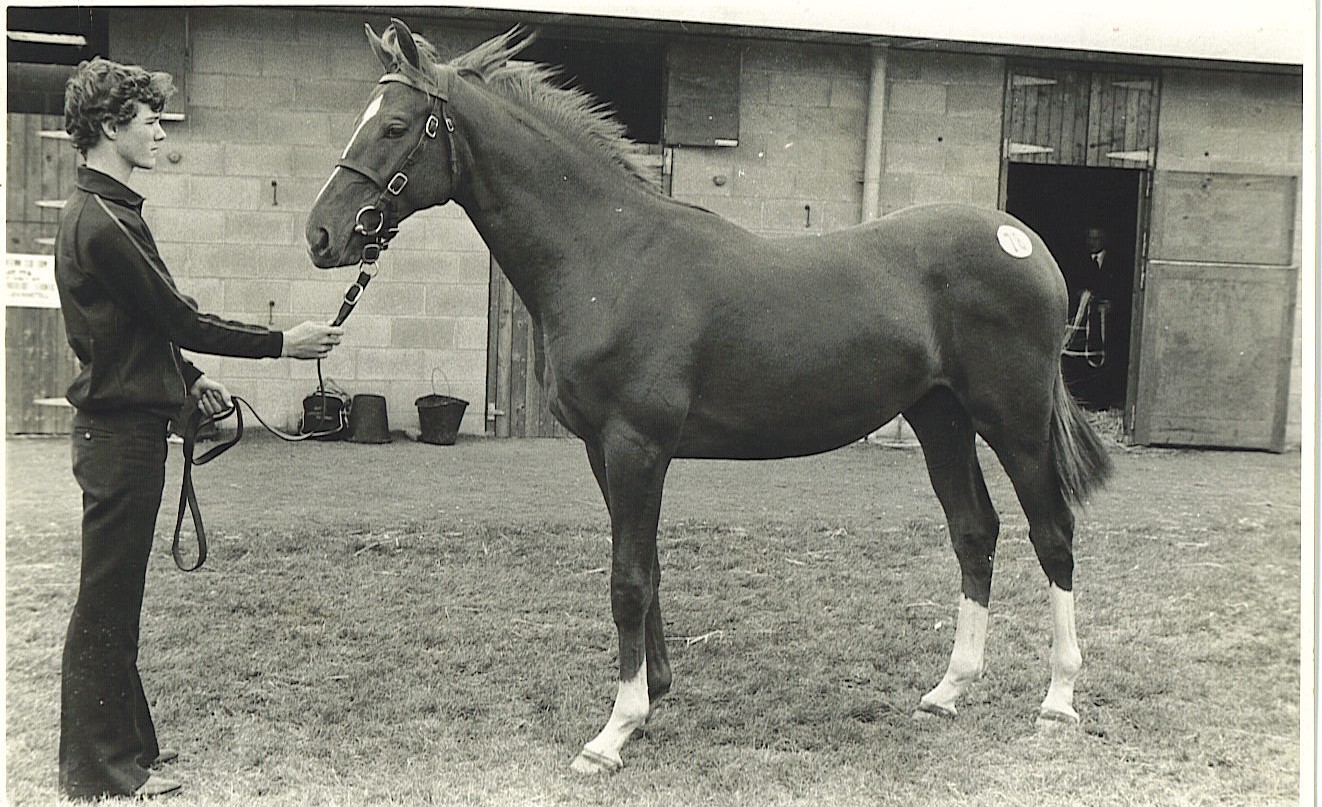
Le Moss was a chestnut horse with a narrow white blaze and three white socks bred in Ireland by the McGrath Trust Company, a family breeding operation run by Joseph McGrath. His sire was the McGrath-owned Le Levanstell, who won the Sussex Stakes and the Queen Elizabeth II Stakes in 1961 before a successful stud career. Le Moss's dam, Feemoss came from a strong staying family, being a daughter of the Yorkshire Oaks winner Feevagh and a half-sister to the Queen Alexandra Stakes winner Laurence O. Feemoss had previously produced the Prix de l'Arc de Triomphe winner Levmoss and the Prix de Diane winner Sweet Mimosa, both of which were also by Le Levanstell and therefore a full-brother and full-sister to Le Moss.
As a yearling, Le Moss was sent to the sales and was bought for 26,000 guineas by representatives of the Italian lawyer Carlo d'Alessio. During his racing career, Le Moss carried d'Alessio's red, white and green racing silks and was trained by Henry Cecil at his Warren Place Stables in Newmarket, Suffolk. He proved a difficult horse to train: Joe Mercer, Le Moss' main jockey, called him "cantankerous"; but on the racecourse the horse gave his all, Mercer considering him "very brave, and once he got his head in front very little would pass him".
After finishing unplaced on his only race as a two-year-old, Le Moss was a "very impressive" winner of a maiden race at Newmarket Racecourse on his first appearance in 1978. He established himself as one of the leading stayers of his generation at Royal Ascot in June when he was ridden by Geoff Baxter to win the Queen's Vase over two miles at odds of 7/4. The following month, again ridden by Baxter, he defeated the mighty Sea Pigeon in the valuable Tennent Trophy over one mile and seven furlongs at Ayr. Re-united with stable jockey Mercer in August, he was an impressive winner of the March Stakes over one and three-quarter miles at Goodwood prior to tackling the final classic of the season, the St Leger Stakes at Doncaster, a race in which he finished second of the fourteen runners, one and a half lengths behind the 28/1 outsider Julio Mariner.
Le Moss began his four-year-old season by beating two opponents in the Lymm Stakes over two miles at Haydock Park in May. He was then sent to Royal Ascot in June, where he was ridden by Lester Piggott in the Ascot Gold Cup over two and a half miles. He started at odds of 7/4 and won by seven lengths from his six-year-old stable companion Buckskin who started favourite. With Mercer back in the saddle, he then won the Goodwood Cup over two miles five furlongs and completed the Stayers' Triple Crown by winning the Doncaster Cup over two and a quarter miles in September.
In early 1980, Le Moss sustained an injury and could not be galloped, being instead brought back to fitness by a programme of swimming. He did not appear until Royal Ascot where he started the 3/1 favourite to retain the Gold Cup. Ridden by Joe Mercer, he led from the start and repelled the persistent challenge of the Irish-trained four-year-old Ardross to win by three-quarters of a length. In the Goodwood Cup, Le Moss started 4/7 favourite, despite being required to concede two pounds to Ardross. In a repeat of their Ascot clash, Le Moss and Ardross dominated the closing stages of the race, with the older horse winning by a neck. The pair met for a third time in the Doncaster Cup. Le Moss led from the start and completed his second Cup hat-trick, again beating his rival by a neck.
On his final appearance he was sent to France to contest the Prix Gladiateur over 4000 metres. He failed to reproduce his best form when finishing a half-a-length second to the filly Anifa who was in receipt of 10lbs. Mercer blamed himself for the defeat, admitting afterwards that he did not set a strong enough gallop and thereby placing more of an emphasis on stamina, his mount's greatest attribute.
Le Moss's full race record is listed below.
Hub AI
Le Moss AI simulator
(@Le Moss_simulator)
Le Moss
Le Moss (3 April 1975 – 17 August 2000) was an Irish-bred, British-trained Thoroughbred racehorse and sire. A specialist stayer, he excelled at distances of two miles and beyond, winning eleven times from fifteen races between 1977 and 1980. He showed good form as a three-year-old, winning the Queen's Vase and finishing second in the classic St Leger, but reached his peak as an older horse. In 1979 he completed the "Stayers' Triple Crown" by winning the Ascot Gold Cup, Goodwood Cup and Doncaster Cup. He won the same three races as a five-year-old, becoming the only horse to achieve this feat twice. At stud Le Moss had some success as a sire of steeplechasers.
Le Moss was a chestnut horse with a narrow white blaze and three white socks bred in Ireland by the McGrath Trust Company, a family breeding operation run by Joseph McGrath. His sire was the McGrath-owned Le Levanstell, who won the Sussex Stakes and the Queen Elizabeth II Stakes in 1961 before a successful stud career. Le Moss's dam, Feemoss came from a strong staying family, being a daughter of the Yorkshire Oaks winner Feevagh and a half-sister to the Queen Alexandra Stakes winner Laurence O. Feemoss had previously produced the Prix de l'Arc de Triomphe winner Levmoss and the Prix de Diane winner Sweet Mimosa, both of which were also by Le Levanstell and therefore a full-brother and full-sister to Le Moss.
As a yearling, Le Moss was sent to the sales and was bought for 26,000 guineas by representatives of the Italian lawyer Carlo d'Alessio. During his racing career, Le Moss carried d'Alessio's red, white and green racing silks and was trained by Henry Cecil at his Warren Place Stables in Newmarket, Suffolk. He proved a difficult horse to train: Joe Mercer, Le Moss' main jockey, called him "cantankerous"; but on the racecourse the horse gave his all, Mercer considering him "very brave, and once he got his head in front very little would pass him".
After finishing unplaced on his only race as a two-year-old, Le Moss was a "very impressive" winner of a maiden race at Newmarket Racecourse on his first appearance in 1978. He established himself as one of the leading stayers of his generation at Royal Ascot in June when he was ridden by Geoff Baxter to win the Queen's Vase over two miles at odds of 7/4. The following month, again ridden by Baxter, he defeated the mighty Sea Pigeon in the valuable Tennent Trophy over one mile and seven furlongs at Ayr. Re-united with stable jockey Mercer in August, he was an impressive winner of the March Stakes over one and three-quarter miles at Goodwood prior to tackling the final classic of the season, the St Leger Stakes at Doncaster, a race in which he finished second of the fourteen runners, one and a half lengths behind the 28/1 outsider Julio Mariner.
Le Moss began his four-year-old season by beating two opponents in the Lymm Stakes over two miles at Haydock Park in May. He was then sent to Royal Ascot in June, where he was ridden by Lester Piggott in the Ascot Gold Cup over two and a half miles. He started at odds of 7/4 and won by seven lengths from his six-year-old stable companion Buckskin who started favourite. With Mercer back in the saddle, he then won the Goodwood Cup over two miles five furlongs and completed the Stayers' Triple Crown by winning the Doncaster Cup over two and a quarter miles in September.
In early 1980, Le Moss sustained an injury and could not be galloped, being instead brought back to fitness by a programme of swimming. He did not appear until Royal Ascot where he started the 3/1 favourite to retain the Gold Cup. Ridden by Joe Mercer, he led from the start and repelled the persistent challenge of the Irish-trained four-year-old Ardross to win by three-quarters of a length. In the Goodwood Cup, Le Moss started 4/7 favourite, despite being required to concede two pounds to Ardross. In a repeat of their Ascot clash, Le Moss and Ardross dominated the closing stages of the race, with the older horse winning by a neck. The pair met for a third time in the Doncaster Cup. Le Moss led from the start and completed his second Cup hat-trick, again beating his rival by a neck.
On his final appearance he was sent to France to contest the Prix Gladiateur over 4000 metres. He failed to reproduce his best form when finishing a half-a-length second to the filly Anifa who was in receipt of 10lbs. Mercer blamed himself for the defeat, admitting afterwards that he did not set a strong enough gallop and thereby placing more of an emphasis on stamina, his mount's greatest attribute.
Le Moss's full race record is listed below.
Recent media