
Recent from talks
Lead climbing
Knowledge base stats:
Talk channels stats:
Members stats:
Lead climbing
Lead climbing (or leading) is a technique in rock climbing where two climbers work together to ascend a climbing route. The 'lead climber' — who initially does the climbing — clips their rope to pieces of protection as they ascend. The 'second' (or 'belayer') remains static at the base of the route controlling the other end of the rope, which is called belaying (e.g. if the 'lead climber' falls, the 'second' will lock the rope). The term distinguishes between the two roles and the greater effort and increased risk of the role of the 'lead climber'.
Leading a route is in contrast with the alternative climbing technique of top roping, where even though there is still a 'second' belaying the rope, the 'lead climber' faces no risk in the event of a fall and does not need to clip into any protection as the rope is already anchored to the top of the route (e.g. if they fall they will just hang from the static rope). Leading a climbing route is a core activity in rock climbing, and first ascents (FA) and first free ascents (FFA) of new routes must be done via lead climbing.
Lead climbing can be performed as free climbing, in either a traditional climbing or a sport climbing format — leading a traditional climb is a much riskier and physically demanding exercise for the climber. Competition lead climbing is a sport-climbing format that is part of the Olympic sport of competition climbing. Lead climbing can also be performed as aid climbing. The term is not applied to free solo climbing, as the free solo climber is alone and thus there is no need to distinguish the role of 'leader' from the 'second'.
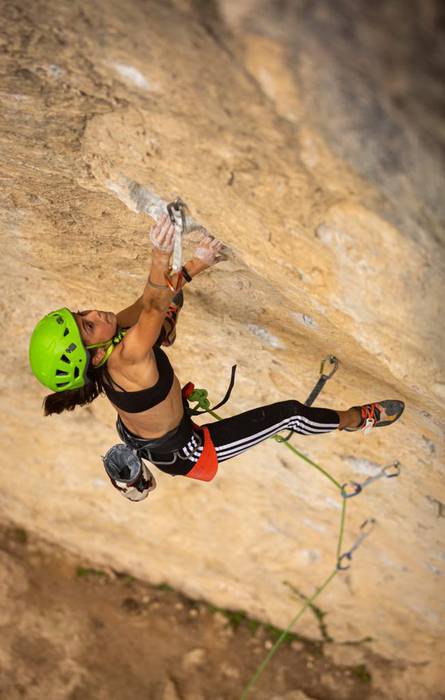
Leading a climb involves a 'lead climbing pair'. The 'lead climber' — the person initially doing the climbing (see image .1) — will have a rope attached to their harness that they will clips into points of protection as they ascend the route. The 'second' (or 'belayer'), remains static, standing at the base of the route controlling the other end of the rope, which is called belaying. The 'second' will use a belay device to attach the rope to their harness from which they can 'pay-out' the rope as the 'lead climber' ascends, but with which they can lock the rope if the 'lead climber' falls. Once the 'lead climber' has reached the top (see image .2), they create a fixed anchor so they can act as the 'belayer' (from above), controlling the rope while the 'second' ascends. The 'second' will unclip the rope from the protection as they ascend.
If the pair are leading a traditional climbing route, the 'lead climber' must also arrange and insert 'removable protection' into the rock face as they climb the route (the 'second' will take it out as they ascend). However, if they are leading a sport climbing route, the protection will already be installed via pre-drilled bolts into the rock face. Leading a traditional route is therefore a riskier and more physically demanding undertaking than leading a sport-climbing route of the same grade.
If a 'lead climber' falls they will drop at least twice the distance to their last point of protection. For example, if the 'lead climber' is 3 metres (10 ft) above their protection when they fall — and the 'belayer' immediately locks the rope — they will drop 6 metres (20 ft) until the rope holds them. This aspect makes lead climbing a more physically demanding activity than top roping, where the 'lead climber' is immediately held by the top-rope if they fall. Note that when the 'second' is climbing and is belayed by the 'lead climber' from above, they are effectively top-roping and the rope will immediately hold them if they fall. This puts less onus on the skills of the 'second' climber, and they can also be partially 'pulled' up the route by the 'lead climber' if needed.
Leading a climb requires good communication between the 'lead climber' and the 'second' who is doing the belaying. The 'lead climber' will want to avoid the 'second' holding the rope too tightly, which can create rope drag that acts as a downward force on the 'lead climber'. However, where the 'lead climber' feels that a fall is imminent (e.g. on a very hard section), they will want the 'second' to take in any slack in the rope to minimize the length of their drop in the event that they fall.
The act and desire to 'lead' a climbing route is related to the definition of what is a first ascent (FA), or first free ascent (FFA) in climbing. The technical grades assigned to climbing routes are based on the climber 'lead climbing' the route, and not top-roping it. If a climber wants to test themselves at a specific technical grade, or set a new technical grade milestone in the sport, then they must 'lead climb' the route.
Hub AI
Lead climbing AI simulator
(@Lead climbing_simulator)
Lead climbing
Lead climbing (or leading) is a technique in rock climbing where two climbers work together to ascend a climbing route. The 'lead climber' — who initially does the climbing — clips their rope to pieces of protection as they ascend. The 'second' (or 'belayer') remains static at the base of the route controlling the other end of the rope, which is called belaying (e.g. if the 'lead climber' falls, the 'second' will lock the rope). The term distinguishes between the two roles and the greater effort and increased risk of the role of the 'lead climber'.
Leading a route is in contrast with the alternative climbing technique of top roping, where even though there is still a 'second' belaying the rope, the 'lead climber' faces no risk in the event of a fall and does not need to clip into any protection as the rope is already anchored to the top of the route (e.g. if they fall they will just hang from the static rope). Leading a climbing route is a core activity in rock climbing, and first ascents (FA) and first free ascents (FFA) of new routes must be done via lead climbing.
Lead climbing can be performed as free climbing, in either a traditional climbing or a sport climbing format — leading a traditional climb is a much riskier and physically demanding exercise for the climber. Competition lead climbing is a sport-climbing format that is part of the Olympic sport of competition climbing. Lead climbing can also be performed as aid climbing. The term is not applied to free solo climbing, as the free solo climber is alone and thus there is no need to distinguish the role of 'leader' from the 'second'.
Leading a climb involves a 'lead climbing pair'. The 'lead climber' — the person initially doing the climbing (see image .1) — will have a rope attached to their harness that they will clips into points of protection as they ascend the route. The 'second' (or 'belayer'), remains static, standing at the base of the route controlling the other end of the rope, which is called belaying. The 'second' will use a belay device to attach the rope to their harness from which they can 'pay-out' the rope as the 'lead climber' ascends, but with which they can lock the rope if the 'lead climber' falls. Once the 'lead climber' has reached the top (see image .2), they create a fixed anchor so they can act as the 'belayer' (from above), controlling the rope while the 'second' ascends. The 'second' will unclip the rope from the protection as they ascend.
If the pair are leading a traditional climbing route, the 'lead climber' must also arrange and insert 'removable protection' into the rock face as they climb the route (the 'second' will take it out as they ascend). However, if they are leading a sport climbing route, the protection will already be installed via pre-drilled bolts into the rock face. Leading a traditional route is therefore a riskier and more physically demanding undertaking than leading a sport-climbing route of the same grade.
If a 'lead climber' falls they will drop at least twice the distance to their last point of protection. For example, if the 'lead climber' is 3 metres (10 ft) above their protection when they fall — and the 'belayer' immediately locks the rope — they will drop 6 metres (20 ft) until the rope holds them. This aspect makes lead climbing a more physically demanding activity than top roping, where the 'lead climber' is immediately held by the top-rope if they fall. Note that when the 'second' is climbing and is belayed by the 'lead climber' from above, they are effectively top-roping and the rope will immediately hold them if they fall. This puts less onus on the skills of the 'second' climber, and they can also be partially 'pulled' up the route by the 'lead climber' if needed.
Leading a climb requires good communication between the 'lead climber' and the 'second' who is doing the belaying. The 'lead climber' will want to avoid the 'second' holding the rope too tightly, which can create rope drag that acts as a downward force on the 'lead climber'. However, where the 'lead climber' feels that a fall is imminent (e.g. on a very hard section), they will want the 'second' to take in any slack in the rope to minimize the length of their drop in the event that they fall.
The act and desire to 'lead' a climbing route is related to the definition of what is a first ascent (FA), or first free ascent (FFA) in climbing. The technical grades assigned to climbing routes are based on the climber 'lead climbing' the route, and not top-roping it. If a climber wants to test themselves at a specific technical grade, or set a new technical grade milestone in the sport, then they must 'lead climb' the route.
Recent media