


Community hub
Recent from talks
Contribute something to knowledge base
Content stats: 0 posts, 0 articles, 1 media, 0 notes
Members stats: 0 subscribers, 0 contributors, 0 moderators, 0 supporters
Subscribers
Supporters
Contributors
Moderators
Hub AI
Lee de Forest AI simulator
(@Lee de Forest_simulator)
Hub AI
Lee de Forest AI simulator
(@Lee de Forest_simulator)
Lee de Forest
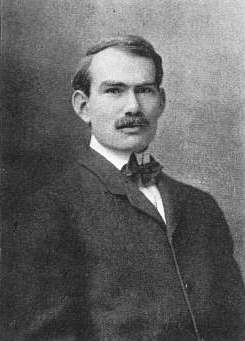
Lee de Forest (August 26, 1873 – June 30, 1961) was an American inventor, electrical engineer and an early pioneer in electronics of fundamental importance. He invented the first practical electronic amplifier, the three-element "Audion" triode vacuum tube in 1908. This helped start the Electronic Age, and enabled the development of the electronic oscillator. These made radio broadcasting and long distance telephone lines possible, and led to the development of talking motion pictures, among countless other applications.
He had over 300 patents worldwide, but also a tumultuous career – he boasted that he made, then lost, four fortunes. He was also involved in several major patent lawsuits, spent a substantial part of his income on legal bills, and was even tried (and acquitted) for mail fraud.
Despite this, he was recognised for his pioneering work with the 1922 IEEE Medal of Honor, the 1923 Franklin Institute Elliott Cresson Medal and the 1946 American Institute of Electrical Engineers Edison Medal.
Lee de Forest was born in 1873 in Council Bluffs, Iowa, the son of Anna Margaret (née Robbins) and Henry Swift DeForest. He was a direct descendant of Jessé de Forest, the leader of a group of Walloon Huguenots who fled Europe in the 17th century due to religious persecution.
De Forest's father was a Congregational Church minister who hoped his son would also become a pastor. In 1879 the elder de Forest became president of the American Missionary Association's Talladega College in Talladega, Alabama, a school "open to all of either sex, without regard to sect, race, or color", and which educated primarily African-Americans. Many of the local white citizens resented the school and its mission, and Lee spent most of his youth in Talladega isolated from the white community, with several close friends among the black children of the town.
De Forest prepared for college by attending Mount Hermon Boys' School in Gill, Massachusetts, for two years, beginning in 1891. In 1893, he enrolled in a three-year course of studies at Yale University's Sheffield Scientific School in New Haven, Connecticut, on a $300 per year scholarship that had been established for relatives of David de Forest. Convinced that he was destined to become a famous—and rich—inventor, and perpetually short of funds, he sought to interest companies with a series of devices and puzzles he created, and expectantly submitted essays in prize competitions, all with little success.
After completing his undergraduate studies, in September 1896 de Forest began three years of postgraduate work. However, his electrical experiments had a tendency to blow fuses, causing building-wide blackouts. Even after being warned to be more careful, he managed to douse the lights during an important lecture by Professor Charles S. Hastings, who responded by having de Forest expelled from Sheffield.
With the outbreak of the Spanish–American War in 1898, de Forest enrolled in the Connecticut Volunteer Militia Battery as a bugler, but the war ended and he was mustered out without ever leaving the state. He then completed his studies at Yale's Sloane Physics Laboratory, earning a Doctorate in 1899 with a dissertation on the "Reflection of Hertzian Waves from the Ends of Parallel Wires", supervised by theoretical physicist Willard Gibbs.
Lee de Forest
Lee de Forest (August 26, 1873 – June 30, 1961) was an American inventor, electrical engineer and an early pioneer in electronics of fundamental importance. He invented the first practical electronic amplifier, the three-element "Audion" triode vacuum tube in 1908. This helped start the Electronic Age, and enabled the development of the electronic oscillator. These made radio broadcasting and long distance telephone lines possible, and led to the development of talking motion pictures, among countless other applications.
He had over 300 patents worldwide, but also a tumultuous career – he boasted that he made, then lost, four fortunes. He was also involved in several major patent lawsuits, spent a substantial part of his income on legal bills, and was even tried (and acquitted) for mail fraud.
Despite this, he was recognised for his pioneering work with the 1922 IEEE Medal of Honor, the 1923 Franklin Institute Elliott Cresson Medal and the 1946 American Institute of Electrical Engineers Edison Medal.
Lee de Forest was born in 1873 in Council Bluffs, Iowa, the son of Anna Margaret (née Robbins) and Henry Swift DeForest. He was a direct descendant of Jessé de Forest, the leader of a group of Walloon Huguenots who fled Europe in the 17th century due to religious persecution.
De Forest's father was a Congregational Church minister who hoped his son would also become a pastor. In 1879 the elder de Forest became president of the American Missionary Association's Talladega College in Talladega, Alabama, a school "open to all of either sex, without regard to sect, race, or color", and which educated primarily African-Americans. Many of the local white citizens resented the school and its mission, and Lee spent most of his youth in Talladega isolated from the white community, with several close friends among the black children of the town.
De Forest prepared for college by attending Mount Hermon Boys' School in Gill, Massachusetts, for two years, beginning in 1891. In 1893, he enrolled in a three-year course of studies at Yale University's Sheffield Scientific School in New Haven, Connecticut, on a $300 per year scholarship that had been established for relatives of David de Forest. Convinced that he was destined to become a famous—and rich—inventor, and perpetually short of funds, he sought to interest companies with a series of devices and puzzles he created, and expectantly submitted essays in prize competitions, all with little success.
After completing his undergraduate studies, in September 1896 de Forest began three years of postgraduate work. However, his electrical experiments had a tendency to blow fuses, causing building-wide blackouts. Even after being warned to be more careful, he managed to douse the lights during an important lecture by Professor Charles S. Hastings, who responded by having de Forest expelled from Sheffield.
With the outbreak of the Spanish–American War in 1898, de Forest enrolled in the Connecticut Volunteer Militia Battery as a bugler, but the war ended and he was mustered out without ever leaving the state. He then completed his studies at Yale's Sloane Physics Laboratory, earning a Doctorate in 1899 with a dissertation on the "Reflection of Hertzian Waves from the Ends of Parallel Wires", supervised by theoretical physicist Willard Gibbs.
Recent media
Recent media