Hubbry Logo
LeerdamLeerdamMain
Open search
Leerdam
Community hub
Leerdam
logo
8 pages, 0 posts
0 subscribers
Be the first to start a discussion here.
Leerdam
Leerdam
from Wikipedia

Dutch topographic map of the former municipality of Leerdam, June 2015

Key Information

Leerdam (Dutch: [leːrˈdɑm] ) is a city and former municipality in the western Netherlands, in the province of Utrecht. The municipality was merged with the municipalities of Vianen and Zederik on 1 January 2019. The name of the new municipality is Vijfheerenlanden which is a part of the province Utrecht. The former municipality Leerdam was a part of the province South Holland.

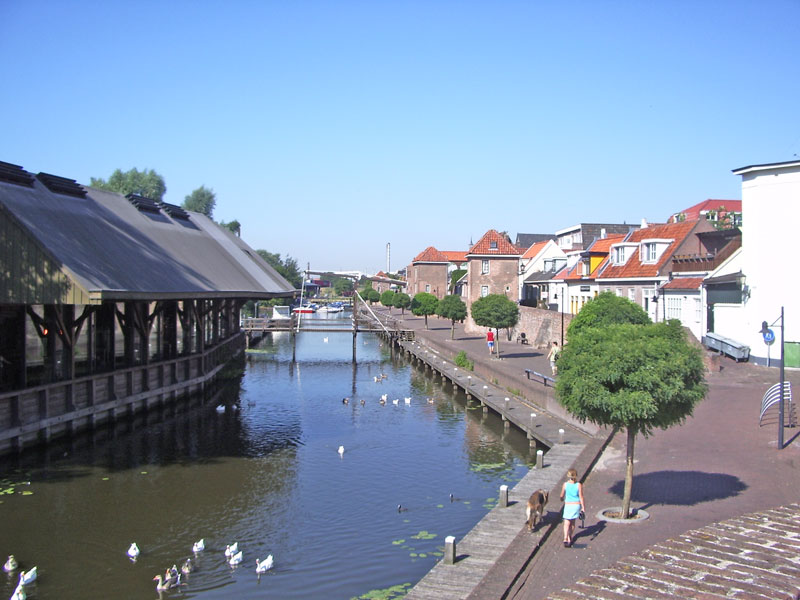
The south border of the town is formed by the river Linge. The name originates from a dam in the river Lede which was a branch from the river Linge towards Meerkerk. Leerdam is situated almost exactly in the middle of the three highways A2, A15, and A27.

History

[edit]

Leerdam received city rights in 1407. The small river Linge, bordered by beautiful water meadows, defines the atmosphere and tone of the landscape. Several centuries ago Leerdam formed a part of the Vijfheerenlanden domain, before it was raised to the level of County in 1498.

In 1551, Leerdam, together with Acquoy, became property of the House of Orange and part of the County of Holland.

The rich history of Leerdam can be found in well-kept historic buildings such as the Grote Kerk (Great Church), the Hofje van Mevrouw van Aerden (Mrs. Aerden Almshouses, now a museum), the remaining and restored city walls on the Zuidwal and the Oude Raadhuis (Old City Hall).

In South Africa a fort was built by the Dutch East India Company between 1666 and 1679 in the coastal city Cape Town. It is called Castle of Good Hope. The corners of this fort received names in honour of William of Orange-Nassau and because Leerdam was part of the House of Orange-Nassau one of those corners were named Leerdam.[2][3][4]

[edit]

Glass industry

[edit]

Since the 18th century, the town's culture has been strongly influenced by the glass industry and the timber industry. The glass currently manufactured in Leerdam is internationally known as Royal Leerdam or (particularly in respect of designer glass and glass art) as Royal Leerdam Crystal. This, with the National Glass Museum, the Glass Centre (with its glassblowing and demonstration activities), and several art galleries, make Leerdam a major tourist attraction in the Netherlands.

Glassblowers work in the Glass Centre [5] in Leerdam, which is open to the public.

Cheese

[edit]

The cheese Leerdammer is named after Leerdam, but is actually producted in Schoonrewoerd, located in the same municipality.

Public transport

[edit]

Born in Leerdam

[edit]

References

[edit]
[edit]
Revisions and contributorsEdit on WikipediaRead on Wikipedia
from Grokipedia
Leerdam is a town in the , located in the province of on the banks of the Linge River within the Green Heart region. With a population of 20,095 as of 2024, it serves as a cultural and industrial hub known primarily as the "Glass City" of the due to its longstanding glassmaking tradition that began with the establishment of the first glass factory in 1765. The town was an independent municipality until January 1, 2019, when it merged with and Zederik to form the larger municipality of Vijfheerenlanden. Leerdam is also linked to the origins of cheese, a semi-hard variety developed in 1974 in the nearby village of Schoonrewoerd and named after the town. The town's glass industry gained prominence in the late , particularly with the expansion of a bottle factory into the Leerdam Glass Factory (NV Glasfabriek Leerdam) in 1878, which focused on producing and for export. Under the leadership of director P.M. Cochius starting in 1912, the factory pioneered collaborations between industrial production and renowned Dutch artists and architects, such as Andries Dirk Copier, resulting in innovative, high-quality designs that elevated Leerdam's reputation in modern . Today, the National Glass Museum in Leerdam preserves this legacy through extensive collections of factory-produced from 1878 onward, alongside demonstrations of traditional techniques. Beyond its industrial heritage, Leerdam offers a picturesque setting for outdoor activities, including on the Linge, paths, and exploring its historic city center with unique shops and eateries. The area's fertile lands also support , contributing to local production that underpins brands like , which blends traditional Dutch cheesemaking with a distinctive creamy texture featuring large eyes. As part of the Utrecht Region, Leerdam attracts tourists interested in its blend of craftsmanship, nature, and regional cuisine, while maintaining a dense population reflective of its urban-rural balance at 1,163 inhabitants per square kilometer.

Geography and Demographics

Location and Topography

Leerdam is situated at geographic coordinates 51°53′N 5°05′E, with an average elevation of approximately 1 meter above sea level. The town lies in the municipality of Vijfheerenlanden within Utrecht province, established on January 1, 2019, through the merger of the former municipalities of Leerdam, Vianen, and Zederik. This central Dutch location places Leerdam in a low-lying area typical of the Netherlands' western riverine landscape. The southern boundary of Leerdam is defined by the Linge River, a approximately 100-kilometer originating in the Betuwe region, while the Lek River flows nearby to the north, contributing to the area's hydrological features. The town's name derives from a historical constructed on the Lede, an ancient branch of the Linge that extended toward Meerkerk. Leerdam's is characterized by expansive polders—reclaimed lowlands protected by dikes—interspersed with lush meadows and fruit orchards, forming part of the Green Heart, a preserved green corridor between the urban centers of and . This fertile, flat terrain reflects centuries of Dutch and agricultural adaptation. The region enjoys a temperate maritime , with mild winters averaging 2–6°C and cool summers reaching 17–20°C, accompanied by moderate annual of about 800 mm distributed throughout the year.

Population and Demographics

As of 2025, Leerdam has a of approximately 20,230 residents. The town's population has shown steady historical growth, rising from about 2,400 in 1830 to around 5,200 by 1910 and reaching about 10,800 by 1950, driven by post-World War II industrialization that attracted workers to local factories. Recent trends indicate a slight annual increase of roughly 1%, influenced by net inward migration and the broader regional integration following the 2019 formation of Vijfheerenlanden municipality, which includes Leerdam as its largest town. Demographically, Leerdam's residents reflect a balanced age structure similar to the surrounding , with approximately 18% under 18 years old, 61% of working age (18–65), and 21% aged 65 and older as of . Ethnically, over 75% of the is of Dutch origin (79% with Dutch heritage), while around 22% have a migration background (including 5% from other European countries and 16% from outside Europe), with notable communities from and that contribute to the town's . Economic activity is robust, with an unemployment rate of about 3.1% as of 2024, lower than the national average of 4.0% as of September . Leerdam's housing landscape combines preserved historic architecture in the compact town center with expanding modern suburbs, accommodating a population density of approximately 5,400 inhabitants per square kilometer across its urban core of 3.75 km². This density supports a vibrant community while allowing access to nearby green spaces along the Linge River, influencing settlement patterns in the flat riverine topography.

History

Origins and Medieval Period

Leerdam, named after the medieval dam constructed on the Linge River to block the smaller Lede stream, was first documented in 1143 as Ter Lede or , initially serving as a lordship under the Lords of der Lede. The settlement's location along the navigable Linge facilitated its early growth into a modest , leveraging river access for local commerce in the fertile Betuwe region. In 1382, Leerdam received city rights from Otto van Arkel. In 1407, Count Willem VI of granted additional city rights, which included market privileges and prompted the construction of fortifications, including city walls to protect against regional conflicts. These developments marked Leerdam's transition from a rural outpost to a fortified town, with remnants of the early 15th-century walls still preserved along the southern side, illustrating its defensive architecture. The medieval centered on and rearing in the surrounding meadows, supplemented by milling operations along the river and limited in goods like and . The town endured significant disruptions during the (1568–1648), as Spanish and Dutch forces plundered Leerdam amid broader regional strife, exacerbating economic strain through sieges and deliberate inundations that flooded low-lying areas to hinder enemy advances. A Jewish presence in Leerdam dates to 1621 with the arrival of a moneylender, though a sustained community formed in the late , with members contributing to trade and commerce. Jews held services in rented spaces from at least 1797. The community was officially organized under the Napoleonic decree in 1811 and built its first synagogue in 1828. The community dissolved in 1937, and the few remaining were murdered during .

Industrial Era and Modern Times

The industrialization of Leerdam began in the mid-18th century with the establishment of the town's first glass factory in , initially focused on producing bottles to meet local and regional demand. This venture laid the foundation for Leerdam becoming a center of glass production in the , drawing workers and fostering tied to the resource-rich environment along the Linge River. By 1878, the factory expanded significantly under the leadership of C.A. Jeekel, who founded Glasfabriek Leerdam to produce and artistic glass, marking a shift toward more sophisticated that incorporated design innovation; the company was reorganized as NV Glasfabriek Leerdam in 1891 to support this expansion. In the , Leerdam's industry experienced a notable economic boom during the , driven by director Petrus M. Cochius, who from onward promoted collaborations with architects and artists to create modern, functional designs that elevated the factory's international reputation. During , Leerdam endured German occupation from 1940, with local resistance groups engaging in underground activities such as distributing ration cards and hiding Allied pilots, though challenges like internal betrayals complicated efforts; post-war reconstruction rebuilt the damaged infrastructure, supported by an influx of workers attracted to the reviving glass sector. On January 1, 2019, Leerdam lost its independent municipal status through a merger with and Zederik, forming the larger municipality of Vijfheerenlanden to enhance administrative efficiency and regional coordination. In the post-2000 era, Leerdam has seen growth in centered on its glass heritage, including visits to the Nationaal Glasmuseum and Linge River boat tours, contributing to local economic diversification. Sustainability initiatives have gained prominence, with efforts to promote energy-efficient practices and green spaces, alongside regional flood defense measures along the Linge River—such as dyke reinforcements and water management under the national Delta Programme—to mitigate rising flood risks exacerbated by .

Economy

Glass Industry

The glass industry in Leerdam traces its origins to 1765 with the establishment of a bottle factory, but the modern era began in 1878 when C.A. Jeekel founded the NV Glasfabriek Leerdam to produce tableware, including blank stemware and pressed glass, initially aimed at export markets such as the United Kingdom, Mexico, and the United States. In its early years, the factory focused on utilitarian items through blown and pressed techniques, expanding from an existing bottle plant to include a dedicated glassworks for everyday objects. A pivotal shift occurred in the 1910s under director Petrus Marinus Cochius, who assumed leadership in 1912 and began commissioning collaborations with artists and architects from 1915 onward, transforming from utility production to innovative, artistic designs that emphasized . This era marked the emergence of the "Leerdam style," characterized by geometric forms and high-quality factory-made pieces, with key contributions from designers like Andries Dirk Copier, who joined in 1927 and served as chief designer until 1971, creating mass-produced mould-blown and press-moulded glassware alongside unique hand-finished works. Notable international involvement included American architect , who designed vases, candlesticks, and other items for in 1929, adapting his organic motifs to crystal forms though the line achieved limited commercial success. Production techniques evolved to include crystal blowing for delicate shapes, pressed molding for durable , and for decorative monograms and patterns, often applied post-production for quality control. By the mid-20th century, the factory had become a of Leerdam's , employing hundreds in its operations and exporting premium to global markets, including significant volumes to the and , where its elegant and decorative pieces gained popularity. The brought challenges from increased competition by cheaper imports, leading to a period of contraction and restructuring within the European sector, though the industry persisted through ownership changes. Today, operations continue under Leerdam Crisal Glass, formed from the post-2010s integration of Royal Leerdam with Portuguese producer Crisal and acquired by Dutch firm Anders Invest in 2022, focusing on sustainable at facilities in the and with over 600 employees. The company produces brands like ONIS for foodservice, emphasizing outspoken, authentic designs that blend tradition with modern needs, and maintains exports worldwide while leveraging Leerdam's heritage for renewed vitality.

Dairy and Cheese Production

Leerdam's dairy tradition traces back to , when the fertile meadows along the Linge River in the Betuwe region supported extensive grazing for , fostering early cheese and production among local farmers. The area's soils and abundant grasslands have sustained for centuries, contributing to the region's agricultural heritage. In 1974, cheese was invented by Cees Boterkooper, a local dairy owner in nearby Schoonrewoerd since 1914, and Bastiaan Baars, a cheesemaking manager, aiming to combine the mildness of Gouda with the distinctive holes of . This semi-hard variety is made from pasteurized cow's milk and aged for 3 to 12 months, developing a creamy texture, mild nutty flavor, and large round holes formed by bacteria during . The cheese's smooth, melt-in-the-mouth quality results from careful milk selection, ensuring optimal fat content and absence of antibiotics. The dairy in Schoonrewoerd, established in 1914, underwent expansions in the mid-20th century. Leerdammer production began on a small scale there in 1974 and later expanded to dedicated factories in the region, now operated by the Lactalis Group following its 2021 acquisition from Bel Group, including facilities in Schoonrewoerd and Dalfsen that process high volumes for global export, with a 2024 launch in the U.S. market. Facilities adhere to standards like ISO 9001 and FSSC 22000 for quality and safety. The operation employs nearly 1,000 workers locally and supports sustainable farming practices in the Linge Valley, including milk quality assurance from partner farms. Economically, Leerdammer bolsters the local economy through hundreds of direct jobs and ties to regional dairy suppliers, promoting eco-friendly methods like efficient resource use in the valley's grasslands. Culturally, the brand holds significance as a modern icon of Dutch cheesemaking, named after Leerdam despite its Schoonrewoerd origins, with popular varieties including the full-fat Original and reduced-fat Light slices.

Government and Infrastructure

Administrative Status

Leerdam has held the status of a within the larger of Vijfheerenlanden since 1 2019, when it merged with the neighboring municipalities of and Zederik to form a single administrative entity with a total population of approximately 62,600 residents as of 2025. This merger aimed to enhance regional efficiency in governance and service delivery across the combined area in the province of . Governance in Leerdam is integrated into the municipal structure of Vijfheerenlanden, where the , Sjors Fröhlich (appointed in November 2019), and a 33-seat municipal council oversee policy and decision-making for the entire municipality, including Leerdam. Local services in Leerdam are managed through borough-level (wijk) administration, which handles community-specific implementation of municipal policies while coordinating with the central council based in . Leerdam operated as an independent from 1817 until the 2019 merger, during which it developed key policies emphasizing the preservation of its glassmaking heritage and promotion of as economic drivers. These priorities continue under Vijfheerenlanden, with ongoing initiatives to protect historic sites and support visitor economies tied to cultural assets. Municipal oversight extends to in Leerdam, including primary and through local schools coordinated by the , healthcare via community clinics and partnerships with regional providers, and systems integrated into Vijfheerenlanden's sustainable collection programs. In the 2022 municipal elections, held on 16 March, the council composition reflected a strong emphasis on green initiatives, with parties such as GroenLinks-PvdA and D66 securing significant seats to advance policies on climate adaptation, , and environmental preservation across the municipality.

Transportation

Leerdam railway station lies on the MerwedeLingelijn, a segment of the broader Elst–Dordrecht railway line operated by (NS). Local trains depart approximately every 30 minutes toward Geldermalsen to the east and to the west, enabling efficient regional connectivity. Passengers can travel to Centraal in about 45 minutes via a connection at Geldermalsen, while journeys to Rotterdam Centraal take around 1 hour via , with services running throughout the day. Road access to Leerdam is provided primarily through the A27 motorway, which links the town to (about 30 km north) and (about 50 km south), with local exits facilitating entry via secondary roads like the N320. Complementing motorized routes, extensive includes dedicated paths along the Linge River, forming part of the 41 km Linge Cycle Route that loops through orchards, villages, and historic sites while integrating into the national long-distance cycle network, such as the LF17 Cycle Route. The meandering Linge River supports this non-motorized connectivity by offering flat, scenic terrain ideal for cyclists. Waterways historically played a key role in Leerdam's transport, with the Linge River serving as a vital freight corridor for goods like agricultural products until the , when larger rivers supplanted it. Today, the Linge supports modern leisure boating, including guided cruises from Leerdam's historic quay that highlight the surrounding countryside and . Public transport options include bus lines such as Qbuzz's 85 (connecting to and every 30 minutes) and Arriva's 673 (to in about 37 minutes), alongside OV-fiets bike-sharing at the railway station for €4.65 per day to extend journeys. The compact, car-free historic center promotes pedestrian mobility with its walkable streets and proximity to key amenities. For , the electrified rail lines serving Leerdam have been powered by 100% renewable wind energy since 2017, aligning with national goals for climate-neutral operations by 2050.

Culture and Landmarks

Museums and Glass Heritage

Leerdam's museums dedicated to glass heritage provide immersive experiences into the town's longstanding tradition as a center of Dutch , which began with the establishment of a bottle factory in 1765. The National Glass Museum (Nationaal Glasmuseum), founded in 1953 within the former residence of P.M. Cochius—the director of the Leerdam Glassworks who championed artistic —serves as the national repository for glass art and from 1850 to the present. Housed in a renovated 2010 facility designed by bureau SLA that connects the historic villa with modern extensions via glass bridges, the museum displays the largest collection of Dutch glass, encompassing utilitarian items, decorative pieces, and experimental works by designers like Andries Copier and Karel de Bazel. Interactive elements enhance visitor engagement, including regular glass blowing demonstrations where artisans shape molten glass before audiences, highlighting techniques rooted in Leerdam's industrial legacy. The adjacent Glass Blowing Studio (De Glasblazerij) offers live sessions and hands-on workshops, enabling participants to create their own pieces under expert guidance and continuing the innovative spirit of the Royal Leerdam Glassworks, which commissioned its first artistic designs in 1915. These experiences emphasize the craftsmanship that transformed Leerdam into a hub for high-quality, design-oriented glass. The institutions draw tens of thousands of visitors each year, fostering appreciation through events like the annual Glas Leeft! festival held in , which features citywide shows, exhibitions, and markets celebrating both traditional and innovative techniques. Contemporary exhibits often include site-specific installations by artists such as Marinus Boezem, the Leerdam-born conceptual artist whose works explore glass's transparency and form, as seen in his 2025 public piece unveiled in the town. Accessibility is supported by guided tours in Dutch and English, with the museum's design ensuring wheelchair-friendly navigation and family-oriented programming that invites questions and interaction.

Historic Sites and Architecture

Leerdam's historic sites reflect its medieval origins as a fortified town, granted city rights in 1407, which prompted the construction of defensive walls and key religious structures. The town's architecture blends durable brick construction typical of the with later influences, preserving a compact urban layout along the Linge River. The Grote Kerk, Leerdam's oldest surviving building, originated with a Romanesque tower from the 13th century around which a cruciform pseudo-basilica was developed in the Gothic style during the . The dates to the first half of the 15th century, with the , , and added subsequently, featuring decorative layers of natural stone that highlight the transition from Romanesque to Gothic elements. The church's tower, integral to its silhouette, was adapted over time, and the structure now serves the Reformed congregation while holding national protected status as a . Inside, a notable organ built in 1854 by C.G.F. Witte enhances its acoustic heritage, though surviving medieval frescoes are limited due to Reformation-era alterations. The Hofje van Mevrouw van Aerden stands as a prime example of 18th-century charitable architecture, founded through the bequest of Maria Ponderus, widow of Pieter van Aerden, who died in 1764. Construction of the complex, including its regent's house and communal gardens, occurred between 1770 and 1772 on the site of the demolished medieval Leerdam Castle, providing housing for impoverished Protestant women related to the founders. The design mixes neoclassical symmetry with intimate courtyard layout, featuring brick facades and gated access that evoke the era's philanthropic traditions. Remnants of Leerdam's medieval city walls and , erected following the 1407 city rights to defend against regional conflicts, survive primarily along the southern ramparts. These fortifications originally included four and small defensive towers, with portions repurposed from the outer walls of the destroyed after Spanish forces razed it in the . Small round defensive towers known as muizentorentjes (mouse towers), restored in the 20th century, exemplify the brick-built defenses along the southern ramparts. Leerdam's architectural landscape integrates medieval , seen in the robust walls and church, with Renaissance-inspired gables on burgher houses from the 16th and 17th centuries that feature stepped or bell-shaped designs for visual emphasis. The introduced functionalist elements, particularly in structures tied to the glass industry, emphasizing clean lines and industrial materials like to support manufacturing efficiency without ornate decoration. This eclectic mix underscores the town's evolution from a defensive settlement to an industrial hub. Preservation efforts intensified in the 1960s under the Dutch Monuments Act of 1961, which granted protected status to key sites like the Grote Kerk and city wall remnants, ensuring their maintenance amid post-war development. Today, Leerdam boasts over 30 such protected buildings, with municipal policies reinforcing restoration to safeguard the town's cohesive historical fabric.

Notable Residents

Sports Personalities

Leerdam, a small town in the , has a modest but dedicated sports culture centered around community-based activities, particularly football, which reflects the broader regional emphasis on amateur and youth development in and provinces. While the town lacks large-scale professional training facilities, local clubs provide essential venues for recreational and competitive play, fostering talent from an early age. This environment has produced several internationally recognized athletes, underscoring Leerdam's ties to Dutch sports heritage. One of the most notable sports figures from Leerdam is Henk Pellikaan, a born in the town on November 10, 1910. Pellikaan began his career with local side TSV LONGA before moving to prominent clubs like and Xerxes Rotterdam, where he honed his skills in the Dutch leagues during the 1930s. He earned 13 caps for the Netherlands national team between 1932 and 1946, scoring one goal, and represented his country at the in , appearing in all three group stage matches as the Dutch side exited early. His international debut came against in 1932, and he remained a key player despite the era's challenges, including the impact of on European football. Pellikaan passed away in 1999, leaving a legacy as one of Leerdam's early exports to the global stage. Another prominent athlete is Matwé Middelkoop, a professional tennis player born in Leerdam on September 3, 1983. Specializing in doubles, Middelkoop has won 14 ATP doubles titles, including the 2023 Swiss Indoors Basel with Érik Moller, and reached a career-high doubles ranking of No. 18 in 2023. He has represented the Netherlands in Davis Cup ties and competed in Grand Slam tournaments, contributing to Leerdam's modern sports profile. Football dominates Leerdam's sports landscape, with two primary clubs serving the community: Leerdam Sport '55 and LRC Leerdam. Founded in 1912 as Sparta and renamed in 1955, Leerdam Sport '55 competes in the Vijfde Klasse D of the KNVB district leagues (as of 2024/25), emphasizing youth academies and senior amateur teams that promote physical fitness and social cohesion among residents. The club fields multiple squads, including women's and junior divisions, and hosts matches at its Sportpark ground, which includes pitches for training and community events. Similarly, LRC Leerdam, established in 1958, operates in the Vierde Divisie (as of 2024/25) and focuses on competitive amateur football at a national level, with a history of promoting local talent through structured youth programs. These clubs tie into the town's demographics, where organized sports contribute to regional tournaments and grassroots development. Leerdam's sports infrastructure supports this culture through modest facilities like the local sportpark and Elite Gym, which offer training spaces for football, fitness, and other activities but are geared toward community rather than elite preparation. While no major Olympic or professional training centers exist in the town, these venues have historically nurtured skills for athletes like Pellikaan and Middelkoop and continue to encourage participation, with ties to nearby regional hubs for advanced development. The emphasis on local clubs has helped sustain a vibrant scene, integrating with Leerdam's overall community life.

Artists and Public Figures

Leerdam has produced several influential figures in the arts and public life, contributing to Dutch cultural and societal landscapes. Among them is Marinus Boezem, a pioneering ist born in Leerdam in 1934, renowned for his innovative use of natural elements and public spaces in art. His seminal work, De Groene Kathedraal (The Green Cathedral), created between 1971 and 1987, consists of 174 Italian poplar trees planted in the shape of Cathedral's floor plan in the Dutch polder landscape near , symbolizing a living, evolving architectural form that critiques traditional monuments. Boezem's pieces have been exhibited internationally, including at the , where his Shows series explored sensory and ephemeral experiences from the onward, establishing him as a key figure in Dutch . Another prominent contemporary artist from Leerdam is Marc Bijl, born there in 1970, whose practice centers on installations, videos, and sculptures that interrogate societal norms, consumerism, and political ideologies. Bijl's works often incorporate symbols from subcultures, media, and global conflicts to expose contradictions in modern life, as seen in his mid-career retrospective at the Groninger Museum, which highlighted pieces blending punk aesthetics with critiques of . Based in , his art has been featured in galleries like Upstream Gallery, contributing to discussions on post-capitalist visuals and cultural decay. In the realm of public figures, Cornelis Pieter van den Hoek (1921–2015), born in Leerdam, stands out as a WWII resistance fighter who played a crucial role in smuggling Allied pilots and resistance materials across the Biesbosch wetlands. Known by his alias "Schele Piet," he was one of the few Dutch recipients of the Military William Order for his bravery in operations that aided the Allied liberation efforts. Post-war, van den Hoek focused on remembrance and education by founding the Stichting Omzien en Gedenken in 1993, an organization dedicated to preserving WWII history through public programs and financial support for memorials, ensuring the lessons of resistance informed future generations. A notable contemporary public figure is Arno Brok (born July 29, 1968, in Leerdam), a politician affiliated with the People's Party for Freedom and Democracy (VVD). He served as Mayor of from 2017 to 2021 and has been the of since 2021, previously holding roles such as in Werkendam and Leerdam. Brok's career highlights civic leadership at municipal and provincial levels. Historical figures associated with Leerdam include Christiaan Antoon Jeekel (1839–1885), born in but serving as mayor of Leerdam from 1882 until his death. He was instrumental in the town's industrialization by founding the Hardglasfabriek Jeekel in 1875, which evolved into the renowned Glasfabriek Leerdam and advanced Dutch glass design. His dual role as civic leader and industrial innovator helped transform Leerdam into a hub for glass production during the late . These individuals' legacies underscore Leerdam's impact on the Dutch modern art scene and public discourse, with Boezem and Bijl elevating conceptual and critical practices internationally, while figures like van den Hoek, Brok, and Jeekel embodied civic duty and industrial heritage.

References

  1. https://commons.wikimedia.org/wiki/File:Leerdam_-_Grote_Kerk_-_Nederland.jpg
Add your contribution
Related Hubs
User Avatar
No comments yet.