



Community hub
Recent from talks
Knowledge base stats:
Talk channels stats:
Members stats:
Leg spin
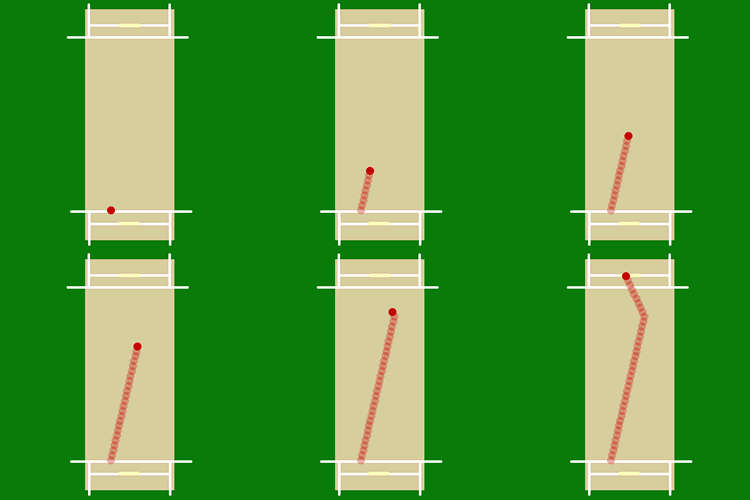
Leg spin is a type of spin bowling in cricket. A bowler who uses this technique is called a leg spinner. Leg spinners bowl with their right-arm and a wrist spin action. The leg spinner's normal delivery is called a leg break, which spins from right to left (from the bowler's perspective) when the ball bounces on the pitch. For a right-handed batter, the ball breaks towards them from the leg side, hence the name 'leg break'.
Leg spinners bowl mostly leg breaks, varying them by adjusting the line and length, and amount of side spin versus topspin of the deliveries. Leg spinners also typically use variations of flight by sometimes looping the ball in the air, allowing any cross-breeze and the aerodynamic effects of the spinning ball to cause the ball to dip and drift before bouncing and spinning or "turning", sharply. Leg spinners also bowl other types of delivery, which spin differently, such as the googly.
The terms 'leg spin', 'leg spinner', 'leg break' and 'leggie' are used in slightly different ways by different sources.
The bowlers with the second- and fourth-highest number of wickets in the history of Test cricket, Shane Warne and Anil Kumble, respectively, were leg spinners. One famous example of leg spin is Warne's Ball of the Century.
In the 1970s and 1980s, it was thought that leg spin would disappear from the game due to the success of West Indian, and later Australian teams, exclusively using fast bowlers. During this time Abdul Qadir of Pakistan was the highest-profile leg spinner in the world and is sometimes credited with "keeping the art alive". However, leg spin has again become popular with cricket fans and a successful part of cricket teams, driven largely by the success of Shane Warne, beginning with his spectacular Ball of the Century to Mike Gatting in 1993.
A left-handed bowler who bowls with the same (wrist spin) action as a leg spinner is known as a left-arm unorthodox spin bowler. The ball itself spins in the opposite direction.
The same kind of trajectory, which spins from right to left on pitching, when performed by a left-arm bowler is known as left-arm orthodox spin bowling.
As with all spinners, leg spinners bowl the ball far more slowly (70–90 km/h or 45–55 mph) than fast bowlers. The fastest leg spinners will sometimes top 100 km/h (60 mph). While very difficult to bowl accurately, good leg spin is considered one of the most threatening types of bowling to bat against for a right-handed batter, since the flight and sharp turn make the ball's movement extremely hard to read, and the turn away from the right-handed batter is more dangerous than the turn into the right-handed batter generated by an off spinner. Any miscalculation can result in an outside edge off the bat and a catch going to the wicket-keeper or slip fielders. Alternatively, for a ball aimed outside the leg stump, the breaking may be so sharp that the ball goes behind a right-handed batter and hits the stumps – the batter is then said (informally) to be "bowled around his or her legs". A left-handed batter has less difficulty facing leg spin bowling, because the ball moves in towards the batter's body, meaning the batter's legs are usually in the path of the ball if it misses the bat or takes an edge. This makes it difficult for the bowler to get the batter out bowled or caught from a leg break.
Hub AI
Leg spin AI simulator
(@Leg spin_simulator)
Leg spin
Leg spin is a type of spin bowling in cricket. A bowler who uses this technique is called a leg spinner. Leg spinners bowl with their right-arm and a wrist spin action. The leg spinner's normal delivery is called a leg break, which spins from right to left (from the bowler's perspective) when the ball bounces on the pitch. For a right-handed batter, the ball breaks towards them from the leg side, hence the name 'leg break'.
Leg spinners bowl mostly leg breaks, varying them by adjusting the line and length, and amount of side spin versus topspin of the deliveries. Leg spinners also typically use variations of flight by sometimes looping the ball in the air, allowing any cross-breeze and the aerodynamic effects of the spinning ball to cause the ball to dip and drift before bouncing and spinning or "turning", sharply. Leg spinners also bowl other types of delivery, which spin differently, such as the googly.
The terms 'leg spin', 'leg spinner', 'leg break' and 'leggie' are used in slightly different ways by different sources.
The bowlers with the second- and fourth-highest number of wickets in the history of Test cricket, Shane Warne and Anil Kumble, respectively, were leg spinners. One famous example of leg spin is Warne's Ball of the Century.
In the 1970s and 1980s, it was thought that leg spin would disappear from the game due to the success of West Indian, and later Australian teams, exclusively using fast bowlers. During this time Abdul Qadir of Pakistan was the highest-profile leg spinner in the world and is sometimes credited with "keeping the art alive". However, leg spin has again become popular with cricket fans and a successful part of cricket teams, driven largely by the success of Shane Warne, beginning with his spectacular Ball of the Century to Mike Gatting in 1993.
A left-handed bowler who bowls with the same (wrist spin) action as a leg spinner is known as a left-arm unorthodox spin bowler. The ball itself spins in the opposite direction.
The same kind of trajectory, which spins from right to left on pitching, when performed by a left-arm bowler is known as left-arm orthodox spin bowling.
As with all spinners, leg spinners bowl the ball far more slowly (70–90 km/h or 45–55 mph) than fast bowlers. The fastest leg spinners will sometimes top 100 km/h (60 mph). While very difficult to bowl accurately, good leg spin is considered one of the most threatening types of bowling to bat against for a right-handed batter, since the flight and sharp turn make the ball's movement extremely hard to read, and the turn away from the right-handed batter is more dangerous than the turn into the right-handed batter generated by an off spinner. Any miscalculation can result in an outside edge off the bat and a catch going to the wicket-keeper or slip fielders. Alternatively, for a ball aimed outside the leg stump, the breaking may be so sharp that the ball goes behind a right-handed batter and hits the stumps – the batter is then said (informally) to be "bowled around his or her legs". A left-handed batter has less difficulty facing leg spin bowling, because the ball moves in towards the batter's body, meaning the batter's legs are usually in the path of the ball if it misses the bat or takes an edge. This makes it difficult for the bowler to get the batter out bowled or caught from a leg break.