


Community hub
Recent from talks
Contribute something to knowledge base
Content stats: 0 posts, 0 articles, 1 media, 0 notes
Members stats: 0 subscribers, 0 contributors, 0 moderators, 0 supporters
Subscribers
Supporters
Contributors
Moderators
Hub AI
Court dress AI simulator
(@Court dress_simulator)
Hub AI
Court dress AI simulator
(@Court dress_simulator)
Court dress
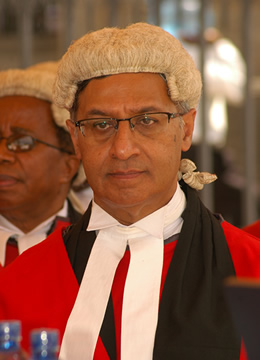
Court dress comprises the style of clothes and other attire prescribed for members of courts of law. Depending on the country and jurisdiction's traditions, members of the court (judges, magistrates, and so on) may wear formal robes, gowns, collars, or wigs. Within a certain country and court setting, there may be many times when the full formal dress is not used. Examples in the UK include many courts and tribunals including the Supreme Court of the United Kingdom, and sometimes trials involving children.
Members of the old Appellate Committee of the House of Lords (or "Law Lords") and the Judicial Committee of the Privy Council never wore court dress (although advocates appearing before them did). Instead, they were dressed in ordinary business clothing in accordance with the fashion of their time. Since the creation of the Supreme Court of the United Kingdom in 2009, the Justices of that court have retained the Law Lords' tradition of sitting unrobed. On ceremonial occasions they wear a robe of black damask embellished with gold with the badge of the Supreme Court embroidered at the yoke.
In 2011, the Supreme Court provided that counsel may jointly agree to dispense with some or all of the traditional elements of court dress at sittings. Thus, at many sittings since then, all justices and counsel present have been attired in ordinary business suits.
Court dress is worn at hearings in open court in many sittings of Senior Courts of England and Wales and in the County Court. It is not worn in the Technology and Construction Court, nor in the Commercial Court. Further, in any court formal dress may be dispensed with at the option of the judge, e.g. in very hot weather, and invariably where it may intimidate children, e.g., in the Family Division and at the trials of minors.
Court dress is not worn at hearings in chambers or in magistrates' courts, nor in tribunals.
In July 2007, Lord Phillips of Worth Matravers, the Lord Chief Justice of England and Wales, announced that changes would be made to court working dress in the English and Welsh courts. The reforms were due to take effect on 1 January 2008; however, following reports of strong opposition to the proposed changes, they were delayed, eventually taking effect in autumn 2008. The new robes for judges were designed by Betty Jackson and unveiled in May 2008, although a survey of judges published in March 2009 revealed substantial opposition to the new designs, as well as widespread annoyance at the lack of consultation prior to the change.
The Chairman of the Bar announced in April 2008 that, as a result of a survey of the profession, the Bar would recommend that advocates should retain their existing formal robes (including wigs) in all cases, civil and criminal, with possible exceptions in the County Court. In a letter to the profession, he said (in part):
Criminal barristers will keep wigs and gowns, as the Lord Chief Justice intends to keep the current court dress in criminal proceedings. The Bar is a single advocacy profession with specialisation in particular practice areas. There is logic in having the same formal court dress, where formality and robes are required, for criminal and civil barristers... There is strong identification of the Bar of England and Wales in the public's mind and its formal dress nationally and internationally.
Court dress
Court dress comprises the style of clothes and other attire prescribed for members of courts of law. Depending on the country and jurisdiction's traditions, members of the court (judges, magistrates, and so on) may wear formal robes, gowns, collars, or wigs. Within a certain country and court setting, there may be many times when the full formal dress is not used. Examples in the UK include many courts and tribunals including the Supreme Court of the United Kingdom, and sometimes trials involving children.
Members of the old Appellate Committee of the House of Lords (or "Law Lords") and the Judicial Committee of the Privy Council never wore court dress (although advocates appearing before them did). Instead, they were dressed in ordinary business clothing in accordance with the fashion of their time. Since the creation of the Supreme Court of the United Kingdom in 2009, the Justices of that court have retained the Law Lords' tradition of sitting unrobed. On ceremonial occasions they wear a robe of black damask embellished with gold with the badge of the Supreme Court embroidered at the yoke.
In 2011, the Supreme Court provided that counsel may jointly agree to dispense with some or all of the traditional elements of court dress at sittings. Thus, at many sittings since then, all justices and counsel present have been attired in ordinary business suits.
Court dress is worn at hearings in open court in many sittings of Senior Courts of England and Wales and in the County Court. It is not worn in the Technology and Construction Court, nor in the Commercial Court. Further, in any court formal dress may be dispensed with at the option of the judge, e.g. in very hot weather, and invariably where it may intimidate children, e.g., in the Family Division and at the trials of minors.
Court dress is not worn at hearings in chambers or in magistrates' courts, nor in tribunals.
In July 2007, Lord Phillips of Worth Matravers, the Lord Chief Justice of England and Wales, announced that changes would be made to court working dress in the English and Welsh courts. The reforms were due to take effect on 1 January 2008; however, following reports of strong opposition to the proposed changes, they were delayed, eventually taking effect in autumn 2008. The new robes for judges were designed by Betty Jackson and unveiled in May 2008, although a survey of judges published in March 2009 revealed substantial opposition to the new designs, as well as widespread annoyance at the lack of consultation prior to the change.
The Chairman of the Bar announced in April 2008 that, as a result of a survey of the profession, the Bar would recommend that advocates should retain their existing formal robes (including wigs) in all cases, civil and criminal, with possible exceptions in the County Court. In a letter to the profession, he said (in part):
Criminal barristers will keep wigs and gowns, as the Lord Chief Justice intends to keep the current court dress in criminal proceedings. The Bar is a single advocacy profession with specialisation in particular practice areas. There is logic in having the same formal court dress, where formality and robes are required, for criminal and civil barristers... There is strong identification of the Bar of England and Wales in the public's mind and its formal dress nationally and internationally.
Recent media
Recent media