


Community hub
Recent from talks
Contribute something
Nothing was collected or created yet.
Judge
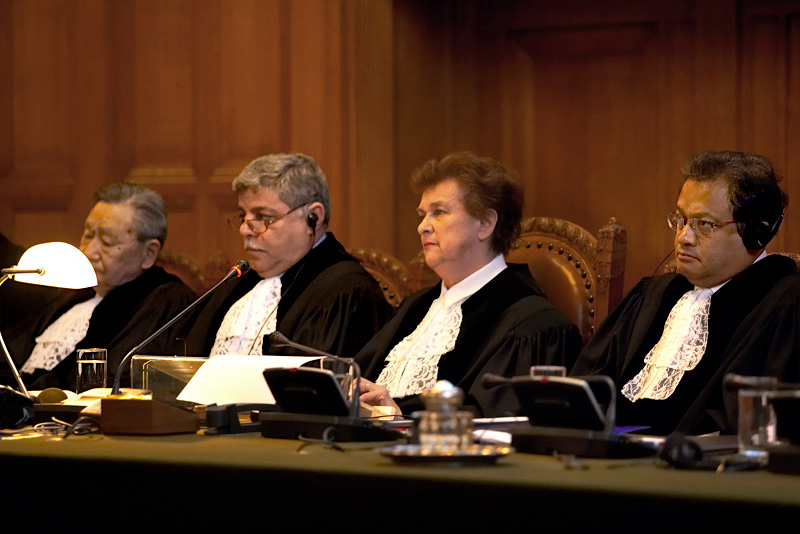
View on Wikipedia Judges at the International Court of Justice | |
| Occupation | |
|---|---|
| Names | Judge, justice, magistrate |
Occupation type | Profession |
Activity sectors | Law, Justice |
| Description | |
Education required | University degree in law and experience as a lawyer |
Fields of employment | Courts |
Related jobs | Barrister, prosecutor |
A judge is a person who presides over court proceedings, either alone or as a part of a judicial panel. In an adversarial system, the judge hears all the witnesses and any other evidence presented by the barristers or solicitors of the case, assesses the credibility and arguments of the parties, and then issues a ruling in the case based on their interpretation of the law and their own personal judgment. A judge is expected to conduct the trial impartially and, typically, in an open court.
The powers, functions, method of appointment, discipline, and training of judges vary widely across different jurisdictions. In some jurisdictions, the judge's powers may be shared with a jury. In inquisitorial systems of criminal investigation, a judge might also be an examining magistrate. The presiding judge ensures that all court proceedings are lawful and orderly.
Powers and functions
[edit]The ultimate task of a judge is to settle a legal dispute in a final and publicly lawful manner in agreement with substantial partialities. Judges exercise significant governmental power. They can order police, military, or judicial officials to carry out searches, arrests, imprisonments, garnishments, detentions, seizures, deportations, and similar actions. However, judges also supervise trial procedures to ensure consistency and impartiality and to prevent arbitrariness. A judge’s powers are checked by higher courts, such as courts of appeal and supreme courts.
The court usually has three main legally trained court officials: the judge, the prosecutor and the defence attorney. The role of a judge can vary between legal systems. In an adversarial system (common law), as in effect in the U.S. and England, the judge functions as an impartial referee, mainly ensuring correct procedure, while the prosecution and the defense present their case to a jury, often selected from common citizens. The main factfinder is the jury, and the judge will then finalize sentencing. Nevertheless, in smaller cases judges can issue summary judgments without proceeding to a jury trial. In an inquisitorial system (civil law), as in effect in continental Europe, there is no jury and the main factfinder is the judge, who will do the presiding, judging and sentencing on their own. As such, the judge is expected to apply the law directly, as in the French expression Le juge est la bouche de la loi ("The judge is the mouth of the law"). Furthermore, in some systems even investigations may be conducted by the judge, functioning as an examining magistrate.
Judges may work alone in smaller cases, but in criminal, family and other significant cases, they work in a panel. In some civil law systems, this panel may include lay judges. Unlike professional judges, lay judges are not legally trained, but unlike jurors, lay judges are usually volunteers and may be politically appointed. Judges are often assisted by law clerks, referendaries and notaries in legal cases and by bailiffs or similar with security.
Requirements and appointment
[edit]There are both volunteer and professional judges. A volunteer judge, such as an English magistrate, is not required to have legal training and is unpaid.[1] Whereas, a professional judge is required to be legally educated; in the U.S., this generally requires a degree of Juris Doctor. Furthermore, significant professional experience is often required; for example, in the U.S., judges are often appointed from experienced attorneys. Judges are often appointed by the head of state. However in some jurisdictions, judges are elected in a political election.[2]
Impartiality is often considered important for rule of law. Thus, in many jurisdictions judges may be appointed for life, so that they cannot be removed by the executive. However, in non-democratic systems, the appointment of judges may be highly politicized and they often receive instructions on how to judge, and may be removed if their conduct does not please the political leadership.
Judge as an occupation
[edit]Judges must be able to research and process extensive lengths of documents, witness testimonies, and other case material, understand complex cases and possess a thorough understanding of the law and legal procedure, which requires excellent skills in logical reasoning, analysis and decision-making. Excellent writing skills are also a necessity, given the finality and authority of the documents written. Judges work with people all the time; by the nature of the job, good dispute resolution and interpersonal skills are a necessity.[3] Judges are required to have good moral character, i.e. there must be no history of crime. Professional judges often enjoy a high salary, in the U.S. the median salary of judges is $101,690 per annum,[3] and federal judges earn $208,000–$267,000 per annum.[4]
Gender effects
[edit]In many civil law countries in Europe the majority of judges are women: in 6 countries (Slovenia, Serbia, Latvia, Luxembourg, Greece and Hungary) women make more than 70% of judges of the first instance. In contrast, in common law countries (UK, Ireland, Malta and the United States) the situation is reverse: over 70% of judges of the first instance are men.[5]
On the other hand, women are underrepresented in the supreme courts of the United States and European Union member-states, except for in Romania, where over 80% of the judges of the High Court of Cassation and Justice are women.[5]
Age and retirement
[edit]In the United States, federal judges are appointed "for good behavior", which means in practice, that federal judges work until they die, voluntarily retire or are impeached.[6] The death of Ruth Bader Ginsburg in the office in 2020 and suspension of Pauline Newman in 2023 reinvigorated the discussion about mandatory retirement age for federal judges, but such change would require a constitutional amendment and is unlikely to be implemented soon.[7]
States have more flexibility in establishing a mandatory retirement age for judges, as was confirmed by the SCOTUS in its 1991 decision Gregory v. Ashcroft. As of 2015, 33 States and the District of Columbia had mandatory retirement ages for State court judges, which ranged from 70 to 75 for most (but is as high as 90 in Vermont).[8][9]
A 2020 study by the National Bureau of Economic Research found significant positive effects on the performance of state Supreme Courts with mandatory retirement age for judges. The authors advocated the adoption of mandatory retirement ages for all federal and state judges, although they felt, that the individual authorities should decide on the specific age for themselves.[10]
Symbols of office
[edit]
A variety of traditions have become associated with the rank or occupation. Gavels (a ceremonial hammer) are used by judges in many countries, to the point that the gavel has become a symbol of a judge. In many parts of the world, judges wear long robes (often in black or red) and sit on an elevated platform during trials (known as the bench).
American judges frequently wear black robes. American judges have ceremonial gavels, although American judges have court deputies or bailiffs and contempt of court power as their main devices to maintain decorum in the courtroom. However, in some of the Western United States, like California, judges did not always wear robes and instead wore everyday clothing. Today, some members of state supreme courts, such as the Maryland Supreme Court wear distinct dress. In Italy and Portugal, both judges and lawyers wear particular black robes.
In some countries, especially in the Commonwealth of Nations, judges wear wigs. The long wig often associated with judges is now reserved for ceremonial occasions, although it was part of the standard attire in previous centuries. A short wig resembling but not identical to a barrister's wig (a Bench Wig) would be worn in court. This tradition, however, is being phased out in Britain in non-criminal courts.[11]
In Oman, the judge wears a long stripe (red, green white), while the attorneys wear the black gown.
In Portugal and in the former Portuguese Empire, the judges used to carry a staff that was red for ordinary judges and white for the judges from the outside.
Titles and forms of address
[edit] | This section needs additional citations for verification. (September 2021) |
Asia
[edit]Hong Kong
[edit]In Hong Kong, court proceedings are conducted in either English or Hong Kong Cantonese (a dialect of Yue Chinese). Judges of Hong Kong retain many of the English traditions such as wearing wigs and robes in trials.
In the lower courts, magistrates are addressed as Your worship, and district court judges as Your Honour.
In the superior courts of record, namely the Hong Kong Court of Final Appeal and the High Court of Hong Kong (which consists of the Court of Appeal and the Court of First Instance), judges are addressed as My Lord or My Lady and referred to as Your Lordship or Your Ladyship, following the English tradition.
In writing, the post-nominal letters PJ is used to refer to a permanent judge of the Court of Final Appeal and NPJ to a non-permanent judge. In the High Court, the abbreviation JA is used to denote a justice of appeal, and the letter J refers to a judge of the Court of First Instance.
Masters of the High Court are addressed as Master.
When trials are conducted in Chinese, judges were addressed, in Cantonese, as Fat Goon Dai Yan (Hong Kong Cantonese: 法官大人, romanized: faat3 gun1 daai6 jan4, lit. 'Judge, your lordship') before the transfer of sovereignty from the United Kingdom to China, and as Fat Goon Gok Ha (Hong Kong Cantonese: 法官閣下, romanized: faat3 gun1 gok3 haa6, lit. 'Judge, your honour') since 1997. Fat Goon (Hong Kong Cantonese: 法官, romanized: faat gun1, lit. 'Judge') means the word "judge".
India
[edit]
In India, judges of the Supreme Court and the High Courts were addressed as Your Lordship or My Lord and Your Ladyship or My Lady, a tradition directly attributable to England. The Bar Council of India had adopted a resolution in April 2006 and added a new Rule 49(1)(j) in the Advocates Act. As per the rule, lawyers can address the court as Your Honour and refer to it as Honourable Court. If it is a subordinate court, lawyers can use terms such as sir or any equivalent phrase in the regional language concerned. Explaining the rationale behind the move, the Bar Council had held that the words such as My Lord and Your Lordship were "relics of the colonial past". The resolution has since been circulated to all state councils and the Supreme Court for adoption but over five years now, the resolution largely remained on paper.
However, in an unprecedented move in October 2009, one of the judges of Madras HC, Justice K Chandru had banned lawyers from addressing his court as My Lord and Your Lordship.
Israel
[edit]In Israel, the judges (Hebrew: שופט, romanized: shofét, lit. 'judge') of all courts are addressed as Sir, Madam (Hebrew: אדוני/גבירתי, romanized: adoni/geverti) or Your Honor (Hebrew: כבודו/כבודה, romanized: kevodo/kevoda). Typically after every naming you will hear haShofét, meaning "the judge" after the respective address. For example, Your Honor the Judge would be כבוד השופט (kevod haShofét).
Biy - elected judges using adat Zheti Zhargy. The Council of biys was the highest council, a kind of senate.
Malaysia
[edit]In Malaysia, judges of the subordinate courts are addressed as Tuan or Puan ("Sir", "Madam"), or Your Honour. Judges of the superior courts are addressed as Yang Arif (lit. 'Learned One') or My Lord, My Lady, etc.; and Your Lordship or My Ladyship if the proceedings, as they generally are in the superior courts, are in English.
Pakistan
[edit]In Pakistan, judges of the Supreme Court and the High Courts are addressed as Your Lordship or My Lord or Lordship and Your Ladyship or My Lady, a tradition directly attributable to England. There is some resistance to this on religious grounds but more or less continues till this day. In lower courts, judges are addressed as sir, madam or the Urdu equivalent Janab or Judge Sahab.
Sri Lanka
[edit]In Sri Lanka, judges of most courts are addressed as Your Honour; however, the Chief Justice is addressed as Your Lordship. Judges of the Supreme Court and the Appeal Court receives the title The Honourable.[citation needed]
Vietnam
[edit]Judges in Vietnam are addressed as Quý tòa (literally the "Honorable Court").
Europe
[edit]
Bulgaria
[edit]In Bulgaria before 1989, during the communist regime, judges were addressed as drugarju (Bulgarian: другарю, lit. 'comrade').[12] After 1989, gospodín sŭdiya (Bulgarian: господин съдия, lit. 'mister judge') or gospožo sŭdiya (Bulgarian: госпожо съдия, lit. 'madam judge') are used.
Finland
[edit]There is no special form of address; ordinary politeness is sufficient and the procedure lacks arcane rituals. Accordingly, the chairman of the panel is addressed as herra/rouva puheenjohtaja ("Mr./Ms. Chairman"). Finnish judges use gavels, but there are no robes or cloaks used in any Finnish courts.[13]
In a district court (käräjäoikeus), ordinary judges work with the title käräjätuomari and the chairman is laamanni (lawspeaker). They are assisted by notaries (notaari), assessors (asessori) and referendaries (viskaali) who may sometimes even chair sessions. In appeals courts (hovioikeus) an ordinary judge has the title hovioikeudenneuvos, the chairman of a section is hovioikeudenlaamanni and the court is led by a presidentti. In the Supreme Court, judges are titled oikeusneuvos and the court is led by a presidentti.
France
[edit]In France, the presiding judge of a court is addressed as Monsieur le président or Madame le président, whilst associated judges are addressed as Monsieur l'Assesseur or Madame l'Assesseur. Out of the courtroom, judges are referred to as Monsieur le juge or Madame le juge.
Germany
[edit]In Germany, judges are addressed as Herr Vorsitzender or Frau Vorsitzende, which translate as "Mister Chairman" and "Madam Chairwoman", or as Hohes Gericht, which translates as "High Court".
Hungary
[edit]The male presiding judge of a court is addressed as tisztelt bíró úr, which means "Honourable Mister Judge" and a female presiding judge is addressed as tisztelt bírónő, which means "Honourable Madam Judge". The court as a body can be addressed as tisztelt bíróság, which means "Honourable Court".
Ireland
[edit]Judges of the Supreme Court, Court of Appeal, or High Court are officially titled The Honourable Mr/Mrs/Ms/Miss Justice Surname (Irish: An Breitheamh Onórach Uasal [surname]), and informally referred to for short as Mr/Mrs/Ms/Miss Justice Surname. In court, they are addressed either by their respective titles or styles, as The Court (An Chúirt), or simply Judge (A Bhreithimh).[14] In law reports, the Chief Justice of Ireland has the postnominal CJ, the Presidents of the other Courts have the postnominal P, and all other judges J, e.g. Smith J.
Judges of the Circuit Court are titled His/Her Honour Judge Surname and are addressed in Court as Judge. Before 2006, they were addressed as My Lord (A thiarna) .
Judges of the District Court are titled Judge Surname and addressed in Court as Judge. Before 1991 these judges were known as District Justices and addressed as Your Worship (d'Onóra).
Italy
[edit]In Italy, the presiding judge of a court is addressed as Signor/Signora presidente della corte (Sir/Madame president of the court) or Vostro Onore (Your Honour).
Netherlands
[edit]In the Netherlands, presiding judges of either sex are, in writing only, addressed edelachtbare ("Your Honour") for judges in the Court of First Instance, edelgrootachtbare ("Your Great Honour") for justices in the Court of Appeal and edelhoogachtbare ("Your High Honour") for justices in the High Council of the Netherlands (Supreme Court).
Poland
[edit]In Poland, presiding judges of either sex during trial are addressed Wysoki Sądzie ("High Court").
Portugal
[edit]In Portugal, presiding judges during trial are addressed as Meretíssimo Juiz when a man or Meretíssima Juíza when a woman (meaning "Most Worthy Judge") or as Vossa Excelência ("Your Excellency") when not specifying gender.
Romania
[edit]In Romania, judges during trial are addressed as Onorata Instanta (Your Honor).[15]
Russia
[edit]In Russia, Vasha Chest (Russian: Ваша Честь, lit. 'Your Honour') is used for criminal cases only with the one judge presiding.[16] For civil, commercial and criminal cases presided over by a panel of judges the right address is Honorable Court.[16][17][18]
Spain
[edit]In Spain, magistrates of the Supreme Court, magistrates and judges are addressed to as "Your Lordship" (Su Señoría); however, in formal occasions, magistrates of the Supreme Court are addressed to as "Your Most Excellent Lordship" (Vuestra Señoría Excelentísima or Excelentísimo Señor/Excelentísima Señora); in those solemn occasions, magistrates of lower Courts are addressed as "Your Most Illustrious Lordship" (Vuestra Señoría Ilustrísima or Ilustrísimo Señor/Ilustrísima Señora); simple judges are always called "Your Lordship".
Sweden
[edit]In Sweden, the presiding judge of a court is traditionally addressed as Herr Ordförande or Fru Ordförande, which translate as "Mister Chairman" and "Madam Chairwoman".
United Kingdom
[edit]England and Wales
[edit]In the Courts of England and Wales, Supreme Court judges are called Justices of the Supreme Court. Justices of the Supreme Court who do not hold life peerages are now given the courtesy style "Lord" or "Lady".[19] Justices of the Supreme Court are addressed as "My Lord/Lady" in court. In the law reports, the Justices of the Supreme Court are usually referred to as "Lord/Lady N", although the Weekly Law Reports appends the post-nominal letters "JSC" (e.g. "Lady Smith JSC"). The President and Deputy President of the Court are afforded the post-nominal letters PSC and DPSC respectively. Only experienced barristers or solicitors are usually appointed as judges.
Judges of the High Court and Court of Appeal are addressed (when sitting in those courts) as "My Lord" or "My Lady" and referred to as "Your Lordship" or "Your Ladyship".
Judges of the Court of Appeal, also called Lords Justice of Appeal, are referred to as "Lord Justice N" or "Lady Justice N". In legal writing, Lords Justices of Appeal are afforded the post nominal letters "LJ": for example, Smith LJ.
When a Justice of the High Court who is not present is being referred to they are described as "Mr./Mrs./Ms. Justice N." In legal writing, the post-nominal letter "J" is used to denote a Justice (male or female) of the High Court; for example, a Justice Smith is referred to as Smith J.[20] Unlike American English, no comma is used to offset the letter J from the Justice's name.[20] The full stop after the preceding examples terminates the sentence, not the abbreviation, and the abbreviation can be used mid-sentence in prose in formal legal writing.[20] Masters of the High Court are addressed as "Master". Insolvency and Companies Court judges in the High Court are addressed as "Judge".
Circuit judges and recorders are addressed as "Your Honour". Circuit judges are referred to as "His/Her Honour Judge N". In writing, this title is occasionally abbreviated as "HHJ" or "HH Judge N", but not in legal writing. District judges and tribunal judges are addressed as "Sir/Madam".
Magistrates are usually still addressed as "Your Worship" in much of England. Magistrates are also addressed as "Sir/Madam".
Scotland
[edit]In the Courts of Scotland judges in the Court of Session, High Court of Justiciary and the sheriff courts are all addressed as "My Lord" or "My Lady" and referred to as "Your Lordship" or "Your Ladyship".
Justices of the peace in justice of the peace courts are addressed and referred to as "Your Honour".
Northern Ireland
[edit]The judicial system of Northern Ireland is very similar to that of England and Wales, and superior court judges are addressed the same way as those in England and Wales. However, there are a few differences at the lower levels.
In Northern Ireland, the equivalent to a circuit judge is a county court judge, and they are addressed and titled the same way as a circuit judge is in England and Wales. The senior county court judges assigned to the county court divisions of Belfast and Derry have the titles of Recorder of Belfast and Recorder of Londonderry (or Derry) respectively, but are addressed the same as other county court judges. A district judge sitting in the County Court is addressed as "Your Honour".
A district judge (magistrates' court) is addressed as "Your Worship". A lay magistrate, in cases where they are present, is also addressed as "Your Worship", and may use the post-nominals "LM", e.g. "John Smith LM".[21]
North America
[edit]Canada
[edit]In general, Canadian judges may be addressed directly, depending on the province, as "My Lord", "My Lady", "Your Honour" or "Justice" and are formally referred to in the third person as "The Honourable Mr. (or Madam) Justice 'Forename Surname'". Less formally, judges of a Superior Court are referred to as "Justice 'Surname'", not as "Judge 'Surname.'" When referred to in a decision of a court, judges' titles are often abbreviated to the suffix "J.", so that Justice Smith will be referred to as Smith J. Judges in some superior courts are addressed as "My Lord" or "My Lady".[22] In Ontario, judges are rarely referred to as "My Lord" or "My Lady", but only as "Your Honour" at the Ontario Superior Court of Justice.[23] Formerly, translations of these titles such as Votre Honneur ("your honour") or Votre Seigneurie ("your lordship") were used in French; today, only Monsieur le juge and Madame la juge are officially used. Both the titles "judge" and "justice" are translated juge.
Generally, it is only appropriate to use the term "judge" when speaking of an anonymous or general position, such as "the trial judge", or when referring to a member of an inferior or provincial court such as the Ontario Court of Justice. The exception is Citizenship Judges who are referred to only as "Judge 'Surname'" in accordance with their appointment as independent decision makers of the Citizenship Commission.
Like other members of the Commonwealth, a justice of the peace is addressed as "Your Worship", and a Master of a Superior Court is referred to as "Master". As of December 7, 2018, Ontario Court Masters are addressed in English as "Your Honour" and in French as "Votre Honneur" and no longer as "Master".
United States
[edit] | This section needs additional citations for verification. (March 2017) |

In many states throughout the United States, a judge is addressed as "Your Honor" or "Judge" when presiding over the court. "Judge" may be more commonly used by attorneys and staff, while either may be commonly used by the plaintiff or defendant. Notably, the Superior Court of Los Angeles County, the largest unified trial court in the United States, has a rule that the judge shall be addressed only as "Your Honor" while in court, and never as "Judge", "Judge (name)", "ma'am", or "sir".[24] This is somewhat unusual as "Judge" and "Judge (name)" or similar forms of address are considered appropriate and respectful in many other courts.
The judges of the Supreme Court of the United States, and the judges of the supreme courts of several U.S. states and other countries are called "justices". Justices of the Supreme Court of the United States and Justices of other courts are addressed as "Justice (name)". The Chief Justice of the United States is formally addressed as "Mr. or Madam Chief Justice" but also may be identified and addressed as "Chief Justice (name)".
Regardless of the specific term employed (judge or justice), the formal title is reduced to the postnominal abbreviation "J." in case citations and certain case law reporters when it is necessary to identify the author of a cited opinion.[20] In American English, the postnominal "J." is always divided from the judge's name by a comma and a space, so that a citation to a dissenting opinion by Associate Justice Antonin Scalia would warn that the cited opinion is not the majority opinion with the parenthetical notation "Scalia, J., dissenting".[20] The plural form is JJ.[20] Unlike British English, this abbreviation style is used only in case citations, and is not used mid-sentence in regular prose (as distinguished from case citations dropped into sentences as parentheticals).[20] Thus, a prose sentence discussing the actual contents of a dissenting opinion right before a case citation to that opinion would refer to the reasoning of "Justice Scalia", not "Scalia, J."[20]
The justices of the supreme courts usually hold higher offices than any other judges in a jurisdiction, including a justice of the peace, a judge who holds police court in some jurisdictions and who may also try small claims and misdemeanors. However, the State of New York inverts this usual order. The initial trial court in this state is called the Supreme Court of New York, and its judges are called "justices". The next highest appellate court is the Supreme Court, Appellate Division, whose judges are also called "justices". However, the highest court in New York is called the New York Court of Appeals, whose members are called "judges".
Judges in certain jurisdictions, such as New York and New Jersey, who deal with guardianships, trusts and estates are known as "surrogates".
A senior judge, in American practice, is a retired judge who handles selected cases for a governmental entity while in retirement, on a part-time basis.
Subordinate or inferior jurisdiction judges in American legal practice are sometimes called magistrates, although in the federal judiciary of the United States, they are called magistrate judges. Subordinate judges in American legal practice who are appointed on an ad hoc case-by-case basis, particularly in cases where a great deal of detailed and tedious evidence must be reviewed, are often called "masters" or "special masters".
Judges of courts of specialized jurisdiction (such as bankruptcy courts or juvenile courts) were sometimes known officially as "referees", but the use of this title is in decline. Judges sitting in courts of equity in common law systems (such as judges in the equity courts of Delaware) are called "chancellors".
Individuals with judicial responsibilities who report to an executive branch official, rather than being a part of the judiciary, are often called "administrative law judges" (ALJs) in American practice. Historically, such officials were previously known as hearing examiners or referees before American English settled on the ALJ title. They commonly make initial determinations regarding matters such as workers' compensation, eligibility for government benefits, regulatory matters, and immigration determinations.
Judges who derive their authority from a contractual agreement of the parties to a dispute, rather than a governmental body, are called arbitrators. They typically do not receive the honorific forms of address nor do they bear the symbolic trappings of a publicly appointed judge. However, it is now common for many retired judges to serve as arbitrators, and they will often write their names as if they were still judges, with the parenthetical "(Ret.)" for "Retired".
Unlike many civil law countries which have some courts on which panels of judges with nearly equal status composed of both legally trained professional judges and lay judges who lack legal training and are not career judges, the United States legal system (like most Anglo-American legal systems) makes a clear distinction between professional judges and laypeople involved in deciding a case who are jurors who are part of a jury. Most but not all American judges have professional credentials as lawyers. Non-lawyer judges in the United States are often elected and are typically either justices of the peace or part-time judges in rural limited jurisdiction courts. A non-lawyer judge typically has the same rights and responsibilities as a lawyer who is a judge holding the same office and is addressed in the same manner.
Oceania
[edit]Australia
[edit]
In Australia judges and, since 2007, magistrates, of all jurisdictions including the High Court of Australia are now addressed as "Your Honour". In legal contexts, they are referred to as "His/Her Honour" and "the Honourable Justice Surname" (for judges of superior courts) or "his/her Honour Judge Surname" (for inferior courts). Outside legal contexts, the formal terms of address are "Judge" (for puisne justices) or "Chief Justice" (for chief justices).
The title for most puisne judges is "Justice", which is abbreviated in law reports to a postnominal "J", in the form "Surname J". Chief Justices of the High Court and of state Supreme Courts are titled "Chief Justice", which is abbreviated in law reports to a postnomial "CJ". Judges in State Supreme Courts with a separate Court of Appeal division (New South Wales, Victoria, Queensland and Western Australia) are referred to as Justices/Judges of the Appeal (abbreviated "Surname JA"), while the President of the Court of Appeal is referred to as "President" (abbreviated "Surname P").[25]
New Zealand
[edit]In New Zealand, judges of the District Court of New Zealand generally referred to as "His/Her Honour" or "Sir/Madame". Judges from the High Court, Appeals Court, and Supreme Court are referred to as "Justice [Surname]". In social settings, it is appropriate to use "Judge" in all cases.[26]
South America
[edit]Brazil
[edit]
In Brazil, judges are simply called "Juiz" or "Juíza" (male and female forms of "judge") and traditionally addressed to as "Vossa Excelência" (lit. 'Your Excellency', translated as 'Your Honor') or "Meritíssimo" ('Honorable', but it is used as a pronoun also translated as 'Your Honor'). Judges that are part of a panel in a State Court, or Federal Court are called "desembargadores". Judges sitting in the higher courts (Supremo Tribunal Federal, Superior Tribunal de Justiça, Tribunal Superior do Trabalho, Superior Tribunal Militar and Tribunal Superior Eleitoral) are called "ministro" or "ministra" (male and female forms of "minister") and also referred to as "Vossa Excelência".
International courts
[edit]At the International Court of Justice, judges may be addressed by the titles they received in their countries of origin.[27][28]
Judges of the International Criminal Court are referred to as "judge".[citation needed]
See also
[edit]References
[edit]- ^ "Become a magistrate". GOV.UK. Retrieved 30 September 2025.
- ^ Kritzer, Herbert (2024). Litigating Judicial Selection. Cambridge University Press. doi:10.1017/9781009425476. ISBN 978-1-009-42547-6.
- ^ a b "What Does It Take to Be a Judge? Job Description and Career Profile". thebalance.com. Archived from the original on 30 September 2017. Retrieved 18 March 2018.
- ^ "Judicial Compensation". United States Courts. Retrieved 2018-08-20.
- ^ a b Clearing the Bench: Using Mandatory Retirement to Promote Gender Parity in the U.S. and the EU Judiciaries. 2020. C.C. Goodma
- ^ Douglas Keith, Impeachment and Removal of Judges: An Explainer, BRENNAN CTR. FOR JUST. (Mar. 23, 2018), https://www.brennancenter.org/our-work/analysis-opinion/impeachment-and-removal-judges-explainer
- ^ "No Other Western Democracy Allows This". The Atlantic. 25 September 2020.
- ^ William E. Raftery, Increasing or Repealing Mandatory Judicial Retirement Ages, NAT’L CTR. FOR STATE CTS., https://www.ncsc.org/sitecore/content/microsites/[permanent dead link] trends/home/monthly-trends-articles/2016/increasing-or-repealing-mandatory-judicialretirement-ages.aspx (last visited Feb. 27, 2020).
- ^ "When It Comes to Judges, How Old is Too Old?". 22 January 2021.
- ^ Mandatory Retirement for Judges Improved Performance on U.S. State Supreme Courts. 2020. E. Ash, W.B. Macleod. doi: 10.3386/w28025.
- ^ "Hosted.ap.org". Archived from the original on 2021-04-28. Retrieved 2007-07-12.
- ^ Корнажер, П. – "Съдебна реторика. Избрани съдебни речи", ИК Софи-Р, С., 2000, с. 77
- ^ "Oikeustiede:oikeudenkäyntirituaalit/laajempi kuvaus – Tieteen termipankki". tieteentermipankki.fi. Archived from the original on 29 September 2017. Retrieved 18 March 2018.
- ^ Ireland, Courts Service of. "Rules and Fees: Mode of address : Court Rules : Courts Service of Ireland". www.courts.ie.
- ^ "Ce ai voie sa faci si ce nu la tribunal". MAGNA GRATIA - Literatură creștină de calitate. Totul gratuit. July 2019.
- ^ a b "Criminal Procedure Code of Russia, Article 257. Regulations of the court session". Consultant.ru. Archived from the original on 2013-01-23. Retrieved 2013-06-11.
- ^ "Civil Procedure Code of Russia, Article 158. Procedure of the court session". Consultant.ru. Archived from the original on 2013-07-08. Retrieved 2013-06-11.
- ^ "Arbitral Procedure Code of Russia, Article 154. Procedure of the court session". Consultant.ru. Archived from the original on 2013-05-12. Retrieved 2013-06-11.
- ^ "Courtesy titles for Justices of the Supreme Court" (PDF). Archived from the original (PDF) on 2014-02-07. Retrieved 2010-12-14.
- ^ a b c d e f g h Garner, Bryan A. (2011). Garner's Dictionary of Legal Usage (3rd ed.). Oxford: Oxford University Press. p. 489. ISBN 9780195384208. Retrieved October 22, 2023.
- ^ "A Guide to Judicial Careers in Northern Ireland" (PDF). Northern Ireland Judicial Appointments Commission. April 2009. Archived from the original (PDF) on 2012-01-18.
- ^ "Albertacourts.ab.ca". Albertacourts.ab.ca. Archived from the original on 2012-04-25. Retrieved 2013-06-11.
- ^ "Ontario Justice Education Network Handout: The Jurisdiction of Ontario Courts" (PDF). Ontario Justice Education Network. Archived from the original (PDF) on 2016-03-28. Retrieved 2016-02-23.
- ^ Rule 3.95, Los Angeles Superior Court Rules.
- ^ New South Wales Supreme Court, Addressing Judicial Officers Archived 2013-08-18 at the Wayback Machine
- ^ "New Zealand Law Society". www.lawsociety.org.nz. Archived from the original on 2017-03-01. Retrieved 2017-03-01.
- ^ "Members of the Court | INTERNATIONAL COURT OF JUSTICE". www.icj-cij.org. Retrieved 2024-07-02.
- ^ "Introduction to The International Court of Justice". AMUN. Retrieved 2025-06-19.
External links
[edit]


- State of California Commission of Judicial Performance
- CEPEJ European commission for the efficiency of justice.
- CCJE European consultative council of judges.
- How sentencing works: You be the Judge
- Directgov Crown Court – what it does (Directgov, England and Wales)
| International | |
|---|---|
| National | |
| Other | |

Judge
View on GrokipediaDefinition and Role
Core Functions in the Judicial Process
Judges serve as impartial arbiters in the judicial process, primarily tasked with interpreting and applying the law to the facts presented in a case to resolve disputes.[6] This core function of adjudication requires evaluating evidence, assessing legal arguments from parties, and rendering decisions that uphold legal standards and due process.[10] In doing so, judges must remain neutral, avoiding any influence from personal biases or external pressures, as their rulings establish precedents and enforce societal rules.[11] A fundamental responsibility is presiding over court proceedings to ensure orderly and fair conduct. Judges manage hearings and trials by ruling on procedural matters, such as the admissibility of evidence and the relevance of witness testimony, thereby shaping the evidentiary record without usurping the fact-finding role of juries where applicable.[5] They instruct juries on applicable laws and legal standards, guiding deliberations without commenting on the weight of evidence, which preserves the separation between legal interpretation and factual determination.[5] In non-jury trials, judges directly assess both facts and law to reach verdicts.[6] Judges also decide questions of law, including interpreting statutes, constitutions, and prior judicial decisions to resolve ambiguities or conflicts.[5] This involves dismissing frivolous claims pretrial, granting or denying motions like summary judgment, and crafting written opinions that explain reasoning, which may bind lower courts or influence future cases. In criminal matters, post-conviction functions include imposing sentences within statutory guidelines, balancing factors such as offense severity, offender history, and rehabilitative potential.[11] Throughout, judges safeguard procedural fairness, protecting rights like those to a speedy trial and impartial hearing, as deviations can lead to appeals or reversals.[10]Distinction from Prosecutors, Juries, and Legislators
Judges serve as impartial decision-makers in the adjudication process, distinct from prosecutors who act as advocates for the state or government in criminal proceedings. Prosecutors, often part of the executive branch, initiate charges, present evidence to prove guilt beyond a reasonable doubt, and seek convictions or penalties, thereby representing the interests of society in enforcing laws.[12] This adversarial role contrasts with the judge's duty to remain neutral, overseeing trials to ensure procedural fairness, ruling on admissibility of evidence, and applying the law without favoring either party.[10] Judicial codes emphasize this impartiality, prohibiting judges from engaging in advocacy or permitting influences that could compromise objectivity.[13] In systems employing juries, such as common law jurisdictions, juries function as lay fact-finders, evaluating witness testimony and evidence to determine factual issues like guilt or liability in trials.[14] Judges, by contrast, instruct juries on applicable legal principles, resolve questions of law, and in non-jury or bench trials, serve as the ultimate fact-finders and legal appliers.[15] This division prevents conflation of empirical fact assessment—often delegated to jurors for community input—with the interpretive authority vested in judges to uphold statutory and precedential consistency.[16] Judges further differ from legislators through the principle of separation of powers, which allocates law-making to the legislative branch while confining the judiciary to interpretation and application of enacted laws in concrete disputes.[17] Legislators draft, debate, and pass statutes reflecting policy choices, whereas judges lack authority to create or amend laws, instead resolving ambiguities via reasoned analysis bound by constitutional limits and prior rulings.[18] This demarcation guards against judicial overreach into policymaking, ensuring that normative shifts occur through elected representation rather than unelected adjudication.[19]Historical Development
Ancient and Medieval Origins
In ancient Mesopotamia, judicial authority was exercised by royal officials who adjudicated disputes through direct pleas from parties, without intermediaries like lawyers, under the oversight of deities such as Shamash, the god of justice.[20] The Code of Hammurabi, promulgated around 1750 BCE by the Babylonian king, formalized penalties for crimes and civil matters, with judges applying these laws in cases involving contracts, property, and family issues, often requiring oaths or witnesses for proof.[21] In ancient Egypt, the pharaoh served as the ultimate judge, embodying the principle of maat (order and truth), but delegated authority to viziers and local magistrates who heard cases in town courts or marketplaces, ruling based on testimony, documents, and sometimes oracles.[22][23] Among the ancient Hebrews, judges emerged as charismatic leaders combining military deliverance and dispute resolution during the period from approximately 1200 to 1020 BCE, as described in the Book of Judges; figures like Othniel, Ehud, Deborah, and Samson ruled tribes for terms ranging from 40 to 80 years, enforcing Mosaic law against idolatry and inter-tribal conflicts.[24] In Greece, Draco codified Athens' oral laws around 621 BCE, introducing written statutes with severe penalties for offenses like theft and homicide, enforced by archons acting as magistrates.[25] Solon, appointed archon in 594 BCE, reformed these by moderating punishments, establishing debt relief, and creating a council to review laws, shifting toward broader citizen involvement in justice.[26] In the Roman Republic, praetors, first elected in 366 BCE, functioned primarily as judges with imperium authority to administer civil law (ius civile), preside over trials, and issue edicts interpreting statutes for cases like property disputes and contracts; by the late Republic, multiple praetors handled specialized urban and peregrine (foreign) jurisdictions.[27] During the Empire, emperors expanded judicial roles, but praetors retained oversight of quaestiones perpetuae for criminal matters.[28] Medieval European justice operated through feudal manorial courts, where lords or their stewards judged villein disputes over land tenure, labor, and minor crimes using customary law, with appeals possible to the lord's curia.[29] In England after the Norman Conquest of 1066, the king's curia regis evolved into centralized royal courts by the 12th century, dispatching itinerant justices to apply uniform "common law" across shires, prioritizing writs for real property and felonies over local customs.[30] This system, formalized under Henry II (r. 1154–1189), introduced assizes and juries for fact-finding, laying foundations for professional judges as royal servants independent of feudal lords.[31] Ecclesiastical courts handled moral and clerical matters, influencing canon law's emphasis on equity.[32]Evolution in Modern Legal Systems
The modern judiciary emerged in the late 18th century with the establishment of structured, independent court systems in constitutional frameworks, distinguishing judges as interpreters of codified or common law rather than mere enforcers of royal or clerical edicts. In the United States, the Judiciary Act of 1789 created a federal court system separate from state courts, comprising district courts, circuit courts, and the Supreme Court, vesting judges with life tenure during good behavior to insulate them from political pressures.[33] This model influenced other common law jurisdictions, such as England and Wales, where post-19th-century reforms professionalized the bench by requiring legal qualifications and emphasizing impartial adjudication over discretionary royal justice.[31] A pivotal evolution was the consolidation of judicial review, empowering judges to invalidate laws conflicting with higher constitutional norms. The U.S. Supreme Court's decision in Marbury v. Madison (1803) formalized this power, asserting that courts must declare acts void if repugnant to the Constitution, a principle rooted in earlier colonial practices but elevated to a cornerstone of modern constitutionalism.[34] [35] This doctrine proliferated globally after World War II, with over 80 countries adopting constitutional review mechanisms by the late 20th century, often through specialized courts applying civil law traditions where judges focus on statutory interpretation amid Napoleonic codes established in 1804.[36] [7] Professionalization intensified in the 19th and 20th centuries, shifting from lay or politically appointed judges to those with formal legal training and merit-based selection. In the U.S., while some states adopted judicial elections after 1850 to enhance accountability, federal judges retained appointment by the executive with legislative confirmation, prioritizing expertise over popularity.[37] Reforms emphasized judicial independence through fixed salaries, prohibitions on practice of law, and impeachment only for misconduct, as affirmed by the Marshall Court in early 19th-century rulings.[38] In civil law systems, judges became career civil servants, entering via competitive exams and advancing through hierarchical courts, reducing political influence but raising concerns over bureaucratic conformity.[7] The 20th century saw further specialization and internationalization of judicial roles, with judges handling complex administrative, commercial, and human rights cases via dedicated tribunals. Post-1945, institutions like the European Court of Human Rights (1959) and International Court of Justice expanded judges' purview to supranational disputes, requiring expertise in international law and fostering global standards of independence.[36] These developments, while enhancing rule-of-law capacities, have prompted debates on judicial overreach, as unelected judges increasingly shape policy through interpretive rulings in areas like administrative agency actions.[39]Selection and Qualifications
Methods of Judicial Selection: Elections, Appointments, and Merit Systems
Judicial selection methods determine how individuals are chosen to serve as judges, balancing democratic accountability, expertise, and insulation from political pressure. The primary approaches include direct elections by voters, appointments by executive or legislative officials, and merit-based systems that incorporate nominating commissions. These methods vary by jurisdiction, with elections prominent in the United States at the state level, while appointments dominate federally and internationally. Globally, elections for judges are rare outside the U.S., where they apply to subnational courts; most countries rely on appointments or competitive examinations for career judiciaries.[40] Elections involve voters directly choosing judges, either through partisan ballots—where candidates are nominated by political parties and listed with party affiliations—or nonpartisan contests without party labels. In the U.S., 21 states use partisan elections for selecting some judges, including supreme court justices in states like Alabama, Texas, and West Virginia as of 2023. Nonpartisan elections occur in 15 states, such as Michigan and Ohio, for similar positions. Approximately 87% of state judges nationwide, or about 10,000 individuals, face elections for initial or retention terms, primarily for trial and appellate courts. Retention elections, used post-initial term, allow voters to approve or remove incumbents without opponents, as in 20 states for supreme court judges. Internationally, direct judicial elections are exceptional, limited to a handful of U.S.-influenced systems and not standard in Europe, Asia, or Latin America.[41][42] Appointments entail selection by political actors, typically the executive branch with legislative confirmation, to emphasize qualifications over popular vote. In the U.S. federal system, Article III judges, including Supreme Court justices, are nominated by the president and confirmed by the Senate, a process originating in the 1789 Judiciary Act. At the state level, 22 states appoint supreme court judges via gubernatorial nomination with legislative or commission vetting, as in New York and Pennsylvania. Legislative appointment, used in two states like South Carolina for appellate courts, involves direct selection by lawmakers. Worldwide, appointments are the norm: in the United Kingdom, the Judicial Appointments Commission recommends candidates to the lord chancellor since 2005; France employs a High Council of the Judiciary for magistrate appointments; and Germany's Federal Constitutional Court justices are elected by parliamentary committees. This method prioritizes professional vetting but risks executive influence, as evidenced by U.S. Senate confirmation battles, such as the 2016 rejection of Merrick Garland's nomination.[43][44] Merit systems, often called assisted appointments or the Missouri Plan, use independent nominating commissions to screen candidates based on qualifications, reducing overt partisanship. Originating in Missouri's 1940 constitutional amendment, the process involves a nonpartisan commission—typically comprising lawyers, judges, and lay members—recommending three to five finalists to the governor for appointment, followed by a public retention vote after an initial term. As of 2024, 24 states apply merit selection to appellate courts, including Arizona, Indiana, and Utah, covering about 30% of state supreme court seats. Variations exist, such as legislative confirmation in some states or no retention elections. Internationally, similar commission-based merit processes appear in Canada, where provincial judicial councils advise the attorney general, and South Africa, via the Judicial Service Commission since 1994. Empirical studies indicate merit systems correlate with higher bar passage rates and judicial experience among selectees compared to pure elections, though commission composition can introduce subtle biases.[45][46][42]| Method | U.S. States Using for Supreme Courts (as of 2024) | Key Features |
|---|---|---|
| Partisan Election | 7 (e.g., Alabama, Texas) | Party-nominated candidates; full terms via vote[41] |
| Nonpartisan Election | 5 (e.g., Washington, Wisconsin) | No party labels; direct voter choice[41] |
| Gubernatorial Appointment (with confirmation) | 9 (e.g., California, New York) | Executive pick, legislative or commission approval[44] |
| Merit Selection (Missouri Plan variant) | 10 (e.g., Missouri, Nevada) | Commission nominates; governor appoints; retention vote[43] |
| Legislative Appointment | 2 (e.g., South Carolina, Virginia) | Direct by legislature[44] |
Eligibility Requirements and Professional Background
Eligibility requirements for judges vary significantly by jurisdiction and level of court, but they universally emphasize legal expertise, professional maturity, and ethical fitness to ensure competent adjudication. In the United States federal system, the Constitution imposes no explicit qualifications, allowing appointment based on political and professional merit as evaluated by the President and Senate, though nominees are almost invariably experienced attorneys.[48] State courts often mandate minimum criteria such as U.S. citizenship, state residency (typically 5 years), a minimum age (e.g., 30 years in Maryland), and active membership in the state bar for a specified period, such as 10 years in New York.[49][50] Professional background requirements further prioritize practical legal experience to foster sound judgment and familiarity with courtroom dynamics. Aspiring judges generally must hold a juris doctor degree, pass a state bar examination, and accumulate years of post-bar practice, often 5 to 10 or more, in roles like private practice, prosecution, or public defense.[51][52] For federal circuit courts, data from appointments through 2014 indicate that 84.7% of active judges had prior private practice experience, 54.6% held previous judicial positions, and many others served in government roles, underscoring a trajectory from advocacy to the bench.[53] In common law systems, including the UK and Australia, similar emphases on bar-qualified lawyers with substantial practice persist, though formal years of service may be supplemented by assessments of temperament and impartiality.[54] These standards aim to mitigate risks of incompetence, drawing from empirical patterns where inexperienced judges correlate with higher reversal rates in appeals, though selection processes remain influenced by political considerations rather than uniform metrics.[55] Jurisdictions without strict minima, like some federal appointments, rely on vetting by bar associations and congressional committees to filter for credible backgrounds, excluding those lacking demonstrated legal acumen.[56]Tenure, Age Limits, and Retirement
Judges' tenure varies across legal systems, with lifetime appointments rare and typically limited to certain constitutional courts to promote independence from political pressures. In the United States federal judiciary, Article III of the Constitution grants judges tenure "during good behavior," allowing service until resignation, retirement, or removal by impeachment, a provision intended to insulate adjudication from executive or legislative influence. Globally, however, most countries impose term limits or mandatory retirement ages rather than indefinite tenure; for instance, supreme or constitutional court judges in nations like Canada, Germany, and the United Kingdom serve fixed terms or until a set age, with terms often ranging from 9 to 15 years to ensure periodic renewal while maintaining expertise.[57][58] Mandatory retirement ages are common worldwide to balance judicial experience with institutional refreshment and prevent prolonged service by aging judges, though they raise debates about age discrimination versus competence. In the UK, the mandatory retirement age for judges was raised from 70 to 75 in 2022, applying to roles including Supreme Court justices, following consultations on recruitment challenges and judicial capacity.[59] Other jurisdictions enforce earlier limits, such as Germany's 68 for Federal Constitutional Court judges or Australia's 70 for High Court justices, with ranges typically between 60 and 75 across constitutional courts.[60] In contrast, U.S. federal judges, including Supreme Court justices, face no mandatory age cap, relying instead on voluntary retirement or senior status to manage caseloads.[61] Retirement provisions often include pensions tied to service length and age to incentivize experienced judges to step down without financial hardship, fostering turnover. U.S. federal judges eligible for retirement receive full salary for life upon meeting criteria like 15 years of service and age 65 (or equivalents under the "Rule of 80"), enabling "senior status" where they handle reduced caseloads while drawing pay.[62] State systems vary, with many offering defined-benefit plans calculated on final salary and years served, such as California's Judges' Retirement System providing lifetime annuities post-vesting.[63] Internationally, pensions align with national civil service norms, but term-limited courts like those in Brazil (retirement at 75) emphasize non-renewable appointments over extended benefits.[60] These mechanisms aim to mitigate risks of cognitive decline in later years, though empirical studies on age's impact on judicial performance remain limited and contested.[57]Powers and Functions
Adjudication and Fact-Finding
Adjudication encompasses the judge's core function of resolving disputes by applying established legal principles to the facts established in a case, culminating in a binding decision on the parties' rights and obligations.[64] This process occurs primarily at the trial level, where judges preside over proceedings, rule on procedural matters, and ensure compliance with evidentiary rules to facilitate accurate fact determination.[11] In bench trials, without a jury, the judge directly integrates fact-finding with legal analysis to issue findings and conclusions.[65] Fact-finding involves ascertaining the events and circumstances relevant to the dispute through evaluation of evidence, witness testimony, and documents. In jury trials, prevalent in common law systems like the United States, the jury assumes the role of primary fact-finder, deliberating on credibility and resolving factual disputes based on admissible evidence presented at trial.[66][67] The judge, however, determines preliminary facts necessary for evidence admissibility, such as foundational requirements under rules like Federal Rule of Evidence 104, thereby gating what the jury considers without usurping its ultimate factual role.[68] Judges conduct fact-finding independently in non-jury contexts, including pretrial suppression hearings to assess evidence legality, sentencing proceedings requiring factual resolutions on aggravating factors, and certain post-trial matters.[65] For instance, in suppression hearings, the judge weighs probable cause or voluntariness of confessions based on sworn testimony and records, independent of jury involvement.[69] This judicial monopoly on preliminary and procedural facts ensures procedural integrity, as juries lack authority over legal thresholds like relevance or hearsay exceptions.[70] In civil law traditions, judges often adopt a more investigative posture, directing inquiries and compiling evidence dossiers before rendering decisions, contrasting the adversarial delegation to juries in common law.[71] Regardless of system, judges may invoke judicial notice for adjudicative facts—those specific to the case and indisputable from reliable sources—bypassing evidentiary contests to promote efficiency, as codified in Federal Rule of Evidence 201.[72] Empirical studies indicate that judicial fact-finding in bench trials yields decisions aligning with legal norms, though comparisons with jury outcomes reveal variances in emphasis on certain evidence types, underscoring the judge's trained assessment of reliability over lay deliberation.[73]Legal Interpretation and Precedent
Judges interpret legal texts, including statutes and constitutions, to resolve ambiguities and apply them to specific facts, often relying on textual meaning, legislative history, and contextual factors to ascertain original intent or purpose.[74] This interpretive role ensures uniformity in legal application while adapting to novel circumstances without overstepping legislative authority. In common law systems, such interpretations form the basis of precedent, where judicial rulings guide future decisions to maintain stability and predictability. Central to this process is the doctrine of stare decisis, Latin for "to stand by things decided," which requires courts to follow prior rulings in analogous cases, particularly those from higher courts. Originating in 18th-century English common law, stare decisis establishes vertical binding authority—lower courts must adhere to higher court precedents—and horizontal authority, where courts of equal standing generally respect earlier decisions from the same jurisdiction.[75] The binding element, known as the ratio decidendi (the essential legal reasoning tied to material facts), distinguishes precedent from non-binding obiter dicta (incidental remarks).[76] Precedent's scope is determined by factual similarity and the articulated principles, allowing judges to extend or distinguish rulings as needed, though overruling is rare and typically justified by manifest error, societal changes, or unworkability.[77] This mechanism fosters reliance on established law, reducing arbitrary outcomes, but critics argue it can entrench outdated interpretations absent legislative reform. Empirical analyses indicate that adherence to precedent correlates with lower reversal rates on appeal, enhancing judicial efficiency.[78] In contrast, civil law traditions, prevalent in continental Europe and derived from Roman law codifications, emphasize statutory interpretation over precedent; judicial decisions provide persuasive guidance but lack binding force, prioritizing comprehensive codes as the primary law source.[7] Judges in these systems apply interpretive canons like literal, systematic, or teleological methods to codes, with case law serving as secondary interpretive tools rather than law-making instruments.[79] Hybrid systems, such as those in mixed jurisdictions like Louisiana or Scotland, blend elements, where precedent influences but does not strictly bind.[80]Sentencing, Remedies, and Judicial Review
In criminal cases, judges impose sentences post-conviction, exercising discretion guided by statutory frameworks, offense severity, offender history, and mitigating or aggravating circumstances to achieve retribution, deterrence, rehabilitation, and incapacitation.[81] In the U.S. federal system, the Sentencing Reform Act of 1984 introduced guidelines via the U.S. Sentencing Commission to promote uniformity and curb excessive disparities from pre-guideline eras, where judges had near-unfettered authority.[82] These guidelines calculate a base offense level adjusted by factors like victim impact and acceptance of responsibility, yielding a recommended range, though post-United States v. Booker (2005), they became advisory, permitting variances based on the totality of evidence, including policy disagreements with guideline mechanics.[83] [84] Empirical analyses reveal ongoing disparities despite guidelines; for instance, federal data from 2017–2021 indicate Black male offenders receive sentences averaging 20% longer than comparable white males for similar offenses, after controlling for criminal history and guideline factors, with Hispanic males facing 5% longer terms.[85] Inter-judge variation has risen in advisory regimes, with studies of nearly 400,000 defendants showing increased deviations in sentence length and incarceration rates post-Booker, attributable to individual judicial philosophies rather than solely case facts.[86] Such patterns persist across districts, influenced by local demographics and judicial composition, underscoring causal links between unchecked discretion and unequal outcomes, though reforms like mandatory minimums have also exacerbated rigidity in high-volume drug and firearm cases.[88] In civil litigation, judges fashion remedies to restore plaintiffs or enforce rights, distinguishing legal remedies—quantifiable monetary awards like compensatory damages for actual losses or punitive damages for egregious conduct—from equitable remedies requiring discretion, such as injunctions to prevent ongoing harm or specific performance for unique obligations like land contracts.[89] Courts assess remedy adequacy by whether monetary compensation suffices; irreparable injury, like environmental damage or trade secret loss, justifies injunctions, granted only if legal remedies fall short and balance of hardships favors the plaintiff.[90] Declaratory judgments clarify rights without coercive action, useful in contract disputes, while restitution mandates return of unjust gains, emphasizing causal restitution over punishment.[91] Judicial discretion here prioritizes equity, informed by precedent and public interest, but varies by jurisdiction—common law systems favor damages, while civil law traditions integrate codified remedies with interpretive flexibility. Judicial review constitutes a core power enabling judges to scrutinize legislative, executive, or administrative acts for conformity to superior law, typically constitutions, voiding those in conflict to uphold rule of law and limit government overreach.[92] In the U.S., this doctrine crystallized in Marbury v. Madison (1803), where Chief Justice Marshall asserted courts' duty to declare statutes unconstitutional if repugnant to the Constitution, establishing supremacy of written text over ordinary law.[34] Historically rooted in English common law precedents like Dr. Bonham's Case (1610) affirming judges' interpretive supremacy, it evolved as an American innovation emphasizing enumerated powers and checks, though not explicitly constitutional.[93] Globally, forms differ: concentrated review vests authority in specialized constitutional courts (e.g., Germany's Federal Constitutional Court), while diffuse review permits any court to invalidate, as in the U.S.; empirical outcomes show it constrains majoritarian excesses but invites accusations of counter-majoritarian difficulty when striking popular laws.[94] Judges apply standards like strict scrutiny for fundamental rights infringements or rational basis for economic regulations, grounding decisions in textual fidelity and original public meaning to mitigate subjective bias.[95]Judicial Independence
Principles and Institutional Safeguards
The principle of judicial independence encompasses both individual autonomy for judges in decision-making and institutional separation from other branches of government, ensuring adjudication based on law rather than external pressures.[96] This dual dimension requires states to guarantee that judges are free from personal, political, or economic influences, as articulated in international standards adopted by the United Nations General Assembly in 1985.[96] Institutional independence further mandates that the judiciary as a branch operates without interference in its administration, budget, or case assignment, preventing executive or legislative dominance over judicial functions.[97] Core institutional safeguards include security of tenure, which protects judges from arbitrary removal except through established disciplinary processes for misconduct.[96] In many systems, this manifests as fixed terms, life appointments during good behavior, or mandatory retirement ages, reducing incentives for rulings aligned with transient political majorities.[98] Financial security constitutes another safeguard, prohibiting reductions in judicial salaries during tenure to insulate judges from budgetary leverage by other branches.[96] For instance, Article III, Section 1 of the U.S. Constitution explicitly vests federal judicial power with tenure "during good Behaviour" and compensation that "shall not be diminished," a model echoed in various common law jurisdictions to preserve decisional integrity.[99] Administrative autonomy reinforces these principles by vesting control over court operations, staffing, and resource allocation within the judiciary itself, minimizing opportunities for external manipulation.[96] Selection processes, often involving merit-based qualifications and multi-branch involvement, further safeguard against partisan capture, though empirical analyses indicate that lifetime appointments correlate with sustained independence perceptions among judges, albeit with risks of entrenching ideological biases if unchecked by accountability.[100][101] Internationally, the UN principles emphasize impartial case assignment and prohibit executive directions on judicial decisions, principles that, when institutionalized, empirically bolster public confidence in rule-of-law adherence across diverse legal systems.[96][102]Empirical Evidence on Independence's Impact
Empirical studies consistently find that higher levels of judicial independence correlate with improved economic performance across countries. For instance, cross-country regressions indicate that de jure judicial independence positively affects GDP growth, with a one-standard-deviation increase in independence measures associated with approximately 0.2 to 0.5 percentage points higher annual growth rates in panel data spanning 1960–2000.[103] Similarly, judicial efficiency, often proxied by case clearance rates and disposition times, explains up to 10–15% of variation in productivity growth in firm-level data from over 100 countries.[104] These associations hold after controlling for factors like initial income levels and institutional quality, though endogeneity concerns persist without instrumental variables.[105] Causal evidence from judicial reforms reinforces these patterns. In China, a 2014–2019 reform granting local courts greater independence from administrative interference led to an 8.4% increase in annual firm investment in affected regions, primarily through enhanced contract enforcement and reduced expropriation risks.[106] Access-to-justice initiatives, which bolster effective independence by reducing backlogs, have similarly boosted total factor productivity by 1–2% while curbing public corruption in randomized evaluations.[107] On foreign direct investment, stronger judicial contract enforcement—measured by time and cost to resolve disputes—explains 20–30% of cross-country FDI inflows, with efficiency improvements in judicial systems predicting higher inflows in gravity models.[108] Regarding corruption, independent judiciaries, particularly those with autonomous prosecutorial arms, reduce perceived and actual corruption levels. Panel data from 1980–2010 show that countries scoring higher on judicial independence indices experience 10–15% lower corruption perceptions, with prosecutorial independence exerting a stronger effect than general judicial tenure protections.[109] Accountability mechanisms tied to independence, such as merit-based promotions, further decrease bribery incidence by enhancing deterrence, though effects weaken in low-democracy settings where executive interference overrides formal safeguards.[110] Impacts on democratic outcomes are more nuanced and context-dependent. While judicial independence supports rights protection and constrains executive overreach in consolidated democracies, evidence from underdeveloped states reveals no stabilizing effect on regime survival, with political competition mediating outcomes more than independence alone.[111] Reforms undermining independence, such as populist purges, causally increase biased rulings favoring incumbents, eroding public trust by 5–10% in affected jurisdictions.[112] Overall, benefits accrue most reliably in middle-income economies with complementary institutions, underscoring that independence alone does not guarantee positive externalities absent broader rule-of-law foundations.[113]Accountability Mechanisms
Disciplinary Processes and Ethics Codes
Judges in the United States federal judiciary are governed by the Code of Conduct for United States Judges, promulgated by the Judicial Conference, which outlines five canons requiring fidelity to the law, avoidance of impropriety or its appearance, performance of duties impartially and diligently, limitation of extra-judicial activities to minimize conflicts, and refraining from political activity.[10] This code applies to Article III judges and emphasizes promoting public confidence in judicial integrity, with provisions against partisan influences or financial entanglements that could sway decisions.[10] In November 2023, the Supreme Court issued its own Statement on the Code of Conduct for Justices, adapting similar principles including respect for the law, avoidance of relationships influencing judgment, and public statements that undermine confidence in the judiciary.[114] State judiciaries typically adopt variations of the American Bar Association's Model Code of Judicial Conduct, which mandates upholding judicial independence, integrity, and impartiality while prohibiting practices like ex parte communications or harassment.[115] Violations encompass not only courtroom behavior but also private conduct implying bias, such as discriminatory remarks or undisclosed financial interests.[116] Internationally, principles like those in the Bangalore Principles of Judicial Conduct (2002) echo these standards, stressing propriety, equality, and competence, though enforcement varies by jurisdiction. Disciplinary processes for federal judges under the Judicial Conduct and Disability Act of 1980 begin with complaints filed against a judge's conduct (excluding legal rulings), routed to the chief judge of the relevant circuit for initial review.[117] If merited, the chief judge conducts a preliminary inquiry; dismissal occurs for frivolous claims, or it proceeds to the judicial council for further action, potentially forming a special committee for fact-finding and recommendations like censure, suspension of case assignments, or referral for impeachment.[118] Article III judges cannot be removed except by impeachment and conviction by Congress, with historical instances limited—such as the 1804 impeachment of Associate Justice Samuel Chase, acquitted, and the 1986 resignation of Judge Harry Claiborne amid conviction—highlighting the high threshold for removal. At the state level, commissions on judicial conduct handle complaints through investigation, hearings, and sanctions ranging from private reprimands to public censure or recommendation for removal, with over 1,000 complaints processed annually across states as of recent data.[119] For instance, New York's Commission requires written, signed complaints detailing alleged misconduct, followed by preliminary review and potential formal charges.[120] Empirical analyses indicate that while these mechanisms deter overt misconduct, self-regulation by judicial peers can introduce inconsistencies, as peers may hesitate to discipline colleagues, leading to calls for independent oversight.[119] Enforcement relies on cooperation, with codes mandating judges assist disciplinary bodies, though Supreme Court justices' self-enforcement has drawn criticism for lacking binding sanctions.[121]Impeachment, Removal, and Public Oversight
Impeachment serves as a constitutional mechanism in systems like the United States to charge federal judges with misconduct, typically requiring a majority vote in the House of Representatives to impeach and a two-thirds Senate vote to convict and remove from office.[122] The grounds include "Treason, Bribery, or other high Crimes and Misdemeanors," which courts have interpreted to encompass abuse of judicial power, corruption, or incapacity beyond mere legal errors.[123] Since 1789, only 15 federal judges have been impeached by the House, with eight convicted and removed by the Senate, the most recent being District Judge Thomas Porteous in December 2010 for bribery and false statements under penalty of perjury.[124] [125] Removal processes vary by jurisdiction; in the U.S., Article III judges hold lifetime tenure absent impeachment, designed to insulate against political pressure, though state judges may face additional mechanisms like recall elections or legislative address.[126] Internationally, some civil law systems employ judicial councils or supreme courts for dismissal on grounds of professional misconduct or incapacity, often requiring evidence of deliberate ethical breaches rather than unpopular rulings.[127] For instance, in the European Union, member states' judiciaries are subject to oversight by bodies like the European Court of Justice, which can trigger removal proceedings for systemic failures in judicial independence. Historical data indicate removals remain infrequent globally, averaging fewer than one per decade in major democracies, underscoring the tension between accountability and tenure security.[128] Public oversight complements formal removal by fostering transparency through media scrutiny, ethics codes, and independent commissions that investigate complaints without direct removal power. In the U.S., the Judicial Conference's Committee on Judicial Conduct and Disability handles allegations, referring egregious cases to Congress, while state commissions probe violations of codes prohibiting partisan activity or conflicts of interest.[129] [10] Media exposure has amplified oversight, as seen in coverage of ethical lapses prompting resignations, such as those involving undisclosed financial ties, though Supreme Court justices' 2023 code lacks binding enforcement, relying on self-compliance.[130] Empirical analyses show such mechanisms enhance public confidence when investigations are impartial, but politicized complaints risk eroding judicial legitimacy if used to target ideological opponents.[131] Commissions' independence is bolstered by diverse appointments and procedural safeguards, yet challenges persist in balancing secrecy for unfounded claims against transparency for substantiated ones.[132]Judicial Philosophies and Debates
Originalism, Textualism, and Strict Construction
Originalism is a theory of constitutional interpretation that holds the meaning of the U.S. Constitution's text is fixed by its original public meaning at the time of its ratification or amendment.[133] This approach emerged prominently in the 1970s and 1980s as a response to perceived judicial overreach in "living Constitution" theories, aiming to limit judges to enforcing the document's enacted meaning rather than updating it through contemporary values.[134] Key proponents include Justice Antonin Scalia and legal scholar Robert Bork, who argued that originalism promotes democratic accountability by reserving lawmaking to elected branches.[135] In practice, originalism requires judges to ascertain historical understandings through evidence like ratification debates and period dictionaries, as exemplified in District of Columbia v. Heller (2008), where the Court interpreted the Second Amendment based on its 1791 public meaning affirming individual self-defense rights.[136] Textualism, closely allied with originalism for constitutional cases but primarily applied to statutory interpretation, insists that judges discern a law's meaning from the ordinary public understanding of its words at enactment, disregarding legislative intent, purpose, or subsequent policy consequences.[137] Justice Scalia, appointed to the Supreme Court in 1986, championed textualism in works like A Matter of Interpretation (1997), contending it ensures predictability and prevents judges from substituting their own views for those of legislators.[138] Unlike broader purposivism, textualism rejects extrapolating from a statute's "spirit" if it contradicts the text, as Scalia demonstrated in cases like United States v. Locke (2001), where he prioritized plain language over inferred intent.[139] Proponents maintain that this method aligns with rule-of-law principles by treating legal texts as objective constraints on judicial discretion. Strict constructionism, often conflated with originalism and textualism, differs by emphasizing the narrowest possible reading of a text to minimize judicial expansion of government power.[140] While textualism and originalism may yield broader interpretations when the original or ordinary meaning demands it—such as Scalia's rejection of hyperliteralism in favor of contextual ordinary meaning—strict construction prioritizes literal wording even if it leads to absurd results.[141] Historical figures like Chief Justice John Marshall critiqued overly strict approaches in McCulloch v. Maryland (1819), arguing they undermine necessary flexibility, though modern strict constructionists view it as a bulwark against implied powers.[142] These philosophies collectively seek to anchor judicial decisions in enacted law, fostering consistency; however, critics argue originalism's reliance on historical facts can introduce indeterminacy, as ascertaining precise public meaning often involves contested evidence.[143] Empirical analyses suggest originalist reasoning correlates with more restrained outcomes in structural constitutional cases, though its constraining effect varies by judicial application.[144]Judicial Activism versus Restraint
Judicial activism refers to judicial decision-making in which judges interpret statutes or constitutional provisions in ways that advance policy preferences, often by striking down legislation or expanding rights beyond the original text's apparent meaning, rather than deferring to elected branches.[145] This approach contrasts with judicial restraint, which emphasizes adherence to the Constitution's original public meaning, respect for stare decisis, and deference to legislative enactments unless they clearly violate enumerated limits.[146] Proponents of restraint argue it preserves democratic accountability by limiting unelected judges from substituting their views for those of representatives, thereby maintaining separation of powers as intended by the framers.[147] The debate traces to early American jurisprudence, with restraint rooted in James Bradley Thayer's 1893 advocacy for courts to invalidate laws only when violations are unambiguous, influencing figures like Learned Hand and Felix Frankfurter.[148] Activism gained prominence during the Warren Court era (1953–1969), exemplified by Brown v. Board of Education (1954), which declared segregated schools unconstitutional under the Equal Protection Clause, overriding state laws despite prior precedent like Plessy v. Ferguson (1896).[149] Critics, including conservatives, contend such rulings exemplify activism by imposing national policy on contentious social issues, bypassing electoral processes; for instance, Roe v. Wade (1973) derived a right to abortion from implied privacy penumbras, a decision later overturned in Dobbs v. Jackson Women's Health Organization (2022) as lacking textual or historical basis.[150] [151] Empirical analyses reveal fluctuating activism levels across courts; a study of federal courts found that while invalidations occur, they often align with ideological majorities rather than consistent overreach, with the Rehnquist Court (1986–2005) showing restraint in deferring to Congress on commerce clause expansions post-United States v. Lopez (1995).[152] [153] Critics of activism highlight risks of policy distortion, noting that unelected judges lack the information and accountability of legislatures, potentially leading to suboptimal outcomes as evidenced by state-level divergences after Dobbs, where voter-driven laws replaced uniform federal mandates.[154] Restraint's benefits include fostering legal stability and reducing retroactive disruptions, as originalist restraint minimizes unpredictable shifts by anchoring decisions to fixed meanings.[155] Accusations of activism often reflect ideological disagreement, with progressive scholars decrying conservative restraint as obstructionist (e.g., on environmental regulations) while conservative analysts, aware of academia's left-leaning tilt, view liberal activism as systemic bias in expanding unenumerated rights.[156] Empirical voting patterns confirm justices' philosophies correlate with outcomes; for example, data from 1994–2005 show conservative justices exercising restraint by upholding statutes more frequently than predecessors.[151] Ultimately, restraint aligns with constitutional design by constraining judicial power to checking excesses, preventing courts from becoming super-legislatures, as warned by Alexander Hamilton in Federalist No. 78, which limits equity to cases of clear legal violation.[157]Living Constitution Approaches and Critiques
The living constitution approach posits that the U.S. Constitution should be interpreted as an evolving document that adapts to contemporary societal conditions, moral understandings, and practical needs, rather than being confined to its original public meaning at ratification.[158] Proponents argue this flexibility allows the judiciary to address unforeseen challenges, such as technological advancements or shifting social norms, without requiring formal amendments, which have been rare since 1789, with only 27 ratified in over two centuries.[158] This method draws on precedents, evolving standards of decency, and purposive interpretation to update textual provisions, emphasizing the Constitution's broad principles over rigid historical fixation.[159] Key approaches within living constitutionalism include evolutionary interpretation, where clauses like the Equal Protection Clause are read to incorporate modern egalitarian values, and dynamic consensus, which incorporates societal consensus as evidenced by legislative trends or public opinion shifts.[160] Justices such as William J. Brennan Jr. and Ruth Bader Ginsburg exemplified this in cases like Roe v. Wade (1973), where the right to privacy under the Due Process Clause was extended to abortion based on contemporary notions of personal autonomy, and Obergefell v. Hodges (2015), which recognized same-sex marriage under evolving understandings of liberty and equality.[161] Academic supporters, including Ronald Dworkin, contended that this preserves the Constitution's moral aspirations by allowing judges to discern underlying principles amid changing contexts, as opposed to mechanical textualism.[162] Critics, particularly originalists like Antonin Scalia and Robert Bork, argue that the living constitution approach invites judicial subjectivity, enabling unelected judges to substitute personal policy preferences for democratic processes, thereby undermining the separation of powers.[158] Bork, in his 1990 book The Tempting of America, described it as a form of "judicial will" that erodes constitutional stability, citing instances where courts invented unenumerated rights absent from the text or historical practice, leading to reversals like Dobbs v. Jackson Women's Health Organization (2022), which overturned Roe on grounds that substantive due process lacks originalist roots for abortion.[163] This critique holds that fixed meaning ensures predictability and democratic accountability, as amendments provide the legitimate mechanism for change, whereas living interpretation risks "government by judiciary."[162] Empirical analyses of outcomes linked to living constitutionalism reveal patterns of ideological divergence in judicial invalidations of statutes, with studies showing that justices adopting flexible interpretations strike down laws at higher rates—averaging 5-10% more congressional acts per term in activist eras—often aligning with the appointing president's ideology rather than neutral textual constraints.[164] For instance, post-1937 "switch in time" decisions expanded federal power under commerce and spending clauses to accommodate New Deal programs, reflecting adaptive readings but criticized for exceeding enumerated powers.[165] Such activism correlates with policy shifts favoring individual rights expansions during liberal majorities on the Court, yet invites backlash and legitimacy erosion when perceived as overriding majority will, as evidenced by public approval dips below 50% for the Supreme Court in Gallup polls during controversial rulings like Obergefell.[151] Detractors note that while proponents claim adaptability prevents obsolescence, the approach's reliance on subjective "evolving standards" lacks falsifiable criteria, fostering inconsistency across judicial compositions.[166]Controversies and Criticisms
Political Bias and Ideological Influence
Judicial appointments in democratic systems frequently involve political actors, embedding ideological preferences into the judiciary from the outset. Presidents and legislatures nominate or select judges based on alignment with their policy views, as evidenced by historical patterns where U.S. presidents like Franklin D. Roosevelt prioritized ideological compatibility in federal nominations.[167] This process results in courts composed of judges whose backgrounds correlate with the appointing party's ideology, influencing subsequent decision-making. Empirical analyses confirm that such selections predict judicial behavior more reliably than legal precedents alone in contested cases.[168] Extensive research on U.S. federal courts reveals that judges' political ideologies shape outcomes in areas like criminal sentencing, administrative law, and civil rights. Republican-appointed judges consistently rule conservatively on issues such as agency deference and voting rights, issuing longer sentences in criminal cases compared to Democratic appointees—differences averaging several months per defendant.[169][170] Panel composition exacerbates this: uniform ideological panels diverge more sharply than mixed ones, where cross-partisan influence moderates extremes.[168] On the Supreme Court, justices vote along ideological lines in over 60% of divided cases, with appointing presidents' parties predicting conservative or liberal stances on economic, social, and regulatory matters.[171] Similar ideological influences appear in international and supranational courts, though selection mechanisms vary. At the International Court of Justice, judges favor states that appointed them or those with comparable economic profiles, deviating from neutral application of international law.[172] In the European Union's General Court, national political ideologies affect rulings on competition and state aid, with judges from left-leaning governments more likely to support interventionist policies.[173] These patterns underscore causal links between pre-bench ideologies and judicial outputs, challenging claims of pure legal determinism while highlighting safeguards like collegial deliberation that partially mitigate bias. Academic sources documenting these effects, often from politically homogeneous institutions, may understate conservative judicial restraint but affirm the data's robustness through replicable voting analyses.[169]Corruption, Nepotism, and Ethical Scandals
Judicial corruption manifests primarily through bribery, fraud, and undue influence, undermining public trust in legal systems worldwide. In the United States, an analysis of nearly 57,000 federal corruption cases from 1976 to 2008 found that fraud and bribery accounted for the vast majority of public official misconduct convictions, with judicial involvement often linked to case-fixing or favoritism in sentencing.[174] Globally, Transparency International's 2023 Corruption Perceptions Index highlights how bribery and elite capture obstruct access to justice, particularly in low-scoring countries where judicial decisions favor the powerful over empirical evidence or legal merits.[175] Notable U.S. cases illustrate these patterns. Operation Greylord, an FBI probe launched in 1980, exposed systemic bribery among Chicago judges and court officials, leading to over 90 convictions by 1994 for accepting payoffs to manipulate trials and verdicts.[176] In 2019, a Texas state judge was convicted of bribery and obstruction after accepting $100,000 to influence a case outcome, demonstrating how isolated acts can erode institutional integrity.[177] In developing nations, judicial corruption often stems from low salaries and weak oversight, enabling practices like docket manipulation; a Hoover Institution study notes that such issues correlate with reduced foreign investment due to unpredictable enforcement of contracts.[178] Nepotism in judiciaries involves appointing or promoting relatives, bypassing merit-based selection and fostering insular decision-making. A Reuters investigation revealed thousands of U.S. judges who violated ethics rules, including nepotism, yet faced minimal removal, with one example being a judge enforcing anti-nepotism policies while hiring family.[179] In Mexico, empirical research on federal courts identified family ties as a key factor in judicial appointments, increasing under discretionary systems and reducing overall competence as measured by reversal rates in higher courts.[180] Studies in elective judiciaries, such as parts of the U.S. and India, show familial networks dominate, with up to 50% of high court judges in some regions having judicial relatives, perpetuating biases against outsiders.[181] Ethical scandals often involve conflicts of interest or extrajudicial conduct blurring impartiality. In October 2025, a New Hampshire Supreme Court justice pleaded guilty to ethics violations tied to improper communications but returned to the bench shortly after, highlighting lax enforcement in some states.[182] Similarly, a South Dakota judge was removed in 2025 for repeated Code of Judicial Conduct breaches, including bias in rulings, following Judicial Qualifications Commission review.[183] These incidents underscore causal links between weak accountability—such as infrequent impeachments—and persistent violations, as empirical data from federal cases show most ethical lapses result in reprimands rather than removal, preserving systemic vulnerabilities.[184]Sentencing Disparities and Systemic Fairness Issues
In the United States federal courts, empirical analyses of sentencing outcomes reveal persistent but modest racial and ethnic disparities after accounting for offense severity and criminal history. According to the United States Sentencing Commission's 2023 report on demographic differences, Black male offenders received average prison sentences 4.7% longer than those for White males, while Hispanic males received sentences 1.9% longer, based on fiscal year 2022 data controlling for guideline calculations.[185] These figures represent lengthier incarceration for non-White males relative to White counterparts within similar legal categories, though the Commission notes that criminal history and offense level explain the majority of raw differences in sentence lengths across demographics.[186] For female offenders, disparities show greater variance: Hispanic females faced sentences 27.8% longer than White females, while those of other races received 10.0% shorter terms, again after adjustments for key sentencing factors.[185] Meta-analyses and longitudinal studies confirm that such residual disparities endure even post-controls for variables like prior convictions and crime seriousness, though effect sizes have diminished since the 1990s due to sentencing guidelines.[187] Prosecutorial charging decisions and plea bargaining, which precede judicial sentencing, amplify these patterns, but judges retain final authority over departures from advisory guidelines established under the 1984 Sentencing Reform Act.[188] Judicial variation contributes to systemic fairness concerns, as sentence lengths differ significantly across individual judges handling comparable cases. Transactional Records Access Clearinghouse (TRAC) analyses of federal data from 1992 onward demonstrate judge-to-judge inconsistencies, with some imposing sentences up to 50% longer or shorter than peers for similar offenses and defendant profiles.[189] These divergences correlate with judges' appointing presidents, demographics, and districts, raising questions of ideological or experiential influence on discretion post-United States v. Booker (2005), which rendered guidelines advisory.[190] Racial disparities in outcomes further vary by judge, with certain districts exhibiting wider gaps tied to local judicial composition.[191] Broader fairness issues stem from the tension between judicial discretion and uniformity mandates. Federal guidelines aim to mitigate arbitrariness by structuring decisions around empirical risk assessments, yet departures—upward for aggravating factors or downward for mitigators—introduce subjectivity, potentially exacerbating inequities for defendants with unobserved variables like pretrial detention status, which independently predicts harsher sentences.[192] Critics argue this framework fails to fully neutralize biases, as evidenced by higher incarceration rates for people of color despite controls, though government data emphasize that legitimate differences in recidivism risks and offense patterns account for much of the observed variance.[186] Reforms, including data-driven monitoring via the Judiciary Sentencing Information platform, seek to enhance transparency and consistency among judges.[193]Jurisdictional Variations
Common Law Jurisdictions
In common law jurisdictions, judges interpret statutes and common law principles through an adversarial process, serving as neutral referees who resolve disputes based on evidence presented by opposing parties.[194] The doctrine of stare decisis, meaning "to stand by things decided," mandates adherence to precedents from higher courts to ensure legal stability and predictability, a cornerstone of common law systems originating in medieval England.[195][196] This binding nature of precedent distinguishes common law judging from civil law traditions, where codified statutes predominate over judicial rulings.[197] Judicial selection prioritizes merit and independence, with appointments by the executive branch common across jurisdictions like the United Kingdom, United States, Canada, and Australia.[40] In the UK, the independent Judicial Appointments Commission assesses candidates on merit criteria including intellectual capacity, analytical skills, and sound judgment, recommending selections to the Lord Chancellor for approval by the monarch; political involvement is minimized post-2005 reforms.[198] U.S. federal judges are nominated by the President from a pool often including experienced lawyers or lower court judges and confirmed by Senate vote, a process enshrined in Article II of the Constitution that incorporates partisan scrutiny but secures lifetime tenure upon approval.[40] Canada's federal appointments involve Cabinet recommendations vetted by an independent advisory committee since 2016, emphasizing diversity and qualifications, while provincial judges follow similar merit-based protocols. In Australia, the Governor-General appoints High Court justices on the Attorney-General's advice after consultations with legal experts, focusing on legal eminence without public confirmation hearings.[199] Tenure arrangements safeguard judicial independence by insulating judges from political pressure, though specifics vary to balance accountability. U.S. Article III judges hold office "during good Behaviour," permitting removal only via impeachment by Congress for misconduct, with just 15 federal judges impeached since 1789 and 8 convicted.[61] UK judges serve until mandatory retirement at age 75, introduced in 1993 to replace life tenure, with removal requiring an address by both Houses of Parliament—a process unused since 1830.[200] Canadian federal judges retire at 75, removable by joint parliamentary resolution on grounds of incapacity or misconduct, invoked only twice historically. Australian federal judges hold tenure until 70, with removal by parliamentary address, ensuring longevity but allowing age-based succession to refresh benches.[199] These mechanisms foster impartiality, yet variations introduce risks; for instance, elected state judges in 39 U.S. states face retention elections or partisan ballots, correlating with harsher sentences pre-election to appear tough on crime, as evidenced by empirical studies showing 10-20% sentencing spikes in election years.[201] In contrast, appointed systems in Commonwealth nations reduce such electoral incentives, though patronage concerns persist in opaque processes, prompting reforms like Canada's advisory panels to mitigate executive dominance.[194] Overall, secure tenure correlates with rulings against government interests in over 70% of cases in mature common law systems, per cross-national data, underscoring its role in upholding rule of law.[61]Civil Law Jurisdictions
In civil law jurisdictions, which predominate in continental Europe, Latin America, and parts of Asia and Africa, judges interpret and apply codified statutes derived from Roman law traditions, with limited binding force accorded to prior judicial decisions. These systems emphasize the judge's role as an impartial applicator of the law, often within an inquisitorial framework where the judge actively directs the investigation and evidence gathering to ascertain facts, contrasting with the adversarial party's-driven approach in common law.[202][203][80] Judges in these systems are characteristically career professionals selected early in their legal careers through merit-based competitive examinations, rather than political appointment or election, fostering a bureaucratic judiciary insulated from external pressures. Requirements typically include a law degree, followed by rigorous entry tests assessing legal knowledge and aptitude; successful candidates then complete specialized judicial training programs lasting 2–3 years, combining theoretical instruction, apprenticeships, and practical clerkships. For instance, in France, candidates enter the École Nationale de la Magistrature (ENM) after passing national exams, undergoing 31 months of formation that includes internships in courts and prosecutor's offices before initial postings as probationary judges.[204][205][206][207] In Germany, aspiring judges complete two state bar examinations after university law studies, then enter a two-year preparatory service (Referendariat) involving rotations through courts, prosecution, and advocacy, culminating in appointment to the judicial service upon passing a final assessment. This model extends to other civil law nations, such as Italy and Spain, where similar exam-based recruitment and training academies ensure judges are generalists capable of handling civil, criminal, and administrative matters, often rotating courts to maintain impartiality. Lifetime tenure post-probation, subject to disciplinary oversight by judicial councils, promotes independence but can entrench seniority-based promotions over performance metrics.[208][209] During proceedings, civil law judges exercise significant procedural control: in civil cases, they manage discovery and hearings to elucidate facts per the code, while in criminal matters, specialized investigating judges (e.g., France's juge d'instruction for serious felonies) lead pretrial inquiries, summoning witnesses and ordering expertise independently of prosecutors. Verdicts prioritize logical deduction from evidence and statutes, with appellate review focusing on legal errors rather than de novo fact-finding. This structure aims for efficiency and truth-seeking but has drawn critique for potential judicial overreach in fact determination, though empirical studies indicate lower reversal rates compared to adversarial systems due to upfront judicial involvement.[202][210][208]International and Supranational Courts
Judges in international and supranational courts adjudicate disputes between states, interpret treaties, and address violations of international law, often without direct enforcement powers reliant on state compliance. These courts differ from national judiciaries by operating in a framework of sovereign equality, where judges must balance diverse national interests while upholding principles of independence and impartiality. Selection processes emphasize qualifications in international or criminal law, geographical representation, and representation of major legal traditions, but elections or appointments frequently involve political negotiations among states.[211][212] The International Court of Justice (ICJ), the principal judicial organ of the United Nations, consists of 15 judges elected for nine-year renewable terms by the UN General Assembly and Security Council voting simultaneously, requiring an absolute majority in both bodies. Candidates must possess qualifications for the highest judicial offices in their countries or demonstrated expertise in international law, with the court designed to reflect equitable geographical distribution and major legal systems. Five judges are elected every three years to maintain continuity. Judges deliberate in private, apply international law sources as defined in the ICJ Statute, and issue binding contentious judgments or advisory opinions requested by UN organs.[211][213][214] The International Criminal Court (ICC) features 18 judges elected by secret ballot in the Assembly of States Parties for non-renewable nine-year terms, needing a two-thirds majority of states present and voting. Eligible candidates require high moral character, impartiality, and either competence in criminal law and procedure or substantial experience in relevant international law fields; lists distinguish between legal expertise (List A) and trial practice (List B), with at least nine from List A initially. The court targets individual criminal responsibility for genocide, crimes against humanity, war crimes, and aggression, with judges forming pre-trial, trial, and appeals divisions. Elections occur in groups every three years, prioritizing gender parity and equitable regional representation.[212][215] In supranational bodies like the Court of Justice of the European Union (CJEU), one judge per member state is appointed by common accord of national governments after review by an independent panel assessing independence and qualifications for high judicial office, serving six-year renewable terms. The CJEU ensures uniform application of EU law, with judges ruling on preliminary references from national courts and direct actions challenging EU acts. Similarly, the European Court of Human Rights (ECtHR) appoints one judge per Council of Europe state for non-renewable nine-year terms, elected by the Parliamentary Assembly from a national list of three candidates who meet criteria equivalent to their state's highest courts. ECtHR judges handle individual and interstate applications under the European Convention on Human Rights, issuing binding judgments enforceable via Committee of Ministers oversight.[216][217][218] Selection for these positions often entails geopolitical bargaining, as states nominate candidates aligned with national priorities, leading to criticisms of politicization and occasional election of judges lacking sufficient expertise due to opaque voting and bloc influences. For instance, ICJ elections have seen delays and regional caucusing, while ICC processes face scrutiny over balancing specialized skills against diversity mandates. Despite formal independence safeguards, such as prohibitions on external instructions and fixed terms, judges' prior governmental roles can raise impartiality concerns in high-stakes cases involving state sovereignty. Empirical analyses indicate that while these courts promote global rule of law, enforcement gaps persist absent voluntary state cooperation, underscoring judges' reliance on diplomatic pressures over coercive authority.[219][220][221]Symbols, Titles, and Traditions
Regalia, Robes, and Insignia
Judicial robes and regalia symbolize the authority, impartiality, and solemnity of the office, originating from medieval European traditions where such attire denoted professional status and promoted uniformity to obscure personal identity. These elements trace to English practices, where judges wore fur-trimmed robes in winter and colored variants in summer by the 17th century, evolving to emphasize dignity over fashion. In the United States, black wool or silk robes became standard by the early 1800s under Chief Justice John Marshall, though the shift to black occurred earlier in England following the 1694 funeral of Queen Mary II, signifying mourning and neutrality.[222][223] In common law jurisdictions, variations persist: English High Court judges don scarlet robes with black caps for criminal trials and simpler dark gowns for civil matters, a distinction formalized post-1635. Wigs, mandatory for judges in England until partial reforms in 2008, derive from 17th-century periwig fashion but symbolize collegiality and detachment from contemporary society; they remain in use in Australia and some Caribbean courts. American judges eschew wigs, adhering to plain black robes without collars or bands to underscore egalitarian simplicity.[224][225] Civil law jurisdictions exhibit greater diversity, often favoring subdued attire over elaborate regalia; French judges wear red-trimmed black robes for formal sessions, while German counterparts don dark suits with minimal insignia, reflecting a focus on functional authority rather than ceremonial symbolism. In supranational bodies like the International Court of Justice, judges wear black robes with gold accents during deliberations, blending common law influences with international uniformity established in the 1946 Statute.[226] Insignia such as the gavel, a wooden hammer used to signal order or rulings, emerged in 19th-century American courts from English auctioneer tools, embodying decisive judicial power without coercive force. Other symbols include jurisdictional seals on robes or benches, denoting official capacity, and in some traditions like the Philippines, colored sashes—purple for civil, red for criminal—over robes to indicate case type. These elements collectively reinforce the judge's role as an impersonal arbiter, grounded in historical precedents rather than modern egalitarian impulses.[227][226]Forms of Address and Ceremonial Practices
In common law jurisdictions such as the United States, trial court judges are typically addressed in open court as "Your Honor," a practice rooted in traditions of deference to judicial authority during proceedings.[228] In the United Kingdom, High Court judges are addressed as "My Lord" or "My Lady," while circuit judges receive "Your Honour," reflecting hierarchical distinctions in the judiciary.[229] Similarly, in Australia, federal court judges are referred to as "Your Honour" in courtroom interactions.[230] In civil law systems, forms of address tend to emphasize professional titles over honorifics, with judges often addressed as "Herr Richter" (Mr. Judge) in German-speaking courts or "Monsieur le Président" for presiding judges in French systems, underscoring a focus on functional roles rather than ceremonial elevation.[231] At international tribunals like the International Court of Justice, proceedings begin with addressing the presiding judge as "Mr. President" or "Madam President," followed by references to "distinguished members of the Court," aligning with diplomatic protocols.[232] Ceremonial practices surrounding judicial address include solemn oaths of office, where judges in England and Wales swear allegiance to the monarch and a judicial oath to "do right to all manner of people," administered publicly to affirm impartiality.[233] In the United States Supreme Court, traditions such as the "judicial handshake" among justices at session openings and placement of white quills on counsel tables evoke historical continuity, symbolizing deliberate, unhurried deliberation.[234] Court openings often feature ritual elements like the sounding of a gavel or processional entries in robes, intended to convey gravity and decorum, though these vary by jurisdiction and have persisted for centuries to reinforce public trust in judicial proceedings.[235]References
- https://www.repository.law.[indiana](/page/Indiana).edu/facpub/779/