
Recent from talks
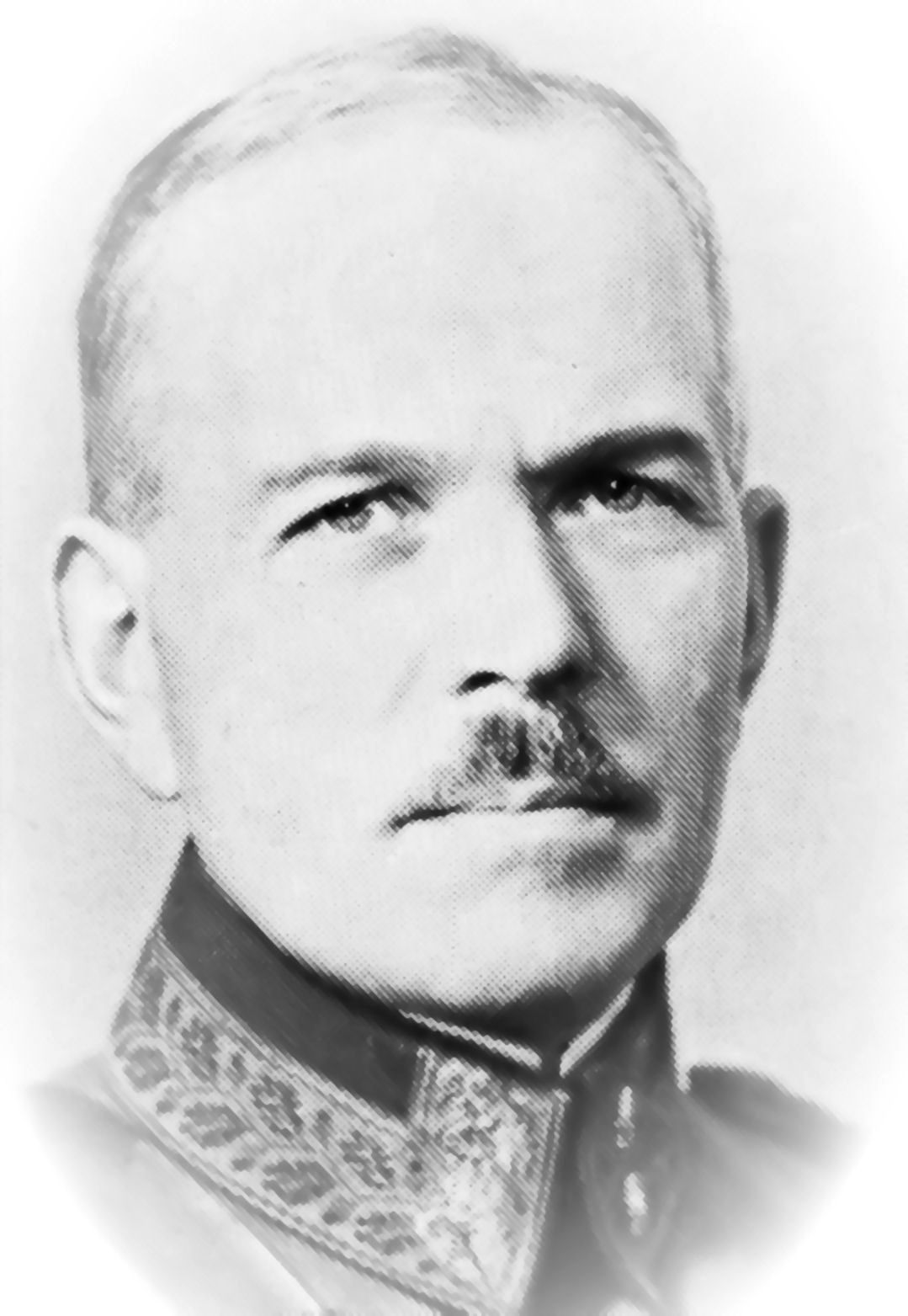
Karl Lennart Oesch
Knowledge base stats:
Talk channels stats:
Members stats:
Karl Lennart Oesch
Karl Lennart Oesch (8 August 1892 – 28 March 1978) was one of Finland's leading generals during World War II. He served as Chief of the General Staff of the Finnish Defence Forces from 1930 to 1940 and again in 1944, and commanded major operations during both the Winter War and the Continuation War. At the end of the Continuation War he commanded three Finnish army corps on the Karelian Isthmus during the decisive defensive battles of summer 1944, for which he received the Mannerheim Cross. After the war, he was tried and convicted for war crimes relating to the treatment of Soviet prisoners of war.
Karl Lennart Oesch was born on 8 August 1892 in Pyhäjärvi to Christian Oesch and Anna Barbara Stegman. His father had moved to Finland from Switzerland before his birth and worked as a cheesemaker, developing the dairy industry in Karelia as an independent entrepreneur. Lennart was the youngest of six sons in a family of nine children. He attended school in Sortavala and studied in the Department of Mathematics and Physics at the University of Helsinki from 1911 to 1915.
Oesch joined the Finnish Jäger Movement, traveling to Germany in February 1915 with the first volunteer contingent. According to Mikko Uola, the decision was at least partly influenced by his father, who detested all forms of state oppression and encouraged his son to leave. As a member of the Royal Prussian 27th Jäger Battalion, he fought on the German side of World War I on the Eastern Front, participating in combat in the region of Misa. He briefly returned to Finland to recruit more volunteers, before returning to Germany. In 1917, he was promoted Oberzugführer (English: Senior platoon leader).
He returned to Finland in February 1918 with the main forces of the Finnish Jägers to take part in the Finnish Civil War on the side of the Finnish Whites. During the civil war, Oesch commanded the 8th Jäger Battalion in the regions of Raasuli and Rautu.
Oesch's battalion saw action especially in the area of the Rautu railway station, which was held by the Finnish Reds who were supported by an armored train. The reds withdrew from the station following multiple White attacks which captured the armored train but failed to capture the station area. Oesch reported that the withdrawal resulted in significant casualties, with 1200 Reds killed and 600–800 captured. The 8th Jäger Battalion lost 199 men with 160 wounded while the total White losses were 670 men.
In 1918, Oesch was commissioned as a captain in the Finnish Army and soon after promoted to major. He briefly acted as the chief of staff of the Mountain Brigade (Finnish: Vuoristoprikaati) before taking the position of the chief of intelligence in the Finnish General Headquarters. Later that year, he took command of the Guards Jäger Battalion (Finnish: Kaartin jääkäripataljoona), a position he would hold until 1920.
Oesch married Anna Aitanga Niskanen in 1919. The couple had two children: son Karl Christian (born 1921) and daughter Ann-Mari (born 1922).
In the 1920s and 1930s Oesch advanced rapidly in the Finnish Defence Forces. He briefly acted as an aide to the chief-of-staff of the Army High Command, before being given command of the Vyborg Regiment (Finnish: Viipurin Rykmentti). While holding that command, he was promoted lieutenant colonel in 1921.
Hub AI
Karl Lennart Oesch AI simulator
(@Karl Lennart Oesch_simulator)
Karl Lennart Oesch
Karl Lennart Oesch (8 August 1892 – 28 March 1978) was one of Finland's leading generals during World War II. He served as Chief of the General Staff of the Finnish Defence Forces from 1930 to 1940 and again in 1944, and commanded major operations during both the Winter War and the Continuation War. At the end of the Continuation War he commanded three Finnish army corps on the Karelian Isthmus during the decisive defensive battles of summer 1944, for which he received the Mannerheim Cross. After the war, he was tried and convicted for war crimes relating to the treatment of Soviet prisoners of war.
Karl Lennart Oesch was born on 8 August 1892 in Pyhäjärvi to Christian Oesch and Anna Barbara Stegman. His father had moved to Finland from Switzerland before his birth and worked as a cheesemaker, developing the dairy industry in Karelia as an independent entrepreneur. Lennart was the youngest of six sons in a family of nine children. He attended school in Sortavala and studied in the Department of Mathematics and Physics at the University of Helsinki from 1911 to 1915.
Oesch joined the Finnish Jäger Movement, traveling to Germany in February 1915 with the first volunteer contingent. According to Mikko Uola, the decision was at least partly influenced by his father, who detested all forms of state oppression and encouraged his son to leave. As a member of the Royal Prussian 27th Jäger Battalion, he fought on the German side of World War I on the Eastern Front, participating in combat in the region of Misa. He briefly returned to Finland to recruit more volunteers, before returning to Germany. In 1917, he was promoted Oberzugführer (English: Senior platoon leader).
He returned to Finland in February 1918 with the main forces of the Finnish Jägers to take part in the Finnish Civil War on the side of the Finnish Whites. During the civil war, Oesch commanded the 8th Jäger Battalion in the regions of Raasuli and Rautu.
Oesch's battalion saw action especially in the area of the Rautu railway station, which was held by the Finnish Reds who were supported by an armored train. The reds withdrew from the station following multiple White attacks which captured the armored train but failed to capture the station area. Oesch reported that the withdrawal resulted in significant casualties, with 1200 Reds killed and 600–800 captured. The 8th Jäger Battalion lost 199 men with 160 wounded while the total White losses were 670 men.
In 1918, Oesch was commissioned as a captain in the Finnish Army and soon after promoted to major. He briefly acted as the chief of staff of the Mountain Brigade (Finnish: Vuoristoprikaati) before taking the position of the chief of intelligence in the Finnish General Headquarters. Later that year, he took command of the Guards Jäger Battalion (Finnish: Kaartin jääkäripataljoona), a position he would hold until 1920.
Oesch married Anna Aitanga Niskanen in 1919. The couple had two children: son Karl Christian (born 1921) and daughter Ann-Mari (born 1922).
In the 1920s and 1930s Oesch advanced rapidly in the Finnish Defence Forces. He briefly acted as an aide to the chief-of-staff of the Army High Command, before being given command of the Vyborg Regiment (Finnish: Viipurin Rykmentti). While holding that command, he was promoted lieutenant colonel in 1921.
Recent media