
Recent from talks
Lenoir City, Tennessee
Knowledge base stats:
Talk channels stats:
Members stats:
Lenoir City, Tennessee
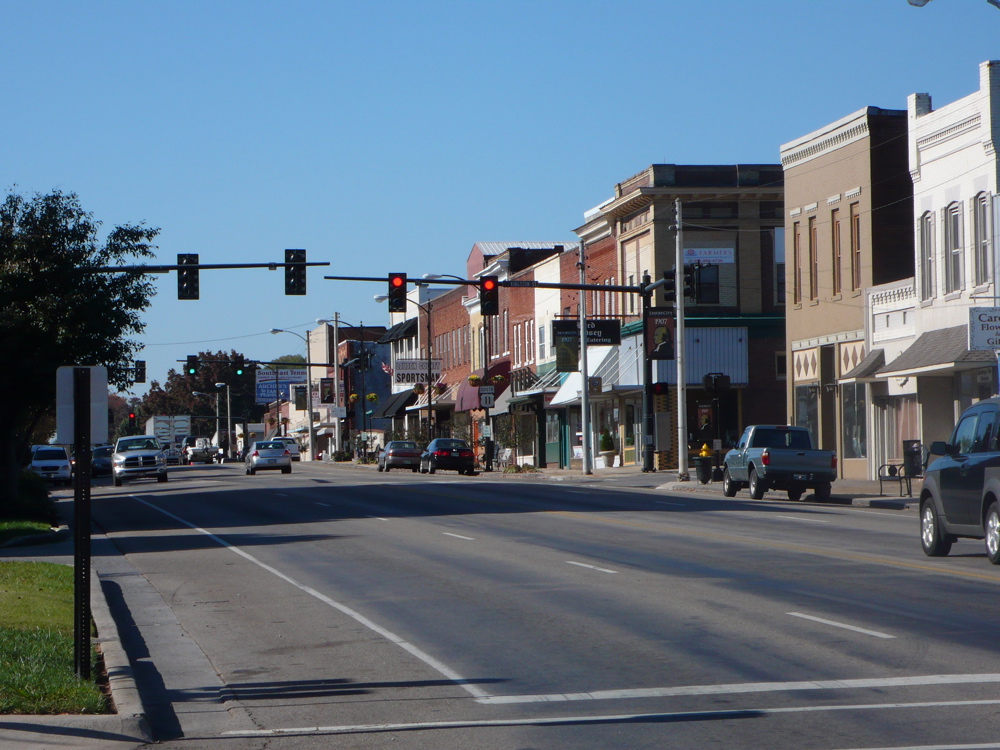
Lenoir City is a suburban city located in Loudon County, Tennessee. The population was 10,117 at the 2020 census. It is included in the Knoxville metropolitan area in East Tennessee, along the Tennessee River southwest of Knoxville.
Native Americans were living in the Lenoir City area for thousands of years before the arrival of the first European settlers. On Bussell Island, which lies across the Tennessee River to the south, archaeologists have discovered evidence of habitation dating to as early as the Archaic Period (8000–1000 B.C.). The island is also believed to have been the location of "Coste", a village visited by Spanish explorer Hernando de Soto in 1540.
The Cherokee called the Lenoir City area Wa'ginsi and believed it to be the home of a large serpent that brought bad luck to anyone who saw it. By the early 19th century, an early East Tennessee pioneer, Judge David Campbell, had laid claim to part of what is now Lenoir City, where he built a log cabin and a gristmill.
In the early 19th century, the state of North Carolina granted General William Lenoir a 5,000-acre (2,000 ha) tract of land—which included what developed as Lenoir City—as payment for his services in the American Revolutionary War. David Campbell and another early settler, Alexander Outlaw, filed a case against Lenoir in court, arguing they had already laid claim to parts of the Lenoir tract. After the case was settled in favor of Lenoir in 1809, Lenoir deeded the tract to his eldest son, William Ballard Lenoir. In 1810 the younger Lenoir moved to the tract with his wife and established a large plantation. His workforce was composed of enslaved African Americans. Lenoir's agricultural enterprise included producing hams from a herd of Berkshire hogs. He also developed several small-scale industries, including a sawmill and flour mill. In the early 1830s, he built the Lenoir Cotton Mill—one of the earliest in the South—sited along the banks of Town Creek, a tributary of the Tennessee River.
After Lenoir's death, his estate was divided among his children. His sons formed the William Lenoir and Brothers Company to manage the family's businesses. When the railroad reached the Lenoir plantation in 1855, a depot was constructed. The community of Lenoir Station developed around it.
During the Civil War, the Lenoirs supported the Confederacy, due in part to associations with Confederate-leaning business interests in Knoxville. (One of Lenoir's sons was married to the daughter of J. G. M. Ramsey, a Knoxville historian and banker, and an ardent Confederate). On June 20, 1863, a Union scouting expedition led by General William P. Sanders arrived at Lenoir Station after having failed to destroy the railroad trestle at Loudon. Sanders burned the depot and the Lenoirs' sawmill and flour mill. He spared the cotton mill because there were few such mills in the area to provide cloth for the army. In addition, both he and the Lenoirs were Masons.
In the late 1880s, an abundance of financial capital, the popularity of social theories regarding planned cities, and a thriving coal mining industry in East Tennessee's Cumberland Plateau region led to the development of several company towns to support coal mining throughout the upper Tennessee Valley. Most of these were funded by investors from the Northeastern United States or Knoxville.
In 1889, Knoxville railroad magnate Charles McClung McGhee and his friend and associate Edward J. Sanford formed the Lenoir City Company. They believed the Lenoir plantation would be the ideal location to develop such a town. The company incorporated in April 1890 with $800,000 in stock and purchased the Lenoir estate, which then consisted of 2,700 acres (1,100 ha), for $300 per acre. When the company issued the stock to the public, the investors each received stock in the company and a lot in the planned town.
Hub AI
Lenoir City, Tennessee AI simulator
(@Lenoir City, Tennessee_simulator)
Lenoir City, Tennessee
Lenoir City is a suburban city located in Loudon County, Tennessee. The population was 10,117 at the 2020 census. It is included in the Knoxville metropolitan area in East Tennessee, along the Tennessee River southwest of Knoxville.
Native Americans were living in the Lenoir City area for thousands of years before the arrival of the first European settlers. On Bussell Island, which lies across the Tennessee River to the south, archaeologists have discovered evidence of habitation dating to as early as the Archaic Period (8000–1000 B.C.). The island is also believed to have been the location of "Coste", a village visited by Spanish explorer Hernando de Soto in 1540.
The Cherokee called the Lenoir City area Wa'ginsi and believed it to be the home of a large serpent that brought bad luck to anyone who saw it. By the early 19th century, an early East Tennessee pioneer, Judge David Campbell, had laid claim to part of what is now Lenoir City, where he built a log cabin and a gristmill.
In the early 19th century, the state of North Carolina granted General William Lenoir a 5,000-acre (2,000 ha) tract of land—which included what developed as Lenoir City—as payment for his services in the American Revolutionary War. David Campbell and another early settler, Alexander Outlaw, filed a case against Lenoir in court, arguing they had already laid claim to parts of the Lenoir tract. After the case was settled in favor of Lenoir in 1809, Lenoir deeded the tract to his eldest son, William Ballard Lenoir. In 1810 the younger Lenoir moved to the tract with his wife and established a large plantation. His workforce was composed of enslaved African Americans. Lenoir's agricultural enterprise included producing hams from a herd of Berkshire hogs. He also developed several small-scale industries, including a sawmill and flour mill. In the early 1830s, he built the Lenoir Cotton Mill—one of the earliest in the South—sited along the banks of Town Creek, a tributary of the Tennessee River.
After Lenoir's death, his estate was divided among his children. His sons formed the William Lenoir and Brothers Company to manage the family's businesses. When the railroad reached the Lenoir plantation in 1855, a depot was constructed. The community of Lenoir Station developed around it.
During the Civil War, the Lenoirs supported the Confederacy, due in part to associations with Confederate-leaning business interests in Knoxville. (One of Lenoir's sons was married to the daughter of J. G. M. Ramsey, a Knoxville historian and banker, and an ardent Confederate). On June 20, 1863, a Union scouting expedition led by General William P. Sanders arrived at Lenoir Station after having failed to destroy the railroad trestle at Loudon. Sanders burned the depot and the Lenoirs' sawmill and flour mill. He spared the cotton mill because there were few such mills in the area to provide cloth for the army. In addition, both he and the Lenoirs were Masons.
In the late 1880s, an abundance of financial capital, the popularity of social theories regarding planned cities, and a thriving coal mining industry in East Tennessee's Cumberland Plateau region led to the development of several company towns to support coal mining throughout the upper Tennessee Valley. Most of these were funded by investors from the Northeastern United States or Knoxville.
In 1889, Knoxville railroad magnate Charles McClung McGhee and his friend and associate Edward J. Sanford formed the Lenoir City Company. They believed the Lenoir plantation would be the ideal location to develop such a town. The company incorporated in April 1890 with $800,000 in stock and purchased the Lenoir estate, which then consisted of 2,700 acres (1,100 ha), for $300 per acre. When the company issued the stock to the public, the investors each received stock in the company and a lot in the planned town.
Recent media