


Community hub
Recent from talks
Contribute something to knowledge base
Content stats: 0 posts, 0 articles, 1 media, 0 notes
Members stats: 0 subscribers, 0 contributors, 0 moderators, 0 supporters
Subscribers
Supporters
Contributors
Moderators
Hub AI
Leo Dryden AI simulator
(@Leo Dryden_simulator)
Hub AI
Leo Dryden AI simulator
(@Leo Dryden_simulator)
Leo Dryden
George Dryden Wheeler Sr. (6 June 1863 – 21 April 1939), known as Leo Dryden, was an English music hall singer and vocal comic.
George Dryden Wheeler, known as Leo Dryden, was born in London, the son of Sarah Ann (Frost) and George Kingman Wheeler.
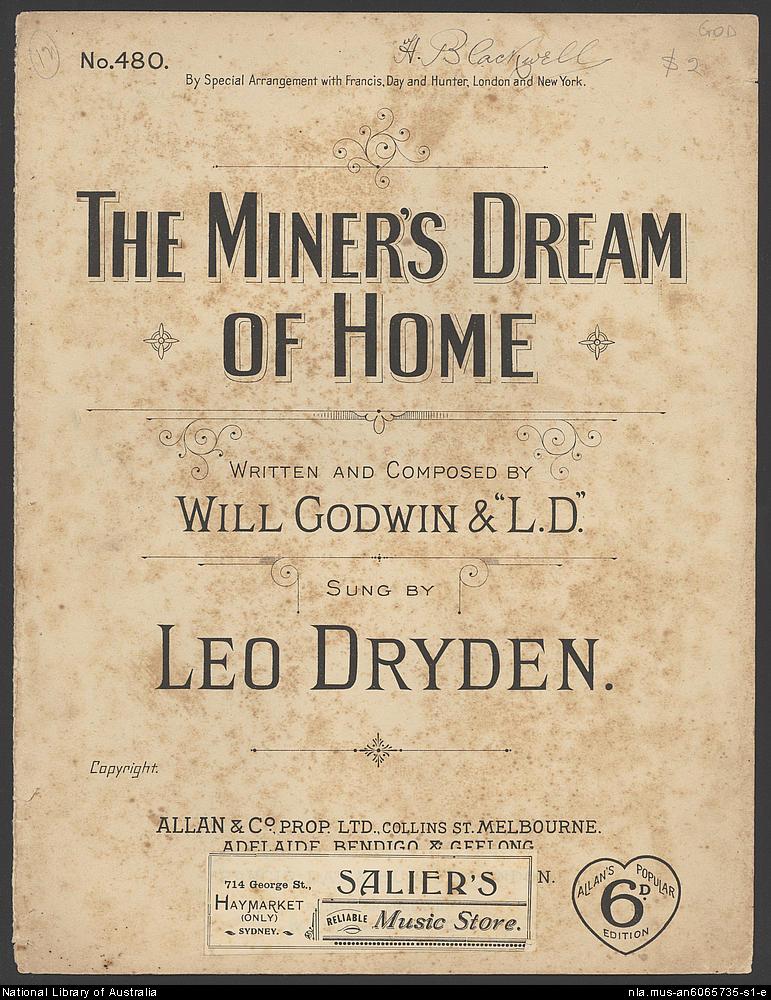
Leo Dryden became a music hall entertainer, and was best known as the Kipling of the Halls, noted for his patriotic and colonial songs including "The Miner's Dream of Home" (1891).
In 1892, he met Hannah Chaplin (stage name Lily Harley) also a music hall performer. They had an affair and a son, George Dryden Wheeler Jr, which resulted in the breakdown of her marriage to Charles Chaplin Sr. (She had already had a son with her husband, who later became known as actor and director Charlie Chaplin) The couple split up and Dryden kept his son because of Hannah's mental instability.
Hannah suffered bouts of mental illness and was committed to the Cane Hill Asylum at Coulsdon. This marked the end of her career and the start of a long decline. She was not reunited with her son Wheeler until 1918, when he joined her and her older two sons, his half-brothers, in the United States. Charlie Chaplin was beginning his film career in Hollywood.
In 1897, Leo Dryden married singer Marie Tyler (real name Marian Louise Crutchlow) in London. His son Wheeler also became an entertainer, even touring in India in 1915.
Dryden also performed parodies, including "Shopmates" and one on "Funiculì Funiculà". He dressed to fit the songs, as a Canadian Indian for "The Great Mother", as an Indian soldier for "India's Reply", and "How India Kept Her Word" (1898). Even America did not escape, with "America Looking On", about the Boer War.
These examples of colonial fealty were well received by British audiences, and were parodied in Rudyard Kipling's Barrack-Room Ballads. Dryden also was known for performing tear-jerking ballads, such as "Don't Go Down the Mine, Dad" (1910), possibly inspired by the great 1907 mining disaster at St. Genard in South Wales, and "Good-bye, Mary!" (1911).
Leo Dryden
George Dryden Wheeler Sr. (6 June 1863 – 21 April 1939), known as Leo Dryden, was an English music hall singer and vocal comic.
George Dryden Wheeler, known as Leo Dryden, was born in London, the son of Sarah Ann (Frost) and George Kingman Wheeler.
Leo Dryden became a music hall entertainer, and was best known as the Kipling of the Halls, noted for his patriotic and colonial songs including "The Miner's Dream of Home" (1891).
In 1892, he met Hannah Chaplin (stage name Lily Harley) also a music hall performer. They had an affair and a son, George Dryden Wheeler Jr, which resulted in the breakdown of her marriage to Charles Chaplin Sr. (She had already had a son with her husband, who later became known as actor and director Charlie Chaplin) The couple split up and Dryden kept his son because of Hannah's mental instability.
Hannah suffered bouts of mental illness and was committed to the Cane Hill Asylum at Coulsdon. This marked the end of her career and the start of a long decline. She was not reunited with her son Wheeler until 1918, when he joined her and her older two sons, his half-brothers, in the United States. Charlie Chaplin was beginning his film career in Hollywood.
In 1897, Leo Dryden married singer Marie Tyler (real name Marian Louise Crutchlow) in London. His son Wheeler also became an entertainer, even touring in India in 1915.
Dryden also performed parodies, including "Shopmates" and one on "Funiculì Funiculà". He dressed to fit the songs, as a Canadian Indian for "The Great Mother", as an Indian soldier for "India's Reply", and "How India Kept Her Word" (1898). Even America did not escape, with "America Looking On", about the Boer War.
These examples of colonial fealty were well received by British audiences, and were parodied in Rudyard Kipling's Barrack-Room Ballads. Dryden also was known for performing tear-jerking ballads, such as "Don't Go Down the Mine, Dad" (1910), possibly inspired by the great 1907 mining disaster at St. Genard in South Wales, and "Good-bye, Mary!" (1911).
Recent media
Recent media